Bicheno keeps making the welcoming-towns list. I think I know why
Bicheno landed at seven on Booking.com's most-welcoming-towns list. St Helens at ten. Two east-coast Tassie towns in the top ten, and I drove down to find out why.

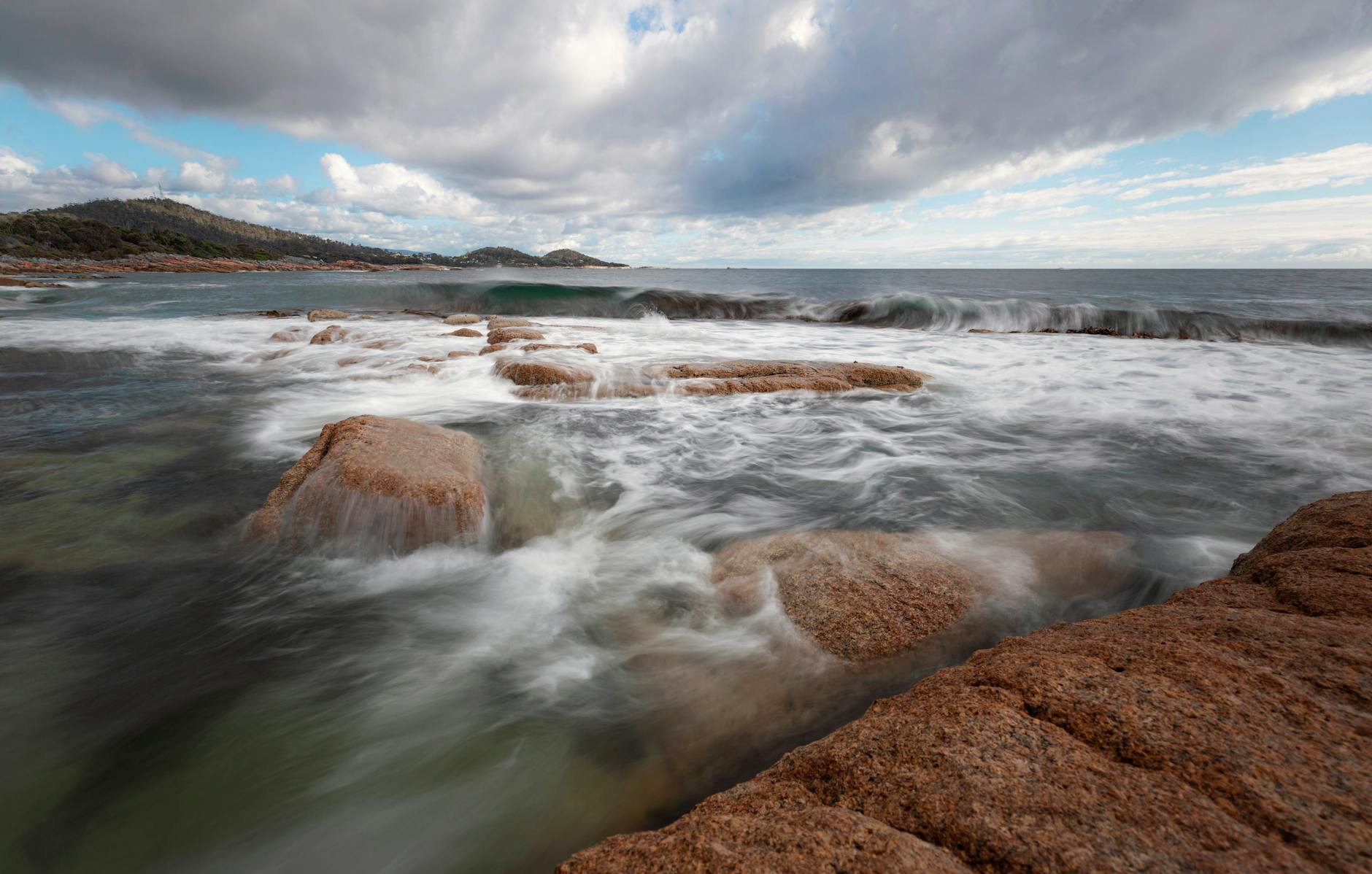
The Tasman Highway south of St Marys goes quiet for a bit. The trees crowd the verge, the radio breaks up, you stop noticing you’re driving. Then the road bends east and the trees thin and the water shows up. I have made that drive maybe forty times. Forty. It still gets me.
Last Sunday I was halfway down it again, heading to Bicheno for fish and chips and an overnight at a friend’s place by the Gulch, when I caught a yarn on the radio about a travel ranking. Bicheno had landed near the top of something or other, the presenter said. Ahead of Port Douglas, allegedly. I laughed. Port Douglas is in another country if you live here, and the only person I know who reads those lists is my mother.
I might be wrong about this. There may well be a hard-news version of the story. But I’ve spent the better part of a week trying to find a credible “Bicheno number one” headline and the closest I can pin down is a Booking.com survey from early February. It’s the 14th Annual Traveller Review Awards, built off more than 370 million verified reviews, and it lists ten Most Welcoming Towns in Australia. Bicheno comes in at seven, with St Helens, up the coast a bit, at ten. Two east-coast Tassie towns inside the top ten, then. Noosa took the actual title.
So not number one. Not ahead of Port Douglas, which didn’t make the list at all, which feels like the actual news if there is one. Seven and ten on the same ledger though, both within an hour’s drive of each other and both with populations that wouldn’t fill a Saturday session at the MCG: that is genuinely interesting to me.
Bicheno had 943 people in the last census I bothered checking. The Wikipedia page is brutally tidy about it. The town was proclaimed in 1866, named after a British Colonial Secretary called James Ebenezer Bicheno who, by all accounts, never came here. Before that the place was called Waub’s Harbour, after Wauba Debar, an Aboriginal woman whose grave sits in Lions Park, and who was taken from her people as a teenager by sealers and lived a life I cannot summarise in a paragraph and won’t try. The town’s bones are older than its name. Whaling stations operated here back in the late 1830s. The crayfish boats still go out.
I keep thinking about that history when I read the welcoming-towns blurb. The award is real enough but it’s also a survey result, built from reviews left by people in transit, and I keep wondering what it actually measures. On Saturday I stopped at Tasmania Coastal Seafoods for the regulation half-flake-and-chips and Ken behind the counter, who half the town calls Ken the Mad Dog, knew the four people in front of me by name and asked one of them how the kids were settling at the new school. The chips arrived in cardboard, and the potato cake was the size of my palm, and I ate it leaning on the boot of my Subaru watching the boats come back from the morning out.
You can build a theory out of that, but be careful with it. Booking.com hospitality is more or less whether someone replies to your email and the room is clean when you get there. What Ken does without thinking is a different thing entirely, and treating them as equivalent is how you get bad ranking columns. Bicheno has both of them, in the order that matters. Most mainland regional towns I’ve stayed in have one and charge for the other.
Why two Tassie towns and not five
I went looking for the trick. Why this stretch of coast and not, say, the Great Ocean Road, which has Port Campbell on the same list, or the south-west of Western Australia, or the north coast of NSW.
Honest answer: I don’t know. Dishonest answer is I have a theory, which I’ll keep brief. The east coast of Tasmania is, I reckon, short enough to feel knowable and long enough to feel like a journey, and that combination matters more than the brochures admit. Bicheno is about two hours twenty from Hobart, two from Launceston, day-trippable with a stop at Spiky Bridge for sandwiches or week-doable if you build in Coles Bay and Freycinet National Park in the middle, which is what the bus tours sell. I keep meeting the TravelManagers Tasmanian Wonders crew in the Bicheno car park, ten days for about five grand a head twin share, and the passengers all look mildly stunned in a good way.
Tour-group passengers don’t tend to call towns welcoming. Efficient, maybe, or clean, or worth the money. Bicheno landing on the warm side of that ledger says something about who’s actually doing the cafe shifts and the small-motel turnovers, where the same family might own the IGA along with the boat charter and one of the five shacks for rent on Burgess Street. Continuity of that flavour is impossible to fake on short notice.
The Booking.com list is global, by the way, and the Australian Traveller piece doesn’t quote anyone from Bicheno. Tourism Noosa got the quote, which makes sense because that’s where the trophy went. Rankings are catnip and this story-shape gets recycled every year by every outlet, so Bicheno at seven this year might be twelve next year and gone the year after. So the award isn’t the news. It’s the excuse to look at the news.
The news, if I’m pressed: an east-coast Tassie town with under a thousand permanent residents continues to operate as if tourism hasn’t broken it. Most houses lived in year-round. Primary school still full. The pub does Monday lunch. Compare that to the coastal towns I’ve written about on the mainland, where half the houses are dark from June to September and the cafe shuts on Tuesdays because “there’s no point in opening”, and you start to see what’s actually going on here.
The penguin tour problem
You can’t write about Bicheno without mentioning the penguins. Fairy penguins come ashore at dusk on the north end of the beach, and a local outfit runs guided viewings with low-red-light torches and a script that is, mercifully, brief. I’ve done the tour exactly once and I’d do it again before any of the dolphin swims I’ve heard about north of Cairns. The animals get on with their evening, you watch from about twenty metres, nobody touches anything, and that, more or less, is the entire promise of it.
I mention it because the penguin tour is the thing the brochures love and the thing locals discuss with careful neutrality. It’s the most aggressively packaged thing about Bicheno, and one of the better worked examples I know of how to package wildlife without ruining it, which is rarer than the brochures will ever admit on the cover page.
If welcoming-towns surveys actually measured anything useful, it would be that trade-off, I think: not the smile at check-in but the quality of the bargain struck between local life and visiting life. Some towns lose the bargain and become theme parks for the long-weekend crowd. Bicheno hasn’t yet, at least not in the way that bothers me.
What I’m less sure about
I’m not convinced this lasts. The property market here has done what property markets in coastal towns do. Friends who bought ten years ago for under three hundred thousand couldn’t afford their own street today, and the grocery store is fine in summer and patchy in winter, and the hospital is in St Helens which is not nothing if you need stitches at midnight in July. Fish-and-chips here is excellent. Fine-dining is basically Freycinet half an hour south, which is fine until you’ve done it a handful of times.
There’s a piece I keep circling back to about the gap between the regional Australia we sell and the regional Australia we live in. Bicheno sits squarely in that gap right now. The Booking.com list tells you the visitors are happy. The locals I drink with tell you it’s harder than it looks.
Both can be true. They usually are.
So is it the best town in Australia
No, mate. There isn’t one. There’s a town that’s right for the weekend you actually have and the version of yourself who’s taking it, and that’s about as far as I’d go with any survey of this kind. If your weekend means a hire car out of Hobart, two nights, a dawn walk on Diamond Island, fish and chips eaten standing up by the Gulch, a penguin tour at twilight on the second evening, then yes, fine. Best town in Australia for that weekend. For that version of you.
For everyone else: Bicheno’s at seven on a survey from a booking site. Higher than the headlines deserve. Lower than anyone who has driven the Tasman Highway south of St Marys would expect. Drive it. The listicle isn’t worth your evening.
I’ll be back at Ken’s counter in three weeks for the regulation half-flake. The boats will still be going out. Some things hold.
Cleo Tasman
Hobart-based travel writer chasing regional Australia, off-grid stays and the slow road.