What I keep getting wrong about the regional boom
Two-thirds of Australians live in the five biggest cities. The 2021 Census paused that, briefly, and the property newsletters called it a turn. From a verandah in the Adelaide Hills, the picture is more uneven and a lot more interesting than either the boom or the bust framing.
My cousin’s verandah faces east. On a winter Saturday in the Adelaide Hills that means waking up cold and staying that way for an hour. The boards groan when you walk on them. He bought the house in 2021, when prices were still leaning into the lockdown weirdness, and paid a number I will round-down out of family politeness. The kettle on his kitchen bench is older than his marriage. The view from the window, when the fog finally lifts off the dam below, is the bit you’d put in a brochure.
He’s two years in and less sure of the move than he was a year ago. He is also, on balance, fine. The bakery’s the only bakery. His daughter’s high school is fifty minutes away by bus. His salary slipped a band when his old firm reorganised the regional-loading rules. Some mornings the magpies are loud enough that you can hear them inside the house. He told me, last time I was up, that he wouldn’t undo it. When I pushed: that he isn’t sure he’d do it again.
That contradiction isn’t the bit I see in any boom-and-bust framing.
The framing tends to come in two versions. Version one says the pandemic woke something real, that hybrid work has rewired the country, that regional Australia is alive in a way it hadn’t been since the seventies. Version two, which is winning at the moment, says the boom was a mirage and the bust is mostly back-to-trend. Both versions miss what’s actually going on, which is something more uneven and a lot more interesting than either.
Last week Michael Yardney wrote a piece on Property Update that sat closer to the truth than the breathless version. He called the regional boom “largely a pandemic distortion” and pointed at the 2021 Census, which is the data layer most of the revival headlines were built on. The Census was taken in August 2021. We were locked down. The young people who normally leave country towns for university or work hadn’t left. The Census caught a pause, and a generation of property newsletters read it as a turn.
Yardney leans on Simon Kuestenmacher, who has been making this point on Demographics Decoded for a while now. About two-thirds of Australians live in the five largest cities. Roughly 80 per cent of our population growth gets absorbed there. Regional Australia, in aggregate, is older than the country as a whole. Fewer 20s, 30s and early 40s. More retirees. None of that disappeared in 2021. We just stopped counting it for a year because everyone was at home.
I might have the proportions wrong here, but the shape of the thing is right.
What confuses the picture, and what I think the simpler bust version gets wrong, is that some regional towns are doing a real and durable thing. They sit within about a two-hour drive of a capital. They have a high school you wouldn’t pull a teenager out of. They have an industry that isn’t just farming or tourism, though that one matters less than the first two. Towns that hit all three are a much shorter list than the Saturday-paper supplements suggested in 2022, and they overlap very little with the towns that featured in the cheap-acreage articles of the same year.
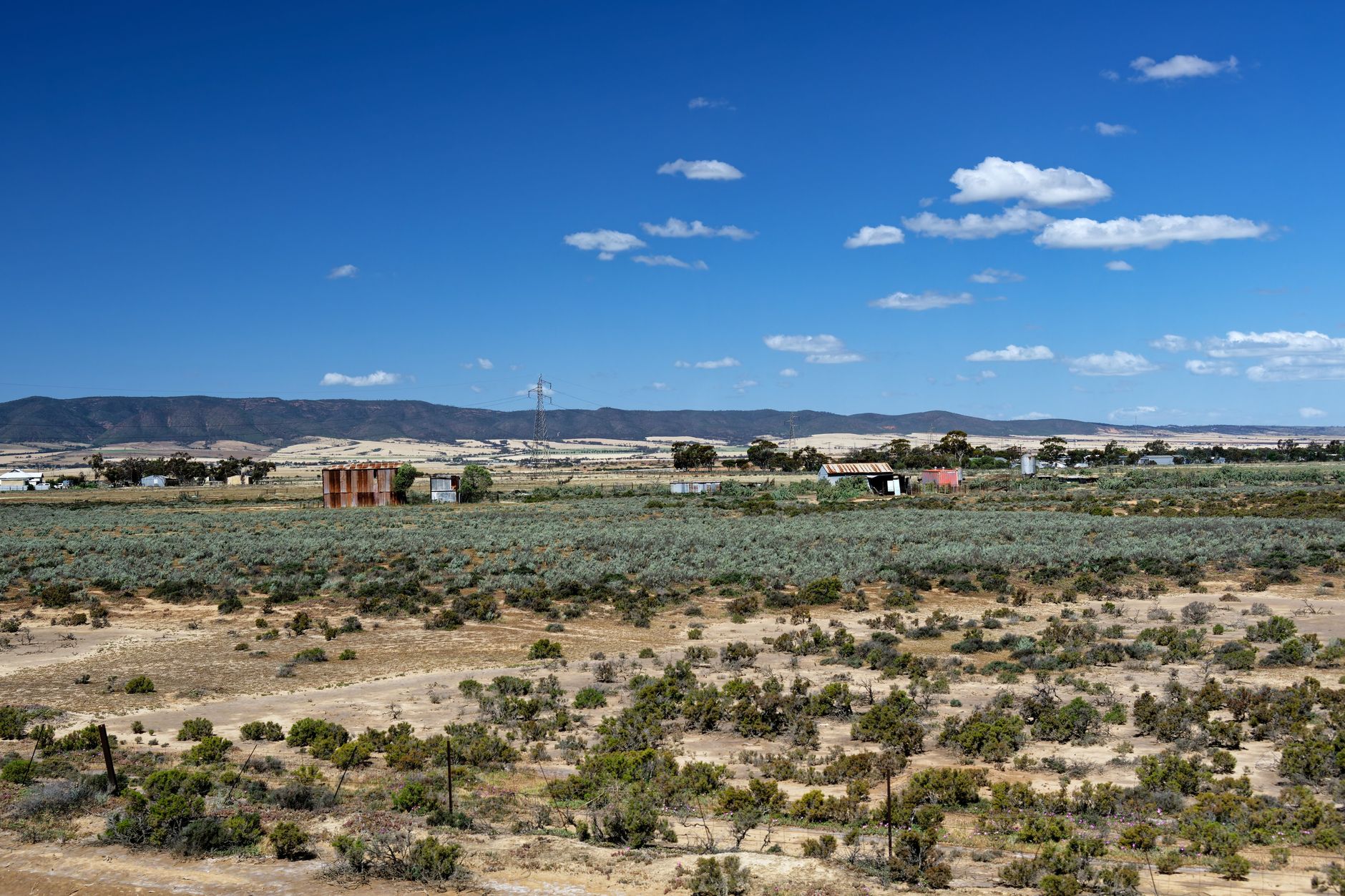
Strathalbyn meets two of the three, which is part of why my cousin is still there. Mount Gambier meets all three, which is part of why my friend Lisa, who left Adelaide for Mount Gambier in 2019 with a partner and a baby, is still there too, and now has an extra baby and a netball roster and a sourdough starter she keeps in a fridge that is not mine. Whyalla meets one on a good day. The Eyre Peninsula meets none unless you count crayfish, which I would except that you can’t raise a teenager on crayfish. The towns that struggled before the pandemic are still struggling. The towns that worked before the pandemic, and were within a tolerable distance of a real city, are mostly doing fine.
This is where the property writing gets in its own way. The investment-thesis frame, which I read because reading it is part of my job, treats the question as one of asset selection. Is the price low enough. Is the rental yield strong enough. Is there migration into the area. The Yardney piece, to its credit, gets close to the answer I keep arriving at on the drive back from Mount Gambier or Strathalbyn or wherever I’ve been that month: cheap property by itself is not a strategy. Population growth on its own doesn’t promise much. Jobs are the reason people pick a city, or stay in a town. People don’t move to towns; they move to lives, and lives are what the Census struggles to count.
A high school within bike-ride distance. A GP who’ll see you on a Tuesday and a football club that finds umpires every winter. None of that shows up in the regional-revival data, and very little of it shows up in property yields. But it is, in my experience writing about lifestyle migration in this part of the country, the thing that makes a move stick or not.
The version of regional Australia that the property newsletters are arguing about isn’t the version most of the people I know are living. The property version is a curve. The lived version is a list of small Tuesdays where the bakery’s open or it isn’t, and the high school called or it didn’t, and your cousin says, on the verandah, that the cold gets into everything but he wouldn’t undo it.
A list of small Tuesdays is a harder thing to put on the cover of a magazine than a boom or a bust. It’s also the only version that has any chance of being accurate.
I keep flip-flopping on whether the regional decade we were promised is going to materialise. Some weeks I drive through a town I last drove through ten years ago and the main street is busier than I remember. Some weeks I drive through somewhere else and the chemist is gone, the IGA’s hours are halved, the one good cafe has shut. The towns that worked before are working harder. The towns that didn’t are emptier. The middle that I’d been hoping a new kind of Australia might be settling into is thinner than the headlines of 2022 suggested and possibly thicker than the corrections of last year want to admit.
I will still be writing about this in 2030. I will still be wrong about most of it.
What I come back to is the verandah. He won’t undo the move; he also won’t quite endorse it. Not boom, not bust. Just a person who chose a town and is now in it, with a mortgage that was sensible when he signed, a school run that is too long, and a winter sun that, when it finally clears the ridge, makes the whole thing make sense for about ninety seconds before everyone gets cold again.

The Lifestyle Desires brief
Style, food, travel and wellbeing — weekly in your inbox.
Subscribe