What the week before Mother's Day looks like from where I sit
One in six Australian women face Mother's Day with grief no one is selling cards for: infertility, miscarriage, stillbirth, involuntary childlessness. From a Brisbane GP's chair, what these patients describe is sayable, and shame keeps it quiet.

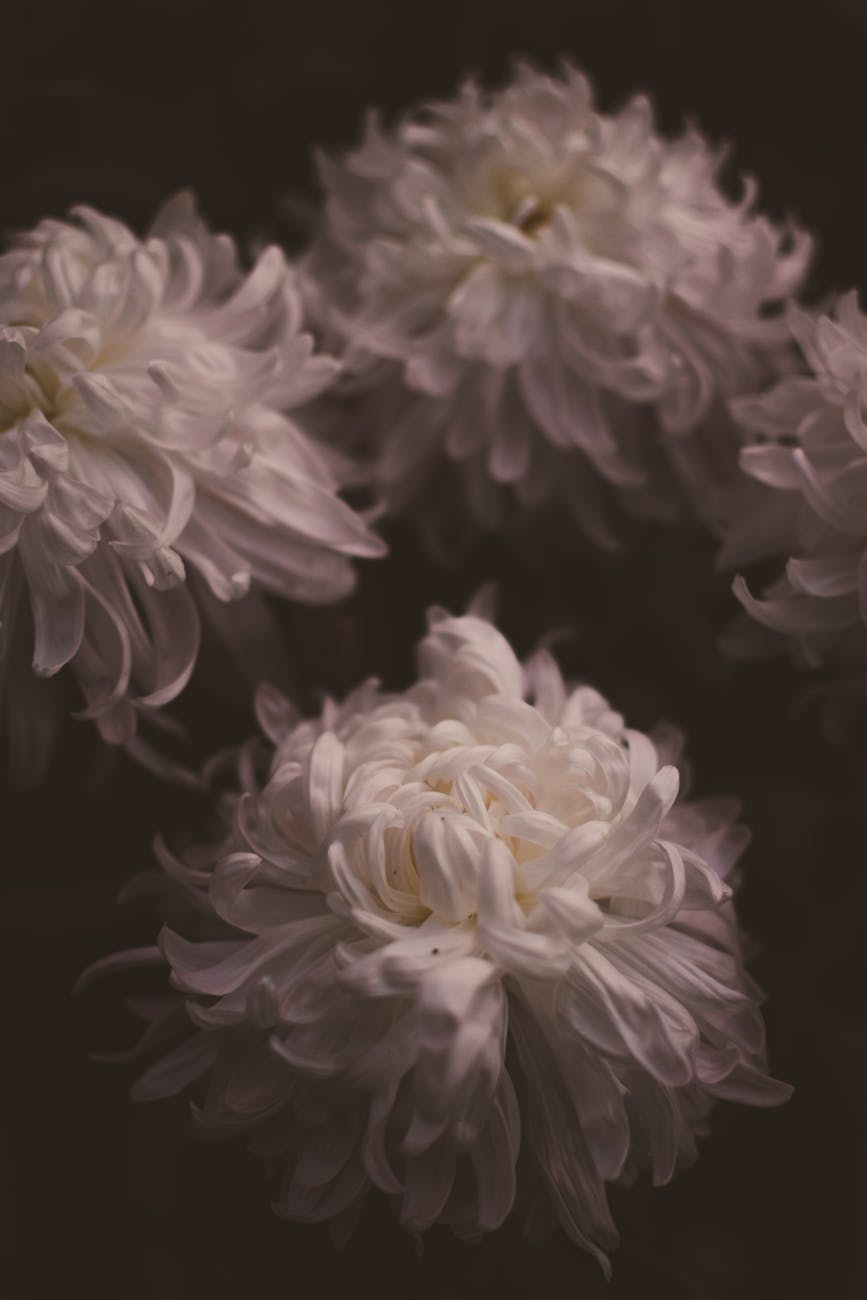
The chrysanthemums turn up in the IGA across from my surgery the first week of May. Tight cellophane sleeves. Pinks, yellows, crooked price stickers. By the time the second Sunday rolls around, half the cafes on Brunswick Street have swapped their usual brunch board for something curlier in chalk. Set menu, two courses, kid-free zone optional.
I notice this. So do my patients. Specifically, the ones who book in the second week of May and want their appointment described as “a chat” rather than anything billable. They sit on the edge of the chair with their bag still on their shoulder.
This is the part of Mother’s Day no one is selling cards for.
According to the Australia and New Zealand Infertility Counsellors Association, around one in six Australian women is on what their chairwoman Rebecca Kerner called a fertility journey, or has lost a longed-for baby, or may never have the child she wanted. Almost 15 per cent of Australian women experience involuntary childlessness. The rate of infertility globally sits at one in eight couples. These are large numbers and they have the strange quality of being invisible at every cafe brunch on the second Sunday in May.
I should say, before I go further, that I am not the woman this piece is about. I have two kids and an apricot poodle who behaves worse than they did at the same age, and my Mother’s Day morning involves toast crumbs on the doona and a card with my name spelled three different ways. I am the version of Sunday that magazines photograph. The patients I’m describing are not reading those magazines on May 11.
What Catherine learned to call it
Catherine Vallence and her partner lost their baby, and here I have to stop and rewrite that sentence because the verb is wrong. They didn’t lose anything. Their daughter was stillborn on Father’s Day. Catherine, who now advocates for an organisation called Involuntary-Childlessness through Treatment, Loss or Circumstance, told NewsWire something that has stayed with me since I read it.
For the first few years after their daughter died, she and her partner started getting their hair cut on Mother’s Day and Father’s Day. They put it in the calendar that way. “Hair Cut Day.” After a while, the hairdresser noticed.
“We did it a few years in a row and then eventually they went, ‘you guys always come in on Mother’s Day and Father’s Day’,” Vallence said.
The reframing was a coping mechanism, and a workable one. She described it as desensitising. Get the haircut, sit in the chair, smell the shampoo, walk out. Make the day be about something else by giving the day a different name. After a few years the new name held.
What stopped me when I read it the first time was Catherine’s other line. “You can be just as isolated at an event as you can just by maybe avoiding it.” She is talking about the trap that anyone working through a loss eventually hits. Going to brunch is hard. Skipping brunch is hard. There is no version of the second Sunday in May that is neutral.
What Rebecca sees in her caseload
Rebecca Kerner is the chairwoman of ANZICA, the peak body for fertility counsellors in Australia and New Zealand. She has thought about this day for longer than most of us have. When she talked to NewsWire, she made the same point twice in different words.
“It’s a day that’s really, really tricky for them. It’s a day that can often come with a lot of mixed feelings.”
And: “They may feel envious, they may feel sad, they may feel resentful, they may feel angry, and allowing them space to have those feelings and to know that it’s OK for this day to feel challenging is also OK.”
I want to dwell on the word “envious” for a second, because it is the one I see patients struggle hardest to admit. The other emotions get social airtime. Sadness, grief, even anger eventually find their right register. But envy is the feeling our culture has decided is small. To be envious of someone else’s pram is to be told, mostly by yourself, that you are not coping. And so it goes underground.
This was the part Ally Hensley wrote about for Mamamia this week, and I think it is the most honest sentence on this topic I have read in a year.
“I didn’t just feel sad. I felt jealous. I thought, ‘Why them but not me?’”
Hensley is an MRKH advocate. She was diagnosed at 16 with Mayer-Rokitansky-Küster-Hauser syndrome, a condition that affects roughly one in 5,000 women, in which a person is born without a uterus, cervix, or vaginal canal. Her essay is about the morning of Mother’s Day in the UK, where she now lives, and the specific moment she sat with her phone and Googled whether it was safe to put an iPhone in the freezer for one day. The freezer spell, apparently, is a folk magic trick for symbolically locking something out of your life. She had read about people doing it for exes. She thought she might try it for the grief.
She didn’t put the phone in the freezer in the end. She rang a friend who is also childless, not by choice. The friend listened. That was enough.
An essay does not solve anything. I know that. But it makes the feeling sayable, and on a topic that sits this close to shame, sayable matters.
What the former premier wrote
The other voice I keep coming back to this week is Annastacia Palaszczuk. The former Queensland premier is 56 now, and her new memoir, The Politics of Being Me, has a chapter she titled “Immeasurable Loss”. In it she describes her miscarriage at 33, her endometriosis diagnosis, and her years of IVF.
“I just thought it was going to happen,” she said. “I was gonna have a baby.”
What lands hardest in her account is not the fertility treatment itself. It is what she didn’t have around her at the time. “There was no information, there was no help, there was no support, there was no counselling,” she wrote. “I had a friend who helped me through it and thank goodness I had my friend.”
The Australia she is describing is not far behind us. Public conversation about IVF and infertility shifted in this country roughly between 2010 and 2020, with Mamamia, the ABC’s Ladies We Need To Talk, and a handful of clinical voices getting the topic out of whisper register. Before that, women dealt with it the way Palaszczuk did. Friends, if you had the right ones. Silence, if you didn’t.
This is the relevant context for any reader who finds the column in front of them and thinks, surely we don’t need to talk about this any more. The women I sit across from in clinic are not all in their 30s. Some are in their late 50s, and the loss they are still grieving happened decades ago. The conversation got better. The grief did not get smaller.
What Janet did in 1924
If we are going to mark Mother’s Day in this country, it is worth knowing where it came from. Australia’s modern Mother’s Day did not start with cards or roast lunches. It started in Leichhardt in 1924, when a woman called Janet Heyden ran a community campaign to send small parcels to the war widows of the local district. Eight hundred and fifty women received them that first year. Soap. Hairpins. Sweets. The chrysanthemum, an autumn flower, became the day’s emblem, partly because it peaks in May and partly because the word ends in mum.
I find the original brief consoling. Mother’s Day in Australia was, from its first form, a day for women who had lost. War widows. Women whose mothering had been interrupted by something larger than them. The cards came later. The brunch came later. The discount codes for spa packages came much later. The original gesture was a parcel for someone who otherwise would have got nothing.
I think about that on the morning of the day, when I’m reading my own card with its three spellings of my name. The day is older and weirder than the marketing makes it sound. There is room in it for the women who can’t.
What’s worth doing on Sunday
I’m cautious about telling anyone what to feel on a day this loaded. Kerner’s framing was right. People will have different ways of dealing with it, and the right one is the one that lets you get to bedtime intact.
What I will say, with my GP hat on, is that the women who do best on this day are usually the ones who decide in advance what their version of it looks like. For one of my patients that is breakfast at her own mum’s place. For another it is a hard pass on the family lunch and a long walk somewhere with no one she knows. One books the salon at 9am and calls the appointment Hair Cut Day, after Catherine.
The women who tend to come into clinic flattened the following Tuesday are the ones who tried to white-knuckle it. They went to the family lunch and held the smile, sat through the brunch that turned out not to be kid-free after all, scrolled through Reels they meant to skip. The grief does not get smaller because you ignore it on the day. It just shows up later, in worse weather, often dressed as something else.
The other thing I’ll say is that Kerner’s call for sensitivity in tea-room conversation is not pearl-clutching. The mothers’ lives I see go best are the ones whose colleagues and family noticed the gap without making a thing of it. A friend who texts on Saturday night and says, “thinking of you, do you want to do anything Sunday?” is doing more than they think. The ask is small. The signal is enormous.
If you are reading this on Sunday morning and you are not okay, there are people on the other end of a phone line. ANZICA, the counsellors’ association, keeps a directory of fertility-trained therapists. Beyond Blue is on 1300 22 4636 and the line staffs Sundays. For MRKH specifically, the MRKH Intersex Organization keeps the global directory of peer support, which Hensley points readers to in her own essay. None of these are going to fix anything by 5pm. They do pick up the phone.
There is also no rule that says you have to do this Sunday on the Sunday. The Vallences moved theirs onto the salon calendar. Other patients of mine fly to Tasmania for the weekend and turn the phone off in Hobart. One stays in her dressing gown and watches a film she has seen a dozen times before. The point is that the day belongs to you, not to the chalkboard outside the cafe.
The chrysanthemums in the IGA will still be there next week, slightly cheaper, slightly more bedraggled. So will the rest of us.
If you, or someone you care about, is struggling with grief or infertility this Mother’s Day, you can reach Beyond Blue on 1300 22 4636 (24 hours), or contact ANZICA for fertility counselling referrals.
Dr Mira Joshi
Brisbane-based GP turned health writer. Covers women's health, fertility and the gap between clinic and culture.