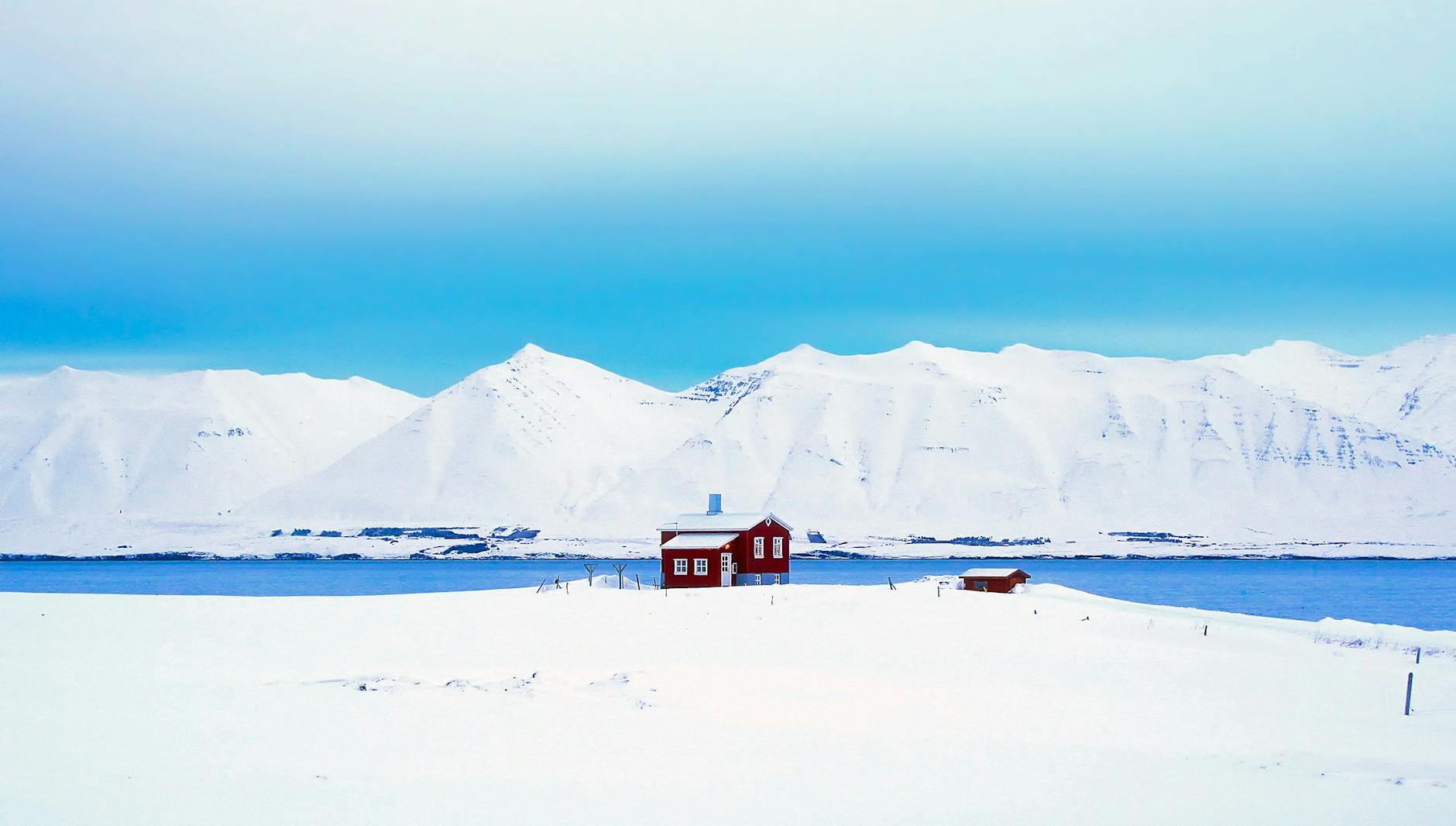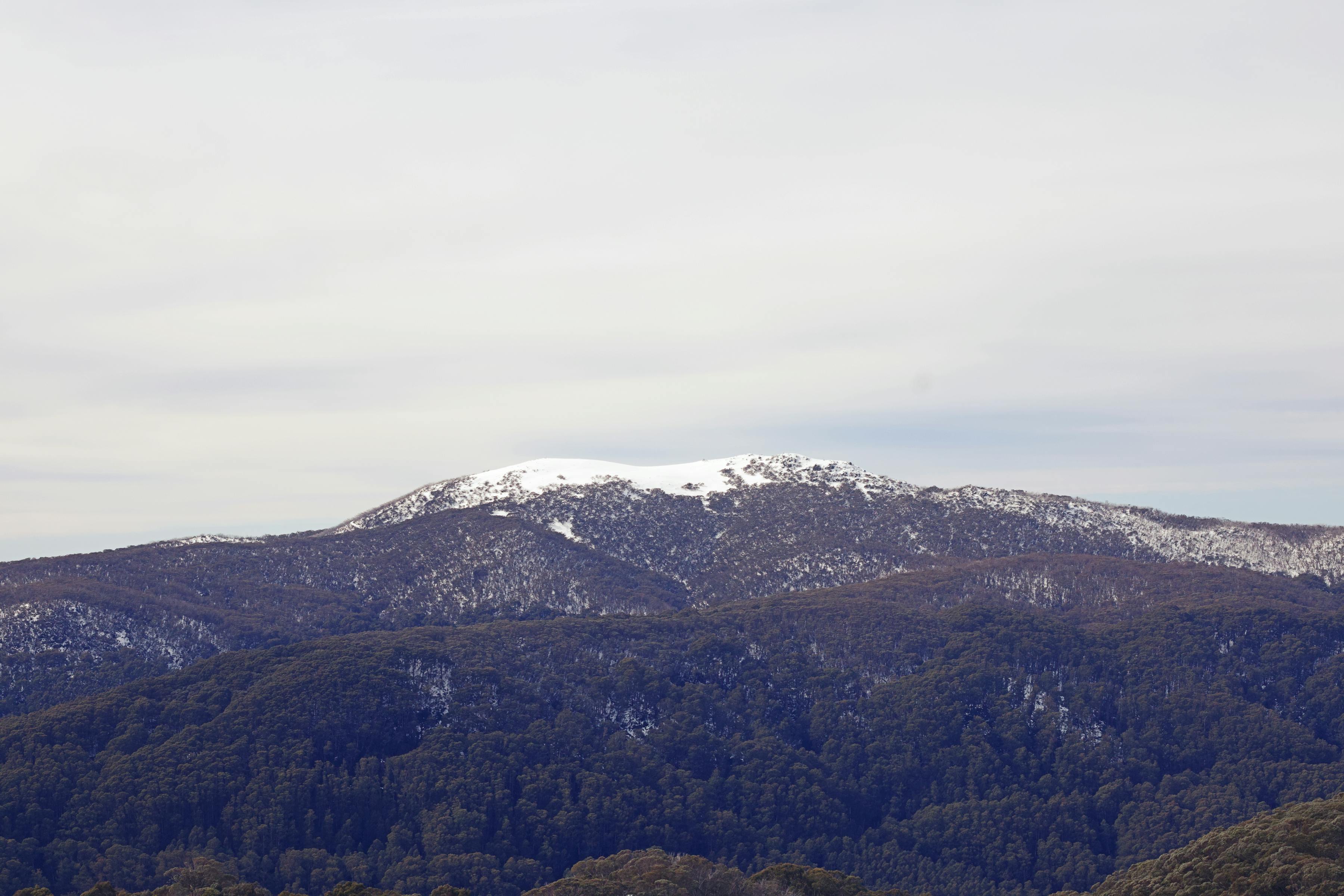
Snow at Mt Baw Baw, a month before the lifts spin
Seven centimetres at Mt Baw Baw and a low-pressure front to 400 metres in Victoria. A soft early-May snowfall isn't a forecast for the season ahead, but it is permission to start thinking like a snow person again.

The first photo a Tasmanian friend sent me this week was of Cradle Mountain dressed for July. Boulders clean as new linen. The huts halfway up the Overland Track stuffed in snow. Then a second one came through from a friend in Gippsland, of Mt Baw Baw’s village strip, cars parked on a shoulder of fresh white, the roof of the Frosti Frog cafe outlined in dribbles of soft snow that had thawed and refrozen overnight.
I am not the only one in the country who reads a snow report like a horoscope.
Seven centimetres fell at Mt Baw Baw between Wednesday night and Thursday morning, the strongest early-season accumulation across the Victorian resorts. Not enough to ski. Plenty to cancel a barbecue. Falls Creek copped a thinner layer. Mt Buller, where the snow-gun threshold of minus five degrees was finally crossed, fired up its blowers for the first time this season. A Mt Buller spokesperson told the Examiner something I keep replaying. “We were wearing shorts a week ago, then it’s proper winter this week.”
Across the rest of the country it was less dramatic and more interesting. Snow fell to 400 metres in Victoria, according to the Bureau of Meteorology’s Angus Hines, which is the kind of low altitude that brings flakes to picnic spots that don’t really do snow. Lake Mountain saw it. Mt Macedon at a shade above 1,000 metres saw it. Up the Hume in NSW, Oberon and Blackheath copped a soft cover. So did Orange in the Central West, which sits at roughly 860 metres and isn’t supposed to get a feed in May.
Four states copped some flavour of cold front this week. Tasmania down to 500 metres, Victoria to 600, the Snowy Mountains to 700, the ACT and parts of central NSW to 800. The forecasts called for as much as 20 centimetres in the higher mainland alpine areas before the front cleared east, and the BOM kept severe weather warnings out for damaging winds and below-zero overnight minima across the southeast.
What the snow doesn’t tell you
Everyone has a theory about what early-May snow in the Australian Alps means for the rest of the season. The cab driver who took me up the Tasman Highway last winter swore a heavy May predicts a thin August. A lift mechanic at Falls Creek I once shared a lodge with insists on the opposite reading, that a wet May builds soil moisture and helps the natural base hold. He’d been doing the job since the early 90s and was the kind of person you don’t argue with about snow. The truth, if there is one, sits between them, and it never matches either prophecy cleanly.
The Bureau’s seasonal outlook for 2026 has been leaning toward warmer-than-average maxima for southern Australia, which usually argues for a marginal season. Then this week it actually snowed to 400 metres. Both readings can sit on the desk at once without resolving. The Australian alpine season has been in slow retreat for decades. Natural cover tends to arrive later and finish earlier than it did when our parents were skiing. Within that long arc there is still occasional freak generosity. 1981. 1992. 2000. 2022. None were forecast in May. Most announced themselves in mid-June or late July, when nobody was waiting for them.
This is the season I always book a Tasmania trip and then unbook it twice and finally just go anyway. Hobart in May has a honesty Sydney in May refuses to have. The light goes flat by about ten past four. Up on kunanyi the summit gets the ring of low cloud the climbers all complain about. Down at Coningham, the kelp on the rock platform starts to look more like wet leather than the green-amber seaweed it was in February. I like it more than I’m probably meant to. I am not sure my partner does. There is a lifestyle category somewhere between travel and weather grief that gets you out of bed at six in May to read the colour of the sky from the kitchen window with a cup of tea you forgot to drink, and a soft dump of snow at Mt Baw Baw is the closest thing this category has to a club newsletter.
A month before the lifts spin
Mt Baw Baw is scheduled to open on King’s Birthday weekend, June 6, with tobogganing every day from then until the season ends. Hotham and Falls Creek are tracking the same calendar. None of the Victorian resorts have committed to running lifts on early-season natural cover this year, and only one has dropped strong signals about extending operating days into late October if the base hangs around. What this week’s front gave them is breathing room and a great deal of free advertising. Snow on the Frosti Frog roof is good content. Snow on the road home from Lakes Entrance, which a Mansfield friend stopped to film on Thursday morning, is better.
The bigger story is the one nobody at the resorts wants to lead with. Water. Alpine Resorts Victoria has been running a process to upgrade water infrastructure across the resorts, and snowmaking operations depend on storage tanks, reservoirs and pumps that were largely built in the early 1980s. Without a reliable water column, snowmakers can’t deploy when the air temperature finally cooperates. The state funding announcement from earlier this year, which I read in Australian Leisure Management, lists water and snowmaking as joint priorities. That phrasing hides about forty years of climate adaptation in a single line.
What changes after a front like this is the conversation in town. Up at Lake Mountain, the cross-country clubs start group-texting about waxing again. Tradies in Bright check tyre pressures on the work ute. A friend who runs a bookkeeping practice in Mansfield told me on Friday she’d had three lodge owners call asking about quarterly returns within an hour of the snow hitting the webcams. In a country where the snow window is short and famously fickle, an early dump gives everyone permission to start thinking like a snow person again. That’s its own kind of seasonal ceremony, and it doesn’t take much weather to set it off.
The case for going up before the lifts
I find the snow itself less interesting than the argument it makes for off-season alpine travel. A resort in May, before the lifts spin, is one of the better destinations in this country, for reasons that aren’t usually the ones in the brochures. The rates are about half. The walks up to the Baw Baw plateau are open without crowds. Both true and both fine, but neither is what brings me back. The thing I keep noticing is the smell of the road back down. Mountain ash forests around Walhalla and Erica drop the last of the canopy by mid-May, and on a Friday afternoon when you wind down the hill the air comes through the open window thick with composted leaves, ash bark, wet tea tree, and Castrol from someone else’s rental Falcon. There is a small slow lifestyle economy in places like Walhalla, Marysville and Mansfield that doesn’t get marketed to in winter, and on a good weekend it produces the kind of two-day getaway that ordinary glossy travel writing keeps trying and failing to describe.
I keep coming back to the tiny off-grid cabins piece I wrote in March about how Australians take weekends now, which looks less like the all-inclusive resort-week pattern of the 2010s and a lot more like the way our parents took weekends in the 1980s, when an out-of-town break was a Friday-night drive, an op-shop browse on Saturday morning, and a Sunday roast in a country pub before the long drive home. The May alpine corridor in Victoria is laid out almost precisely for this rhythm. You leave Melbourne at five, take the South Gippsland Highway, do an hour at the Yarragon bookshop and a cup of tea at Cosy’s, eat dinner at the Walhalla Star Hotel before they close the kitchen at half past eight. Saturday morning you’re up the mountain with a flask of coffee and a picnic blanket if the snow happens to hold.
The argument against pre-season alpine travel is that nothing is guaranteed. Lifts not running. Natural cover possibly gone by Monday. Roads occasionally closed. The argument for is that you go up to be in the conditions, not to wait in a lift queue. If it snows, the village is yours. If it doesn’t, you walked the lyrebird trail in low cloud and the kookaburras ran ahead of you on the fire trail back to the carpark.
A small economy that runs on cold
There is a thing about the Australian alpine economy that I find more interesting than the seasonal forecast. It is small enough to be hospitable. The total revenue across the Victorian resorts in a strong year is the kind of number a single Sydney-CBD restaurant group might turn over in profit. Most of the lift mechanics know each other. The accommodation is mostly family-run, with about three or four operators per village running half the beds. The tradies who come up to redo the lodges in October mostly come up the same year next year, and the year after that. When a lodge in Hotham burned down a few seasons back, half the village lost shifts.
The result is that May snow doesn’t just turn into Saturday morning content for the resorts’ Instagram feeds. It cycles through a small ecosystem of suppliers, mechanics, lodge cleaners, ski-hire shops in Mansfield and Mt Beauty, dairy farms in Yea and Tawonga, kosher butchers in Glen Iris who supply the Hotham lodges, the Falls Creek staff bus service, the chairlift welder who works out of Bright. Each of them gets a small sigh of relief when a forecast like this one lands. None of them are betting the whole season on it, but each is allowed a quiet bookkeeper hum that the year has at least started in the right direction.
I think this is the part that doesn’t get covered when the metropolitan papers run their alpine season previews. The story is not really about whether Hotham gets 14 weeks of skiing or 9. The story is about whether the lodges in Falls Creek can budget for next year’s water tank upgrade. About whether the local bus drivers in Mt Beauty get full hours through to October or get cut back in early September. About whether the kid who washes dishes at the Mt Baw Baw Hotel can make rent in Warragul.
What I’m still working out
I might be wrong about how the season plays out from here. Most years I am, in one direction or another, and usually by a wider margin than I expect. The wet base I budgeted for in 2024 vanished inside a fortnight of bone-dry westerlies, and I forfeited a four-night booking at Falls Creek that I am still slightly sour about. In 2022 I expected a thin year and ended up skiing fourteen weeks, including five days off the books in mid-October when nobody at work knew where I was. The Bureau will keep updating its seasonal outlook through the rest of May. Mt Baw Baw will keep posting webcam stills of the village strip from a camera that, judging by the angle of the parked four-wheel drives, has been bolted to the chairlift terminal since at least 2019. People I know will check the webcam the way the surfers I know check Coastalwatch at quarter to five in the morning.
What I will probably do is the thing I always do, which is drive up the second weekend in June because I prefer the feeling of a season at the start of its first week to its third. There is a pie place in Erica I have a soft spot for, the kind I’d rather not name in a magazine because half my interest is the lack of a queue. I’ll be at the Frosti Frog cafe at about eight on the Saturday morning, holding a coffee I bought somewhere on the way up, listening to a snow gun start running its compressors a few hundred metres downslope. By that point, the snow that fell this week will be a memory under fresh lift-spinnable cover, or it will be the only cover the season is going to put down. Either result counts as the start of something for me, and for the people I know who watch these forecasts in the same way. That has always been enough to plan a weekend around.
Cleo Tasman
Hobart-based travel writer chasing regional Australia, off-grid stays and the slow road.
More from Travel
Six weeks after Narelle, a fare cheap enough to argue with
The Gold Coast Reinvents Itself — Again
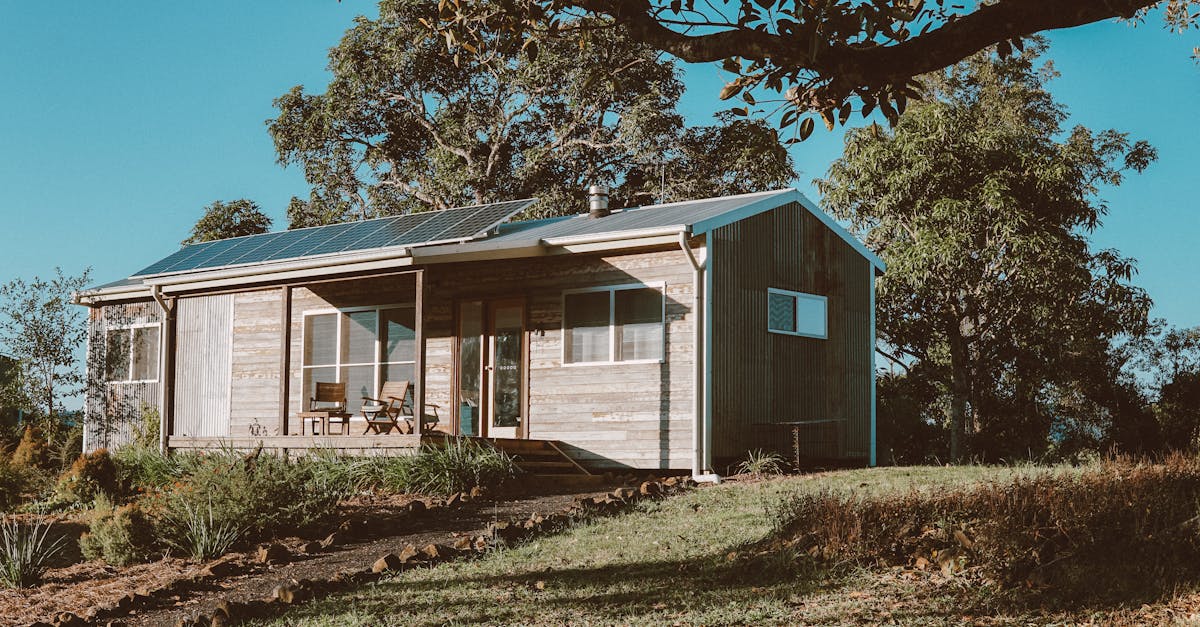
Tiny, Off-Grid, Two Nights Max: How Aussies Are Travelling in 2026
I almost didn't go: Milton Park's $10m makeover and the case for imperfection