Why I keep booking flights to Melbourne in May
Melbourne Design Week opens its tenth edition on 14 May with more than 400 events, and I have been booking flights down for years now. The honest answer to why is that the rest of the country still has not built what Melbourne already has.

The first time I went to Melbourne Design Week I caught the XPT down on a Friday afternoon and slept on a friend’s couch in Carlton, the kind that was too short. I spent the next forty-eight hours feeling slightly underdressed. That was 2017. I wandered into a satellite show in a Collingwood warehouse where someone had hung a chandelier of folded copper from the rafters, and the room was warm with the heat coming off the bulbs. I asked the gallery sitter who had made it. He shrugged. “Christopher Boots, lives around the corner.” That was the whole exchange.
Anyway. I thought about him again last week, when the program for the tenth edition of the design week landed in my inbox. Boots is opening a fifteen-year retrospective of his own work. The show is called Astrolabe and it runs at his studio from 14 to 23 May. Tickets are by RSVP. His chandeliers now go for tens of thousands of dollars, and the studio is a working office that you walk into past someone’s open laptop. The kid I had never heard of in 2017 has become one of the city’s signature designers somewhere along the way. Melbourne Design Week has spent ten years turning that kind of trajectory into something the public can walk through.
That, in a roundabout way, is the argument I keep coming back to about Melbourne. Sydney has its art fair, Adelaide has writers’ week, Brisbane has its design awards. Only Melbourne has built a design week with the kind of ambition you can compare to Milan in April or Stockholm in February without sounding parochial about it. The rest of the country can keep treating it as a Victorian event, or it can admit, ten years in, that the design capital is already settled.
The tenth edition opens on 14 May and runs until the 24th. There are more than 400 events listed in the program. Tony Ellwood, the director of the National Gallery of Victoria, framed it like this in the press release. “Melbourne Design Week is a powerful demonstration of how design can be used to shape the way we live, from the interior of our homes, to the way we eat.” The theme this year is “Design the world you want.” The program reads like a working brief for that theme more than a marketing slogan.
I want to walk you through what I am circling on my own calendar, because I do not think the reader who has never been to a design week should feel locked out of one. Most of the headline events are ticketed but cheap by international standards. The two NGV in-conversation evenings are $40 each, and I am paying for both.
What I am buying tickets for
The first is Mary Featherston in conversation with Anthony Burke on 20 May. Featherston designed furniture and learning environments alongside her late husband Grant from the late 1960s onwards. She is Australian modernism in person. Burke is a working architect who hosts Grand Designs Australia and teaches design. He asks the questions a working designer asks. If you have ever sat in a Featherston Numero IIIB at a regional gallery and wondered who designed the thing, this is the panel where you find out, from her.
The second is David Flack in conversation with NGV curator Dr Timothy Moore on 19 May. I have written about Flack before. His firm Flack Studio has done some of the most quoted Australian interiors of the past five years, and the verb “Flackified” entered the local design vocabulary somewhere around 2023. I wrote a piece earlier this month on what that verb actually means in practice. Hearing him in conversation with a curator at the gallery feels like the right venue for the next chapter, which I suspect is going to be more ambitious than another renovation.
The NGV is doing the heavy lifting
The week’s beating heart is at the NGV International on St Kilda Road. There is a one-day mini-symposium called Interior Design Today on 23 May in the Great Hall. There is also a 25-year career retrospective for Alison Page, the designer of Dharawal and Yuin descent who has spent her career arguing for Indigenous design language inside what is still a mostly Eurocentric profession. I have been to Page’s smaller shows before. She is the one panelist whose work I would tell anyone visiting Melbourne for the week to make time for. The retrospective will be the largest single treatment of her practice the NGV has done.
It matters that the NGV, not a satellite venue, is doing this. The gallery treats design as part of its primary collection, not a visitor from another department. That position is not free. It costs curatorial salaries, exhibition budget, board attention. The Art Gallery of New South Wales has not made the same choice, and the difference shows up here. The work of Creative Victoria, the state agency that runs the program, also shows up here. The Victorian Creative Industries Minister Colin Brooks has spoken at the launch every year I can remember, which is a small thing and also not a small thing.
The Convent and the Synthesis question
A few kilometres north of the NGV, the Abbotsford Convent is doing what it does best. There are two anchor exhibitions. The first is “100 Chairs”, with 130 Australian creatives showing chairs, the design week classic restaging. The second is Synthesis, curated by Ruby Shields of Studio Shields, with 46 Australian designers across furniture, art, textiles and ceramics.
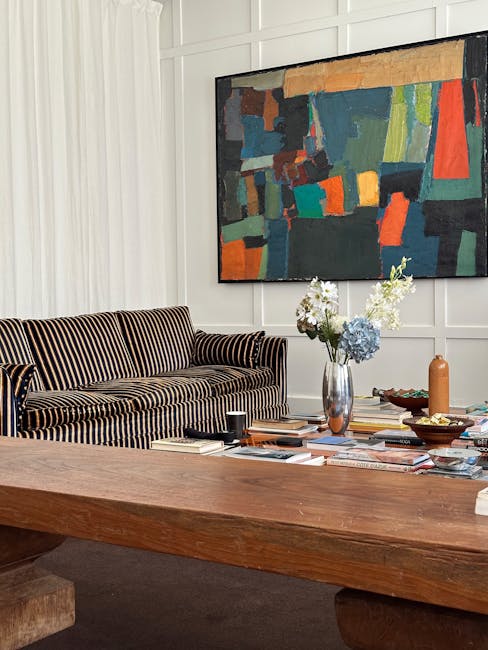
Shields told Homes To Love a longer version of her brief than I had read in the press release, and I think it is worth quoting in full. “Synthesis came about in two parts,” she said. “A growing frustration with the homogenisation of interiors, the endless white walls, and the fading of personality within spaces that should feel alive with soul and character. And equally, the way objects, furniture and art are so often presented in isolation, on a pedestal, against a blank wall, stripped of the very context that gives them meaning.” She added a line later in the same interview. “It is about what happens when everything is placed in conversation, when material, colour, light, scent and space begin to lean on one another. That’s where the magic sits.”
I read that and recognised the anti-listicle complaint a lot of us have been making in print for the past few years. The interiors industry, especially online, optimises for the single hero image, the sort that crops well to a phone screen with one piece of furniture against an off-white wall. Shields is curating against that. “What we’re seeing, particularly at Milan, is a shift away from the pedestal,” she said. “There’s a recognition that meaning is built through relationship. Context isn’t a backdrop, it’s part of the work.” I am planning to spend an afternoon at Synthesis with a notebook and not check Instagram.
The international bookings are short and pointed
Two international guests sit at the top of the program this year. Shunji Yamanaka, the Japanese industrial designer who has done prosthetics and humanoid robotics in addition to consumer product work, is one of them. Tom Kundig, the Seattle architect of Olson Kundig, is the other.
Kundig’s residential work is a useful counterpoint for an Australian audience because his practice has spent decades proving that you can build a single-family house that is as ambitious in materials and tectonics as any cultural building. There is a tendency in Australia to treat the new house as a derivative product of the development industry, a thing built to a specification, with finishes chosen from a narrow palette and a six-month build window. Kundig’s work is a working argument against that. The design week has booked the right guest.
Where the kitchen meets the room
The food side of the program is also denser than it used to be. John Wardle, the architect, is appearing in an event called “Yiaga: The Craft of Place” with the chef Hugh Allen. Allen left Vue de Monde to open Yiaga, which has become the most talked-about restaurant in the city in 2026 in part because of the dining room itself. Wardle designed the space. The conversation is about how a room shapes how food is served and eaten. If you only go to one event that touches both the kitchen and the architecture sides of design, this is the one.
Aesop is, predictably, doing more than its share. The brand is hosting an in-conversation event on 20 May with the architects Clare Cousins and Rodney Eggleston of March Studio, who between them have designed several of the brand’s stores. I spent five minutes recently in the Doncaster store and walked back to the car park trying to remember what the original brief in the building had been. That is the sort of work Aesop has been commissioning for fifteen years now and a panel-format conversation is overdue.
The smaller shows worth a half-day
There are programs I think are easy to miss in the headline lists. Designwork 10, at Sophie Gannon Gallery from 19 to 23 May, includes work from the ceramicist Juz Kitson, whose pieces I have watched migrate from craft fairs into the permanent collections of regional galleries over the past five years. Tender Dialogues, curated by Amy Voterakis at Hali Rugs, sets the textile artist Claudia Bloxsome and the ceramic-and-flax artist Georgia Boseley in conversation through their work. Florian Home is doing “Table Manners” with eleven designers reimagining cutlery, which sounds twee on paper and is the sort of brief that produces the most quoted objects of the week.
If you read my piece earlier this year on warm minimalism, the through-line of these smaller shows will be familiar. The question Australian designers keep returning to is what materials are honest in a hot, drought-prone country with a thinning hardwood supply, and how you make a room of those materials that does not feel like a renovation cliche. The answers sit in the textiles and the ceramics, the local timber and the woven grass, the unsealed clay that takes the light differently in the afternoon. None of it shows up in a quick Instagram crop. All of it is in the rooms.
What Melbourne has that the others do not
The thing I keep coming back to, ten years in, is what Melbourne has that the other capitals do not. Volume is not the answer. Sydney could do a design week, and on raw event count it would land in roughly the same place. The difference is institutional. The NGV is the load-bearing partner of the program in a way the Art Gallery of NSW has never been for design. Creative Victoria treats it as a state-strategy line item, not a tourism deliverable. Sydney would have to invent that institutional architecture from scratch, and Australia is not very good at building those structures from scratch.
There is also something about the geography. The week’s venues sit within a half-hour walk of one another, with the Convent reachable by tram. NGV International, the Ian Potter, the Melbourne School of Design, Christopher Boots’ studio off Smith Street, the Hali Rugs showroom, the Aesop stores along Collins and Flinders Lane. The walking density is what makes the week feel like one event instead of a programme of events. It is what Sydney’s geography does not give it.
I am going down for the second weekend, the 22nd to the 24th, when Synthesis closes and the NGV symposium runs. I will eat at one Hugh Allen restaurant. I will buy nothing. I will walk a lot. The reason I keep going back is not the headline events, although those are part of the appeal. The reason is that for ten days a year Melbourne lets you watch the people who make things explain how they make them, on their own terms, in the city where most of the work was actually built. There are not a lot of places in the world that do that as well. We have one of them, ninety minutes south on a Jetstar fare you can usually get for under $200, and I am still mildly surprised more of us are not on the same plane with our notebooks open.
Lila Beaumont
Sydney inner-west design editor with a soft spot for honest materials, sun-bleached palettes and homes that age well. Ex-Real Living.