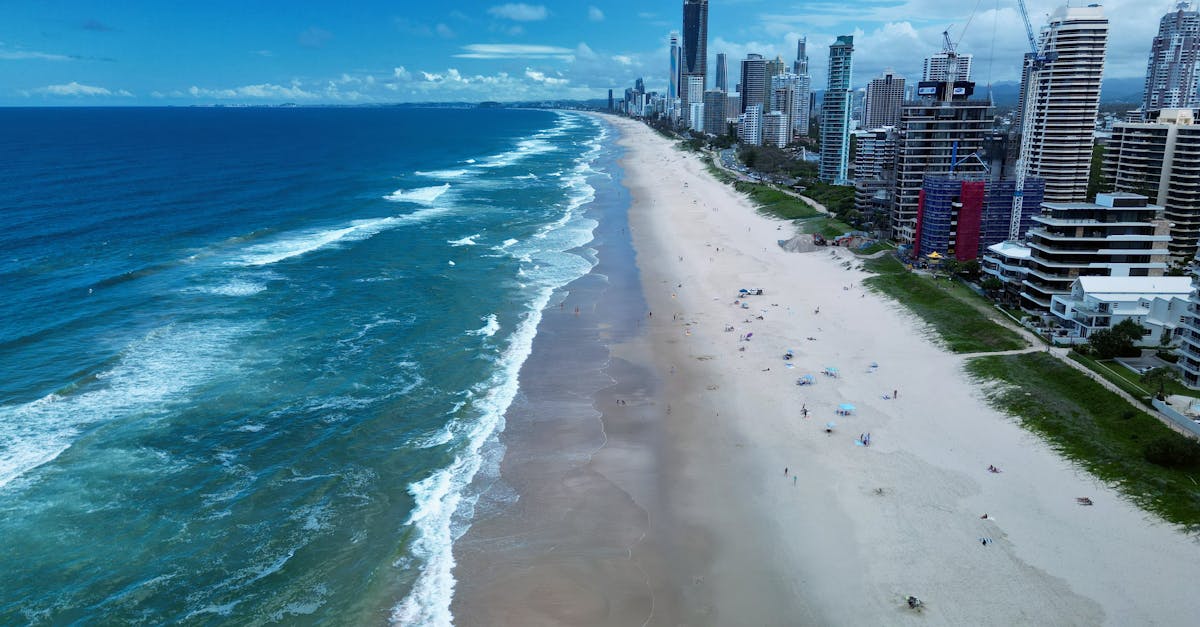
The Gold Coast Reinvents Itself — Again

From schoolies trip cliche to lifestyle-migration darling, the Gold Coast has been quietly reinventing what it means to live and visit there. Inside the cultural and economic shift behind Australia's most polarising holiday destination.
I went up the Q1 again last winter. I hadn’t been since 2019, when my sister dragged me along on a school-holidays thing with her two boys. The lift still empties your stomach into your shoes on the way up. The skyline is more or less the skyline it always was. But standing at the glass with my hands in my pockets I had this strong sense that something underneath had shifted, and I couldn’t immediately name what.
Then I noticed the man next to me was wearing a linen shirt that you don’t really associate with Surfers, and a woman behind us was talking on her phone about her listing in Burleigh in an accent I could’ve heard at any cafe in Sydney’s eastern suburbs.
Right. Okay. That’s what shifted.
I should say upfront that I came at this story with my arms crossed. I’m an Adelaide reporter. The Gold Coast has been the place a certain kind of southerner loves to sneer at for as long as I’ve been writing. Schoolies, theme parks, that very specific brand of ageing-Queensland kitsch that we all decided thirty years ago was beneath us. I’ve been up there plenty for work and for family and have always quietly thought of it as somewhere you visit, not somewhere you take seriously. Sneering at the Coast is a tradition for people like me.
The sneering doesn’t really work anymore, though, and a chunk of why is in the migration data.
ABS internal-migration figures are the cleanest place to start. Outside Brisbane, the Coast has been the largest net beneficiary of internal Australian migration every year since 2020. The financial year just gone, 2024-25, brought in just over 19,000 net new residents. The single biggest feeder, by quite a stretch, was Sydney.
What’s more interesting than the headline number is who’s coming. The 2017–2020 wave skewed grey; this one really doesn’t. Median age of internal arrivals fell from forty-eight in 2018 to thirty-six by 2024. That isn’t retirees. That’s young families and people in their thirties on a laptop. The work-from-home unlock did, in two years, what forty years of tourism marketing had failed to do.
Property responded the way property always responds when you do this to it. CoreLogic’s Gold Coast index is up 47 percent since the start of 2020. Sydney got 12 over the same window. Melbourne, somehow, got 4. Burleigh, Palm Beach and Currumbin are leading. Out the back, in the hinterland, places like Tallebudgera and Mudgeeraba and Tamborine, there’s a whole second boom running quietly along.
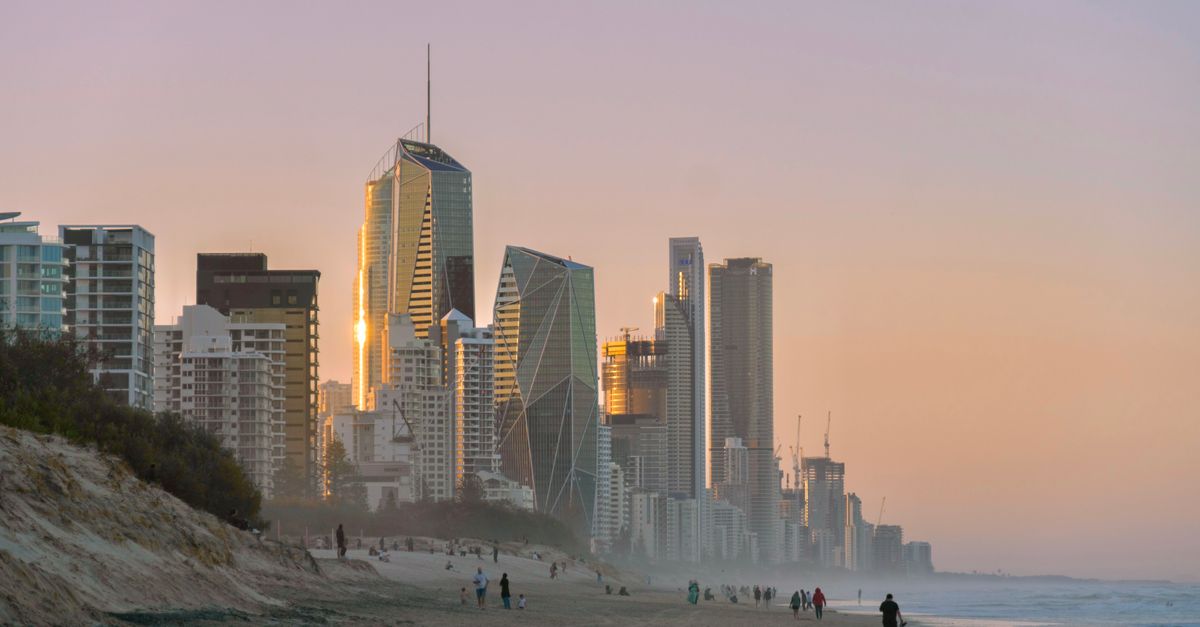
That’s the population picture. The visible picture, the one you actually walk past, has been quietly rebuilt around the new residents.
The strip from Burleigh down to Tugun has turned into somewhere the Sydney and Melbourne food press will now write about with a straight face. They mention Rick Shores. They mention Light Years and Etsu Izakaya and Justin Lane, and a place called The Collective that’s pulled the food-court format upmarket in a way I genuinely didn’t think was possible. Ten years ago none of this would’ve been on a serious critic’s list. It is now, and the reviews aren’t backhanded. The reviewers actually mean it.
The wellness-and-surf thing was always there in a barefoot, free, no-website kind of way. It now has bookings. There are surf schools with deposit policies. The ocean-swim crews have group chats. Ice baths have queues. Pilates studios have moved into the old industrial sheds behind Currumbin Creek. The lifestyle that the eighties and nineties just sort of lived has been productised, for better and probably for worse.
Festivals have grown up alongside all of it: Bleach, Surfers Paradise LIVE, the Gold Coast Film Festival. And then there’s the 2032 Brisbane Olympics, which is sitting out there pulling infrastructure money across the south-east and dropping a meaningful slice of it on the Coast.
None of which has done away with the parts the Coast was always known for. November is still November. Schoolies didn’t quietly disappear because Burleigh got a wine bar. The Surfers strip on a Saturday night is, I promise you, still the Surfers strip on a Saturday night. Movie World, Sea World and Dreamworld are all still anchoring real chunks of the family-tourism market, all reinvested through the post-pandemic recovery, and all heavily booked.

The high-rise problem hasn’t gone anywhere either, no matter what the urban-design people say at conferences. The southern stretch from Palm Beach to Tugun has been arguing about height limits for decades and has, by a rough count, lost about half the contests to developers. The skyline keeps inching north and south from Surfers, one approval at a time. I asked a planner down there whether the politics had really shifted. She laughed first, then said no, not really.
I rang around to find a few people who’d grown up on the Coast. Not the new arrivals. The ones who were already there before all this.
Within ten minutes of picking up the phone, three of them had used variations of the same two words: priced out.
Diane is a primary teacher at Mermaid Waters and asked I leave her surname out of it. Thirty-one years in the same classroom block, three principals, no plans to move. Her eldest is thirty. “She and her partner both work, she’s a physio, he’s in IT, and Burleigh just wouldn’t stack up,” she told me. “They moved to Beenleigh.” A pause down the line. “Beenleigh,” she said again, like the name of a country she hadn’t expected to end up sending her daughter to.
Macca runs a small carpentry crew out of Currumbin. Third-generation Coast, Bulldogs jersey on his work ute, bit of a grin. Work isn’t his problem. He’s got more work than he can take. His problem is apprentices. “They can’t live within an hour of the job,” he said. “Maybe their mum and dad in Tweed can put them up. But they’re nineteen, twenty, they want to live where they work. They can’t. So they go and pour beers in the city, and we lose them.” He’s hired four kids in two years. Three of them are gone.
And Joan. Retired nurse, Tugun, born in 1948 in a house her father built with a hammer. We talked on her back step. Two cups of black tea, a wind moving through the figs. She wasn’t angry. Joan doesn’t really do angry. She was just doing the maths about her grandkids out loud, the way she might’ve done a drug-rounds calc forty years ago. “I’ve got five,” she said. “Two are at uni now. None of them are going to live in Tugun. Maybe one of them ends up in Tweed if we’re lucky.” It wasn’t dramatic. It was a nurse adding numbers and stating the result.
What Diane and Macca and Joan are describing isn’t a place in decline. It’s the opposite, and that’s what makes it harder to write about, honestly. You only get this kind of complaint when a place has, in pure housing-market terms, succeeded too quickly for the people who already lived there to keep up.
It doesn’t sit cleanly on either side of the usual development argument. Both things can be true at the same time. The Coast is genuinely better than it was ten years ago in lots of ways I would’ve sworn impossible in 2015. And a lot of the people who actually made it what it was can no longer afford to be there.
From where I’m sitting, the next ten years feel pretty locked in. Olympics build keeps rolling. Migration flow probably eases off but doesn’t go into reverse. The southern beach suburbs keep climbing upmarket. The hinterland keeps absorbing the people the coast itself has priced out.
The number I keep going back to is the supply gap. Gold Coast City Council approved 4,200 new dwellings in 2024-25. Demand was estimated at closer to 9,000. You don’t need a planning degree to picture what happens when one of those numbers stays half the size of the other one for ten years in a row. Diane’s daughter is in Beenleigh. Macca’s apprentices are pouring beers in the city. Joan’s grandkids are in Tweed if they’re lucky.
I drove home down the M1 thinking about Joan’s back step, and the cups of tea, and what the view from the top of the Q1 is going to look like in 2032 when the world shows up for the Olympics. Probably gorgeous. Probably full.
Ngaire Brennan
Adelaide community reporter covering regional South Australia, lifestyle migration and the people behind the postcode.
You might also like
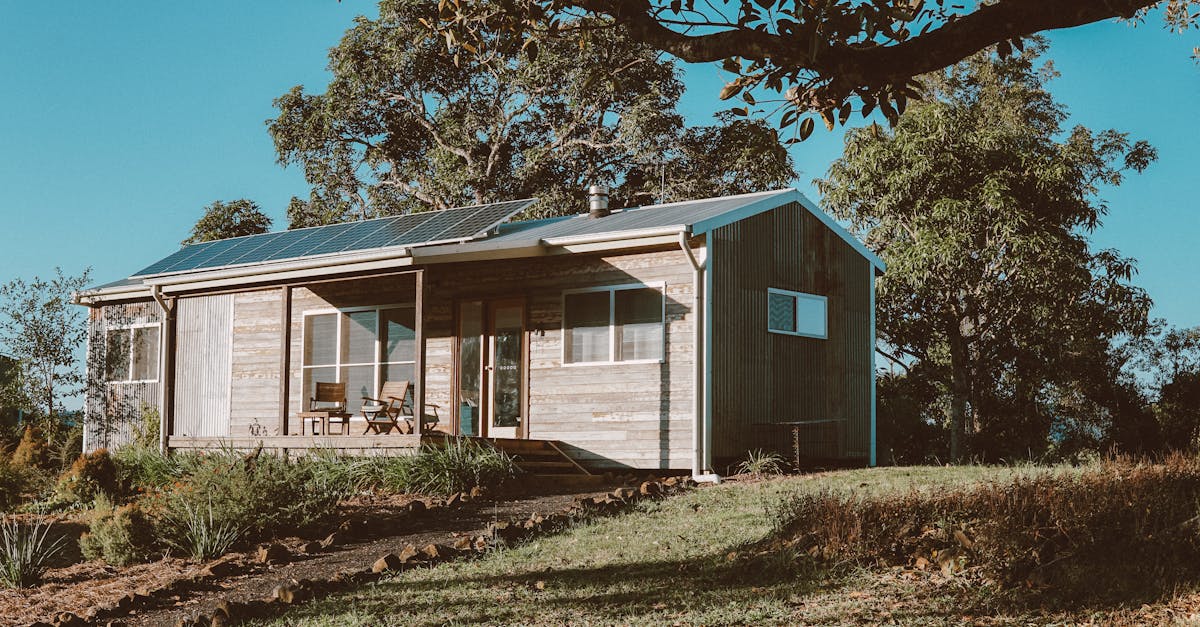
Tiny, Off-Grid, Two Nights Max: How Aussies Are Travelling in 2026
The two-week beach holiday is being quietly retired. Airbnb data and Tourism Australia figures both show short, regional, off-grid stays surging — and South Australian tiny cabins now leading the country's most-wishlisted list.

What's In, What's Out: Australian Interior Design Trends for 2026
The cool grey years are over. Inside the warm, material-led shift defining Australian homes in 2026 — plus the colours, finishes and furniture moves to actually pay attention to as the housing slowdown drives a quiet renovation boom.

Why Single Australians In Their Thirties Are Done Apologising
Dee Salmin's new book, a viral Bridget Jones essay and a cultural recalibration around solo living: how being single past thirty stopped being a problem to fix and started looking like a choice worth making.