What the bathroom floor knows before a trip
Travel toiletries rituals expose the gap between our best intentions and a 100 ml clear bag, especially on the long-haul trips Australians know too well.
The night before a flight, my bathroom floor always looks like a little tribunal. Bottles line up beside the scales. A serum I swear by at home suddenly seems vain. Sunscreen becomes non-negotiable. A cleanser I use without thinking turns into a negotiation with space, weight and the fact that, by midnight, I am no longer packing for a holiday so much as trying to compress a version of myself into plastic.
Travel gear coverage skips this bit. It goes straight to the pouch. The bag is not the point — there is always a bag. The point is control, mood, the private fantasy that this time you will land looking improbably intact. Skin calm. Hair obedient. Not a single shampoo leak soaking through your shirt sleeves.
When Wirecutter published its account of the bathroom laboratory travellers build before a trip, it landed on something I already knew but had never seen anyone admit in print. People who travel a lot don’t pack toiletries because they enjoy order. They pack them because disorder is expensive. Time in airport bathrooms. Money in destination pharmacies. Dignity, of a strange and specific kind, on long-haul flights.
The same ritual looks different depending on where you stand. For Wirecutter’s editors the question is how to edit a beauty routine without making the whole trip feel threadbare. For anyone facing an Australian long-haul haul the question is smaller and more personal: which tiny comforts earn their slot in the clear bag, and which parts of your home self are you ready to leave at the gate? There’s an even colder version — the one an analyst might reach for: if the toiletry problem keeps returning, year after year, perhaps it’s because travel promises efficiency and the body keeps asking for tenderness.
The floor tells on you
It’s where aspiration stops and physics takes over. Lay everything out and you can see the gap immediately. The person who owns six steps of skincare. The person who thinks she’s low-maintenance. The person who still believes one holiday might turn her into someone who moisturises on the plane, sleeps in a silk eye mask and arrives in Rome or Singapore or Hobart airport looking as if the cabin air never touched her. I’ve been all three, sometimes in the same hour.
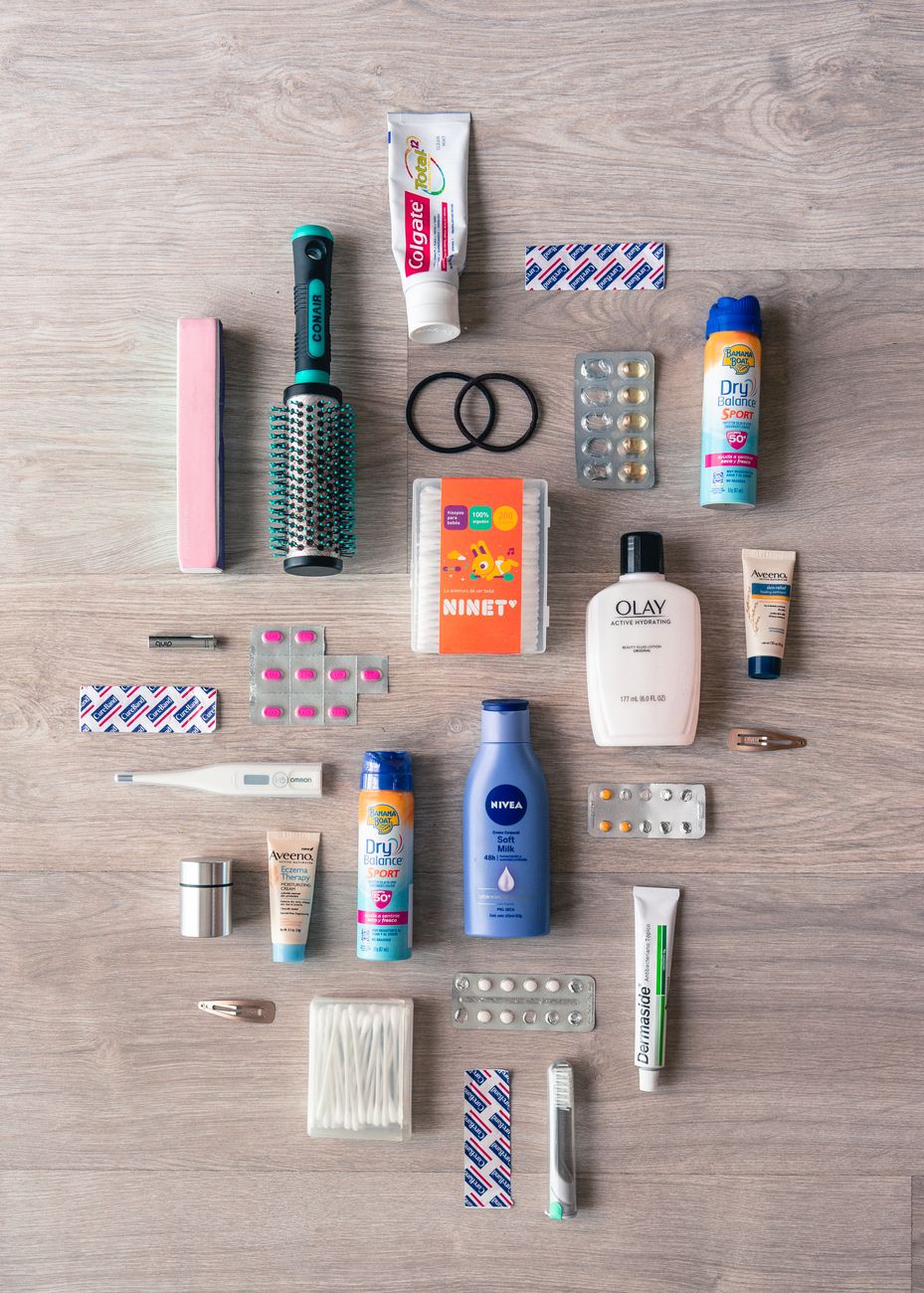
For Australian travellers the argument sharpens quickly. The Australian Border Force’s carry-on rules still cap most liquids, aerosols and gels at 100 ml containers. That number is small enough to feel insulting. It reduces grand routines into fractions: half a cleanser, three days of shampoo, a reluctantly decanted sunscreen. Maybe the mini fragrance if you’re feeling sentimental. What reads as admin is actually editing — what stays is what you think you’ll miss first.
This is why even the most practical packing advice ends up in confessional territory. In a Bon Appétit meditation on the travel items editors actually swear by, the toiletry question slides away from optimisation and toward the familiar misery of liquids sloshing around in a barely closed pouch. Over in ELLE Australia’s long-haul essentials guide, the toiletries bag reads like a continuation of getting dressed. Not vanity, exactly. More the desire to step off a plane feeling legible to yourself.
Travel commerce likes to pretend every problem is solved by a better pouch, a cleverer bottle, a zip that glides with more purpose. Sometimes the object helps. Just as often the object is a prop for something harder to name: deciding what kind of traveller you hope to be when the routine around you disappears.
The clear bag is a moral test
A transparent airport bag has a way of making adults feel judged. Not by security staff — they’ve seen worse. By the arrangement itself. Everything is suddenly public-facing: your sunscreen loyalties, your emergency concealer, the fact that you brought two lip products and no floss. A private maintenance routine, turned into evidence.

The insider view from Wirecutter gets interesting here, because it’s recognisable without pretending to be universal. Travel editor Ria Misra described the Peak Design Wash Pouch this way:
“It’s like a clown car — there’s so much more space inside than you’d believe.”
— Ria Misra, Wirecutter
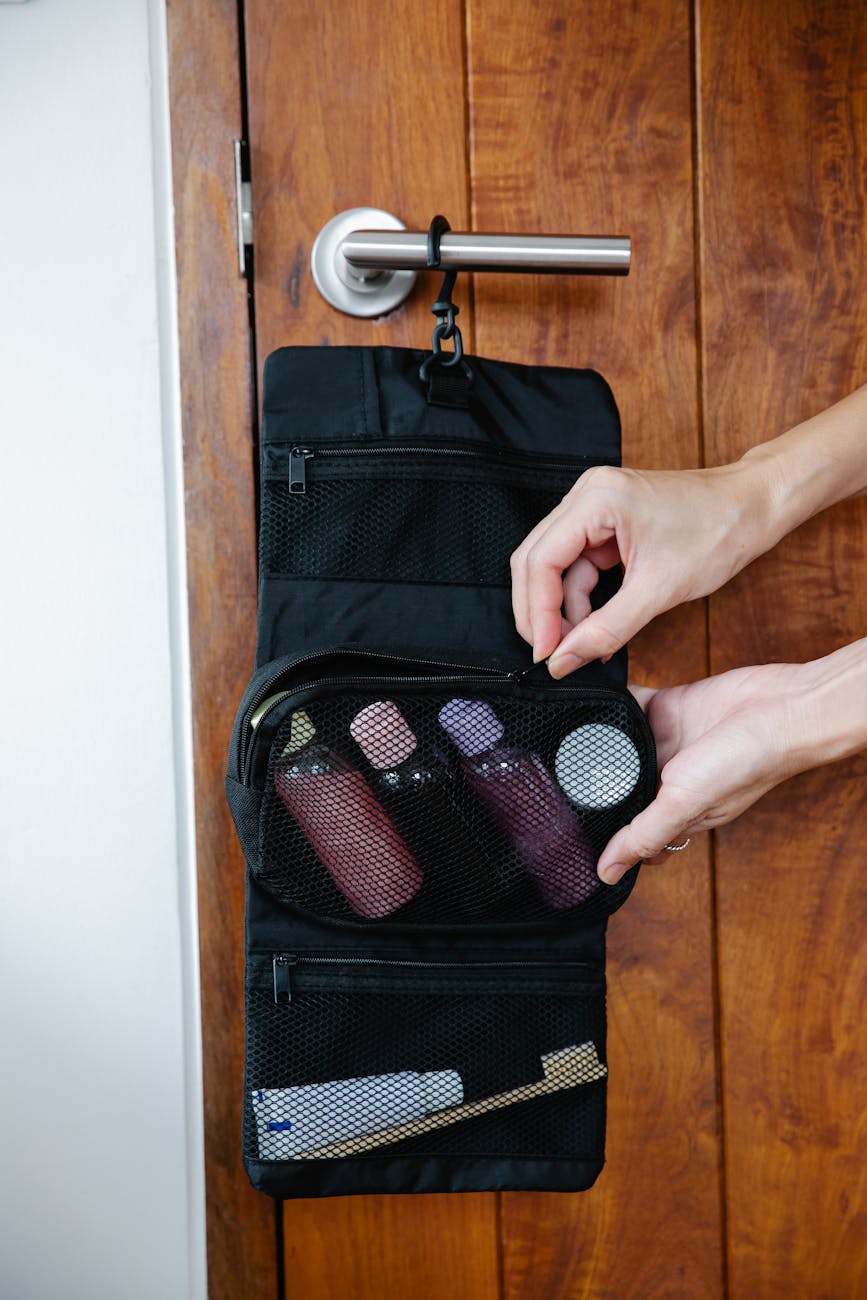
The line is funny because it’s not really about capacity. It’s about relief. A bag that opens properly, hangs neatly, keeps toothbrushes away from shampoo — can feel absurdly moving when you’re trying to leave the house at dawn. Beauty editor Jennifer Sullivan offered an even blunter self-assessment:
“I lose everything.”
— Jennifer Sullivan, Wirecutter
That sentence does more work than a page of product copy. People don’t buy pouches because they worship compartments. They buy them because they know their own chaos. A Baggu Go Pouch Set, a Humangear GoToob+ 3-Pack (Medium), a L.L.Bean Personal Organizer Toiletry Bag — useful, sure. But only insofar as each one answers a human flaw you already know by heart.
I start to resist the fantasy of the perfect system somewhere around here. Every packing cycle has a point where a useful article risks turning into service copy. You can feel it happen, sentence by sentence, as the bathroom floor becomes a showroom. The more honest version is messier. A traveller keeps buying little solutions because the bigger problem never shifts. Pack again next month. Forget what leaked. Think you’ve changed. You haven’t.
What we’re actually asking the toiletry bag to do
On paper it’s practical. In practice, it carries a brief more tender than it sounds: help me feel normal far from home. That’s especially true for Australians. Even a supposedly simple trip often means hours in dry cabin air, fluorescent terminals and the dead-eyed timing of overnight arrivals. A toothbrush and a travel cleanser aren’t luxuries in that context. They’re what you use to make the gap between transit and personhood feel smaller.
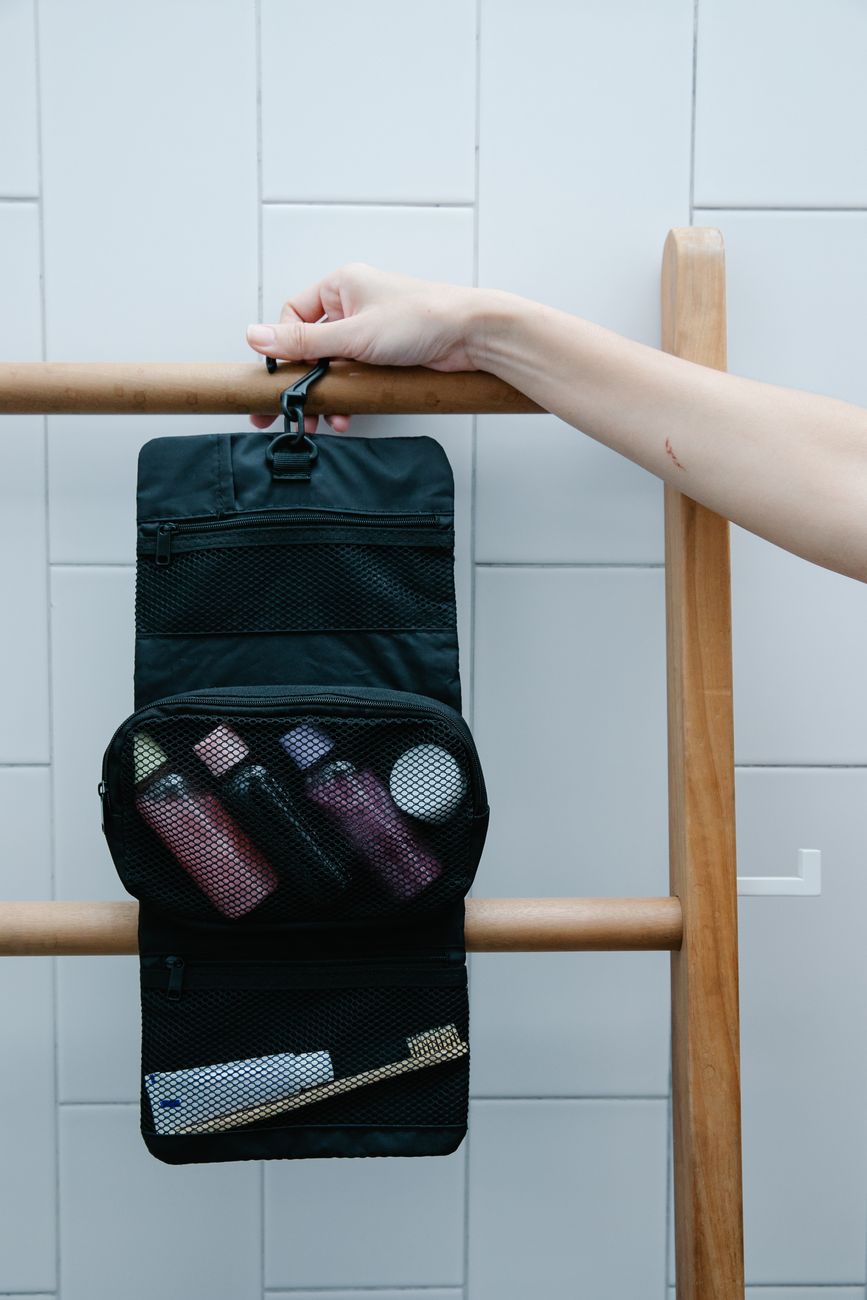
The user-affected perspective — the one that matters most to me — is less about gear than about editing identity under pressure. In The Guardian’s recent piece on wardrobe updates, Jess Cartner-Morley casually admitted she’s ruthless about decanting for carry-on, except for the beauty items that preserve some feeling of self. That aside lands because it’s familiar. We cut shoes without blinking, then agonise over a face oil we may not even use.
If you’ve ever packed for a long-haul flight from Sydney or Melbourne with only cabin baggage, you know the arithmetic. One bottle is comfort. Four bottles are optimism. Eight is denial. Somewhere in the middle sits a version of you who believes a properly packed pouch can compensate for an aisle seat, bad sleep and airport water that tastes faintly metallic.
Claire Wilcox at Wirecutter put it plainly enough:
“I’m a black-hole person, but I appreciate having some compartmentalization in the form of separate pouches.”
— Claire Wilcox, Wirecutter
I like that line. It grants the real stakes without overstating them. Toiletry organisation isn’t a character virtue. It’s a coping mechanism. You know what travel takes out of you and you’d like to arrive with a little less damage.
The question that keeps coming back
An analyst could answer this in one sentence: bodies are messy, analogue, unchanged. Skin still dries out. Shampoo still leaks. We overestimate our discipline in the abstract and underestimate our need for familiarity at 5 am in a hotel bathroom. Travel changes, luggage changes, airport rules barely shift — and none of it changes what the body wants.

Related coverage keeps circling this same terrain. A Business Insider travel planner writing about cruise packing ends up back at the hanging toiletry bag, because organisation buys calm. A Guardian Life review of a suitcase with pop-out shelves pauses at the huge toiletries bag anyway — new luggage design can’t solve the old argument about what you need within reach.
The pattern is almost boring. Except it isn’t. It tells us something slightly embarrassing. Travellers don’t keep returning to toiletries because the market is ingenious. We come back because packing beauty and hygiene products is one of the few moments when a trip still feels editable. Flights are booked. Weather is coming whether you like it or not. The hotel may be disappointing. But on the bathroom floor, for half an hour, preparedness still feels like a kind of charm.
Nobody needs to romanticise that. Sometimes the answer is a decent zip, a bottle that doesn’t burst and the humility to admit you’ll never be a one-bag purist. Still, I think the ritual earns more seriousness than travel commerce gives it. What I’m calling fussiness is often self-knowledge. Overpacking is sometimes refusing, quietly, to let transit strip you down.
So buy the little bottle if it stops your sunscreen from exploding. Decant the good cleanser. Leave the backup mask at home. But pay attention to the scene itself — the towels on the floor, the rows of minis, the last-minute edits made with one eye on the clock. It’s not clutter. It’s a portrait of the traveller you are, and the one you keep hoping to become.

The Lifestyle Desires brief
Style, food, travel and wellbeing — weekly in your inbox.
Subscribe