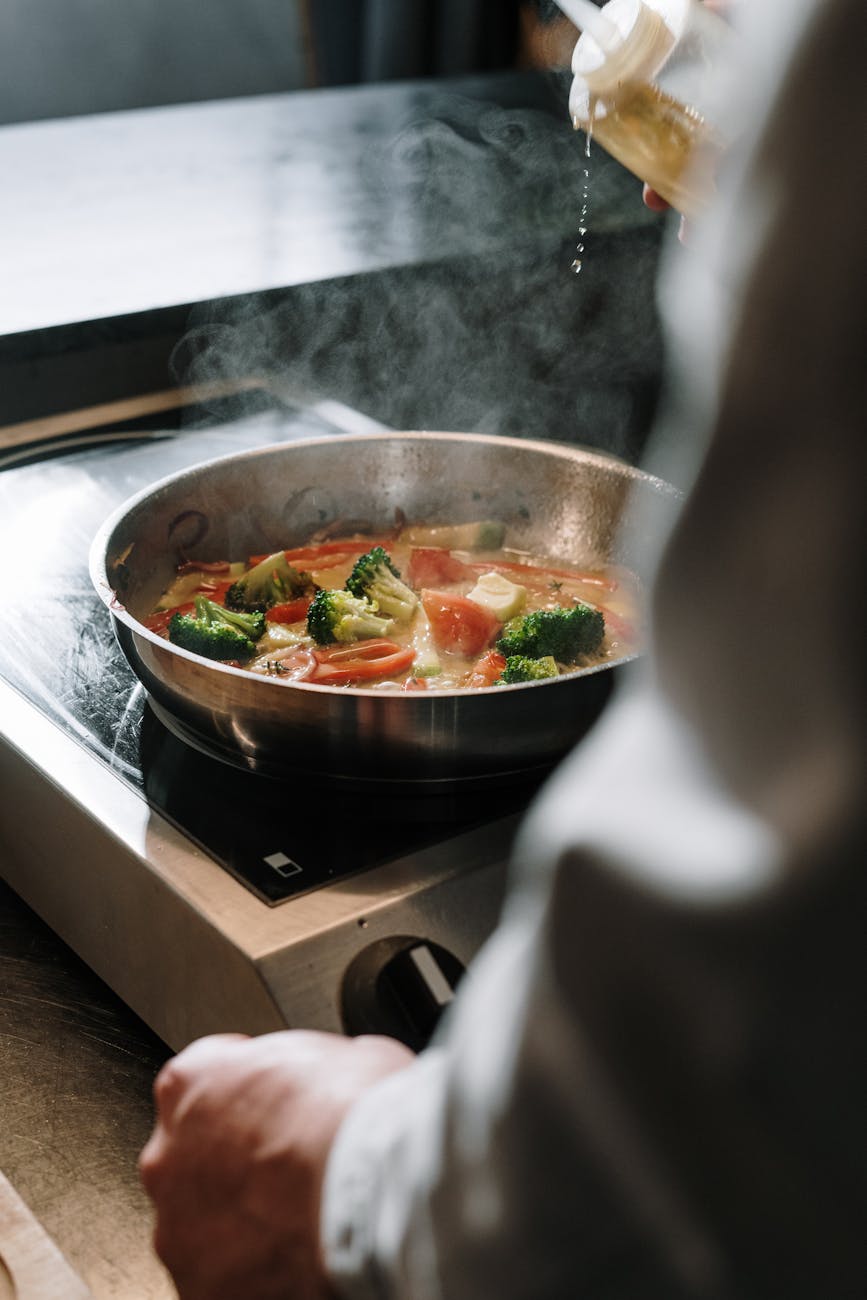
Steam cooking myths Matt Stone wishes home cooks would drop
Steam cooking myths persist because home cooks still confuse moisture with blandness. Matt Stone argues steam is about control, flavour and nerve.
Steam, at home, has dreadful public relations. It fogs the glass, rattles the lid, beads on the cupboard doors and makes a kitchen smell briefly of wet greens — enough, for plenty of us, to slot the whole method into a hospital tray rather than dinner. This reflex I get. For years, “steamed” sounded like code for pale.
Partly why Matt Stone’s conversation with Homes to Love landed so cleanly for me. Stone, a chef with the annoying calm of someone who has already made the mistake you are still defending, was not arguing for steam as virtue. He was arguing for it as technique. There is a difference, and it matters. One belongs to wellness copy. The other belongs to dinner.
Give the sceptic a fair hearing too. Home cooks have spent decades being sold miracle appliances, miracle pans, miracle settings. If steam is supposed to preserve flavour, texture and nutrients — show me. A peer-reviewed review of cooking methods and vitamin retention answers at least part of that complaint: depending on the vegetable, vitamin C retention ranged from nothing useful to more than 90 per cent, but boiling routinely came off worst. Steam is not magic. It is simply gentler than the punishment we are used to calling normal.
The bad reputation started early
Steamed food’s trouble is that many of us met it in its bleakest form. School canteens. Buffet bain-maries. Fillets cooked so cautiously they seemed to have apologised before reaching the plate. No butter. No acid. No salt to speak of. It was steam stripped of context, which is another way of saying it was steam stripped of pleasure.
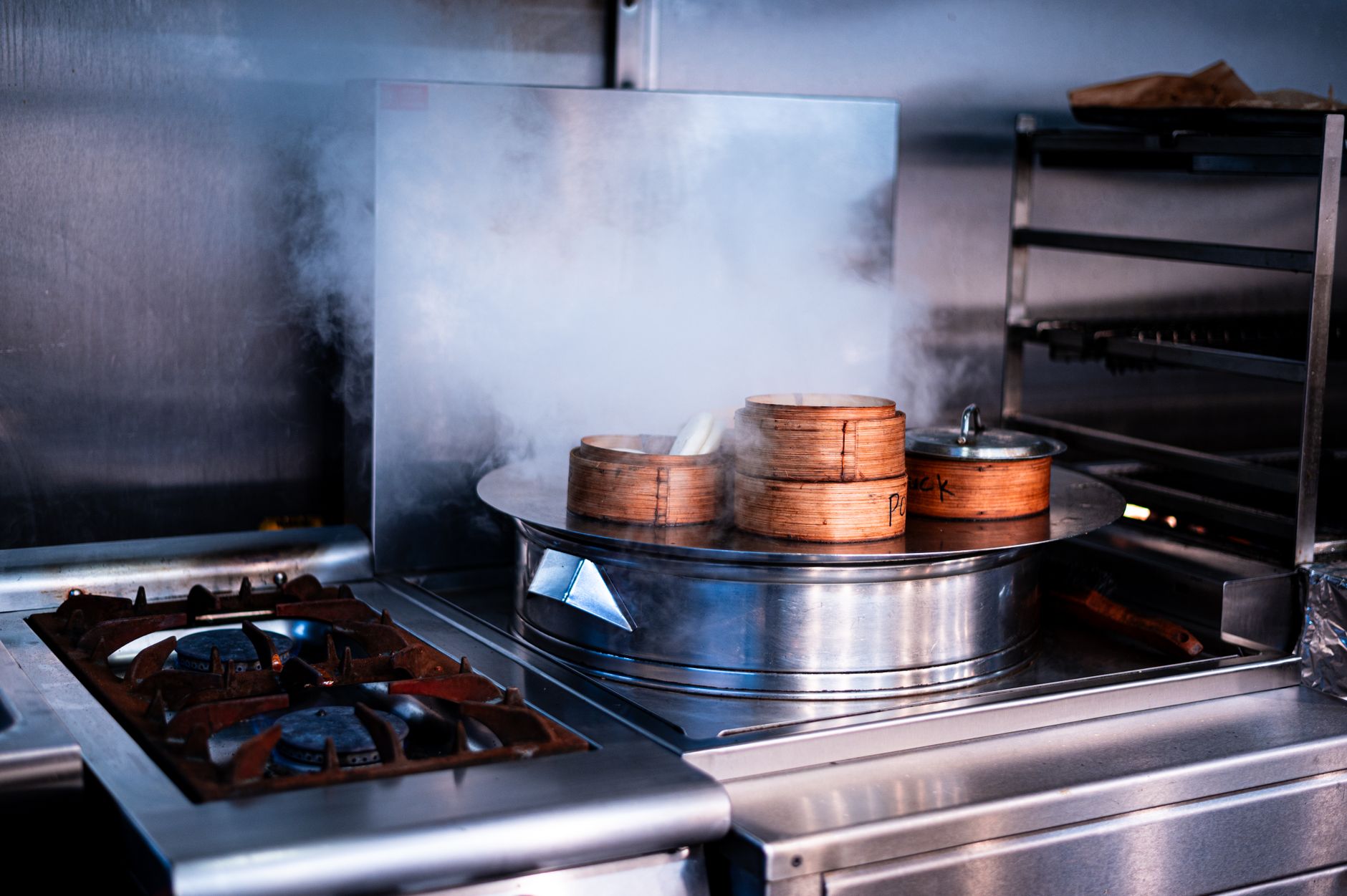
Stone’s complaint, in the Homes to Love piece, is not really with the method so much as the story we’ve attached to it.
“People hear the word steam and immediately picture bland vegetables or soft food, but that really couldn’t be further from the truth.”
— Matt Stone, Homes to Love
What lands about that line is that it recognises the home-cook perspective before correcting it. Someone standing at the stove after work, wondering whether steam will flatten dinner into duty, is not stupid. They are remembering bad evidence. Steamed beans from the wrong decade. Fish treated as if heat itself were indecent. Once a method becomes associated with denial, every bead of condensation feels moralistic.
I suspect that is why food people sometimes over-explain steam. They talk about its benefits in the same thin, managerial language that made ordinary cooks distrust it in the first place. Better to admit the emotional truth: steamed food can be miserable. Of course it can. So can roast chicken. So can pasta. The question is not whether steam is virtuous. It is whether it can be delicious when someone confident is holding the tongs.
A kitchen is not a detox retreat
Professional kitchens rarely carry the home cook’s shame around steam. They use it because it offers control. Not romance — at least not at first. Control over moisture loss. Control over puff pastry. Control over the moment a fillet firms but does not tighten. Much less glamorous than the marketing brochures suggest, and much more persuasive.

In BTTR’s report on Electrolux launching 10 steam-oven models in Australia, the appliance story is easy enough to spot, but what caught my eye was the way Stone kept dragging the conversation back to texture. Moisture, he suggests, is not the opposite of flavour. It is often the thing protecting flavour from your own impatience.
“Steam is actually one of the best ways to enhance flavour because it helps ingredients retain moisture and keep their natural characteristics instead of drying them out.”
— Matt Stone, Homes to Love
Here is the insider perspective in one neat sentence. Steam is a working tool, not a wellness gimmick. You can feel the line pushing against years of home-economics piety. Stone is not asking cooks to become purer versions of themselves. He is asking them to stop confusing aggression with skill.
A similar note runs through Epicurious’s account of a steam oven changing the way one writer bakes. What attracts there is not saintliness. It is lift, gloss, tenderness, a better loaf, a reheated leftover that does not taste like administrative failure. Put another way: the pleasures are ordinary and concrete. Steam earns its keep when it rescues dinner from dryness, not when it promises a new life.
Moisture is not the villain
Even the food-science reader — the sceptical one in the room — will want a cleaner distinction between chef talk and proof. Fair enough. Kitchens are full of folklore. Some of it is lovely. Some of it deserves to be retired. If the claim is that steam can protect texture and preserve more nutrients than harsher methods, the best answer is not reverence. It is method.

The PubMed Central review of vegetable cooking methods is useful precisely because it is not trying to sell anyone an oven. Its findings are nuanced. Retention varies by vegetable and vitamin. Some foods take a bigger hit than others. But when cooks boil the life out of produce, water-soluble vitamins have somewhere obvious to go. Steam, by comparison, tends to keep more of the argument inside the ingredient. None of this means every steamed carrot becomes a nutritional icon. It means the old cliché — that steam necessarily drains food of life — is backwards.
Texture tells the same story more quickly. If you have ever watched greens turn from taut to defeated in a pot of water, you already know this in your hands. Steam gives you a narrower margin between raw and ruined. Exposing, at home, because you are left with the ingredient’s actual character. No heavy browning to hide behind. No oil-slick swagger. Just the fish, or the dumpling, or the bundle of broccolini, tasting more like itself. Some cooks find that honesty thrilling. Others find it unnerving. I am not sure either reaction is wrong.
What steam does especially well is reveal how often we mistake dehydration for flavour. Browning is wonderful — obviously. I would be a grim lunch companion if I argued otherwise. But browning is not the only route to seriousness. The Epicurious piece makes this point beautifully with baking: steam helps dough rise before the crust sets, which is less sexy than saying it transforms bread, but closer to the truth. You get structure with softness still inside it. Dinner can use the same lesson.
The machine is beside the point
Home cooks tend to stall at the hardware question. Steam sounds expensive. It sounds like the province of a handsome oven in someone else’s renovation, not a weeknight pot with a lid that no longer sits perfectly straight. Anxiety about the price tag is real, and the appliance market knows it. Electrolux’s Australian launch of its new steam-oven range makes the premium version of the case: sleek design, specialised settings, precision sold at showroom prices.

And yet the most convincing thing Stone says in that orbit is also the least grand.
“Steam gives you precision without pressure.”
— Matt Stone, BTTR
That line answers the home cook’s real question better than any product sheet. Not do I need the big machine, but what kind of confidence does this method ask of me? Less money than attention. A bamboo basket over a saucepan can teach the same lesson as a combi oven — slightly less elegantly, sure. Fish stays supple. Dumplings do not toughen. Greens keep their snap if you pull them soon enough and finish them like you mean it, with oil, citrus, chilli, browned butter, whatever suits the plate. Steam is not the end of cooking. It is the quiet middle.
I keep returning to this because steam’s reputation has been warped by two opposite tribes. One treats it as punishment. The other treats it as a salvation technology. Both miss the point. The best cooks — and Stone is plainly one of them — seem to use steam the way a good bartender uses dilution: with respect for what a small amount of gentleness can do. Not everything wants fire first. Not everything needs a crust to feel finished. Sometimes dinner asks for a steadier hand.
Maybe that is the myth worth dropping. Not that steamed food can never be bland — it can. Not that a steam oven will suddenly make a confident cook out of anyone — it will not. The deeper misconception is that gentleness is somehow lesser, a compromise setting, the culinary version of lowering your voice because you have run out of conviction. In good kitchens, the opposite is usually true. Restraint is what people reach for once they know exactly how much force they no longer need.
By the time you understand that, the kitchen has usually changed smell. Sharpness goes first. Then the room sweetens. Greens smell greener. Fish smells cleaner. A lid lifts and a rush of heat hits your wrist. Nothing theatrical. Just dinner, intact.

The Lifestyle Desires brief
Style, food, travel and wellbeing — weekly in your inbox.
Subscribe