The best room at fashion week was full of old clothes
Australian Fashion Week vintage market showed that resale, archival labels and personality now pull as much heat as the runway in Sydney.
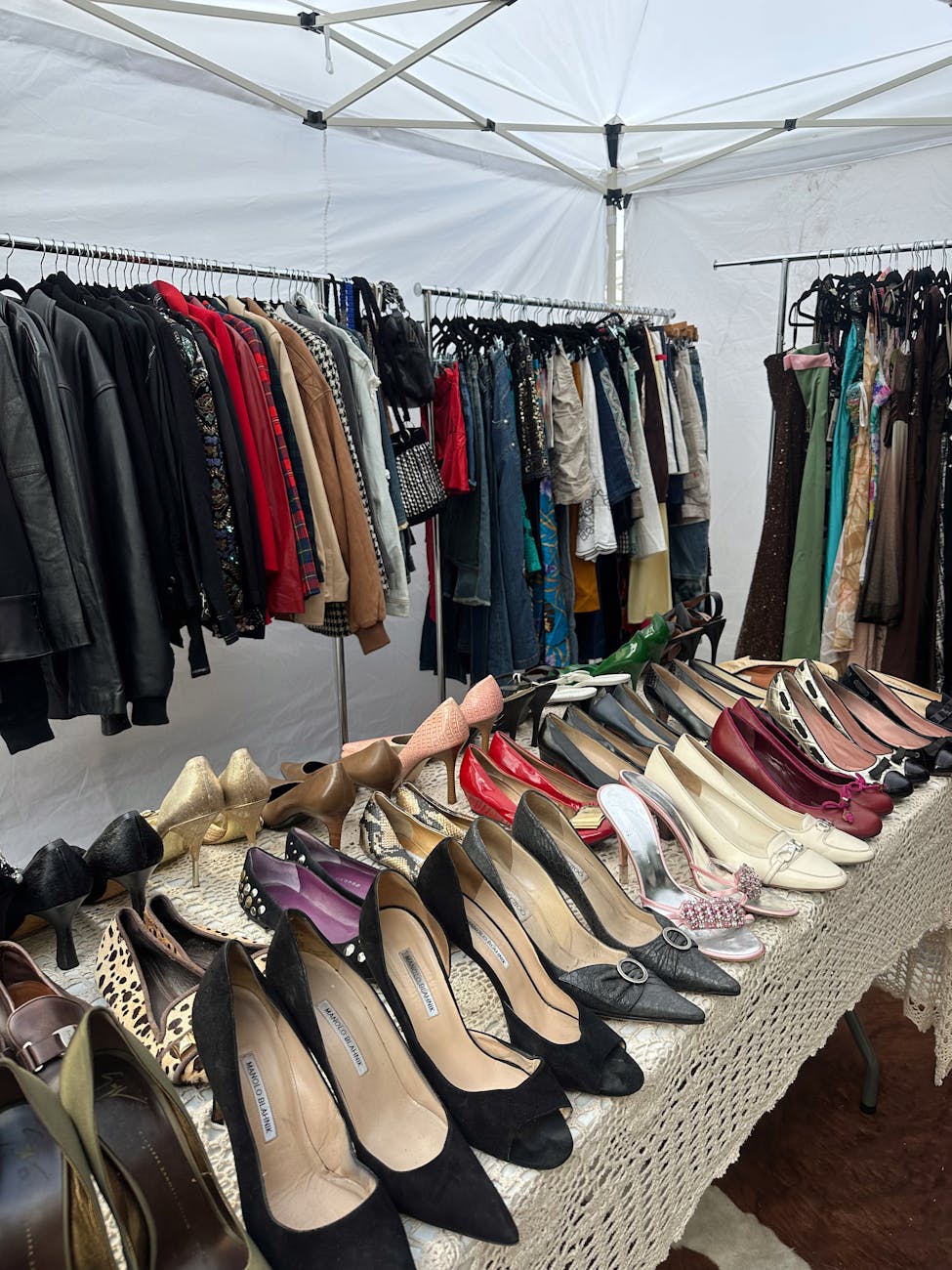
The room I kept drifting back to at Australian Fashion Week didn’t have the loudest soundtrack or the sharpest lights. It had people bent over rails, shoulders brushing, fingers doing that quick little flick through silk, gabardine and old denim — the one you only clock when shoppers suspect the next hanger might change their day. Tucked inside the Overseas Passenger Terminal, the inaugural Vogue Vintage Market felt less like a side activation than a confession. This might be what fashion week looks like when the crowd wants to buy the ideas instead of only photographing them.
That part has stayed with me. Runways still do what runways do — set mood, organise desire, remind the industry how it wants to be seen. Except the one-day market, folded into the Australian Fashion Week programme and echoing through Vogue’s own eBay edit, suggested something messier. More honest. Nobody was only chasing newness. They were chasing proof of taste, a story stitched to a sleeve, a price that didn’t demand a small delusion.
By day three, that stopped feeling like a cute retail detour and became a counterpoint to the runway itself. The insider reading’s straightforward. If fashion week shows where style is moving, a resale floor inside the official programme says vintage is no longer the afterthought. The sceptic reading? Less romantic. Has resale gone central because shoppers care about waste, or because cost-of-living nerves have made second-hand the most socially elegant way to want less and still dress well? I suspect both. Which is probably why the room hummed the way it did.
Jess Cartner-Morley wrote in The Guardian that the best place to look for fashion’s future isn’t the catwalk — it’s the vintage store and the car boot sale. Her line landed after the Sydney market opened, but it captures the mood almost too neatly.
“If you want to know where fashion is going next, the best place to look is not the catwalk but vintage stores and car boot sales.”
— Jess Cartner-Morley, The Guardian
The queue told on us
What struck me first was how fast resale stopped looking like a worthy add-on and started looking like the main attraction. In the abstract, a room full of pre-loved clothes can still read like homework: buy better, waste less, be sensible. That wasn’t the vibe here. The vibe was appetite.
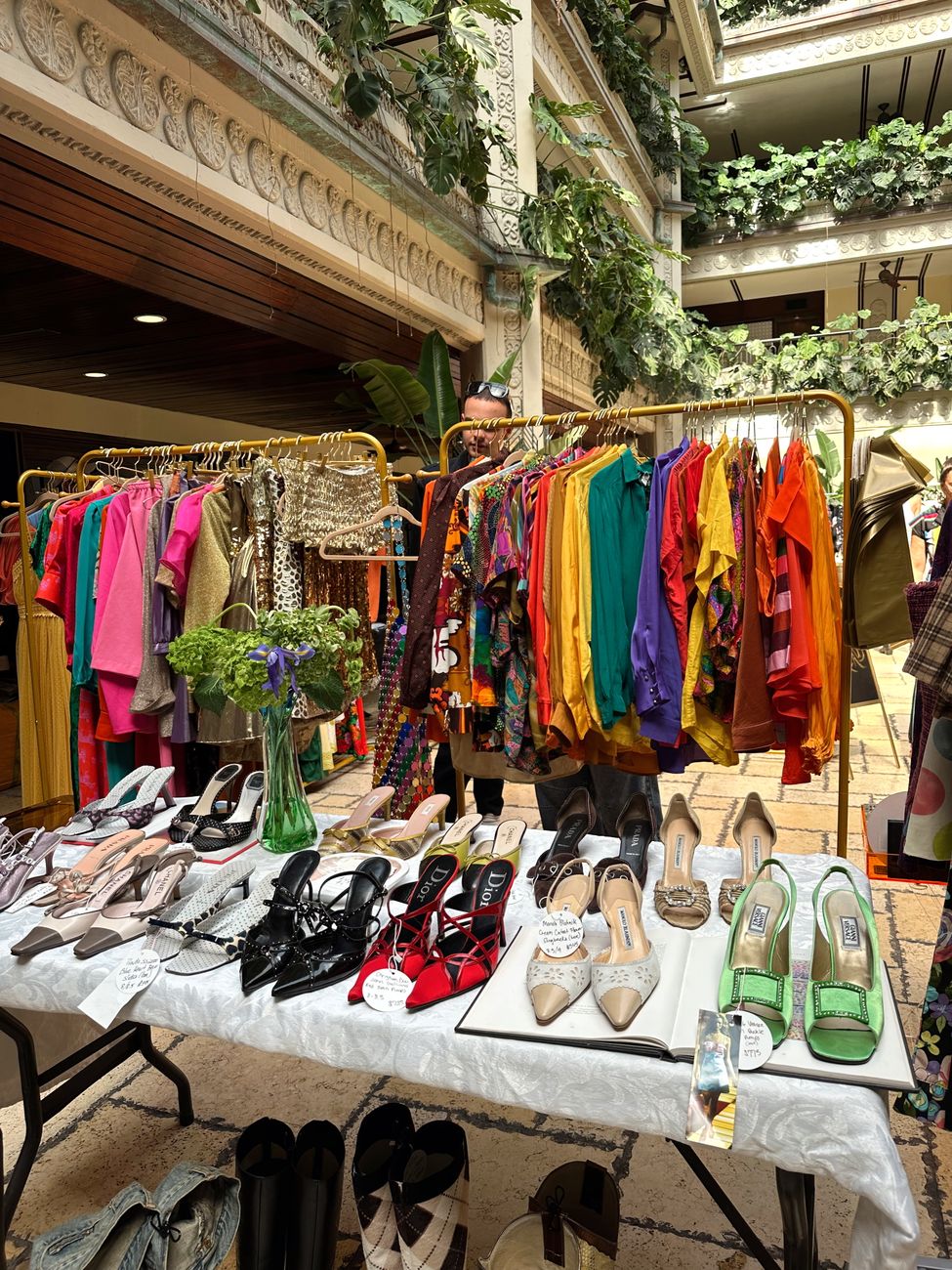
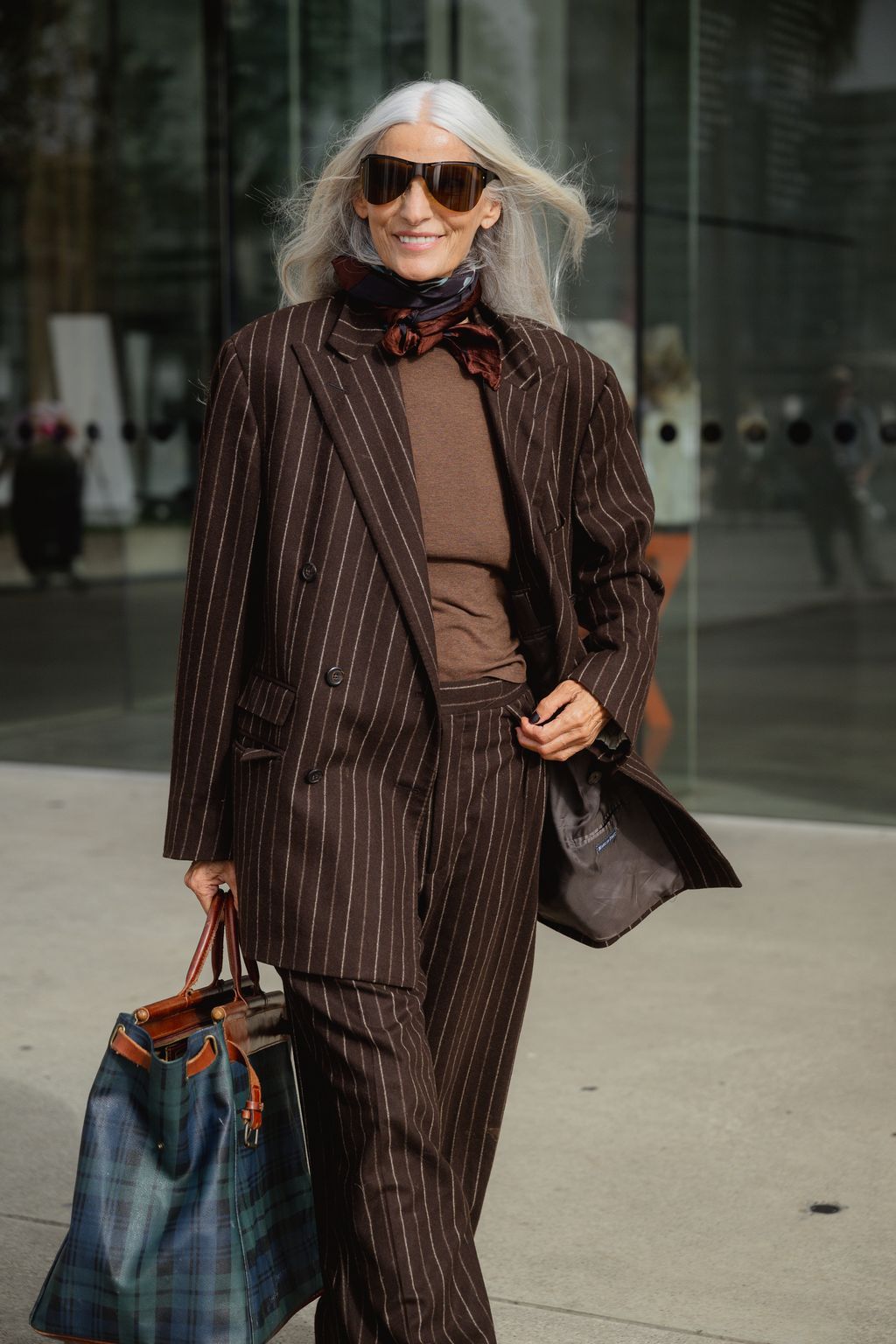
Scroll through the week’s street style pictures in the Guardian and Refinery29’s Sydney roundup and the clothes that linger are often the ones with a slight wrongness to them. An older cut. A handbag with a life before this one. Something not quite in step with whatever the algorithm is trying to sell this month. That’s why a resale floor made sense inside fashion week — it mirrored the street. Gave the audience a chance to shop the instinct they’d already arrived dressed in.
People don’t go hunting through rails like this for virtue alone, I don’t think. They go for authorship. A new luxury piece arrives already over-explained; a good older one still leaves some work for the wearer. Even the items Vogue spotlighted on its market edit carried that feeling — a Burberry Kensington Coat isn’t exciting because it’s fresh off a factory line. It’s exciting because it has survived weather, fashion and somebody else’s wardrobe, and still looks like it knows what it’s doing.
Seems to me that’s the question the crowd answered by simply turning up. Why put a resale room inside Australian Fashion Week instead of running it as a neat standalone shopping event a month later? Setting matters. Inside the week, vintage stops looking peripheral. It becomes part of the argument about what counts as style right now.
McCann put it plainly in comments carried by B&T:
“Set within Australian Fashion Week, it’s a moment to celebrate creativity, conscious consumption and the enduring value of great design.”
— Edwina McCann, Vogue Australia
Old clothes, new status
The user side of this isn’t hard to read, even if fashion people like to pretend it’s more mysterious than that. Vintage at fashion week signals taste because it also signals labour. You had to know what you were looking at. You had to find it. You had to choose something with a past life and make it look precise in the present.

That helps explain why resale now feels native to the street-style crowd rather than adjacent to it. Scarcity carries status, obviously. But discernment does too — and the same week photographers were documenting homemade pieces, older garments and odd little personal flourishes on Sydney streets, the market handed people a way to turn that look from performance into transaction. Not everybody can buy straight from a runway. Plenty of people don’t want to. A second-hand room inside the official week offers a different kind of access, one that feels less obedient.
Nostalgia’s the wrong reading, I think. Nostalgia is soft-edged. What I saw in the framing around the market was sharper — a wager that personality has become more persuasive than polish. Fashion week used to ask attendees to look up, toward the runway, the campaign, the brand myth. Resale asks them to look sideways, at each other, and then back into the rack.
That sideways glance matters in Australia, where fashion week has always kept one eye on local industry reality. Sure, the runways sell aspiration. But they also sit inside a smaller market, a smaller media world and a tighter consumer calculation than Paris or Milan. A resale room acknowledges that local truth without making it feel grim. It says you can care about clothes and still care what they cost. You can want an item because it’s beautiful and because somebody else already took the full-price hit.
The sustainability story gets less neat
Of course, the minute resale becomes fashionable inside a glossy week, the sustainability language arrives with it. Some of that’s fair. Fashion throws off waste, overproduction is real, extending the life of clothes matters. But resisting the tidy version of this story feels important — the one where everybody’s suddenly buying pre-loved from pure environmental conviction.
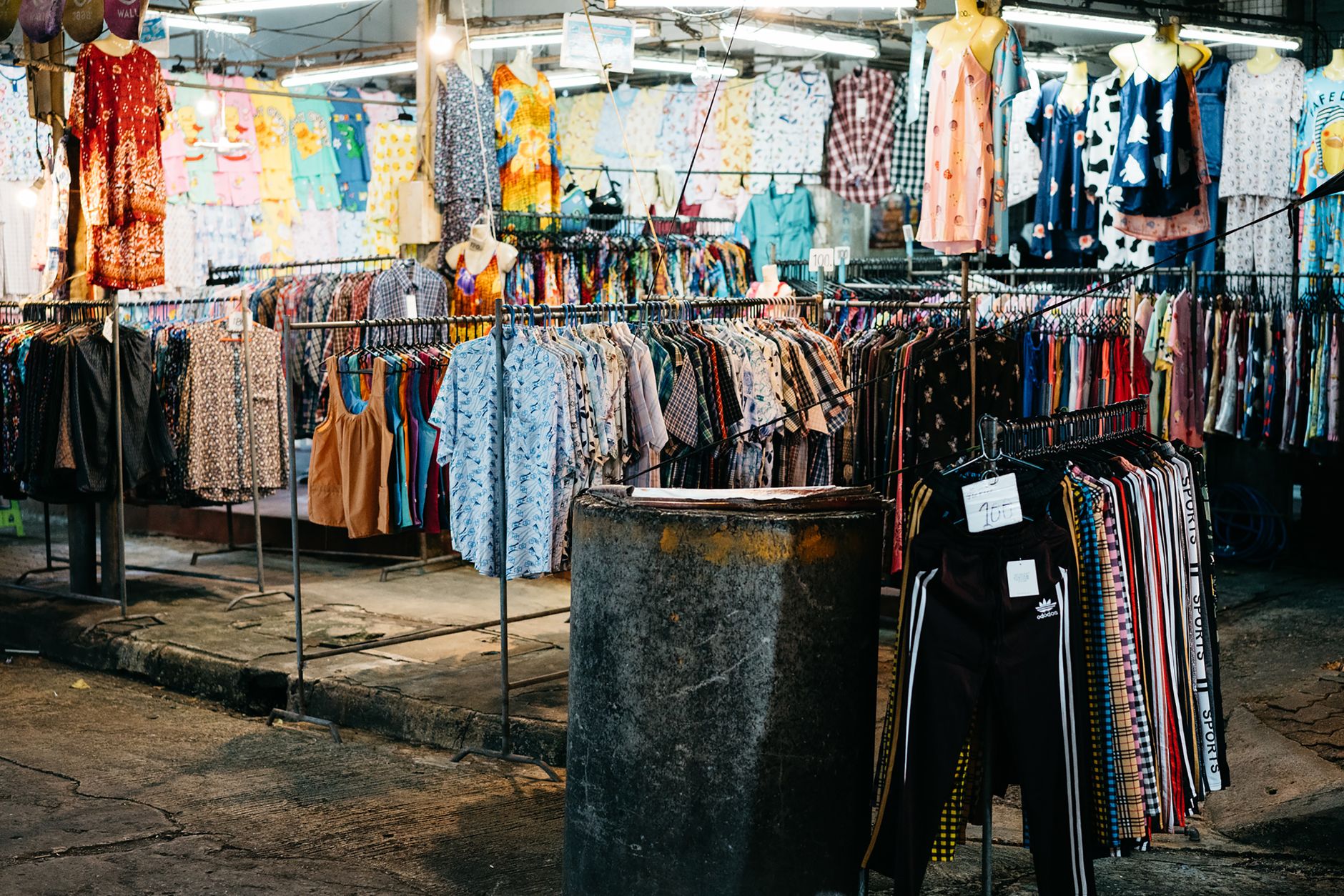
An eBay-commissioned study reported by B&T found that 70 per cent of Australians surveyed already owned a pre-loved fashion item, 87 per cent said they were likely to buy the same amount or more, and 40 per cent said they try to buy most of their clothes second-hand. Big enough numbers to get any platform or publisher interested. They don’t settle the motive, though. They only tell us the behaviour is broad.
Abbott, eBay Australia’s head of marketing and communications, made the scale case in the same B&T coverage:
“It’s exciting to see the growing appetite for pre-loved style, and the role eBay can play in making it more accessible at scale.”
— Zannie Abbott, eBay Australia
Scale. That word is where the analyst and the sceptic start to split. An analysis from CNBC this week argued that fashion companies are still leaning hard on circularity even while value-seeking shoppers respond more readily to price than to ethics. Clare Press, writing in the Guardian, went further: sustainable fashion has repeatedly promised a moral reset and then shrunk into marketing.
I don’t read the Sydney market as proof those critics are wrong. If anything, it works because it’s less sanctimonious than older sustainability pitches. Resale now sells on three clocks at once: the climate argument, which remains real; the cost argument, which is impossible to ignore; and the style argument — maybe the strongest of the lot — because it lets shoppers feel clever rather than corrected. That’s a far more durable proposition than guilt.
Fashion week used to end at the runway
What Vogue and eBay seem to understand is that fashion week no longer belongs only to the people with a seat assignment. It belongs to the people outside the show: the ones building outfits for the footpath, scrolling the galleries on the train home, learning to read a room before they read a trend report. Putting a one-day resale market into the week on 15 May was a way of admitting that commerce and community are now part of the spectacle, not beneath it.
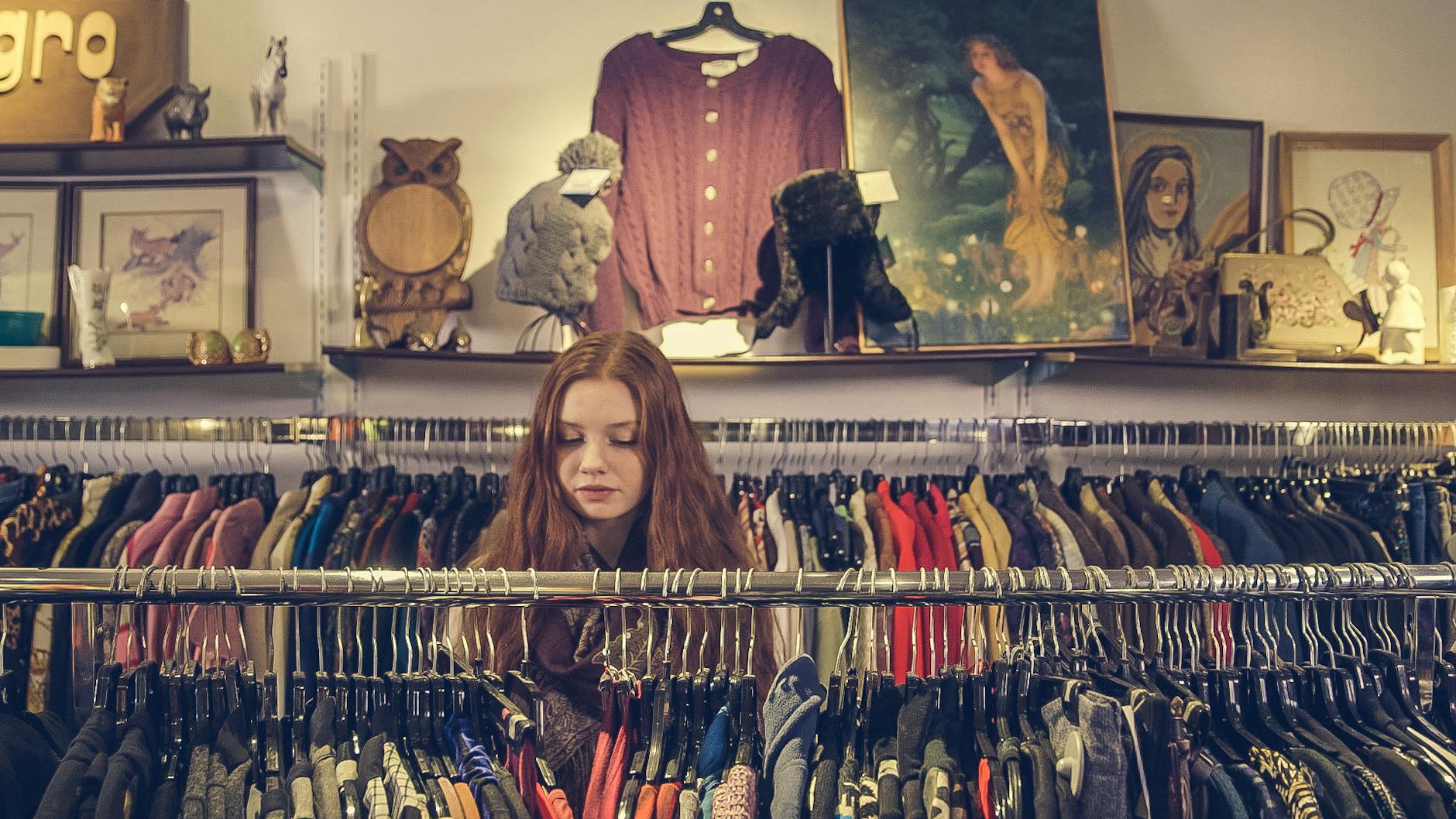
It also fits a broader shift in fashion culture. This week, Vogue reported on a vintage rental platform built around access over ownership. At another event, Vogue covered Fendi’s renewed attention to preserving vintage Baguettes. Different businesses, sure — I don’t want to pretend they’re identical — but they point in the same direction. Preservation. Rental. Resale. Restoration. The older garment is no longer the after-market story. In plenty of rooms, it is the story.
That may be the sharpest thing about the Vogue Vintage Market. It didn’t ask shoppers to leave fashion fantasy behind. It just shifted where the fantasy lives. Instead of the clean thrill of the untouched new item, it offered the denser thrill of the found thing: the coat with a former life, the dress that already knows how to move through a crowd. In a week built on debut, that felt oddly current.
Maybe that’s why the market seemed to hold more emotional charge than some runways did. A runway tells you what a brand wants from the season. A resale floor tells you what people want from fashion when they’re left to their own devices. Looking around that room, I kept thinking the appetite wasn’t for perfection. It was for clothes that had already been chosen once and were ready to be chosen again.

The Lifestyle Desires brief
Style, food, travel and wellbeing — weekly in your inbox.
Subscribe