What Sydney Fashion Week looks like in a coat
At Sydney Fashion Week, the best street style is layered, weather-wise and repeated, revealing how Australians actually dress when the cameras are on.
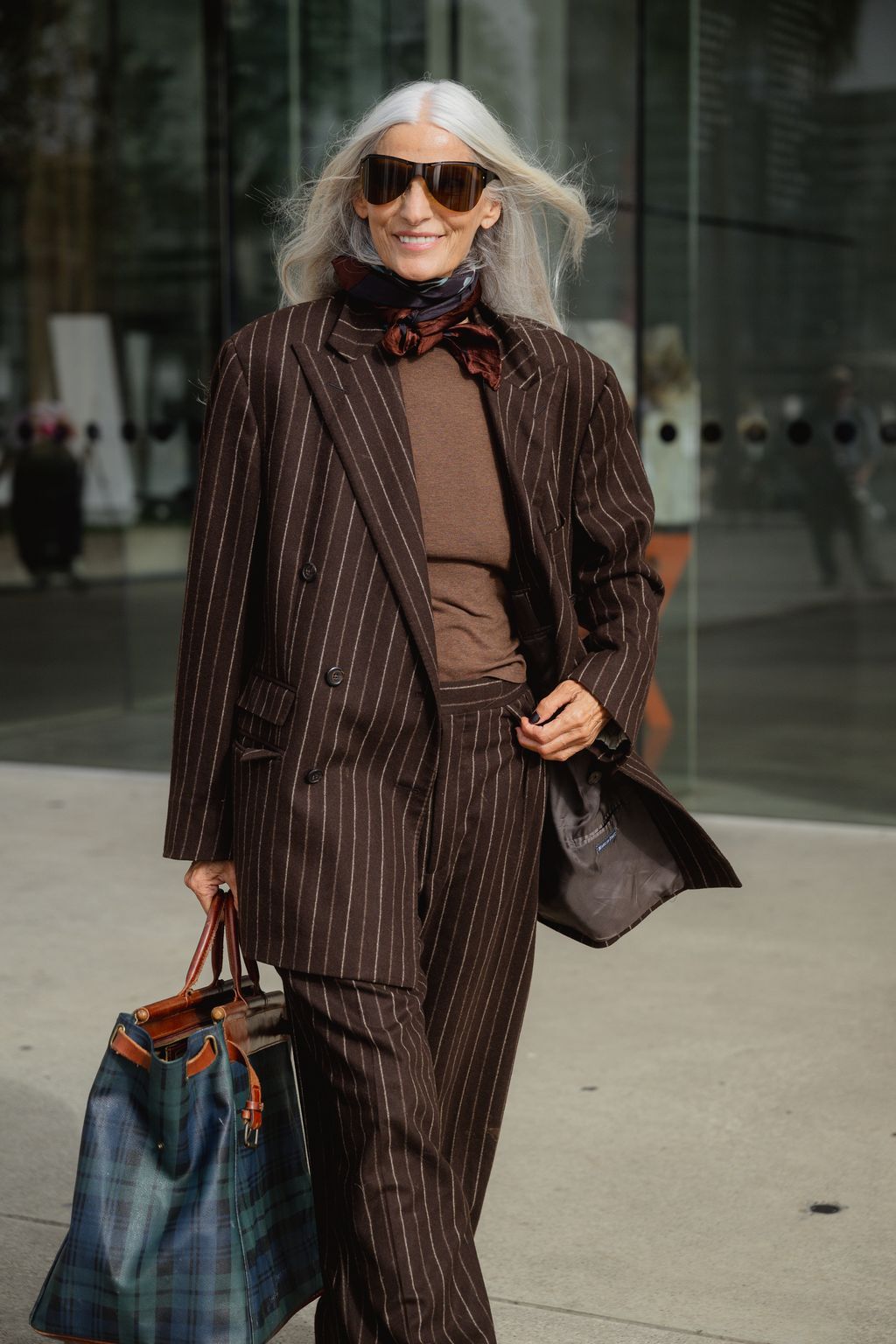
What I keep noticing, looking through Vogue’s 2026 Sydney street-style gallery, is how little anyone seems interested in pretending Sydney is Paris. The light is flatter, the air sharper. The harbour wind couldn’t care less what the fashion calendar would prefer. People arrive in coats shrugged over airy pieces, knits doing quiet rescue work underneath. Even before you get to the official clothes, there is a mood. It says Australian style — at least the version that turns up on the pavement when the cameras are on — would still like to be practical. That might sound obvious. Fashion week street style is meant to be a performance. Of course it is. Photographers at the kerb, publicists a few steps away, an entire cottage industry built on the small alchemy of being seen. But Sydney’s version has always been more revealing when it slips, just slightly, out of costume. What the week shows outside the venues is not only what people want photographed. It is what they reach for when the temperature drops, the day runs long and the body still has to get across town.
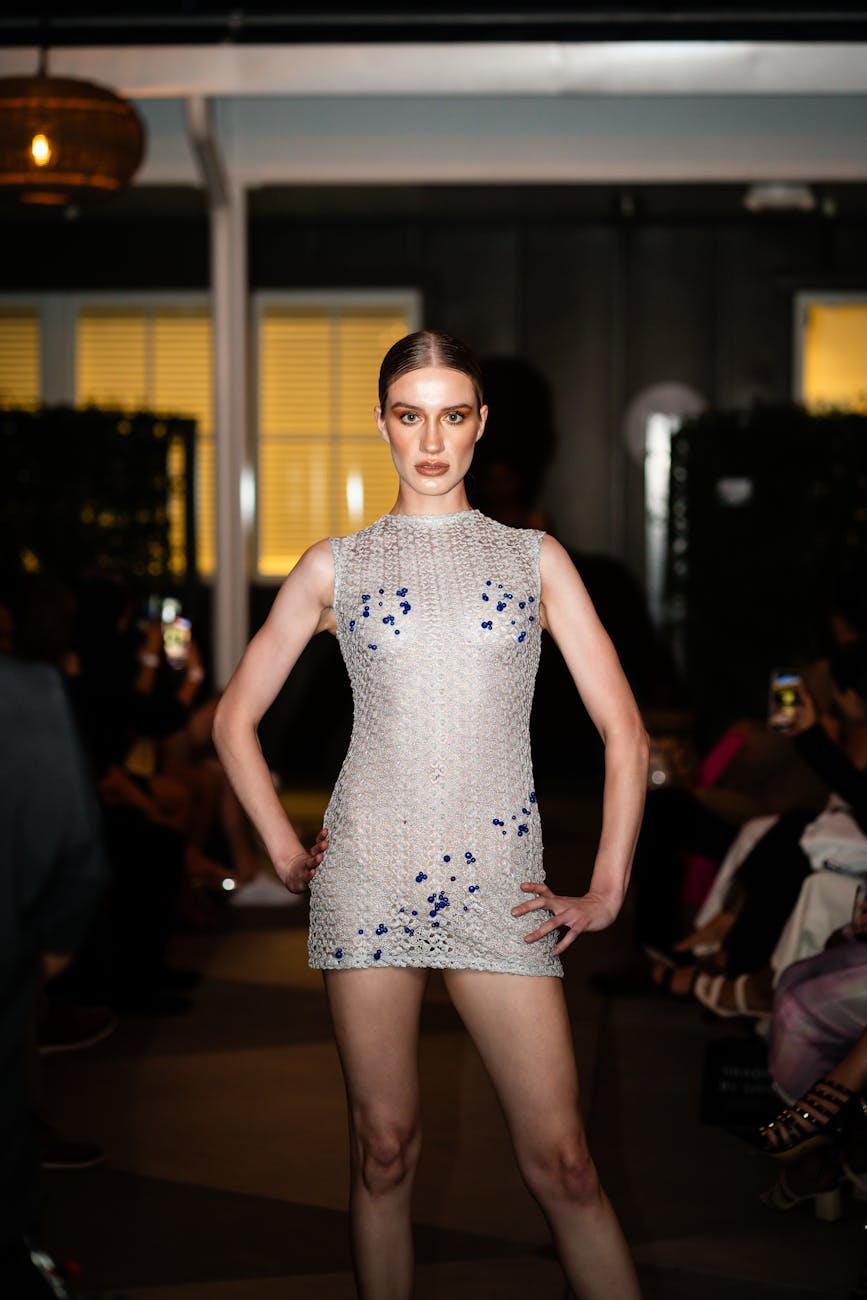
This year that tension read especially clearly. ELLE Australia’s rundown of the best looks noted two bits of useful context: Australian Fashion Week has moved after 13 years at Carriageworks, and the 2026 schedule spans 30 designers. Those facts don’t sound poetic, but they matter. Carriageworks had its own industrial cocooning effect. The MCA precinct gives you harbour exposure, more passers-by, more actual Sydney in the frame. The clothes seem to answer back. You can almost see the extra layer being negotiated in real time.
And that matters because Sydney has never been a city that gives itself over entirely to fashion fantasy. Too windy when it wants to be windy. Too full of stairs and kerbs and last-minute plans, too committed to ordinary movement. Even at fashion week, people still need lunch, a charger, a way home.
I don’t say that to diminish the theatre. I say it because the practical interruption is often the making of the outfit.
Vogue’s gallery, shot by Rachel Yabsley, stretches to 61 images, and the through-line isn’t peacocking so much as calibration. Architectural shapes, yes. The occasional hard little fashion joke, yes. But what stays with me is the Australian instinct to build an outfit the way you build a good travel bag: piece by piece, with room for weather and mood. A crisp coat changes the meaning of a lighter dress. A trouser that might look severe indoors becomes generous on the street.
Nothing seems sealed shut.
That looseness is part of why Sydney street style can read more honestly than the runway reporting that surrounds it. On a catwalk the logic has been decided for you. On a footpath — crowded with editors, buyers, students and the odd person who’s simply wandered in from the city — the logic is more makeshift. I trust makeshift a little more. It’s where taste stops being doctrine and starts being habit.
The Sydney Morning Herald once asked photographer Su Shan Leong why she keeps turning up to shoot the pavements, and she put it plainly: “I love Australian Fashion Week street style.” What she was really getting at, I think, is its unevenness — the good sort. Sydney rarely produces the terrifyingly polished uniform you get at the bigger European weeks, where every coat appears pre-approved by some invisible committee. Here, the best looks still have seams showing. A sensible shoe intrudes. A layer sits a bit off. Someone has clearly dressed for the train before they dressed for the lens.
Better that way.
There’s also a recurring refusal, blessedly, to treat fashion week as a one-night masquerade. In 9Style’s account of attending Australian Fashion Week last year, Joely Malcom said, “I want people to bring back rewearing their clothes.” That line has stayed with me because it pushes against the oldest fantasy attached to fashion events — that the point is novelty at any cost. Sydney’s street style in 2026 seems more comfortable with repetition than that. Rewearing isn’t an embarrassment. It’s proof you know what actually works on your body, in your city, in May. You can feel the same attitude in Fashion Journal’s take on lessons from the AFW streets, where Daisy Henry observed, “There really is no rulebook.” There usually isn’t, despite the annual effort to pretend otherwise. The local genius — if that isn’t too grand a word — lies in refusing to settle on one silhouette and call it the season. A soft skirt under serious outerwear. Vintage with something technical. Bare legs made defensible by a coat that means business. Australians are good at partial commitment in dress, and I mean that as a compliment. We seldom go all the way into costume without leaving ourselves a route back out.
The pre-loved note in this year’s coverage feels important too. Not in the dutiful sustainability-copy way, with everyone solemnly announcing values, but in the looser sense that clothes seem to carry a previous life into the picture. An old leather jacket next to a sharper new heel. A knit that reads lived-in beside something obviously from a showroom rail. The mix takes the starch out of fashion-week dressing. It says the wearer had a wardrobe before the invite arrived.
That is why the layering matters beyond mere weather. Yes, Sydney in May asks more of you than the marketing copy for resort collections would like to admit. But the extra knit, the second shirt, the coat carried till late afternoon — all of it suggests a distinctly local relationship to polish. We like our glamour with an exit strategy. We want the look, certainly, but we also want to sit down, hail a cab, queue for a coffee, survive the breeze off the water.
The street delivers those tiny negotiations in a way the runway never can.
From overseas, Australian fashion still gets flattened into easy stereotypes. Beach minimalism, perhaps. Sunlit linen. Or else a polished cosmopolitanism that behaves as if weather were somebody else’s problem. Street style corrects both myths. The Sydney version is cleverer than that and more mixed-up, happy to put severity next to softness, sentiment next to restraint, thrift next to something expensive enough to make you wince.
I’m less convinced by the old complaint that fashion-week street style is fake because it’s photographed. Of course it’s photographed. That’s the game. Still, being watched doesn’t automatically cancel sincerity. If anything, Sydney tends to make performance look slightly self-conscious, which can be useful. The city has a way of flattening grand gestures. Even news.com.au’s scene-setting notes from the week land on atmosphere as much as spectacle. There’s theatre, obviously, but not enough of it to hide what people actually rely on: tailoring, outerwear, old favourites, a willingness to interrupt one mood with another.
I suspect that’s also why Sydney street style travels so well in photographs. Not because it’s louder, but because it’s harder to reduce. The Vogue gallery calls it a master class in layering, which feels right, though maybe “layering” is just the polite fashion word for compromise. Compromise between fantasy and climate. Between insider fluency and getting dressed at 7am. Between wanting to honour the shows and wanting, at some level, to look like yourself.
Those compromises are where personal style lives.
Anyone can wear a trend head to toe. It takes more nerve to stop halfway.
That, to me, is more interesting than perfection.
For a site like this one, which cares less about ranking the week’s best dressed and more about how style lands in ordinary life, that seems the real story. Sydney Fashion Week is useful not because it tells Australian women what to buy next, but because it keeps offering a live test of what sticks once the fantasy hits the pavement.
This year the answer appears to be layers, yes, but also memory. Clothes kept, clothes repeated, clothes pulled into new company because the temperature changed and the day demanded it.
There’s something reassuring in that. Australian fashion can sometimes sound, in its own publicity, as if it exists only in bright rooms, on clean bodies, with no one ever rushing for a train or getting cold in the late afternoon. Street style interrupts that fiction. It drags the outfit back into weather. It puts a sensible coat over the beautiful thing and asks whether the look survives.
In Sydney, more often than not, it does.
So when I think about this year’s week, I don’t immediately think about the runway first. I think about the footpath. The grey light. The harbour air. The small, clever acts of layering that let people stay themselves while still entering the frame. That may be the most Australian fashion instinct of all: not dressing down, exactly, and not dressing up beyond recognition either. Just building an outfit that can handle the day, then letting the camera find it where it stands.

The Lifestyle Desires brief
Style, food, travel and wellbeing — weekly in your inbox.
Subscribe