Forget the Met Gala: The designers making clothes you'll actually wear
The Met Gala is a content farm. The designers showing at Carriageworks this week have more to say — and they're saying it in fabrics you can machine-wash.
The first thing I noticed at the Esse Studios show wasn’t the clothes. It was the silence — or what passed for silence at a fashion week show, which is really just the low hum of air conditioning, the shuffle of photographers repositioning, the particular quiet of an audience that hasn’t been told what to feel yet. Carriageworks on a Wednesday afternoon, Eveleigh Street still hot outside, the industrial shed swallowing the light.
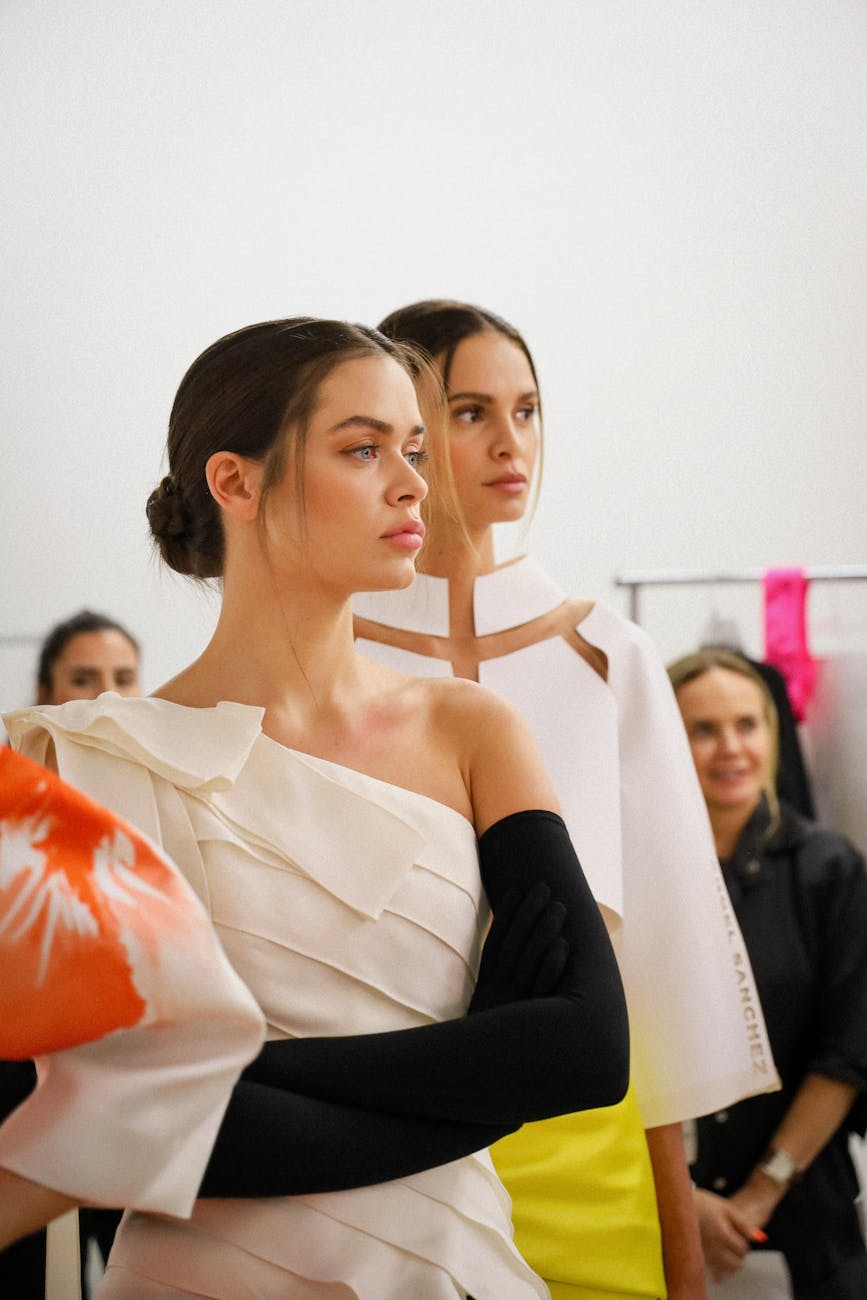
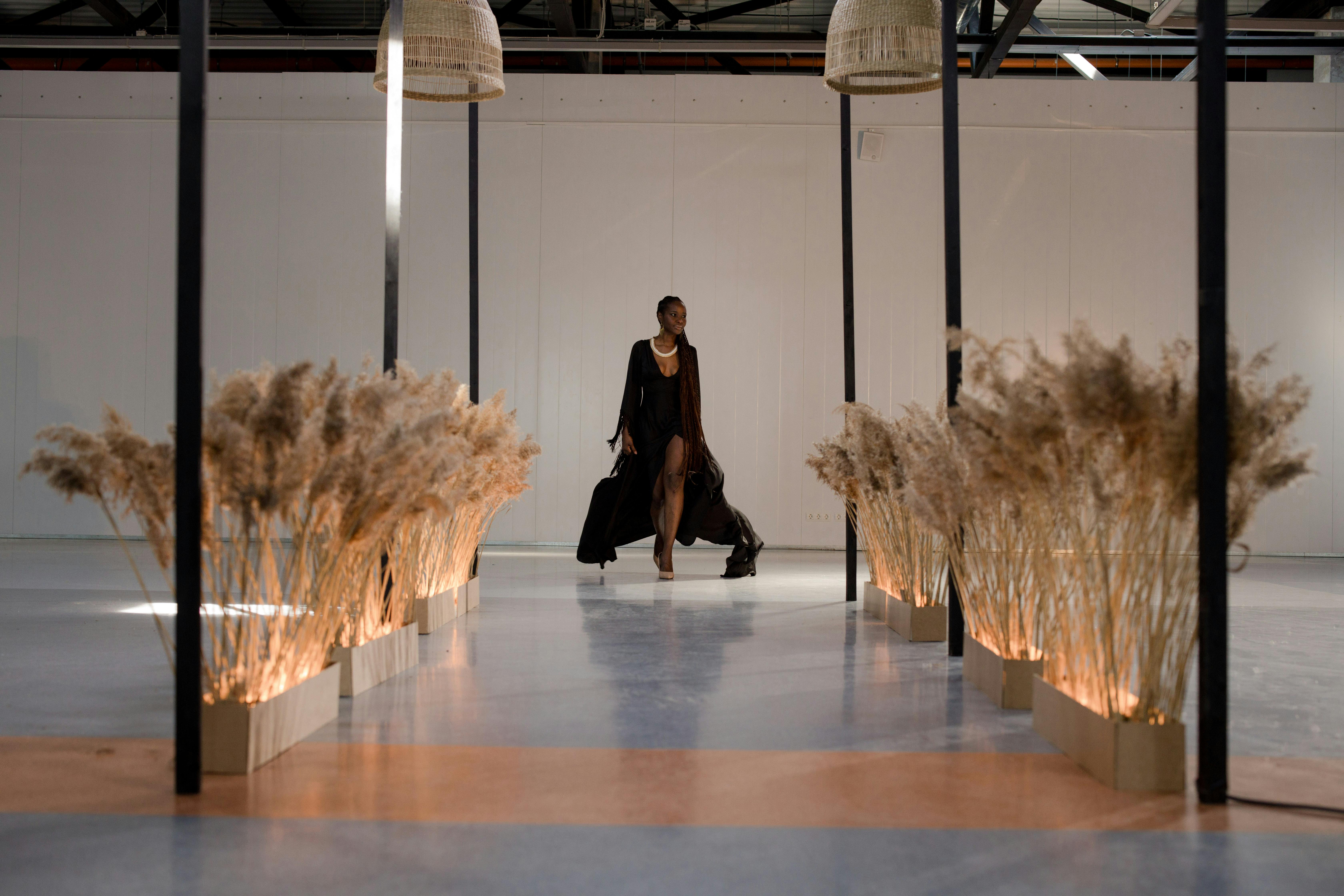
Charlotte Hicks sent out her Resort 27 collection on day three of Australian Fashion Week, in the 30th anniversary year of an event that has, at various points, struggled to justify its own existence. The models walked a clean white runway. The clothes were mostly black, cream, charcoal. A trench coat re-cut with rounded shoulders — the kind of silhouette that looks unremarkable in a photograph and transformative in person. A bias-cut slip dress that moved like water. Trousers with a single sharp pleat, the kind you’d wear to work and then keep on through dinner, not because you’d planned to, but because they were too comfortable to take off. A knitted tank in ivory merino that sat away from the body just enough to suggest ease without losing shape.
There were no crystal-encrusted bodysuits. No trains. No one dressed as a chandelier. If you’d spent the previous Monday scrolling through Met Gala coverage — the architectural headpieces, the naked dresses, the $50,000 tables, the collective agreement that more is always more — the contrast landed somewhere between refreshing and disorienting. It wasn’t that the Esse show felt modest. It felt intentional. The difference matters.
Hicks has been running Esse Studios since 2019, building the kind of label that accumulates followers through word of mouth rather than viral moments. Her customer, she told me after the show, is someone she thinks about constantly. “I’m always thinking of my woman, my customer. She’s holding the world on her shoulders. I want to give her a moment to transport herself. That’s what keeps me going.”
It’s the kind of thing designers say, except Hicks says it with the specificity of someone who has actually spent time watching how women move through their days — the bag drop at the door, the shoe kick-off, the way a jacket gets shrugged on and off a dozen times before lunch. Her clothes accommodate this. The Resort collection expanded on what she calls wardrobe essentials, but the word undersells it. These aren’t basics in the way the industry uses that term, which usually means a cotton T-shirt with a four-hundred-dollar price tag and a story about Japanese milling. These are garments that have been argued with, edited down, stripped of everything that doesn’t earn its place on the body. You can see the decisions in them. You can see the restraint.
“Nothing exists without purpose,” Hicks told GRAZIA. “At the centre of it all is the woman herself, not as a character, but as a presence. Everything is considered in relation to her, the way she moves, the way she holds herself and the space she occupies.”
I keep coming back to that word — presence. It’s the thing fashion often forgets when it’s chasing the other thing, the spectacle thing, the thing that photographs well from a distance but falls apart up close. A woman occupying space. Not performing. Not dressing for the gaze. Just being there, in clothes that work. You could build an entire critique of the last decade of fashion around the gap between those two ideas, and someone probably should.
Across the schedule the same day — Carriageworks is a single venue, and fashion week is less a geography problem than a stamina one — Nagnata showed its own Resort 27 collection. If Esse is about editing, Nagnata is about philosophy. The Byron Bay label, founded by sisters Laura May Gibbs and Hannah Gibbs, has spent years building a version of sustainability that feels less like a marketing position and more like a worldview you can trace through every seam.
The knitwear is produced using 3D knitting technology that shapes garments to the body with near-zero waste. The fibres are organic cotton and merino wool. The dyes are plant-based. None of this is new for the brand, but at a moment when “sustainable fashion” has become a phrase so overused it barely registers — the way “authentic” got used until it stopped meaning anything — there’s something bracing about watching a label that actually means it. Not because the claims are louder, but because they’re quieter. The fabric tells you before the press release does.
Nagnata’s customer, Hannah Gibbs says, is not shy about telling them what she wants. “Our customer is very vocal and lets us know what she wants. We even brought back our colour block bralettes — one of our first styles — because of demand.” She ran an Instagram poll. Ninety per cent of respondents wanted them back. So they came back.
There’s a quiet radicalism in this, and I don’t think I’m overstating it. A fashion label that treats customer feedback not as a sign of creative weakness but as useful information. A design process that loops the wearer in instead of delivering pronouncements from on high. It shouldn’t be unusual. It is. Most brands run focus groups and call it consumer research; Nagnata runs an Instagram poll and calls it making clothes people actually want.
The broader context matters here. Australian Fashion Week has changed hands — it’s now owned and operated by the Australian Fashion Council, a shift that came with promises of a more industry-focused, less celebrity-dependent event. The schedule this year featured more than 29 designers, from established names to first-timers, across five days at Carriageworks. The 30th anniversary framing could have been an exercise in nostalgia, a parade of greatest hits. Instead, it felt like a course correction. Less about proving something to New York and more about proving something to the people who actually buy the clothes.
The numbers are real: the Australian fashion sector contributes an estimated AU$28 billion annually to the economy. That’s not nothing. But the cultural return — the sense that Australian fashion has a point of view worth paying attention to — has always been harder to measure. For years, the conversation has been dominated by the question of whether Australian Fashion Week matters. Whether it can compete with the big four. Whether anyone outside the country is watching.
The Esse and Nagnata shows suggest a better question: what if fashion week stopped trying to compete and started trying to be useful?
I’m less convinced this is a clean, linear story — Australian fashion discovers wearability, hallelujah — than a moment of genuine tension. On one side, the Met Gala industrial complex, where clothes function primarily as content and the goal is to be the most-photographed person in a room full of people being photographed. On the other, a group of designers who seem to be asking: what if the point of a garment is the life it facilitates, not the photograph it generates?
Hicks told me something else, offhand, that I’ve been turning over. She designs for “the woman herself, not as a character.” It’s a distinction that doesn’t sound like much until you start noticing how much fashion — especially the kind that travels well on Instagram — treats women as characters. The bombshell. The ingenue. The boss. The muse. Archetypes you can slip into like a costume, and slip out of just as easily.
What Hicks and the Gibbs sisters are proposing is less theatrical and, I think, harder to pull off: clothes for a person who already knows who she is.
The runway coverage from ELLE Australia captured the breadth of the week — nearly three dozen shows, from the reliably sculptural to the occasionally baffling. But the shows that lingered weren’t the loudest. They were the ones where you could imagine yourself in the clothes. Not in a fantasy way. In a Tuesday way. The way you’d wear them to a meeting, then to pick up milk, then to a bar, and at no point would you be thinking about the clothes at all. That’s the test, really. When the garment disappears and what’s left is just you, getting on with your life.
That might sound like a small ambition. I’d argue it’s the only one that lasts. Trends cycle every six months. The Met Gala happens once a year and generates approximately seventy-two hours of discourse before everyone moves on. But a well-cut pair of trousers, a knit that moves with your body, a dress you reach for without thinking — these are the things that shape a life in increments, day after day, until one morning you realise you’ve been wearing the same label for three years and you can’t remember what you did before it.
Harper’s Bazaar Australia called the week a return to “disciplined ease.” It’s a good phrase, and it captures something real. Discipline — the editing, the refusal, the willingness to leave things out. And ease — not laziness, but the particular comfort of wearing something that was made by someone who actually thought about your body, your day, your life. The two qualities are in tension, and the best clothes live in that tension.
I keep thinking about that Instagram poll. Ninety per cent. The bralette came back. It’s such a small thing, a single product decision, but it’s also a model for how fashion could work if it stopped pretending it knew better than the people who wear it. A conversation instead of a monologue. Listening instead of dictating. The industry talks endlessly about community — building it, serving it, monetising it — but here was a label that just asked a question and acted on the answer.
The Met Gala will be fine. It doesn’t need me, or anyone, to defend it or attack it. It is what it is: a fundraising gala that doubles as a content farm, a very efficient machine for turning celebrity into spectacle into advertising revenue. But if you’re looking for clothes that might actually change how you feel in your own body — walking to work, sitting through a meeting, picking up the kids, standing at a bar waiting for a friend who’s running late — the designers showing at Carriageworks this week have more to say.
And they’re saying it in fabrics you can machine-wash.
Sydney-based fashion editor covering Australian designers, runway and the wider AU industry. Previously at Russh and Fashion Journal.
The Lifestyle Desires brief
Style, food, travel and wellbeing — weekly in your inbox.
Subscribe