When the roof becomes the fantasy
A penthouse carved from the sky above Elizabeth Bay is less interesting as a trophy sale than as a clue to the way Sydney now packages scarcity, taste and home as one shimmering thing.
The strangest part of AFR’s report on Ian Day and Alexandra Kidd’s Elizabeth Bay project is not the A$13.4 million price, although that number arrives with the usual Sydney thud. More arresting is the order of events. First came the apartment. Then, years later, the air above it. Then the new levels, the terrace, the pool, the fiction that if you build high enough you can outrun the old compromises of city living. Buying sky before walls: absurd, a little poetic, and the most Sydney thing I can think of in 2026.
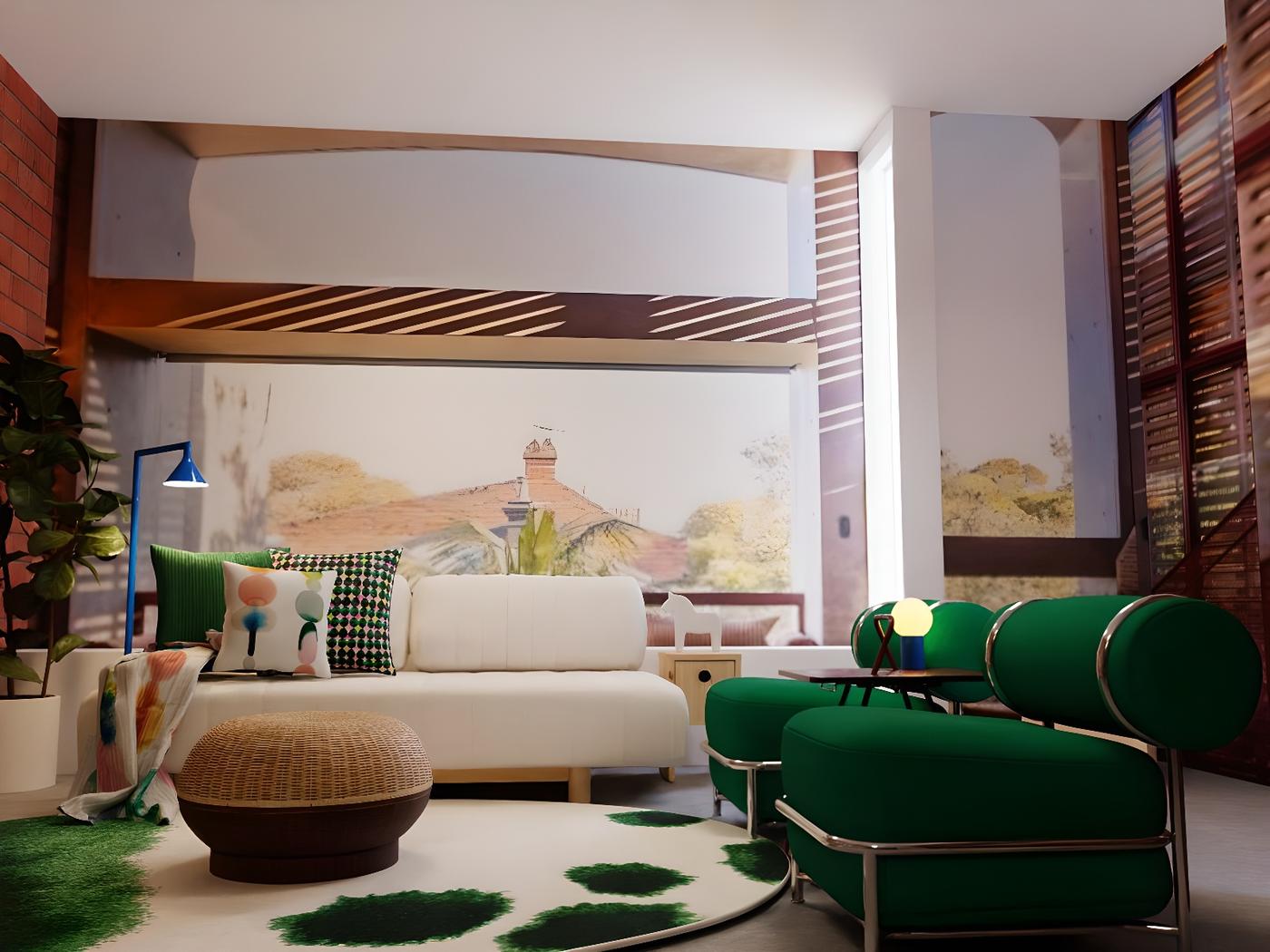
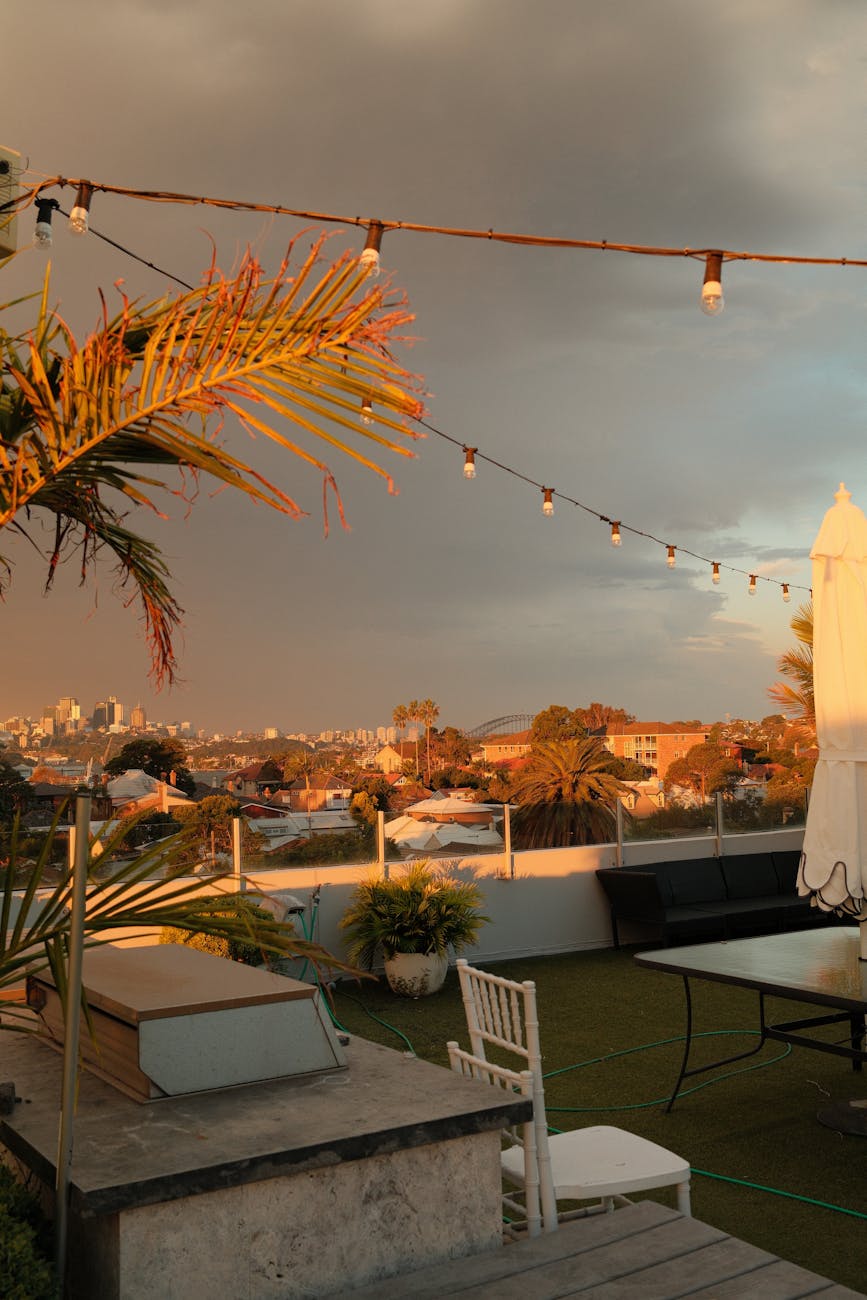
I keep circling that word, airspace, because it belongs to the language of rights and planning notices, not to the softer vocabulary we usually use when we talk about home. Home is usually light, kitchen, linen curtains, a bench that catches the sun at four in the afternoon. Airspace is colder. Legal. Almost sci-fi. And yet here it has been dressed into a domestic fantasy: a 540-square-metre penthouse in Elizabeth Bay, with 380 square metres indoors and another 160 outside, the kind of layout that news.com.au’s listing coverage renders in the usual shorthand of wealth — four bedrooms, four bathrooms, double parking, rooftop pool, city lights. Those details matter, of course. What interests me more is how neatly the project turns scarcity into style.
There is a specific Sydney emotion in that move. We live in a city where land feels not just expensive but mythic, where every decent patch of light seems to come with a moral argument attached. So when a couple buy a top-floor one-bedder for A$1.48 million in 2005, then purchase the airspace above it in 2021, the story barely reads as an eccentric renovation anymore. It reads like the logical end point of our housing culture. If the city cannot spread, it climbs. If square metres are rationed, the fantasy shifts from acreage to altitude. The roof stops being a lid and becomes the next frontier.
The pairing at the centre of this matters. Ian Day is a property lawyer. Alexandra Kidd is an interior designer with a practice built on polished residential transformation. Together they are not just homeowners with good taste. They are, in different ways, professionals in the business of turning complexity into desire. Day told the AFR, “There is enormous potential in airspace.”
Potential, in this case, is not just extra room. It is storyline.
Luxury property copy has always traded in seduction, but older versions of the genre sold permanence — sandstone, harbour frontage, a drawing room, a garden with history in the soil. This newer version sells release. Upwardness. The sensation of floating above the mess. Jason Boon, quoted in the same news.com.au coverage, described the place as “like a sky garden sitting on top of a building, and it’s got a very New York-type feeling, outdoor spaces, a pool and bright city lights.” Glossy language, yes, maybe a little much. But it tells on the market beautifully. The promise is not simply shelter. It is atmosphere. A life edited to skyline and reflection.
I am wary of New York comparisons in Sydney, partly because they can make a place sound imported rather than observed. Still, the comparison works as a sales spell — it carries a fantasy of metropolitan fluency. Not suburb, not compromise, not family logistics, but lift doors opening into private air.
The phrase sky garden does most of the work. It softens height with greenery, prestige with ease. Money, approvals, consultants, the structural headaches — those two words make all of it disappear. What remains is exhale.
That sleight of hand is hardly unique to one penthouse. Domain’s look at the “secret” airspace industry makes clear that unused rooflines and vertical additions have become their own niche of property ambition. Once you start reading about airspace rights, rooftop extensions and the planning gymnastics required to turn void into value, you realise how contemporary the Elizabeth Bay story is. The city is learning to monetise the gap above our heads, and design is the velvet glove that makes the process feel romantic instead of extractive.
Which is why I was more struck by a staircase than by the terrace. In The Design Files’ later feature on the home, Morgan Reid said, “I’m particularly proud of how we turned the stair from an awkward afterthought into something architectural and emotive.” That is the sort of detail I trust. Not because it is modest, exactly, but because it understands where a home reveals itself.
A house lives in circulation, in the bits where you turn, pause, climb, arrive. Anyone can spend money on square metres. The harder task is to make movement feel inevitable rather than imposed.
The stair matters here because the whole project could easily have felt bolted on.
Anything born from airspace rather than ground carries that risk. Sometimes the result reads as addition, as trophy, as a stack of wants piled above an older life. To turn that into something architectural and emotive is to solve a deeper problem than layout. Good design often works like that. It hides the deal under the feeling.
Maybe that is why this penthouse lingers in my mind more as a mood board of contemporary domestic longing than as a property story. The terrace, the pool, the bright city lights, the stretch of internal room opened out into private horizon: none of it is unusual in prestige real estate on paper. What feels current is the way it has been assembled into a fantasy of escape without departure. You stay in the dense city. You keep the restaurants, the harbour edge, the old apartment block, the inner-east shorthand. But you rise above the friction. No commute to acreage. No surrender to suburbia. Just a cleaner edit of urban life, hovering above it.
Home design has been moving in this direction for a while. We ask rooms to do more emotional work than they used to. A kitchen is no longer just a place to cook — it is expected to perform competence for you, to stage it. A bathroom is a retreat, an outdoor terrace a sanity device. Light has been rebranded as wellness, storage as calm. I might be overstating it, but the Elizabeth Bay penthouse feels like the purest luxury expression of that drift. More than space, the architecture supplies storyline: freedom, elevation, composure, distance from the ordinary scramble.
Brutal, too, how openly the numbers sit inside that storyline. A$13.4 million does not whisper. Neither does the history of the deal. The top-floor one-bedder. The later purchase of the airspace. The years of translation from legal possibility into habitable drama. Projects like this are never just romance. They require a lot of money, a lot of patience and the kind of access to expertise that most households will never touch. Perhaps that is why these homes can feel so magnetic in editorial coverage. They exaggerate desires the rest of the market has already normalised: more light, more privacy, more outdoors, better flow, a feeling of calm protected from the city that made the property valuable in the first place.
And yet I do not think the right response is simple sneering. Luxury houses can be tastelessly honest about the fantasies circulating through the broader culture. They tell you, at full volume, what everybody else is being asked to want in smaller, more affordable forms. That is what makes this project useful to look at. Not aspirational in the thin sense, not a pinboard for dream-home content, but clarifying. Here, scarcity is rebranded as ingenuity. Here, airspace, a term that should sound technical and dry, becomes something lush enough to photograph. Here, the market sells domestic life less as shelter than as a sequence of emotional upgrades.
If I am being picky, and I usually am, the fantasy works best when it remembers the building underneath it. The old apartment. The pre-existing structure. The fact that all this lift-off starts from a one-bedder bought two decades earlier, not from some blank-sheet development in the clouds. That origin story gives the penthouse its charge. Without it, the project would be just another expensive interior with a view. With it, the home becomes a very Sydney parable about pressure, invention and the lengths to which taste will go when land runs out.
So yes, there is something audacious in the idea of turning air into asset and asset into atmosphere. There is also something revealing. When a home can be imagined first as a slice of sky and only later as a collection of rooms, you are no longer simply looking at prestige real estate. You are looking at the way a city teaches people to dream. In Sydney, apparently, even domestic life now wants a rooftop, a horizon and a story about escape. The old promise of home was shelter. The newer promise, at least at the glossy end, is lift.

The Lifestyle Desires brief
Style, food, travel and wellbeing — weekly in your inbox.
Subscribe