When the first holiday starts to grade you
The so-called turbulence test turns a romantic getaway into an accelerated audit of money, planning and how two people behave when the wheels come off.
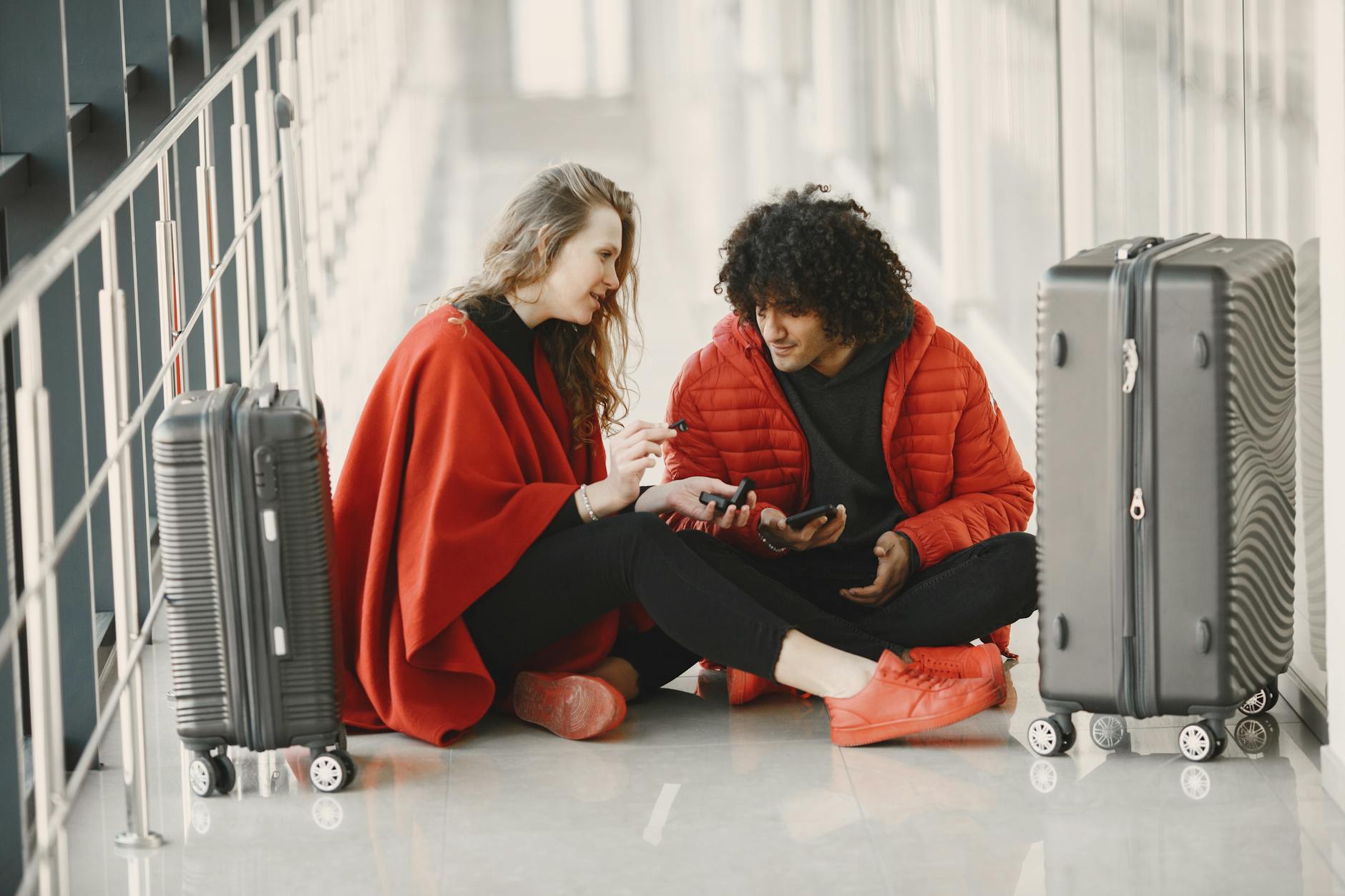
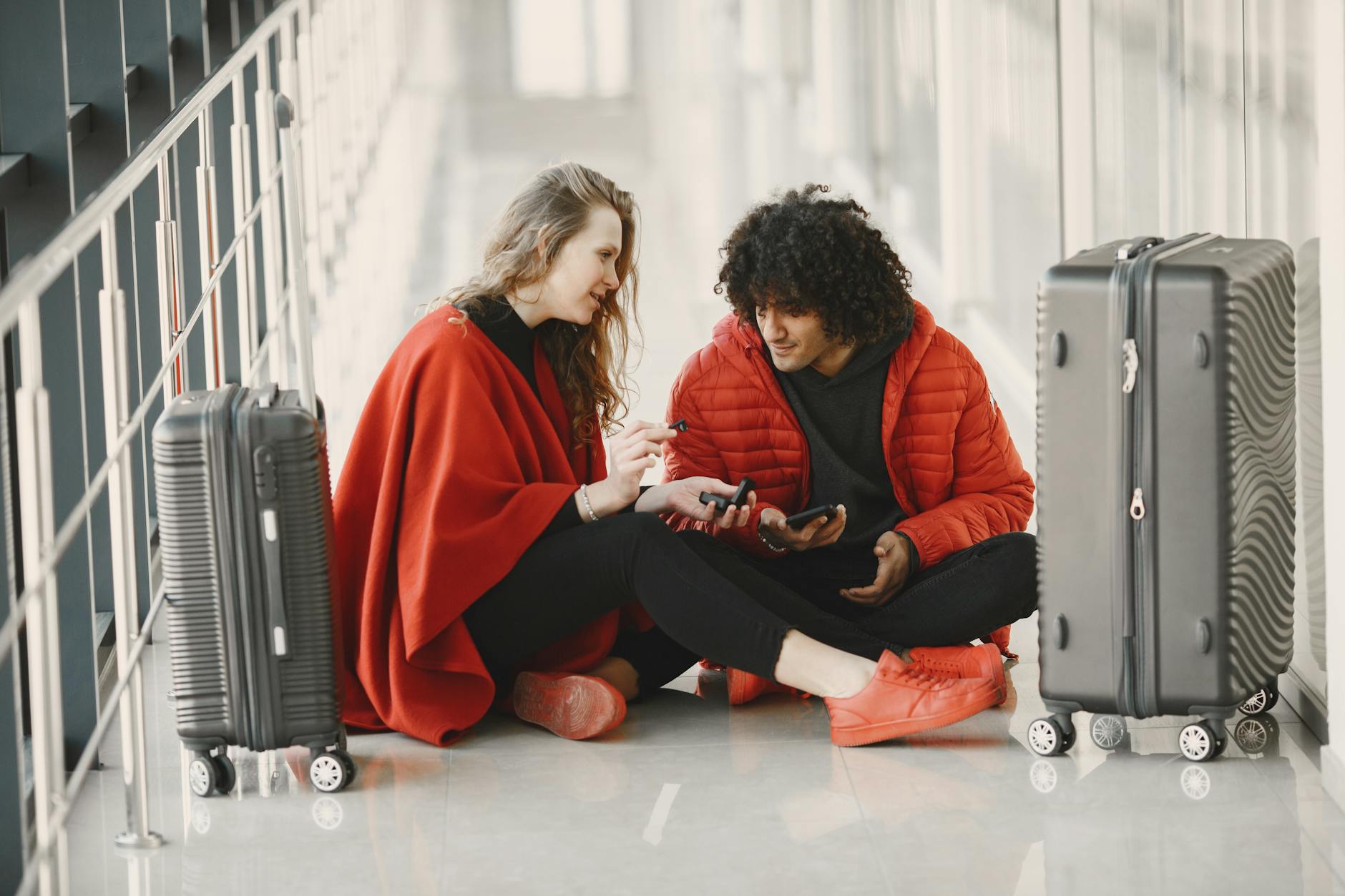
A romantic holiday used to be the reward at the end of a courtship. Spend enough time around newly coupled people comparing airport stories over natural wine in the inner west, though, and it starts to sound more like the exam itself. The trip arrives suspiciously early — before the inside jokes have properly set, before anyone has seen the other person miss a train or sulk over a dinner bill — and suddenly two people are standing at Gate 53 in matching carry-ons, pretending a long weekend in Seminyak is just a bit of fun. When it is also, quite plainly, a test.
Vogue has a name for this mood: the turbulence test. Glossy phrase, a little too neat, but the behaviour underneath it is recognisable. Couples who have barely worked out each other’s coffee orders are booking flights, because three days away surfaces things dinner never will. Whether one person treats an itinerary like military doctrine. Who goes silent the moment they get tired. And the quiet horror of watching someone explain, with a completely straight face, that splitting the airport transfer three ways is “fairest”.
That last bit is the part I keep coming back to. Not the travel-trend language, not the fantasy that a long weekend delivers a clean verdict on your romantic future. What interests me is the fact that so many people want a verdict at all. Modern dating has become weirdly over-administered. We assess chemistry. Then communication style. Then attachment theory. Then whether the person is emotionally available, financially literate and capable of texting back without sounding like they are drafting a media statement. A holiday slots right into that impulse — it compresses a few months of ordinary friction into 72 expensive hours.
The Booking.com 2026 travel predictions put some startling numbers behind this, in the way marketing surveys do: big, round, hard to ignore. Sixty-nine per cent of global travellers said they would be open to taking a trip with a potential partner, colleague or new friend. Sixty-two per cent said they would travel somewhere remote specifically to see how the other person handles ambiguity and discomfort. Seventy-one per cent would step back and watch whether their companion takes the lead in planning. The company’s broader release drew on 29,733 respondents across 33 countries, and chief business officer James Waters framed the finding in language that is either insightful or deeply convenient, depending on your mood: travel is increasingly “a reflection of who people truly are”.
I do not generally look to a booking platform for philosophy of love. Surveys squash people into tidy percentages, and travel brands are not in the business of saying, actually, stay home and have one hard conversation in your suburb instead. But the instinct underneath the marketing rings true. Trips cost real money. Time-poor people want shortcuts. Romance in 2026 hums with the language of optimisation. A holiday that tells me now what six more months of dating would tell me later — my feed is full of people running that maths whether they say it aloud or not.
By Friday afternoon the test has already started. Not in some cinematic storm, despite the name. In the boring places. The queue that does not move. The passport wallet one person swore they packed. The first exchange-rate panic. The private-transfer-versus-shuttle-bus standoff. In the Vogue piece, relationship expert Kimberly Miller puts it plainly: travel introduces unpredictability — delays, unfamiliar places, directions, day-to-day spending, all of it. She is right, though I think the sharper point is that travel strips away each person’s preferred story about themselves. The laid-back one may not be laid-back when the luggage does not appear. The hyper-organised one stops reading as reassuring when every half-hour is scheduled.
A first trip also forces the money conversation without granting anyone the dignity of calling it that. At home you can glide for weeks on charm, a couple of bar tabs and the soft focus of seeing each other mostly after dark. Then you book the flights. Somebody is suddenly choosing between the room with a plunge pool and the room with a window facing the car park. Somebody thinks the tasting menu is the point of being there; somebody else is quietly converting every cocktail back into Australian dollars. I do not mean this cruelly. The cost-of-living squeeze has followed us into romance. It was always in the room, but travel turns up the volume.
Latifah Al-Hazza, quoted in the Vogue piece, says of travelling with someone new: “I want to get it over with, to be honest.” The line lands because it is frank enough to sound rude, and because half the daters I know will recognise themselves in it. Why spend six months wondering whether a person is thoughtful, adaptable and sane when one missed connection through Changi or one overheated ferry terminal in the Greek islands will tell you by lunch? The problem is that this logic flips a holiday — which is supposed to loosen people up — into a form of private invigilation. Every response becomes evidence. Every small irritation becomes a clue.
Twenty minutes in a hotel lobby can surface things a month of flirtation politely avoids. Who takes charge when the booking is wrong? Who apologises to staff for a problem they did not cause? Who spirals? Who goes oddly parental? None of this is trivial. The Washington Post has framed couple travel as a practical crash course in communication, and Newsweek has put it more bluntly: travel can be make-or-break.
That might sound dramatic. Anyone who has watched a situationship decay in an airport food court, though, knows the phrase has teeth.
At the same time, I am cautious about treating friction as a clean diagnostic. A delayed flight does not prove someone is emotionally stunted. Hunger makes saints behave badly. Heat, jet lag and a suitcase wheel that will not cooperate are not laboratory conditions — they are just stressors. What counts is less whether someone stays charming under pressure (almost nobody does) than whether the two of you can recover after it passes. Repair tells you more than poise ever will. The person who snaps while lost in Lisbon but circles back with a sheepish coffee and an apology might be giving you a better answer than the person who keeps their voice level while quietly banking resentment for later.
I think the turbulence test has caught on for a reason that has less to do with aviation than with commitment panic. A lot of contemporary intimacy plays out under conditions of abundance and uncertainty. More choices, more scripts, more warnings, more podcasts dissecting what every bad text message really means. Against all that noise, a trip offers the promise of clarity: a contained scenario with a start and end date, a sequence of small pressures, the seductive feeling that you can know something definitive by the time you clear customs on the way home.
A recent ScienceDirect paper on couples’ holidays, passion and intimacy complicates that certainty. Holidays can boost closeness, novelty and romantic energy — which will not shock anyone who has ever been improved by sea air and a bed that is not their own. Increased intimacy, though, is not a compatibility certificate. Novelty can flatter a relationship just as easily as stress can expose it. You might feel fused for five glowing days and still leave the harder questions untouched: how decisions actually get made, how money is handled, how conflict gets repaired when there is no ocean view in the background.
That is why the trend reads less like a travel story than a dating one, I think.
What the turbulence test really reveals is how badly a lot of us want efficiency from romance. We want to know early. We want to avoid wasting time. We want a partner who can handle a rerouted train, a shared budget, a wet towel on the only chair in the room, and the strange intimacy of brushing your teeth side by side before either of you has seen the other properly angry.
None of that is shallow. It is sensible, really. Compatibility is not built out of candlelight. It is built out of logistics, generosity and what happens when both people are slightly dehydrated.
Some things do become clearer on the road. Control. Stinginess. Flexibility. The ability to laugh when the plan falls apart. Yet an early holiday can also produce a false sense of expertise. You come home convinced you have seen the whole person because you saw them in an airport, in a hotel, in a taxi argument and under fluorescent convenience-store lights at midnight. Maybe you have only seen the travel version, which is real but partial — just as the restaurant version and the Sunday-morning version are partial. So no, I do not think every new couple needs to book a romantic stress test before they have worked out whose place has the better pillows. But I understand the impulse. A holiday now sits at the crossroads of money, desire, time scarcity and the modern terror of choosing badly. That is a lot to load onto a boarding pass.
The more honest reading, I think, is not that travel reveals whether a relationship will survive. It reveals what pace you are trying to force onto it. If the trip becomes a compatibility speed-run, the turbulence may not be in the flight at all. It may be in the hurry.

The Lifestyle Desires brief
Style, food, travel and wellbeing — weekly in your inbox.
Subscribe