What that mint powder is really for
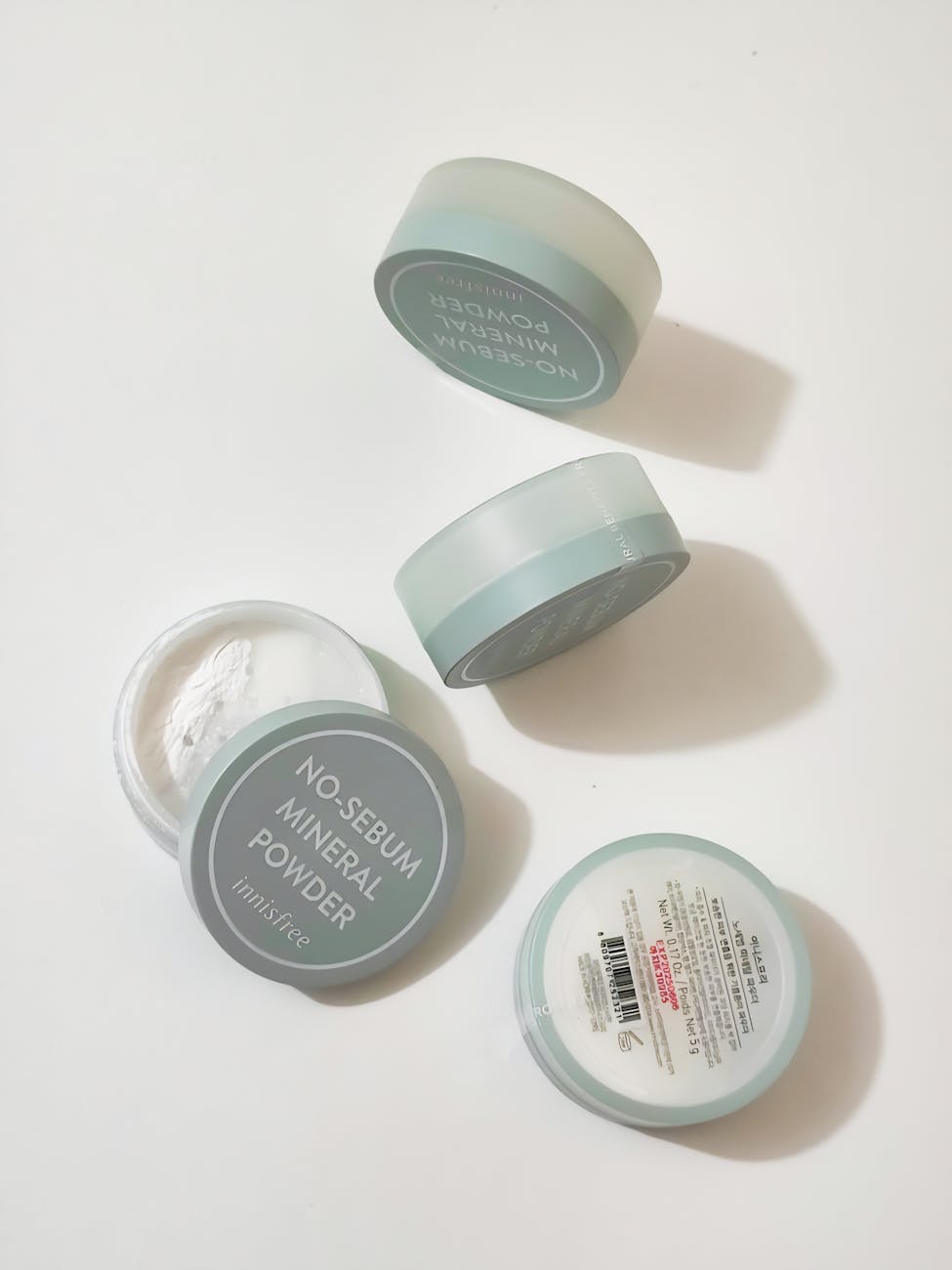
Green setting powder promises to knock back redness and blur shine, but the mint trend only makes sense if you use it lightly and in the right places.
I am constitutionally suspicious of mint-coloured makeup. The first time I saw a green setting powder making the rounds online, it struck me as the sort of thing beauty loves to do when it is bored: take a familiar product, tint it a clever shade, then ask us to believe the laws of complexion have been rewritten. And yet the gimmick has stuck. Suddenly there is mint dust on prestige counters, in TikTok demos, in glossy trend pieces, in the sort of makeup chat that usually burns hot for a week and disappears. What caught my attention was not the novelty, exactly. It was the pitch. Redness down. Shine softened. Makeup still in place by lunch. That is a more ordinary promise than most beauty trends make, which is precisely why I kept looking at it.
Fair enough.
A product does not need to be glamorous to become useful, and Vogue’s recent explainer understood that. The piece frames green powder as the next step in complexion correction, with Prada, Laura Mercier and Huda Beauty all pushing versions that look faintly absurd in the jar and oddly sensible on the face. For me, the interesting part is not whether a celebrity makeup artist has dusted it across a red-carpet jawline. It is whether the thing solves a real problem, or whether it is simply another backstage trick that only works under perfect lighting, on skin with very specific needs, and with someone else holding the brush.
The colour theory is not especially mysterious. Green sits opposite red, which is why makeup artists have long used pistachio-toned primers and concealers around the nose, across the cheeks or over the kind of hormonal chin flare-up that seems to arrive precisely when you have plans. What is new is the packaging of that idea into a finishing product. Instead of cancelling redness before foundation, the pitch is that you can set the face and quietly tone down pinkness at the same time. In Vogue’s piece, celebrity makeup artist Nicole Bueno puts it plainly: “Green color-correcting works best for those who tend to have lots of redness—whether from rosacea or acne.” That is the whole case, really.
Not glow. Correction.
That distinction matters because green setting powder is being sold in the language of universal finishing products when it is not universal at all. Hypebae’s explainer is more honest about the limits. Celebrity makeup artist Kasey Spickard says, “It can’t be used like other loose setting powders to brighten under the eyes. It really is a corrective product with a specific use case.” I suspect that sentence should be printed on the lid. If your relationship to powder is the classic one, a bit of blur on the T-zone, a little grip over concealer, some insurance before a long day, a green tone is not automatically an upgrade.
It is a tool. Quite a narrow one.
This is where the beauty industry can get sly. A colour-correcting powder sounds more advanced than a translucent one, and advanced products are easier to launch with fanfare. They also photograph beautifully. Mint reads as innovation in a flat lay. But for anyone who has ever overdone a lavender brightener or found a banana powder too yellow, the risk is obvious. Once a corrective tint stops being sheer, it stops flattering. On fair to medium skin with visible flush, that may mean a little too much product turns sallow rather than calm. On deeper skin tones, it can pull grey or ashy faster than people in brand campaigns tend to admit. The Independent’s review gets closest to this tension: yes, the effect can look filter-like on redness, but only if the formula stays fine enough, and the hand using it stays disciplined.
That is the part beauty marketing tends to skip. The green is not doing the work on its own. Sheerness is. Placement is. Restraint is.
I think that is partly why the trend has taken off now. Complexion makeup is in a corrective mood again. We are still in the long afterglow of skin tints, strategic concealer and the idea that base products should look like skin even when they are doing a fair bit of administrative work underneath. A green powder offers the fantasy of a shortcut. You do not need a separate redness primer, maybe. You do not need to rebuild the whole base after your cheeks start peeking through, maybe.
Even the language around it sounds efficient. In Bustle’s review of Huda Beauty’s Matcha Milk powder, the writer says, “A green powder sounds gimmicky, but done right, it’s saving you an extra step.” That is the most persuasive argument in its favour, and also the one I trust the most, because it admits the gimmick before defending the utility. Beauty readers are not stupid. We know when a brand is trying to sell us three products where one would do. A powder that genuinely collapses two steps into one will always find an audience, especially among people who want their base to look calm rather than obviously perfected.
Still, a single extra step saved is not the same thing as a revolution. The brands at the centre of the conversation are making strong wear claims. Laura Mercier’s mint version is marketed with a 16HR wear promise in the brand’s own comparison page, while Vogue notes that Huda’s Easy Bake version is sold with an 18-hour line attached to it. Huda’s Matcha Milk launched at $39 in the US. None of that is meaningless, but none of it answers the question most readers actually have, which is what happens at 8:40 on a normal weekday when you put a green-tinted powder on your actual face, near a window, without a ring light, and then go about your business.
Wear claims are marketing language. Technique is what determines whether the product earns its keep.
The technique, mercifully, sounds less dramatic than the colour. Every makeup artist quoted in these pieces circles the same idea: use less than you think, and keep it where the redness lives. That usually means around the nostrils, across the centre of the cheeks, maybe on the chin, maybe on the forehead if you flush there. It does not mean a thick mint veil from lash line to jaw. It definitely does not mean treating the under-eye like a brightening zone, unless you are after the special kind of disappointment only a bathroom mirror can provide at 7am.
I would reach for a small brush or a puff with most of the product pressed off first, then treat the green as a tint inside the powder, not the whole point of the powder. If you can see green sitting on the skin from across the room, you have gone too far. If the face simply looks a bit quieter, a bit less hot through the centre, you are probably in the sweet spot.
There is also a larger truth here that beauty trends rarely volunteer. Redness is not one thing. It can be rosacea, irritation, a fresh breakout, heat, over-exfoliation, a glass of wine, a fast walk to the station. Some of those respond beautifully to a bit of corrective colour. Some do not. Some are better handled with skincare, a less reactive base routine, or the radical act of letting your face look like it contains blood. Green setting powder is useful precisely because it is modest when used properly. It can soften the edge of redness. It can blur the point where pinkness breaks through foundation. It can make the centre of the face look calmer. What it cannot do is replace judgement.
That is why I do not think the trend is nonsense, but I also do not think it belongs in every makeup bag. If you are consistently red through the nose and cheeks, if you already like a lightweight base, and if traditional powder leaves you shiny but not particularly even, this may be one of those quietly effective products that makes more sense once you stop asking it to be magical. If your main concern is brightening the under-eye, or if you wear a deeper complexion that tends to pull oddly with corrective tones, I would be cautious.
The smartest reading of green powder is not that it is the next universal essential. It is that colour correction has moved into a more wearable format, and beauty shoppers are, reasonably enough, curious. Which leaves us with the only verdict that feels honest. Green setting powder is worth trying if your face runs pink and your hand runs light. It is probably not worth trying just because the jar looks chic on a shelf. I keep coming back to that distinction because beauty is forever mistaking theatricality for innovation. This trend, at its best, is not theatrical at all. It is fussy, targeted, slightly nerdy, and surprisingly grown-up. In other words, less a miracle and more a useful little fix for people who know exactly what they are fixing.

The Lifestyle Desires brief
Style, food, travel and wellbeing — weekly in your inbox.
Subscribe