What Western trauma talk misses when recovery looks different
Trauma recovery can look less like confession and more like family, faith and steadiness. Australia’s care system needs to notice.
I know the Australian script for getting better so well I can almost hear the kettle click off in the background. You sit in a small room with soft chairs. You tell the story, or the version of it you can manage that week. Names get attached to feelings that used to arrive as heat in the chest, bad sleep, a jaw clenched hard enough to ache by breakfast.
For many people, that room is a gift. I want to be clear about that. Good trauma therapy can give language to what was wordless, and a steady witness to what has been carried alone for too long.
Still, the script has a cultural accent. It assumes healing moves through disclosure, that the self is the main unit of repair, and that control over one’s own story is the goal. A new piece by Xin Kie Lee and Monash University clinical psychologist Laura Jobson in The Conversation is useful because it says the part mainstream wellness culture often smooths over: not everyone gets better by becoming more fluent in Western therapeutic speech.
These approaches do not work equally well for everyone.
Source: The Conversation
I’d pin that sentence above more intake forms.
The room we keep imagining
Post-traumatic stress care is not neutral, even when it is evidence-based. Much of it grew inside cultures where the individual is imagined as the centre of meaning: my memories, my body, my boundaries, my recovery. Relief can live there. Anyone who has watched a person regain a sense of agency after harm knows how precious it can be.
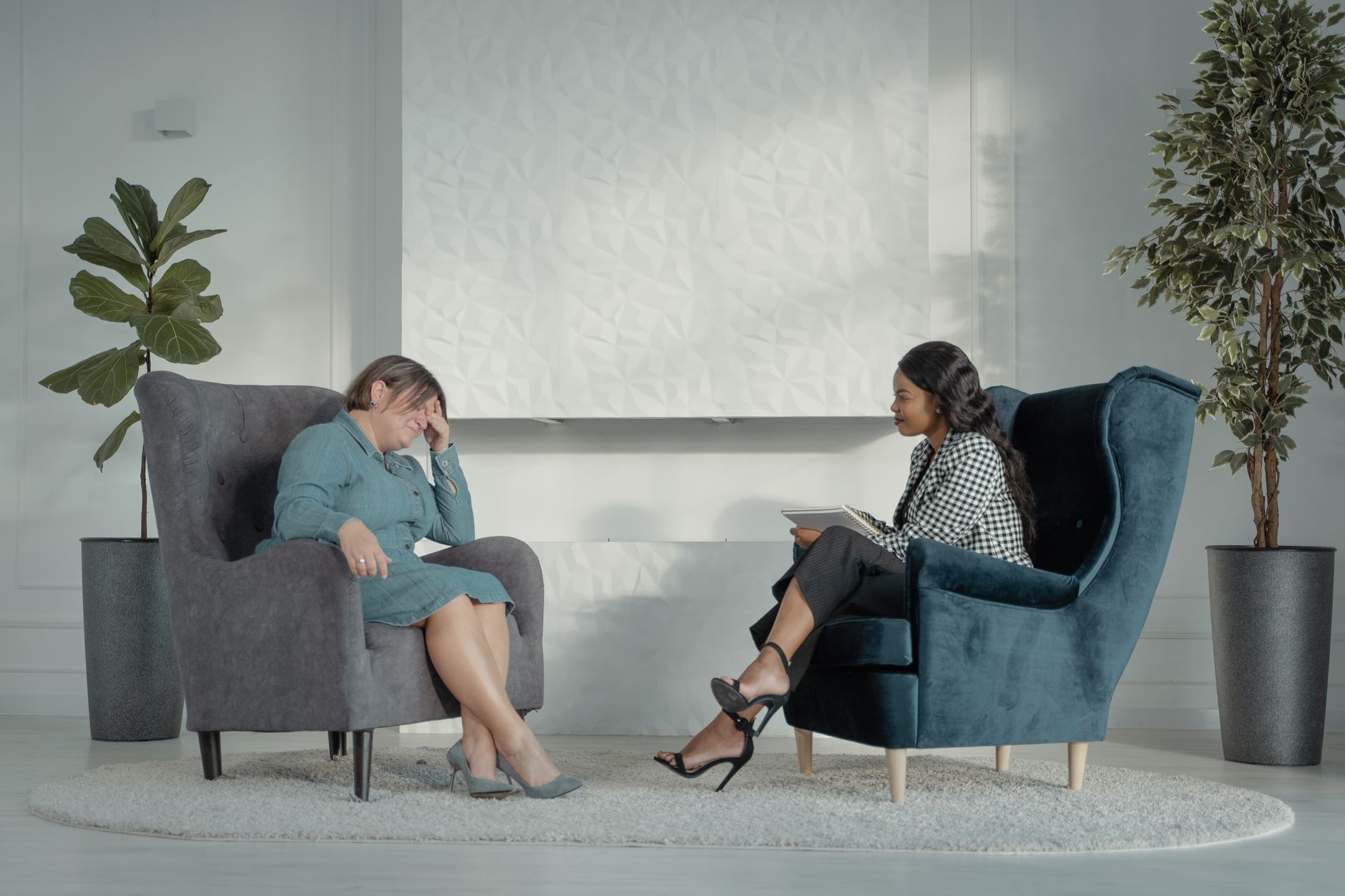
Trouble starts when that model is treated as universal rather than local. In some families, survival is less about narrating the wound than keeping the household intact. Across some faith traditions, suffering is held through prayer, ritual, obligation or the presence of elders. Elsewhere, asking directly for support can feel less like empowerment and more like placing a debt on someone already carrying too much.
Here is where I think Western trauma talk gets a bit smug. Quietness becomes avoidance. Family involvement gets read as enmeshment. Bodily symptoms are treated as denial, spirituality as a detour from the real work. Sometimes those readings are right. Often enough, they are lazy.
A clinician’s question is different from the survivor’s. Clinically, the puzzle is how to adapt the treatment without losing what works. For the person sitting there, the question may be plainer: can I be helped without being asked to become someone else first?
Lee and Jobson are not arguing that people from non-Western backgrounds do not need trauma care, or that culture should be used as a soft excuse for leaving pain alone. Their point is sharper: the default grammar of care says talk, disclose, name, control, and in doing so it can miss the way distress is actually felt and shared.
Australia cannot file this under niche
Comfort would have us treat this as a specialist issue for a few clinics with multilingual brochures. Australia has moved well beyond that excuse. The Australian Institute of Health and Welfare says 31% of people here were born overseas, and 48% have a parent born overseas. Nearly half the country has a direct family link to migration.
None of that means nearly half the country experiences trauma the same way. Of course not. A second-generation Vietnamese-Australian woman in Footscray, a Sudanese father in western Sydney, a Ukrainian psychologist newly arrived in regional NSW, and a British migrant with no language barrier do not belong in one neat cultural box. Exactly. Our care system is too diverse for one neat box.
Policy is the unglamorous bit, but it matters. If trauma-informed care is going to be more than a phrase on a departmental slide deck, it has to do more than translate English pamphlets. Safety may look different when the person in front of you does not separate mind, body, family, faith and community in the way your training manual does.
In ABC News this week, Ukrainian mental health specialists visited Armidale to study trauma response strategies for communities affected by war. One line from Antonina Pushko sat with me longer than the usual statistics about need.
We don’t have a safe place … this is a basic thing for psychotherapy, to provide a safe place.
Source: Antonina Pushko, ABC News
Pushko’s line, from ABC’s reporting, is not about a clever intervention. It is about the floor beneath all interventions. Before disclosure, before cognitive reframing, before any neat worksheet, there is the question of where a body can stop bracing.
ABC also notes research indicating 15 million people in Ukraine need psychological support. Scale changes the moral weather. With need that large, the fantasy of one-to-one therapy as the main vessel of recovery starts to look too narrow. Communities, schools, churches, GPs, settlement services and ordinary kitchens become part of the care system whether the system admits it or not.
What gets called resistance
Inside clinics, resistance is a tempting word. A person does not want to talk about the event. They bring a cousin to appointments. Headaches, stomach pain, fatigue. Prayer helps, they say. Another session is missed because someone else’s need came first.
Some of that may be avoidance. Fear, too. A body may be speaking in the only language it trusts. Or the person may be using a perfectly coherent recovery strategy that looks strange only because the observer expected a Western one.
WHO’s account of trauma-informed counselling in Cambodia is a useful counterweight here. After the 2025 border conflict displaced 650,000 people at its peak, the need was not just for more private rooms where individuals could tell terrible stories. Health workers also had to recognise distress as it appeared in bodies, families and communities.
That, more than anything, is the part I wish wellness culture would absorb. Recovery is not always a dramatic confession. Sometimes it is a person sleeping through the night because an auntie moved into the spare room. Sometimes it is a prayer said every morning, not because faith fixes the nervous system on command, but because rhythm gives the day a handle. Sometimes it is a GP taking stomach pain seriously while also asking, gently, what has been happening at home.
I am less convinced by any model that makes the survivor prove sophistication by sounding psychologically literate. Trauma language has spread so quickly through social media that we can now talk about nervous systems over brunch with the same ease we once reserved for property prices. Some of that has been freeing. Some of it has turned healing into a performance of vocabulary.
Sceptics of Western therapy orthodoxy might ask whether disclosure became the gold standard because it is always best, or because it is legible to the systems that fund, measure and publish treatment. That question does not invalidate exposure therapy or cognitive processing therapy or any of the other methods that help people. It does ask whether the evidence base has always been equally curious about people who heal partly through silence, duty, food, worship, movement or belonging.
The body keeps interrupting the theory
Part of the problem is that the mind-body split keeps failing real people. WIRED’s recent essay on long Covid and recovery stories circled a related problem: once a condition is described through mind-body language, some people hear dismissal, as if the pain has been demoted from real to imagined.
Trauma care can trip over the same wire. A survivor from a collectivist background may arrive with migraines, gut pain or exhaustion, and a rushed system can send them on a tour of referrals without ever asking what grief, fear or displacement is doing in the room. Mental-health culture can also swing too far the other way, treating every bodily complaint as symbolic, as if the body were merely a moody translator for the mind.
Neither habit is good enough.
What I want is not anti-therapy cynicism. I do not want a softer, prettier version of neglect, where we romanticise community and leave people without professional care. Family can harm as well as hold. Faith can comfort, and it can silence. Communities can gather around a survivor, or they can ask them to keep the peace.
Culturally situated care has to be more honest than that. It should be able to say: this treatment has evidence behind it, and we can still adapt how it is offered. An interpreter should be allowed in without being treated as a machine. Clinicians should ask who the person wants involved, not assume privacy is always the highest good. Care should notice when a client is saying no, and when they are saying yes in a register the clinician has not learned to hear.
Guardian reporting on the UK government unlawfully forcing torture survivors to share rooms in former army barracks is a blunt reminder that trauma care does not begin inside therapy at all. If housing makes the body unsafe, if immigration systems keep people in suspense, if privacy is impossible, then asking someone to process trauma can become almost absurd. The court case, reported by The Guardian, was about accommodation. It was also about whether the conditions around a person make recovery plausible.
A bigger idea of getting better
I keep returning to the simplest line from Lee and Jobson.
There is no single way to heal from trauma.
Source: The Conversation
It sounds obvious until you look at how much of wellness culture behaves as if there is. Tell the story. Set the boundary. Do the work. Choose yourself. Heal your inner child. Useful phrases, even tender ones, in the right mouth. Put them on repeat and they become another kind of pressure.
Australia does not need to abandon Western trauma treatment. It needs to stop confusing one cultural pathway with the map itself. A bigger room would have evidence-based therapy in it, yes. Also family meetings when wanted, community workers, bilingual clinicians, spiritual care, attention to housing, GPs who understand somatic distress, and enough humility to ask what recovery would look like if the person did not have to translate themselves first.
Maybe that is the test. Not whether a survivor can learn our language of healing, but whether our systems can become less offended when healing speaks another one.

Brisbane-based GP turned health writer. Covers women's health, fertility and the gap between clinic and culture.
The Lifestyle Desires brief
Style, food, travel and wellbeing — weekly in your inbox.
Subscribe