The strange vanity of looking untouched
Men’s makeup in 2026 is being sold as maintenance, not performance, revealing how beauty still makes masculinity easiest to market when it looks invisible.
I’ve spent enough time around beauty copy to know the oddest promise is the one pretending not to be a promise at all. That’s why Vogue’s new guide to “undetectable” men’s makeup feels so revealing. Nobody is offering glamour here, or even confidence in the old glossy sense. The pitch is smaller and stranger: disappear a little. Look better, maybe, while still registering as yourself.
This is really written for the first-time buyer. He does not want to “wear makeup” so much as look less tired on Monday, less shiny in daylight, less betrayed by the spot on his chin. Vogue’s expert Aika Flores puts it plainly: start with skin, then decide whether you need anything else.
“Skin is the foundation of everything.”
— Aika Flores, Vogue
Still, by the third paragraph I was circling a less comfortable question. If the new masculine beauty ideal is a face that looks untouched, what exactly has changed? The Conversation recently argued that men are joining beauty culture while refusing to call it beauty culture. That rings true. The whole “undetectable” boom suggests the taboo did not vanish; it just changed packaging.
What has changed is scale. CNBC reported in January that the global men’s grooming market could hit $85 billion by 2032. The same report cited survey data showing 15% of heterosexual US men aged 18 to 65 already used cosmetics in 2022. Another 17% said they would consider it. Even the holdout figure is shifting: 75% of men said they never wear makeup in 2024, down from more than 90% in 2019. Add the 26 billion views attached to #mensgrooming on TikTok and this stops looking like an internet curiosity or a backstage trick glimpsed in daylight.
Inside the industry, the explanation is simple enough. Formulas are lighter. Concealers blend more easily. Bronzers do not have to read like theatre. For beginners, the rule is simpler still: the first product has to vanish fast enough that nobody feels obvious. The skeptic’s view deserves space as well. Beauty culture has found a neat way to recruit men by insisting that nothing conspicuous is happening.
The shelf without a name
The clever thing about men’s makeup in 2026 is how briefly it clings to the phrase “men’s makeup”. Growth comes through complexion care, not through building a black-and-gunmetal aisle at the back of the store. No electric-blue liner revival. No return of old metrosexual peacocking. What actually sells are skin tints, concealer sticks and soft bronzers that feel closer to upkeep than artistry.

That logic runs through nearly every source. Vogue treats Chanel complexion products as tools for evening out tone, not announcing a look. GQ’s guide to concealer for men dwells on natural finish, undertone matching and the sort of discreet coverage that lets a beginner feel he has cheated the light rather than declared a new identity. Even the brands still speaking directly to men are careful about tone. War Paint sells tutorials and reassurance almost as hard as it sells product, while CNBC notes that retailers such as Ulta and Sephora are leaning harder on gender-neutral displays and education than on a separate masculine beauty ghetto.
Education matters because the barrier was never only moral panic. Much of it was practical confusion. What shade? What texture? How do you stop concealer from sitting on dry skin like chalk? In Personal Care Insights’ reporting on the category, Shakeup Cosmetics co-founder Jake Xu describes a shopper who wants clarity before he asks for permission.
“Men want to understand what it does, how to apply it, and what result to expect.”
— Jake Xu, Personal Care Insights
Asked plainly, the easiest first step is probably still concealer, maybe a sheer skin tint if the finish is forgiving, because both satisfy the new rule of entry. They do something visible while leaving as little visible residue as possible. Paradoxical, yes. Also the business model.
I’m not especially persuaded by the idea that a thriving standalone men’s aisle is driving this shift. The bigger change is that beauty has loosened its rules about where a product can live and who gets to pick it up. A stick can be a concealer, a skin perfector, a touch-up tool or just “something for under-eye circles”, depending on how nervous the shopper feels that day. Ambiguity helps people buy. Markets usually love that.
The labour nobody is meant to notice
Invisibility still isn’t liberation. It may lower the stigma for a first-time wearer. It can also preserve the old hierarchy by making the labour harder to name. CNBC’s piece on the mainstreaming of men’s makeup quotes Delphine Horvath, a professor of cosmetics and fragrance marketing at FIT, on the language that makes the category easier to swallow.
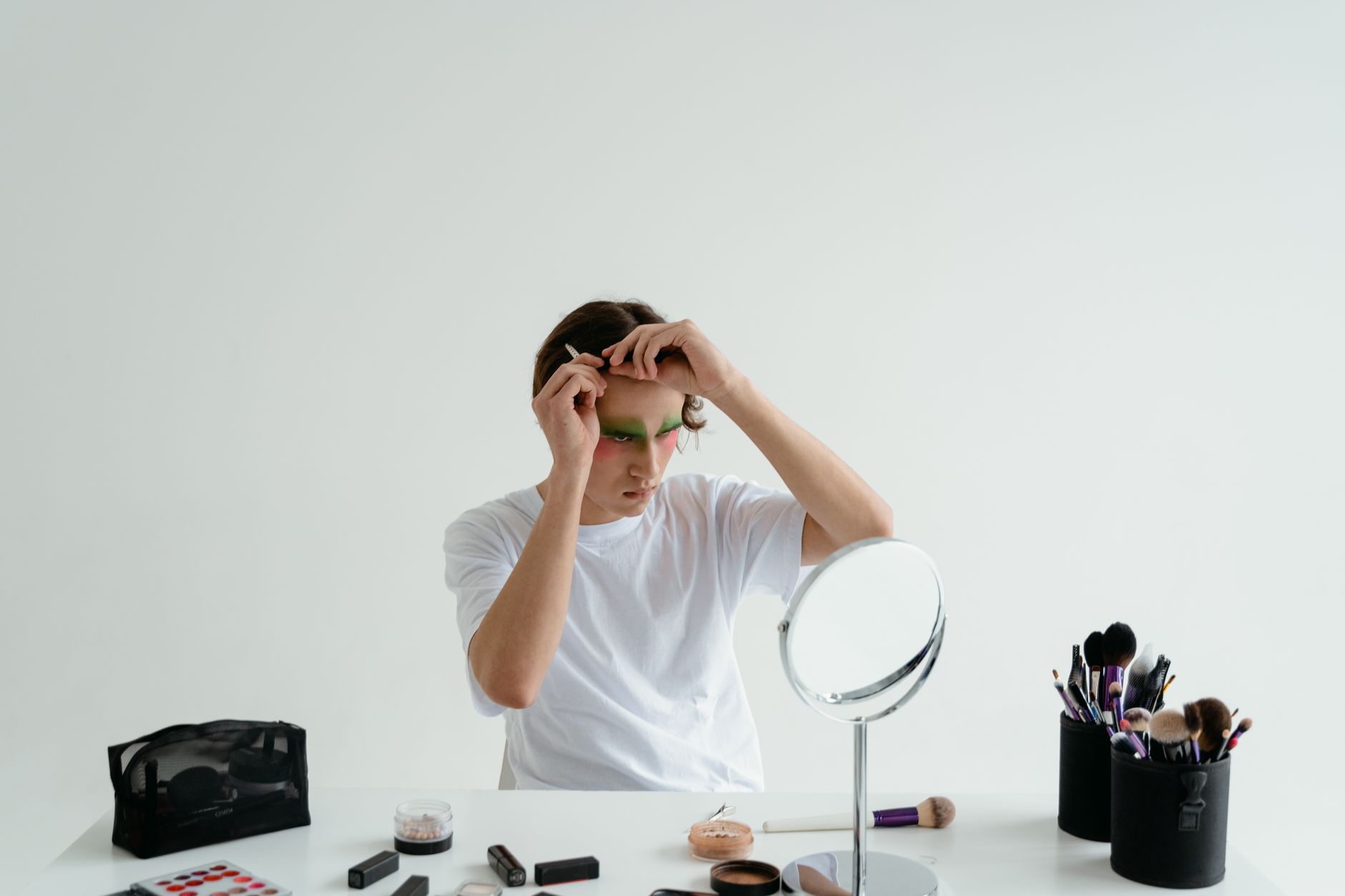
“Many men have started framing grooming and, for some, makeup as maintenance, not vanity.”
— Delphine Horvath, CNBC
There is genuine generosity in that reframing. Plenty of people, not just men, deserve a softer entry point into beauty than the old language of correction and flawlessness. Even so, “maintenance” is an awfully useful word. It implies necessity. It turns elective labour into upkeep. It suggests that a face needing concealer or tint is not making an aesthetic choice so much as demonstrating basic competence.
Women know this trick intimately. The harshest beauty standards often arrive dressed as effortlessness. A Guardian Life essay on the wedding “glow-up” describes the pressure to treat appearance work as a hobby, a ritual, almost a pleasure, even when it is expensive and exhausting. Men’s makeup slips into that same emotional economy through a side door. Not with lipstick first. With concealer sold as common sense.
That is why I keep coming back to the skeptic perspective in The Conversation’s analysis of men and beauty culture. The issue is not that men wearing makeup is absurd. It isn’t. The issue is that beauty culture rarely expands without also expanding the list of people expected to look casually excellent. GQ, in a recent piece about the long history of impossible standards in male self-presentation, comes at the same point from another angle: masculine vanity has always existed; it just keeps changing costume.
Maybe that is what the beauty aisle is finally admitting. Men were never outside it. They were simply allowed to pretend they were. This generation of products does not ask them to be flamboyant or brave. It asks them to stay recognisably masculine while borrowing backstage technologies women have been sold for decades. Better skin. Less redness. Fewer under-eye shadows. No obvious trace of trying.
I don’t say that with moral panic. Some of these products are useful. Some will make people feel more at ease in their own faces, which is not nothing. I just think we should be honest about what is happening when a category defines success as invisibility. It is not abolishing vanity. It is teaching vanity better manners.
So yes, men’s makeup has left the stage. Clear enough. The more interesting question is where it has landed. Not in rebellion, not even in performance, but in the everyday grammar of maintenance: the bathroom shelf, the under-eye fix, the tiny tube bought with a little embarrassment and a lot of plausible deniability. Beauty made room for men by promising they would not have to look as if they had asked to be there. Progress, of a sort. Also a confession. For all the talk of openness, the modern beauty aisle still thinks the safest masculine face is the one that seems to have done nothing at all.

Melbourne beauty editor and ingredient nerd. Five years on the brand side before turning to writing about what's actually in the bottle.
The Lifestyle Desires brief
Style, food, travel and wellbeing — weekly in your inbox.
Subscribe