What red blush says about the face now
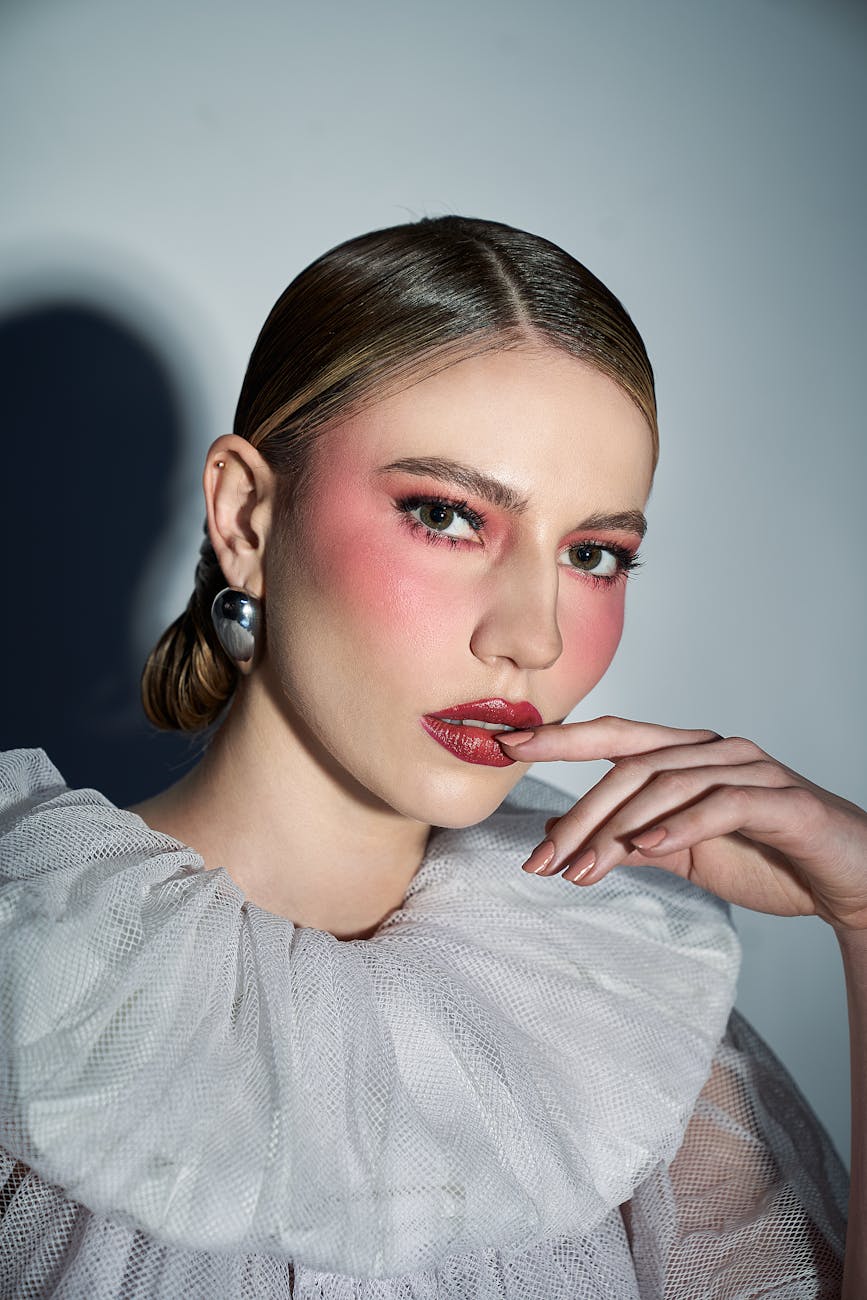
Red blush is back because carefully beige skin has begun to feel deadening, and beauty wants warmth, colour and visible life again.
I keep thinking about how faintly obscene red blush looks in the pan. Not sexy obscene, exactly. More intimate than that: the colour of windburn, tears, a sprint for the bus, the rush of blood you are not usually meant to freeze, package and swipe on before work. Then it lands on an actual face and the alarm goes out of it. Suddenly it is not theatrical at all. More like circulation. More like somebody slept, or flirted, or walked uphill.
For me, that is the whole argument for it. In Vogue’s reporting on the comeback, Saie HQ brand educator Stevie Nelson makes the case plainly: red works because it sits close to a real bodily response, not an invented one.
It truly mimics your body’s natural response to the elements.
— Stevie Nelson, Vogue
Reading Who What Wear’s look at the spike in red blush searches, I kept coming back to the same thought. Search interest reportedly jumped 83 per cent. That sounds less like one random shade having a moment than a broader impatience with the polished neutrality that ruled faces for years. Beige lids, beige cheeks, beige lips, skin so corrected it almost looked laminated. We called it clean. Most days it just looked careful.
Still, I do not mean the clean-girl face has vanished. ELLE Australia put it neatly: the skin-first polish remains, but it is now being layered with experimentation. That feels right to me. Red blush is not the opposite of clean beauty so much as a small mutiny inside it. Your base can still be sheer. Brows can stay brushed up. The change is simpler than that. We are willing, again, to let a face look as if something is happening on it.
The beige years are over

Spend five years around beauty marketing and you hear the same sales pitch again and again: the best face is the least visibly constructed one. Dewy, yes. Sculpted, no. Healthy, yes. Coloured, preferably only by accident. Really, a lot of that language was a pitch for restraint. Do less. Blend more. Correct quietly. Even blush, when it survived the era, was meant to disappear into the complexion.
Which is why red feels pointed now. Not because it is new, because it isn’t, but because it refuses to disappear. Even sheered out, it asks to be seen. Vogue’s broader blush analysis from last year framed the category as already on the rise, but this year’s red turn sharpens the message. The cheeks are no longer there to support the rest of the make-up. They are the point.
Maybe beauty people are shy about saying the next part out loud. The carefully beige face can start to read as emotionally sealed. Perfected skin, neutral lids, a muted lip, all of it lovely in the abstract, can leave a person looking curiously absent. Red blush puts some social information back. You look warmed up. Slightly wind-struck. A touch undone. That is why even very controlled versions, the sort made with something like Saie Dew Blush in Cherie or Merit Flush Balm in Rouge, do not read as product stories first. They read as permission.
Maybe beauty wants colour again not for impact alone, but for proof of life.
When a cheek starts to look like skin
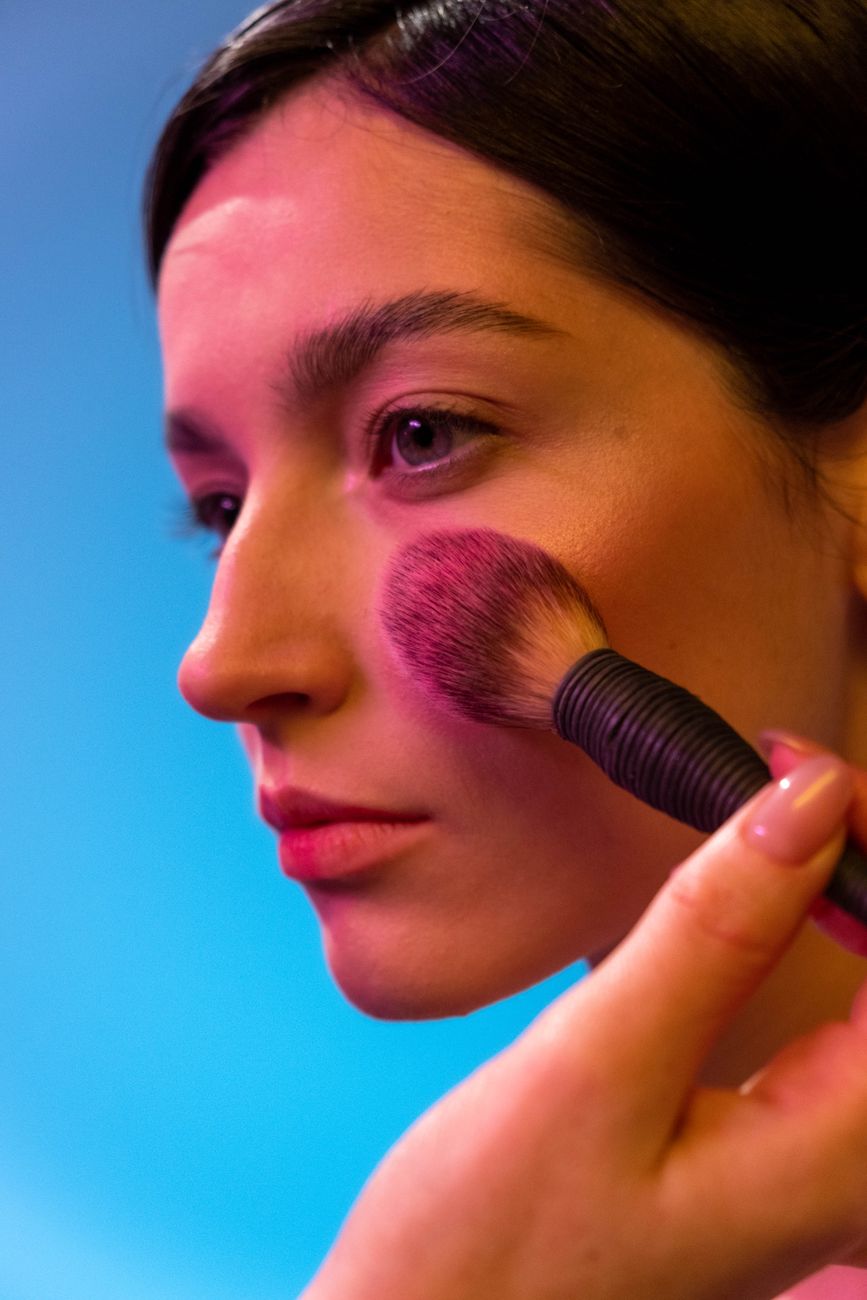
Useful question: does “universally flattering” survive contact with actual faces? I am less convinced by that phrase than by the underlying technique. Claudia Neacsu tells Vogue that everybody can wear red blush, and I think that is true only if we stop pretending everybody should wear the same red, with the same finish, at the same depth.
Everyone can wear red blush no matter their skin tone, age, or style.
— Claudia Neacsu, Vogue
In practice, undertone, opacity and placement do nearly all the work. L’Oréal Paris’s guide to the look is more useful than most brand how-tos because it admits the obvious: cool reds, brick reds, berry reds and poppy reds do not behave the same way. On fairer or cooler skin, a translucent cherry can read as fresh. On deeper or warmer skin, a denser brick or berry can look far more natural than a bright, blue-based red that sits on top of the complexion like a sticker. The job is not to prove red is universal. It is to find the red that already seems to belong to you.
Seen from the make-up chair, the insider view becomes persuasive again. Red blush looks frightening in the compact because we judge it at full saturation, before the hand has broken it up. Once it is pressed thinly over skin, often higher on the cheekbone than the old apples-only placement, the colour stops reading as product and starts reading as temperature. Which is why cream textures do so well here. A balm, whether it is N°1 de Chanel Lip and Cheek Balm in Red Camellia or Armani Beauty Luminous Silk Cheek Tint in Flaming Red, can stain the face rather than decorate it.
It only works for me when it keeps a little ambiguity. Too polished, and red blush becomes retro make-up. Too diffused, and it slides back into the pink neutrality it was meant to escape. The sweet spot is that moment when someone looks a touch colder, happier, busier, more alive than they did five minutes ago, and you cannot quite tell whether it was beauty or weather that did it.
The old references that keep returning

History keeps sneaking in behind this trend. Who What Wear hears echoes of old Victoria’s Secret warmth. Glamour UK’s reading of the Brontë blush mood ties the same appetite to period drama, windswept cheeks and that moody, half-feral romanticism beauty returns to whenever polished femininity starts to feel dull. Even Vogue’s year-of-blush piece reached further back, towards Rococo rouge and older cycles of visible cheek colour.
Ridiculous on paper, maybe. In practice, beauty loves a trend that can be read two ways at once. Kara Yoshimoto Bua, again in Vogue, says the quiet part plainly: the same red cheek can feel romantic or almost animé, soft-focus or cyberpunk.
It can also feel very modern and directional, almost cyberpunk or animé-inspired.
— Kara Yoshimoto Bua, Vogue
That doubleness is why the trend lasts longer than one cold-weather cycle. A fully neutral face tells one story about taste, usually that the wearer values control, polish and a certain kind of good behaviour. A flushed face is messier. It carries old references, yes, but it also leaves room for artifice, exaggeration and costume in a way that feels current. Not because people want to look historical, but because they are less frightened than they were a few years ago of looking deliberately made.
Elsewhere, beauty coverage points the same way. ELLE Australia’s recent reporting on the new glamour mood describes skin that still feels refined but keeps softness and texture intact. That is the larger movement. Not away from polish altogether, but away from the kind that erases any trace of drama. Red blush is simply an efficient carrier for that change because it puts colour back in the exact place where old beauty etiquette once wanted you to apologise for it.
What the face wants now

More than the references, I keep coming back to the bigger question: is this a one-shade spike or a real turn in how we want faces to look? I suspect it is the latter, partly because the trend makes sense well beyond blush. The past year in beauty has been full of little corrections to overcontrol. Lips are softer. Bases are thinner. Even when hair is done, it is often done with more movement. People do not seem desperate to look low-maintenance anymore. They want to look present.
Alive is the word I keep circling. It sounds twee, maybe a bit embarrassing, but it is still the best description for what red blush restores. Not youth, not innocence, not some fantasy of French-girl effortlessness. Just signs of circulation. A face with some weather on it. A complexion less interested in proving how little make-up it contains than in showing what make-up can do.
For all the talk of complexion perfection as the honest option, the face that often reads most human is not the quietest one. It is the one with temperature. The one that lets a little excess stay visible. The one that accepts that looking composed and looking alive are not always the same brief.
Which is why I do not think red blush is back because we are all secretly nostalgic for old Hollywood, Brontë heroines or the Victoria’s Secret runway, though those references help sell the fantasy. It is back because the carefully beige face has started to feel emotionally withholding. We are tired of looking correct. We would rather look warm. Even flushed. Especially flushed.
Call it less a comeback than a pulse.

The Lifestyle Desires brief
Style, food, travel and wellbeing — weekly in your inbox.
Subscribe