The quiet room is winning
2026 Australian Interior Design Awards point to quieter rooms, adaptive reuse and coastal homes that protect rather than perform.
I kept thinking about the kind of room that makes you lower your voice before you have worked out why. Maybe it is expensive; maybe it isn’t. Either way, it does not have that stern, please-don’t-touch-me silence of a showroom. The better version is looser: timber you want to run a hand along, stone that has been allowed to stay stone, light falling so the kettle, the keys and the half-read book look less like clutter and more like proof of life.
That, to me, is the more interesting story inside the 2026 Australian Interior Design Awards. Sydney got the reveal on 12 June, with the usual names, categories and annual hum of design-industry applause. Read the jury language closely, though, and a mood comes through. This year’s prize-giving has turned away from rooms that perform taste for the camera and towards interiors that feel planned, protective and materially awake.
A counterpoint belongs near the front. A sustainability critic would be right to ask whether words like hempcrete, adaptive reuse and wellbeing are doing actual work, or just dressing up a familiar luxury narrative in better linen. I have the same allergy to worthy design copy when it starts to smell of incense and procurement spreadsheets. Here, the strongest projects seem to argue for restraint with a spine: reuse the bones, plan harder, let materials age, then stop before the room starts explaining itself.
The room lowers its voice
Led by convenor Geraldine Maher, the jury praised a field where the best work seemed less interested in novelty than in care. ArchitectureAU’s main awards report quotes the jury saying that across the winners, the best interiors showed that:
“narratives are refined, concepts are carefully considered and the commitment to improving wellbeing through rigorous planning prevails”
, The jury, Australian Interior Design Awards
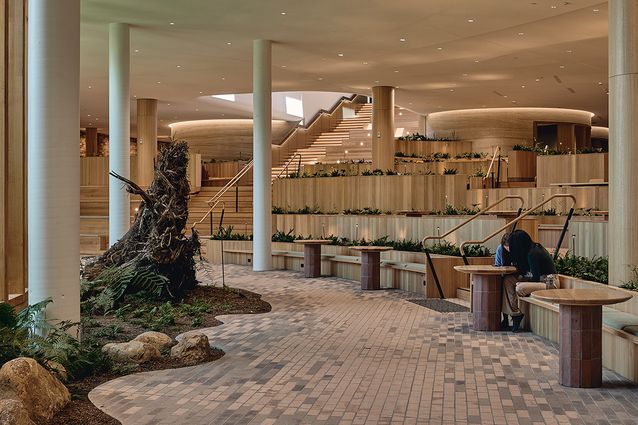
I know. “Rigorous planning” is not exactly a phrase that makes you rush to move the sofa. Still, in interiors it matters. A house can photograph well for one afternoon and fail the moment someone leaves shoes by the door, opens every cupboard and puts a wet glass down without a coaster.
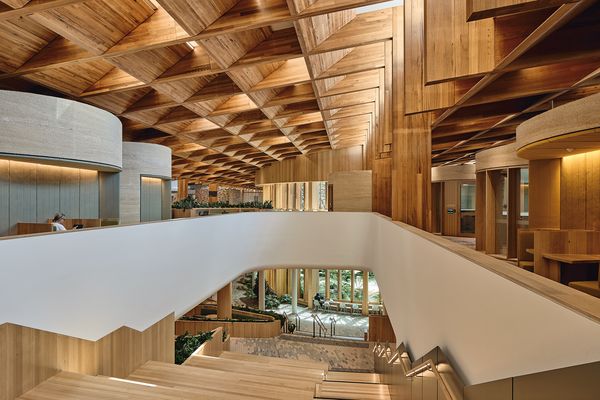
Premier honours went to The Forest by Woods Bagot, a project that also won the Public Design category. What caught me was not only the existing structures, new interventions, hempcrete and landscape connections. Jurors read those moves as atmosphere, not homework. Praise landed on an environment people would want to return to, which is a more demanding test than looking clever in a caption.
“incredibly rich, layered environment that is uplifting and to which anyone would want to return”
, The jury on The Forest
For me, that is where the awards line up with a fatigue I keep hearing from designers and friends trying to renovate their own places. Nobody wants another white-box room that needs a citrus tree, three art books and a very disciplined dog to make sense. Now the sharper question is whether a room has enough grain to survive ordinary living.
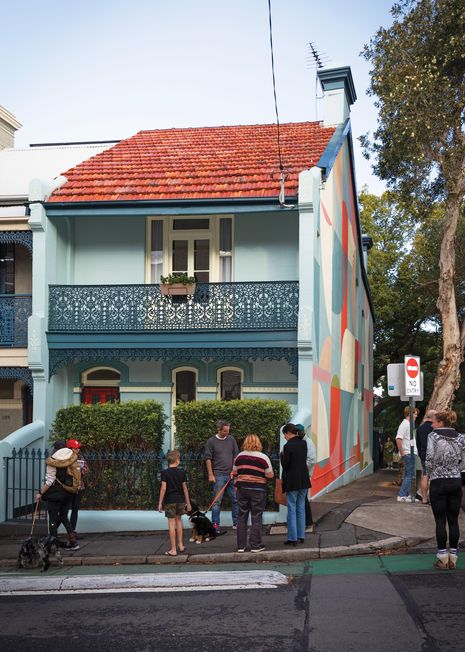
Discipline, at least in this year’s jury language, should not erase character. It should give character somewhere to sit. Subtle, maybe, but it matters in a country where the same curve-backed dining chair and the same pale limestone-look tile can make a Paddington terrace, a Byron Airbnb and a new estate display home feel like cousins with excellent Wi-Fi.
Reuse without the sermon
Adaptive reuse has a way of sounding morally superior before it sounds beautiful. That can be its own trap. A room can be sustainable and dead behind the eyes; a saved brick wall can still feel like a prop. Woods Bagot appears to have avoided that by making the old and the new feel mutually dependent rather than staged for comparison.

Here is the part I hope filters down beyond awards season. Reuse is not only a grand public-building idea. It can be domestic, almost stubbornly so. Keeping the serviceable timber bench. Re-covering the good chair instead of buying the fast-furniture copy. Letting one imperfect tiled splashback stay because it belongs to the house more than the moodboard does.
A recent Homes to Love analysis of Australian retail interiors made a similar point about adaptability, noting how fixtures and custom pieces can be reconfigured over time. Different sector, same instinct. Prestige, at least in this corner, is shifting from spotless newness to the ability to change without throwing everything away.
None of this needs to be hair-shirt design. The good version is sensual. Weight, shadow, a bit of nerve. It can still be polished; it just does not pretend the room was born yesterday.
Scepticism remains useful. Hempcrete and passive design are not magic words. A building has to perform after the opening night, through heat, damp, maintenance, changing tenants and the boring bits of use that awards photography cannot show. For me, the most persuasive sustainability move in this year’s winners is not a single material. It is the sense of systems being folded into the experience of a place rather than pinned on as a badge.
Coastal houses with a spine
If The Forest is the public face of this mood, the residential winners bring it back to the body. Coogee House III, with interiors by Genevieve Hromas and architecture by Tribe Studio Architects, sits in the awards coverage as the sort of home that could have been flattened into coastal prettiness. Instead, the language around it is about light, longevity and crafted detail.
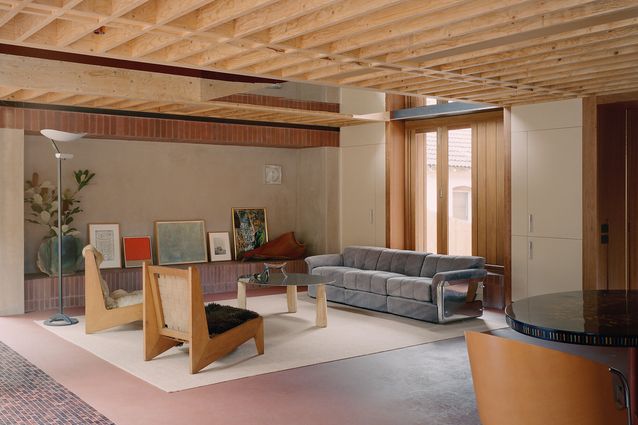
Australian coastal houses have been through a lot aesthetically: beach-shack romance, bleached linen, the resort-at-home fantasy, then the beige algorithm version where everything looked as if it had been selected by a very calm app. What feels fresher in this awards crop is the idea of the coastal home as protective, not exposed for the sake of exposure.
Louise Willey, lead designer on Arrawarra Beach House and senior associate at ELLYETT, described that shortlisted project to Coffs Coast News Of The Area as:
“calm, grounded and protective within a very exposed coastal setting”
, Louise Willey, ELLYETT
That line has stayed with me because it answers the occupant’s question better than most design captions do. How much light can a house take before it stops feeling like shelter? How much view is too much? Good coastal interiors do not only open themselves to the horizon; they decide when to turn their back on it.
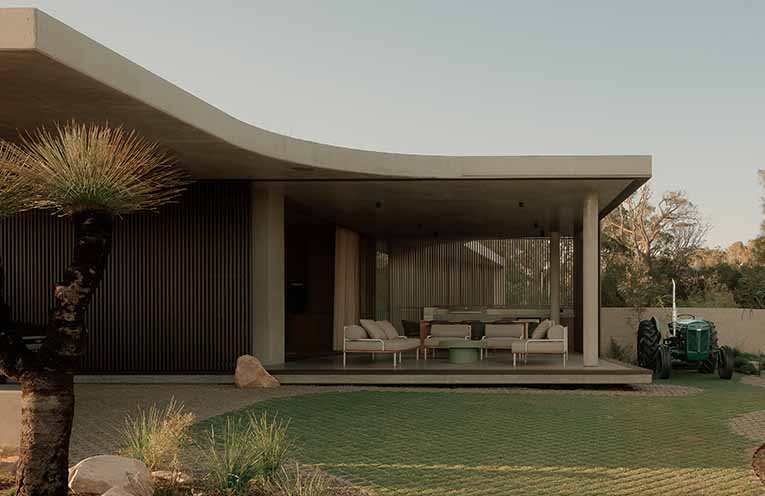
There is a lesson here for anyone who has ever tried to make a rental feel less temporary. You may not be changing the envelope of the building. You may be negotiating with a landlord, a tiny budget and a south-facing living room. Still, the principle travels: soften the glare, choose one material that feels good under the hand, keep the thing with history, stop buying small objects to compensate for a room with no anchor.
It also corrects the way we talk about “bringing the outside in”, as if every home should be a polite glass box. Sometimes the more generous design move is editing the outside. A deep reveal. A shaded corner. A wall that lets wind pass but not every neighbour’s sightline. Protection is not the enemy of beauty; in a hard climate, it is part of it.
What the awards are really pointing at
For months, the broader design mood has been moving in this direction. Homes to Love recently argued that designers are embracing an anti-perfection streak through playfulism and more personal interiors, while its coverage of the 2026 Dulux Colour Awards read the winning palettes as proof that Australian designers are done with default white walls. Even The Guardian’s recent look at Australia’s best apartment designs circled similar values: flexibility, endurance, homes that can adapt with their occupants.

Awards do not decide how the rest of us live. They can, though, reveal what the profession is starting to value in public. This year, the signal is not maximalism or minimalism, not coastal or urban, not colour versus beige. It is more exacting than that. Reward now favours rooms with a reason to exist beyond the image.
That is why the Emerging Interior Design Practice award for Occupy Studio, noted in the winners coverage, belongs in the same conversation. One new practice does not prove a national turn. But the awards are rewarding a way of thinking, from public projects to homes to young studios, where interiors are asked to carry use, feeling and time in the same hand.
I might be wrong about how far this mood will travel. Market taste still loves an easy visual shorthand, and a good deal of “natural texture” can be bought by the metre. When a premier prize goes to adaptive reuse with public life threaded through it, and the residential conversation keeps returning to calm, longevity and protection, something has shifted.
The dream room of 2026 is not shouting. It is not asking to be decoded. It is doing the harder, less glamorous thing: holding its nerve while people live in it.

The Lifestyle Desires brief
Style, food, travel and wellbeing — weekly in your inbox.
Subscribe