The week before your period became content
The luteal phase boom is giving women language for real symptoms, then handing the same vocabulary to creators, brands and wellness politics.
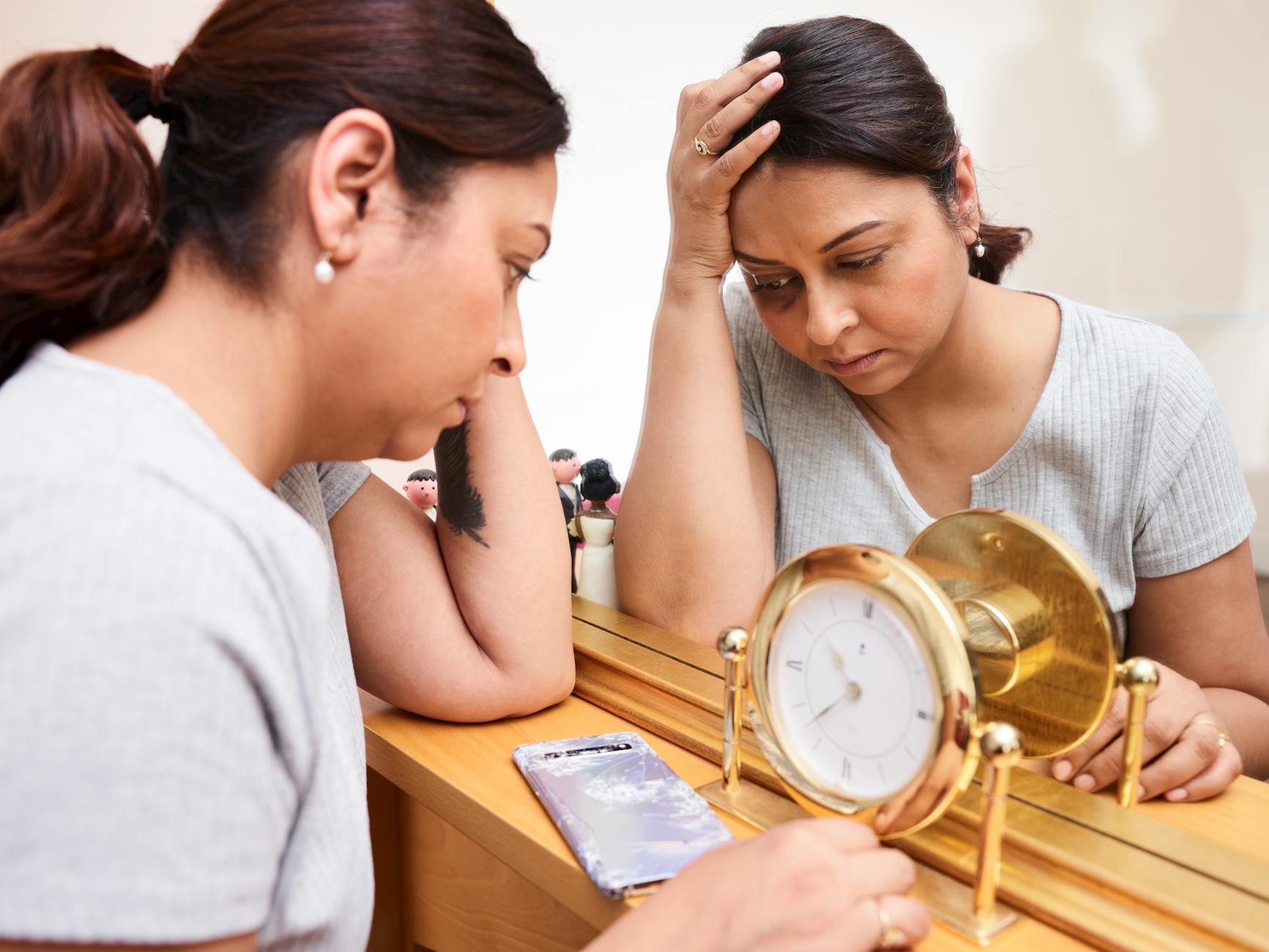
Three nights before a period, the phone light can feel too bright, almost clinical. You might be on the edge of the bed with one foot still on the floor, or in the bathroom while the house sleeps, typing a version of the same small panic into the search bar: why do I feel so awful, so irritable, so unlike myself? For years, women were expected to carry that week as background noise. A private inconvenience. A joke with a heat pack attached. Now the internet has offered a sharper phrase: the luteal phase.
Relief, when the word arrives, is real. According to The Guardian’s reporting, Google searches for “luteal phase” have risen by about 300 per cent over five years. A term that once lived mostly in fertility forums and clinic rooms now turns up on TikTok, in podcast clips, in supplement copy and in the odd comfort of women realising the bad week may not be random after all.
Then the same language gets borrowed by people with a pitch. Wellness creators and MAHA-adjacent influencers have started treating the body as a little ideological stage set, all destiny and purity and obedient hormones. As a GP turned writer, I do not want to mock vocabulary that helps a patient tell me what is happening. I am much more suspicious of the speed with which that vocabulary becomes certainty, identity and something you can add to cart.
One swipe gives you The Conversation’s analysis of cycle syncing. The next gives you soft-focus gospel about womb wisdom or a sherbet-coloured supplement stack. In Australia, that tonal whiplash is the story.
The first relief is being able to name it
For a lot of women, “luteal” is a delayed translation. A diffuse monthly dread suddenly has edges. In a recent BBC report on living with PMDD, and in The Guardian’s first-person account of diagnosis, the shared thread is recognition rather than wellness theatre: this thing has a pattern, it arrives on time, it changes the texture of work and family life, and it is not just bad temperament.
For years, women have been asked to describe cyclical symptoms in miniature, as moodiness, bloating or being a bit off, while carrying the full-sized consequences in private. The Guardian piece that kicked off this week’s conversation cites an estimate that around 6 per cent of menstruating people may be affected by PMDD. It also cites research finding that 72 per cent of people with PMDD in one study reported lifetime active suicidal ideation. That is not the sort of suffering improved by eating a different seed on day 19.
There is a social relief too. The Conversation’s review of Emma Hardy’s memoir about PMDD is really a piece about stigma, about the way female rage and cyclical distress are made to look embarrassing before they are understood. Women learn to mistrust their own pattern first. The internet, for all its frauds, can sometimes interrupt that.
What worries me is the tidying-up that follows. “Luteal” can mean ordinary premenstrual drag, a severe mood disorder, a social media aesthetic of blankets and electrolytes, or all three at once on the same feed. That is why Dr Jody-Ann McLean’s analysis in Newsweek lands so cleanly.
The luteal phase isn’t a pathology, but the wellness industry has an incentive to frame it as one.
Dr Jody-Ann McLean, in Newsweek
What a useful term can, and cannot, do
A clinician’s question is less glamorous than the algorithm’s one. It is not: how do I optimise this phase? It is closer to this: what happens, when, how often, and how much is it disrupting your life? Guidance in American Family Physician stresses prospective daily symptom tracking across at least two cycles, because timing matters. Symptoms that reliably surge after ovulation and ease when menstruation begins tell a different story from the general human misery of being overworked, underslept and alive in 2026.

If the question is when luteal-phase discomfort stops being something to note and becomes something to take to a clinician, the practical answer is earlier than the internet usually suggests. If symptoms are repeatedly knocking out work, relationships or basic functioning, or if despair and intrusive thoughts come with the pattern, that is not content. That is clinical territory. The Cochrane review of SSRIs for PMS and PMDD covers 34 randomised trials, a useful corrective to the influencer economy’s habit of speaking as if medicine has offered women nothing except a shrug.
Phase-based rules are seductive because they feel bespoke. Plenty do not hold up. A recent Guardian explainer on syncing workouts to the menstrual cycle noted that the body’s ability to build muscle appears broadly consistent across phases. Less cinematic than the feed would like. Probably more useful.
So yes, the distinction matters. Literacy helps you arrive with a clearer story. Diagnosis asks for pattern, severity and evidence. I suspect this is why luteal-phase discourse is so sticky: women are not wrong to feel that a bit of language has finally opened a door. The problem starts when the door leads straight past the clinic and into a checkout page.
Once the feed gets there
Here, the current boom starts looking less like overdue education and more like a business model. The Guardian’s reporting traces how figures such as Emily Rae Detrick, appearing on Alex Clark’s Culture Apothecary podcast, fold luteal-phase talk into a larger MAHA-style language of fertility, purity and female destiny. Presented that way, a physiological phase becomes evidence for a worldview.

This is not new exactly. The Conversation’s explainer on cycle syncing argued in May that social media has been repackaging menstrual phases into lifestyle instructions for a while, even though the evidence behind those claims is patchy. What feels newer is the scale, and the speed with which adjacent industries have moved in.
Then come the hormone-tracking wearables, including the one TechCrunch recently reported raising $11 million, plus wellness apps, workout regimes, supplements and endless clips promising the satisfaction of finally being in tune. From Mariah Wellman’s perspective as a scholar of influencers and wellness culture, the pattern is grimly familiar: a private uncertainty becomes a searchable identity, then an engagement loop, then a niche sold back to the people who made it valuable.
The commercial logic is blunt. Validate the feeling. Hint that mainstream medicine has ignored it. Offer the audience a more intimate guide: a creator, a protocol, a stack of products, a worldview that sounds like care. McLean, in that Newsweek piece, puts it more plainly:
This is how a commercial market gains traction.
Dr Jody-Ann McLean, in Newsweek
The difficult part is that the first step is not dishonest. Many women have been underinformed about their cycles. Many have been dismissed. That is exactly why this corner of the internet works. It colonises a real gap.
The trust gap in the middle
Once you notice it, the pattern appears everywhere in hormone culture. The Guardian’s recent menopause explainer was careful, measured and clinically grounded, yet it still had to push against an online atmosphere in which hormone therapy is sold as an everything-fixer, a portal to balance and vitality. MIT Technology Review made a similar point about perimenopause hype: social platforms are very good at turning a messy, uneven bodily experience into a clean promise.

That is why the policy question matters, even in a magazine story that begins with a woman and her phone in the dark. When advice slides into diagnosis, and diagnosis slides into marketing, the line between education and harm thins quickly. ABC Health’s reporting on unapproved peptides being spruiked via telehealth and social media is not about the luteal phase, but it sits in the same cultural weather system: women are invited to mistrust formal medicine right up until someone wants to monetise a medical claim.
Some intimate conversation online is not misinformation at all. It is the rough draft of public health, people comparing notes because nobody left them a better forum. Trouble starts when anecdote picks up the tone of doctrine, and doctrine starts asking for a credit card.
As Keren Landman wrote in The Guardian, the modern hormone beat is increasingly a trust problem before it is anything else.
Women are left wondering, ‘Who do I believe? My clinician … or the person on social media who’s got 2 million followers?’
Keren Landman, in The Guardian
At heart, the luteal-phase boom is asking wellness to admit something simpler and sadder than the content makes it sound. Women did not suddenly become obsessed with a new phase of the menstrual cycle. They were left for years with too little language, too little time in the consulting room and too much cultural embarrassment around ordinary suffering. Of course the search bar filled the gap. Of course influencers arrived two minutes later.
The better response is not to sneer at women for learning a useful term. It is not to wave every hard week away as pathology, either. It is to protect the thin, valuable thing inside the trend: the possibility that naming a pattern might get someone closer to care, not further from it. The body deserves more than a niche. It deserves precision, honesty and, when needed, treatment.

The Lifestyle Desires brief
Style, food, travel and wellbeing — weekly in your inbox.
Subscribe