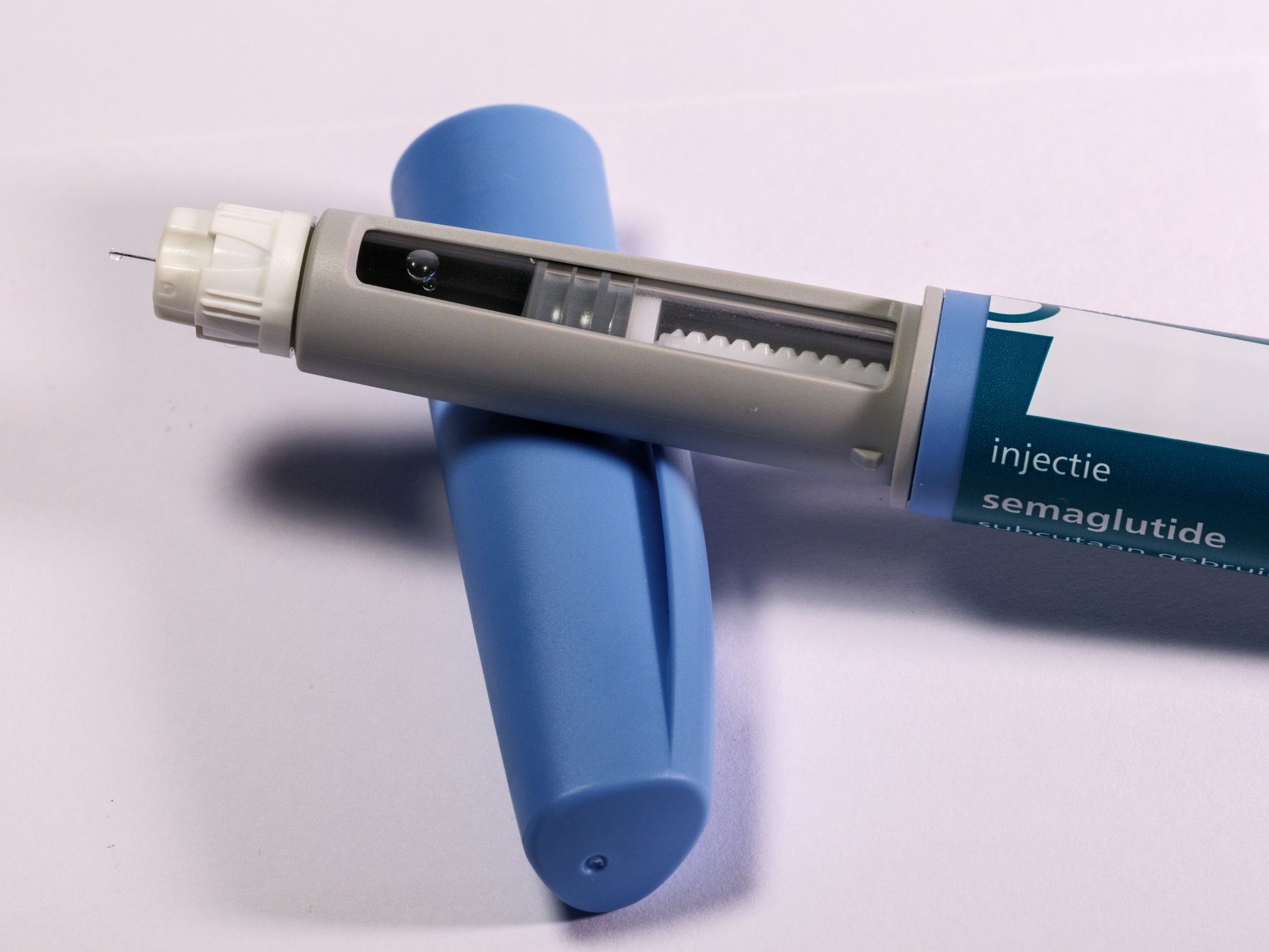
Retatrutide beyond Ozempic: what the trial really says
Retatrutide beyond Ozempic looks less like miracle-jab hype and more like a serious metabolic shift, with caveats about comparison and tolerability.
After months of wellness chatter making every injection sound like the same small pen with a new label, retatrutide landed with numbers I cannot quite shrug off. I do not mean that in the breathless clinic-window way, the one that turns any metabolic medicine into a swimsuit-season promise. I mean it in the ordinary consulting-room way: the person who has tried diet advice, walking plans, metformin, shame, resolve, and shame again, then sits in front of a doctor asking whether this new thing is genuinely different.
For that person, the first answer is yes, probably. The second answer comes slower. The phase 3 retatrutide trial published in The Lancet followed 930 adults with type 2 diabetes for 40 weeks and found average body-weight losses of 11.5% to 15.3% on retatrutide, compared with 2.6% on placebo. HbA1c, the long-range blood-sugar marker that turns up in so many slightly tense GP appointments, fell by 1.7 to 1.9 percentage points on the drug, against 0.8 on placebo.
Dr Marie Spreckley, a University of Cambridge specialist in diabetes prevention, reads the same evidence with a handbrake on. Her point, reported by The Guardian’s health coverage, is not that the data are weak. The study compared retatrutide with placebo, not directly with semaglutide or tirzepatide. So we can say it worked. We cannot yet say, cleanly, that it beats the drugs people already recognise by brand name.
“Direct head-to-head trials will be required before firm conclusions can be drawn regarding comparative effectiveness.”
Source: Dr Marie Spreckley, quoted by The Guardian
The extra lever
Retatrutide matters because it pulls a third lever. Semaglutide acts on GLP-1. Tirzepatide acts on GLP-1 and GIP. Retatrutide acts on GLP-1, GIP and glucagon, a hormone involved in blood sugar and energy use. Lilly’s own trial announcement describes retatrutide as a triple agonist, with studies spanning obesity, type 2 diabetes, knee osteoarthritis pain and obstructive sleep apnoea.

That sounds biochemical, because it is. Still, the plain-English version matters. Most public conversation around GLP-1 drugs has been about appetite: less hunger, smaller portions, food noise turned down. Retatrutide is being pitched as something slightly broader, a medicine that may also nudge energy expenditure. If that holds in larger, longer use, the conversation shifts from “this makes people eat less” to “this changes several pieces of metabolic regulation at once”.
I am wary of neat phrases in medicine. They travel faster than the evidence. This is the first post-Ozempic readout in a while that feels less like a copy of the old script and more like a new draft.
In real life, none of that is glamorous. It is someone noticing their knees hurt less on stairs, or that their sleep study numbers have improved, or that their blood sugar no longer behaves like a house light flicking on at 3am. Lilly says separate retatrutide data showed improvements in obstructive sleep apnoea and knee osteoarthritis pain, alongside weight and A1C changes. That is manufacturer framing, so it needs adult supervision. It is also the piece of the story that deserves attention.
For years, obesity medicine has been dragged into a moral argument about willpower. As the science improves, that argument looks more threadbare. A drug that changes glucose, weight, breathing during sleep and joint pain starts to look less like cosmetic weight loss and more like multi-condition metabolic therapy.
“For many people living with diabetes and obesity, treatments like this could be genuinely life-changing.”
Source: Dr Kath McCullough, Royal College of Physicians obesity adviser, quoted by The Guardian
The caveat in the room
The phrase “life-changing” always needs the next sentence. Changed how? For how long? At what dose? With what nausea, diarrhoea, muscle-loss anxiety, gallbladder risk, cost, access barrier, or private-clinic nonsense attached?
May’s obesity readout explains why retatrutide has been attracting so much heat. Eli Lilly said people in its obesity trial lost 28.3% of body weight after 80 weeks. The CNBC report on that trial noted a lower dose appeared to have fewer discontinuations due to side effects, while STAT’s coverage described weight loss approaching bariatric-surgery territory while keeping one eye on tolerability. That tension is the whole plot.
A drug can be spectacular on a chart and still hard in a body. I think of patients describing nausea that makes dinner feel like a negotiation. Preserving strength while losing weight is its own work; the scale is a blunt instrument. Families who have watched someone cycle through treatments also know that “effective” is not a single word. It has texture.
Here the analyst perspective and the patient perspective meet. Spreckley’s call for head-to-head trials is not academic fussiness. It is the evidence gatekeeper asking the question a patient eventually asks in plainer language: compared with what I could already take, is this better enough to matter?
In Australia, that question will run ahead of approval pathways, supply, prescribing rules and cost. We have already lived through the strange social life of Ozempic: the diabetes drug that became a celebrity shorthand, then a shortage story, then a cultural Rorschach test for bodies, appetite and class. Retatrutide will arrive, if it arrives, into that mess. Not into a clean laboratory.
Cynicism would be too easy. The data are too strong for that. What it deserves is caution with the lights on.
“However, medications are not a silver bullet. While they are proving to be effective, the long-term goal must be to prevent people from needing them in the first place.”
Source: Dr Kath McCullough, quoted by The Guardian
What I would watch next
Comparison is where I would start. Placebo-controlled trials are necessary, but they do not answer the dinner-table question people will ask: should I change from the thing I am already on? Semaglutide and tirzepatide are not imaginary competitors. They are already shaping clinics, pharmacies and group chats. Retatrutide has to beat not just placebo but familiarity.
Dose comes next. The top-line number will get the headlines, because 28% looks extraordinary and because we are still, as a culture, embarrassingly easy to hypnotise with weight-loss percentages. The usable dose may be the one people can stay on. Lower, steadier, less punishing. Maybe less dramatic. Possibly more real.
Function matters most to me. I would rather read six months of boring data about sleep apnoea, knee pain, glucose stability and muscle preservation than another ecstatic sentence about a body-weight percentage. The New York Times analysis of the obesity data treated the scale of weight loss as dramatic, which it is. The next phase of this drug class should be judged by what people can do, not just what they weigh.
Can they climb stairs with less pain. Sleep through the night. Keep enough muscle to carry groceries, lift a child, get up from the floor. Eat in a way that feels less haunted. Improve their glucose without life shrinking around the injection pen.
That last question is not sentimental. It is clinical. Medicine is full of treatments that work in one column and fail in the life around it.
The promise of retatrutide, beyond Ozempic, is a wider frame. Appetite, yes. Weight, yes. Also blood sugar, sleep, joints and energy regulation. That is worth taking seriously.
I would just resist the urge to call it a revolution before the comparison trials, the long-term safety data and the access story have had their say. The body is not a press release. It is a house with creaky floors, old wiring, good days, difficult nights and a thousand private negotiations. Retatrutide may help some people live in that house with less strain. For now, that is the promise. Not the proof.

Brisbane-based GP turned health writer. Covers women's health, fertility and the gap between clinic and culture.
The Lifestyle Desires brief
Style, food, travel and wellbeing — weekly in your inbox.
Subscribe