What Ozempic brides are asking wedding fashion to admit
Ozempic brides are forcing wedding fashion to confront late purchases, shifting sizes and the body pressure stitched into the perfect-dress fantasy.
Under boutique lighting, the old bridal questions still arrive by hand. Satin or crepe. Buttons or zip. How much train can you stand before it starts to feel like you are dragging the whole day behind you. Then a newer question cuts through the tulle: are you planning to lose weight before the dress comes in?
That blunt line keeps snagging on me. A wedding gown is meant to be romance, not stock management, yet the industry is having to talk like a warehouse with better lighting. In The Guardian’s report on bridal salons adjusting to semaglutide, sales staff describe brides trying on dresses early, asking nervous questions about alterations, then hovering at the till because the body they have now may not be the body they expect to have in six months. Zola figures cited in the piece put semaglutide use at 10% of engaged couples; 42% said the ubiquity of GLP-1s made them feel they should look a certain way for the wedding.
At first, the exchange seems to belong to body image. Listen a little longer and it becomes retail. Brides hear a question about the mirror. Retailers hear delayed revenue and extra labour. Designers hear contract risk. Drugs already reshaping how people shop for clothes more broadly have wandered into the most sentimental garment many women will buy. Bridalwear has never really sold just fabric. It sells certainty, or at least the feeling of it.
Viewed from the ledger, the romance thins out fast. Waiting to buy holds back a sale. Ordering and then shrinking out of the gown turns margin into handwork. The old promise, that the dress would be ready when the day arrived, now has a little asterisk sewn into the lining.
The dress arrives before the body settles
Every wedding dress depends on a controlled fantasy: choose the version of yourself you want to remember, place the order, and trust the body to meet the gown on schedule. GLP-1s have made that timetable feel less obedient. Brides are shopping early to test silhouette and price, then buying later because the wrong size now feels expensive in a more literal way.
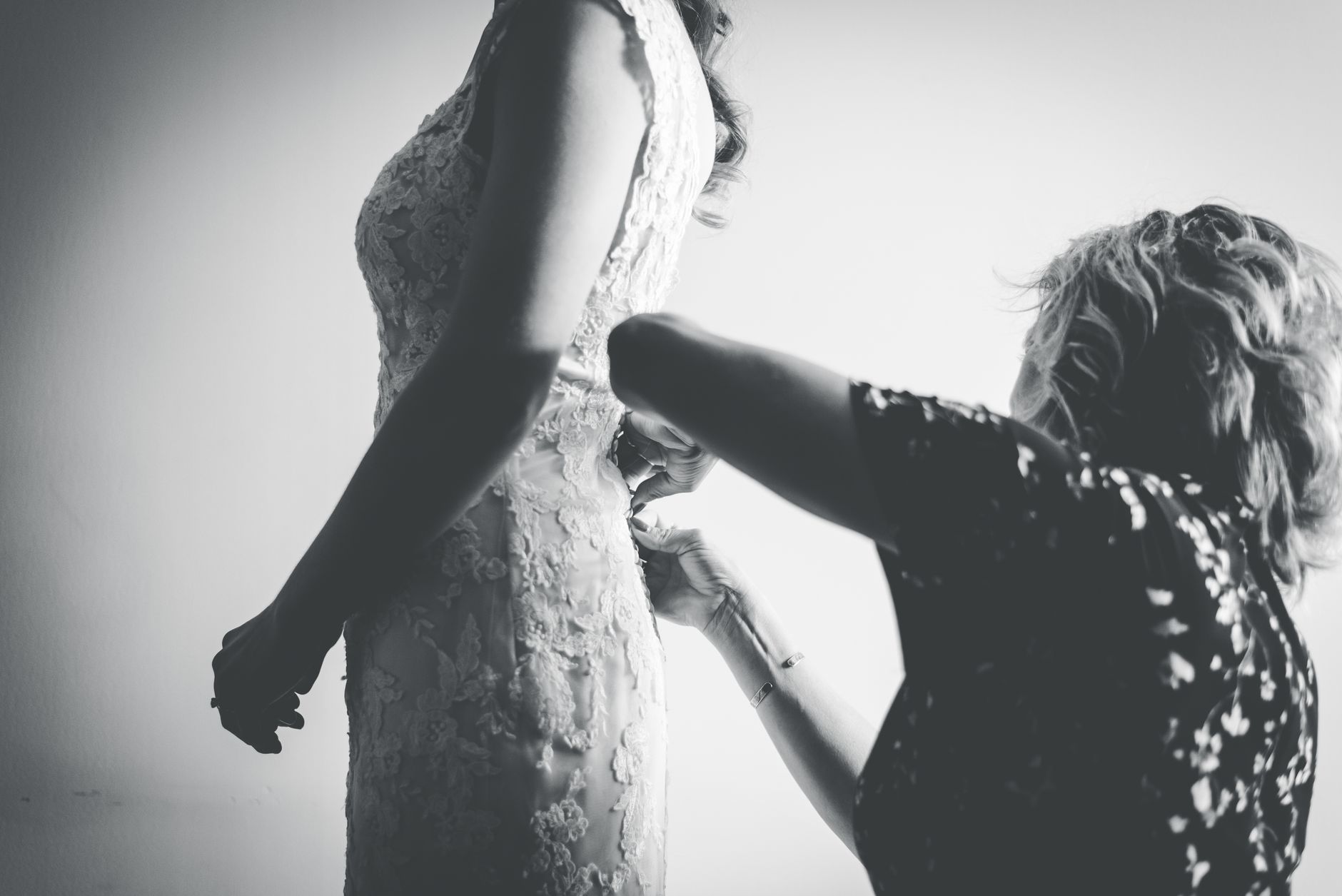
Kelly Cook’s account of what brides are saying in store carries the little tremor in the trend.
Many brides were coming in early to try on dresses, asking anxious questions about weight loss and alterations, but they were “afraid to purchase it”.
Kelly Cook, The Guardian
Speaking in that same Guardian feature on semaglutide and bridal shopping, Cook, the chief executive of David’s Bridal, describes more than a buzzy-drug anecdote. She is hearing the bridal calendar being tugged out of shape. The chain’s typical dress price range, reported at US$500 to US$2,000, is not a trivial gamble when a few months of faster-than-expected weight loss can turn a gown into an alterations puzzle.
Salon workers have been living with versions of this problem for years, only less concentrated. The former bridal-salon employee quoted in Business Insider’s piece on common wedding-dress mistakes warns against buying too early and too small. Semaglutide sharpens both errors at once. Even a sensible, informed bride can find herself ordering against a moving target.
By then, the fitting room resembles the rest of fashion in 2026: brands chasing a customer whose size, spending and confidence look more volatile than they did two years ago. Bridal just strips away the euphemism. Nobody can pretend a wedding dress is an impulse buy.
Who can afford uncertainty
From the outside, this can look like a private panic between a bride and a mirror. Inside the industry, it is closer to a fight over who absorbs the risk. Someone pays when the body changes faster than the gown can be remade. Sometimes it is the bride. Other times it is the alterations specialist staying back late with boning, lace and bad news. Often it is the independent label revising its contract language because kindness does not cover labour.
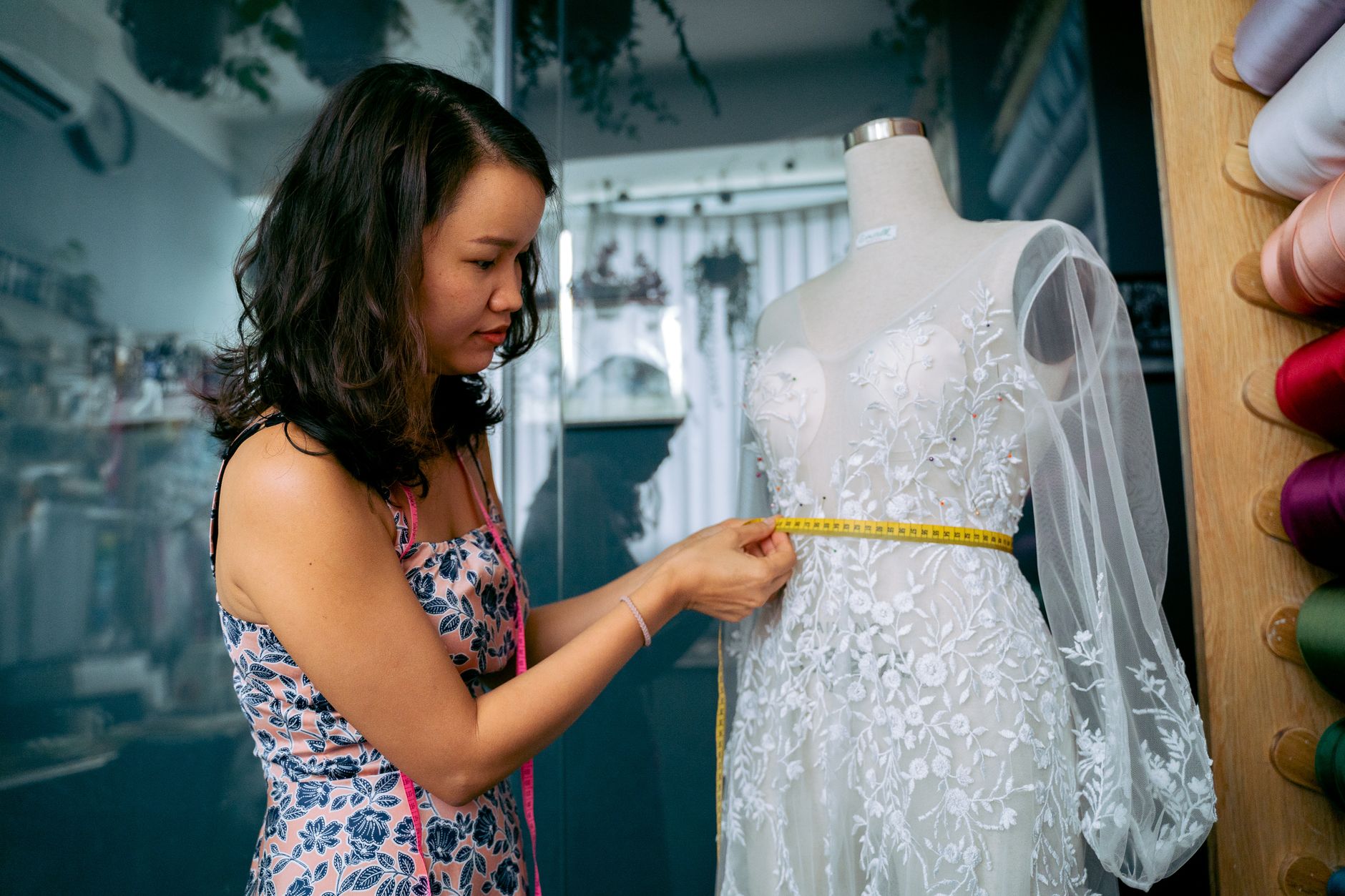
Melissa Lynn Oddo, the alterations specialist quoted in the reporting, says the bill can climb to US$1,500 when a gown is several sizes too big. That number does not read like a fashion flourish. It reads like exposure. A giant chain can spread some of the pain across volume and policy. Independent designers have fabric ordered, production slots booked, a fitter’s time already spoken for.
Rebecca Schoneveld, the bridal designer at the centre of the story, puts it more plainly.
“the weight loss has been dramatic”
Rebecca Schoneveld, The Guardian
Seven words, and the old bridal script starts to wobble. If the weight loss is dramatic, the dress can no longer be sold as a stable object waiting in a garment bag for the big day. It becomes conditional. It comes with caveats, contingency plans and, in some ateliers, a quiet shift back towards dresses that can absorb change without looking as if they were built for compromise.
What does the industry do when it cannot control the timeline? It designs for flex where it can, lawyers the rest, and hopes the fittings do not collapse into blame. Cynical? Maybe. Mostly it is the plain mechanics of a category built on long lead times and high emotion.
Thinness in white satin
Style is the obvious lens, though I do not think it is the whole story. What unsettles me is how quickly the wedding dress turns rapid weight loss into a moral atmosphere. No one is merely being dressed. The bride is being watched in advance, with photos waiting at the end like a final exam no one asked to sit.
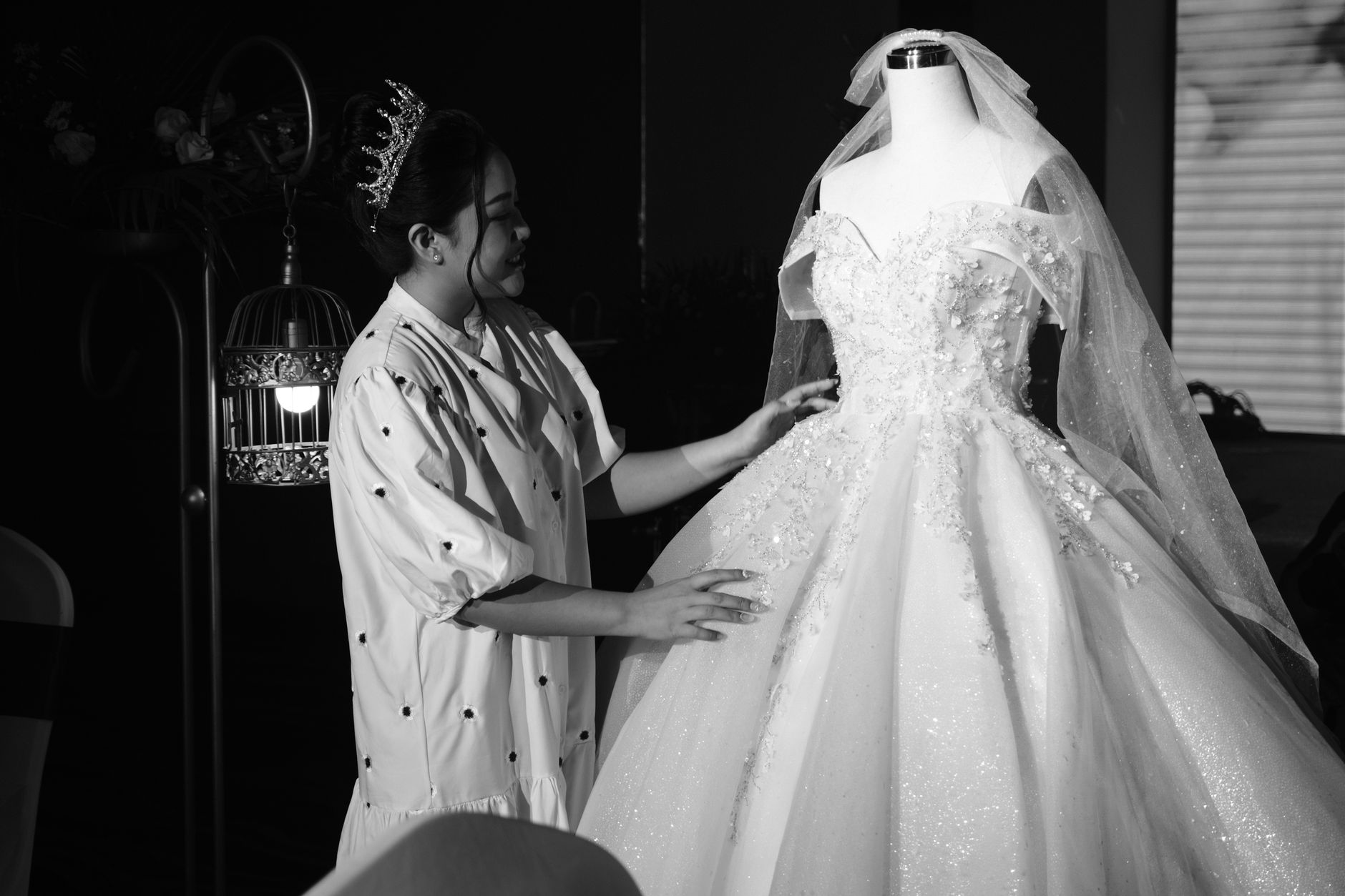
Here, the bride’s experience cuts against the retail reading. Analysts can talk about lead times and inventory. Designers can talk about structure. Brides are left with the psychic residue. In Jessica DeFino’s essay on wedding beauty pressure, the dread is not really about contour or frizz or one injectable trend. It is about how a ceremony meant to stage love can so easily become a referendum on discipline.
“I don’t want to remember how beautiful or skinny or frizz-free I was. I want to remember the love, the dancing, the kissing, the cake.”
Jessica DeFino, The Guardian
Beneath all the bridalwear chatter sits the same uncomfortable question: what, exactly, is the dress now being asked to prove? Body positivity was always a little flimsy in the wedding economy, which has made a handsome living from correction, optimisation and the fantasy of a final reveal. GLP-1 culture gives that old pressure a sharper tool. It does not merely whisper that you could look better in the photos. It offers a medical timeline for getting there.
Maybe that is why this topic feels more loaded than the broader wardrobe story. A pair of jeans can be shrugged off, returned, hidden in the back of a drawer. A wedding gown is meant to witness you. Once it becomes evidence of whether you managed your appetite, your body and your willpower, it stops being merely ceremonial.
Anyone who works in fashion knows the dress is never just the dress. Budget, family politics, venue, weather, the version of adulthood you hope this day might confirm: all of it gets carried in the garment bag. Add a body in flux and the gown starts holding something more punishing, proof that you managed yourself correctly. No wonder brides are delaying the purchase. No wonder fitting rooms feel tense.
Fashion is relearning adjustability
Instability tends to send fashion back to structure. Not always soft structure, either. Lacing, corsetry, internal architecture, garments that can cinch and release. That is one reason this story feels bigger than weddings. Bridal is merely the point where the wider body conversation becomes impossible to hide.
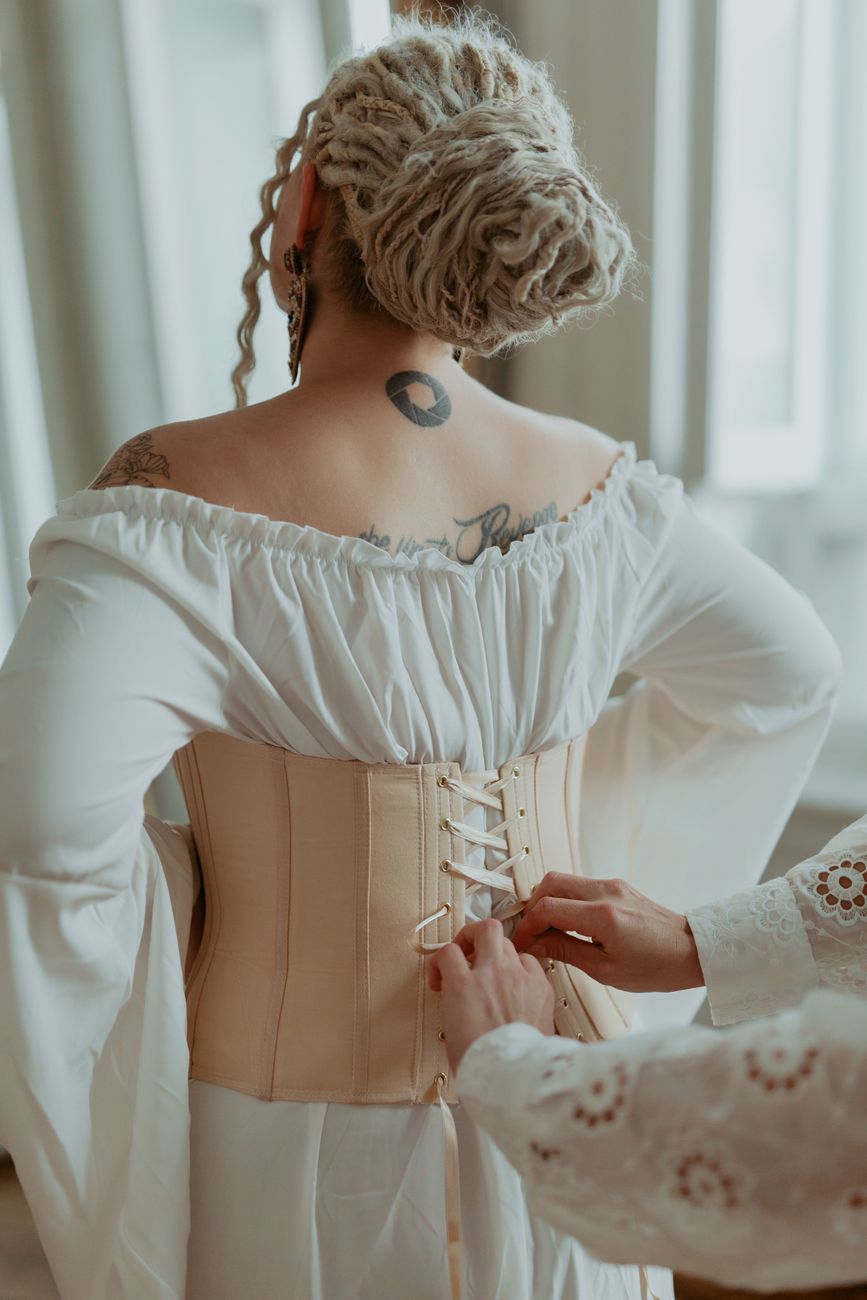
Set beside Vanity Fair’s analysis of the Paris couture collections, bridal starts to sit inside a bigger argument about who gets shaped by clothes and who is expected to shape herself for them. Couture is not the suburban bridal chain, obviously. Still, the mood travels. So does the engineering. Adjustability, once sold as romance or craftsmanship, starts to look like a hedge against volatility.
None of this means every bride on Ozempic is in crisis, or every designer is suddenly drafting around injectable culture. It means the industry can no longer pretend the bridal ideal floats above the rest of fashion’s body politics. Same weather, more lace, higher stakes.
Wedding fashion will probably try to present this as pragmatism. A few more flexible seams. A wiser consultation. Better language in the contract. Fine. Some of that is necessary, and probably overdue. But pragmatism is not neutral when it arrives on the back of a culture telling brides that the perfect dress may still be waiting for the thinner body.
What Ozempic brides are asking wedding fashion to admit is harsher than a sizing problem and more intimate than a retail trend. The industry has always profited from the promise that transformation can be stitched, steamed and photographed into permanence. GLP-1s have exposed the cost of that promise. The body changes. The bill lands somewhere. For many brides, even before the wedding begins, they are already being asked to earn the dress.
The Lifestyle Desires brief
Style, food, travel and wellbeing — weekly in your inbox.
Subscribe