The sleep score is judging us before breakfast
Sleep score anxiety is turning rest into a tiny performance review, just as new research suggests perfect sleep was never a single number.
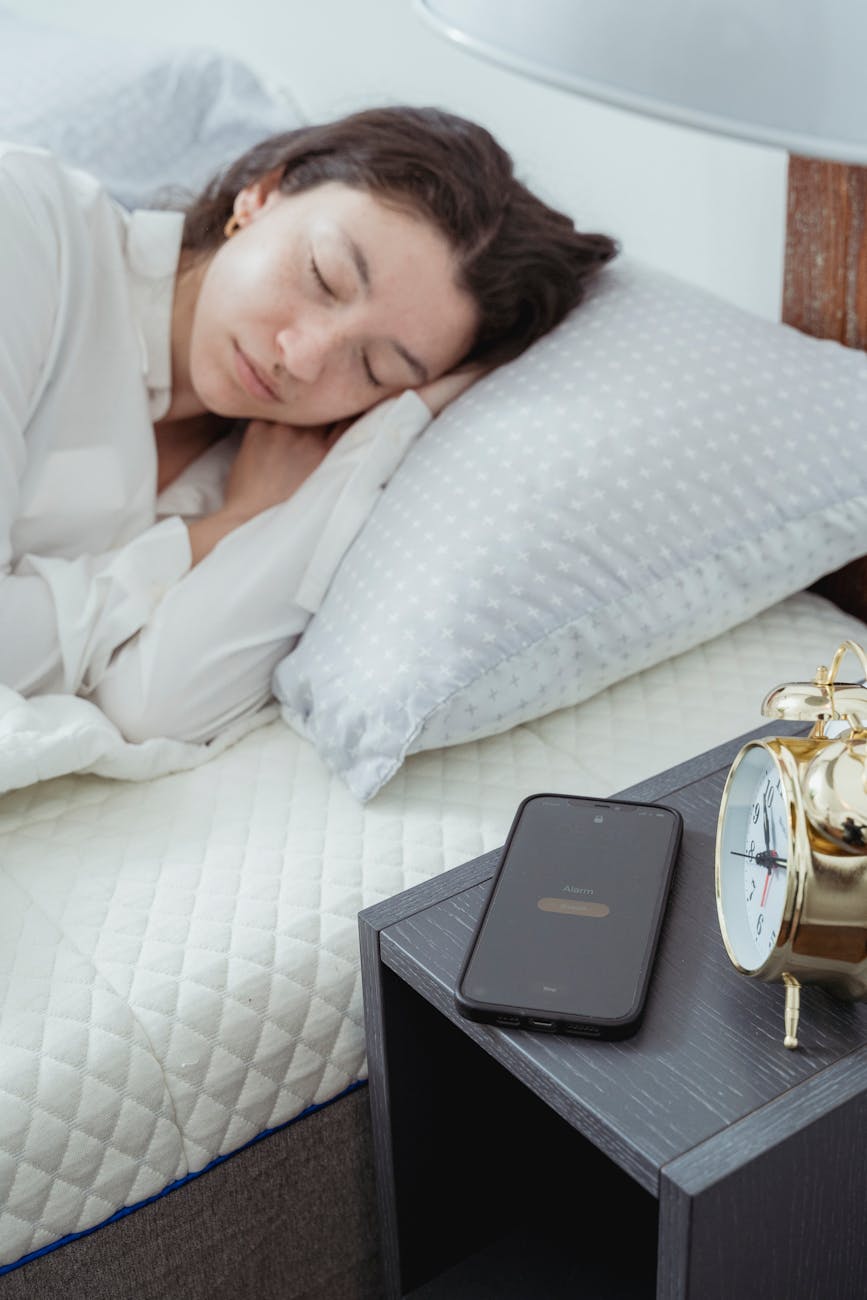
At 6.14am, I know the particular shame of waking before the alarm, reaching for the phone in that half-lit, stale-bedroom minute, and being told I have failed at rest. No headache. No baby crying. No dramatic 3am spiral. Just a number, usually wearing a colour that looks vaguely disappointed in me.
Before coffee, I believe it. I can wake feeling serviceable, kettle on, shoulders loose, only to watch a sleep score downgrade the entire night before my feet have properly found the floorboards. Suddenly the body is no longer the evidence. The app is.
Beneath the latest sleep study doing the rounds is exactly that tension. A new Nature paper, using data from about 500,000 UK Biobank volunteers and 23 biological ageing clocks, found the lowest biological-age gaps clustered around 6.4 to 7.8 hours of sleep a night. Useful? Yes. A commandment? No. Still, I can already see the number migrating from a research finding into the little moral theatre of the bedside table.
In The Guardian, Emma Beddington caught the absurdity neatly, asking whether the secret to the perfect amount of sleep might be to stop worrying about it. The piece named the thing many tracker-wearers know but do not always admit: once sleep becomes measurable, it can start to feel like homework.
The number on the pillow
Rules have always clustered around sleep. Eight hours. No screens. Dark room. Cool room. Same bedtime. Same wake time. Magnesium, tart cherry juice, linen sheets if the algorithm has decided you are that woman. What feels different now is not the advice itself, but the intimacy of the score. It arrives before anyone has spoken to you. It sits closer than a doctor, closer than a partner, almost inside the private weather of the body.

For anxious sleepers, that closeness can be a trap. Researchers and clinicians have been warning for years about orthosomnia, the chase for perfect sleep data that makes sleep itself harder. Healthline’s reporting on sleep apps and insomnia quotes Håkon Lundekvam Berge with the sort of sentence the wellness market should probably pin above its product roadmaps:
“The rapid development of sleep app technology requires the scientific community to keep up with technological advances”
Håkon Lundekvam Berge, quoted by Healthline
Trackers are not useless. I am a GP by training, and I do not think people are silly for wanting patterns. If someone drinks wine late, scrolls until midnight, wakes at 3.40am for a week and then sees the pattern on a graph, that can be clarifying. Data can give shape to what otherwise feels like personal weakness. It can also catch the kind of routine drift we are very good at explaining away.
Crucially, a range is not a verdict. The Nature study’s 6.4 to 7.8 hours matters because it complicates the old eight-hour myth, not because it hands perfectionists a sharper stick. Even Junhao Wen, the study’s lead researcher, framed the findings as “guidance” rather than prescription. That distinction sounds small until you are lying awake at 2.12am calculating whether you can still rescue the graph.
Optimising something that requires surrender has a particular cruelty. You can prepare for sleep. You can protect it. You can stop treating 11pm like a second afternoon. Then, at some point, you have to let the body do its unglamorous animal work. The score arrives after the fact, but the anticipation of it can move into the night itself. It watches from the morning.
What the ring is selling
Inside wearable companies, the hard question is not whether guidance can help. It can. The more interesting question is how guidance should feel. A wearable sleep team is trying to build something supportive, sticky and commercially useful without turning a rough night into a performance review. That is a narrow bridge.
Now the category is shifting from passive logging to active coaching. Wired’s 2026 sleep-tracker guide describes the move from devices that merely collect data to products that offer guidance about what to do next. Fitbit Air, Oura, Whoop and Garmin all live somewhere in that wider market for readiness, recovery and reassurance. The language is gentle, but the business model is not neutral. Scores keep people checking. Coaching keeps them subscribed.

Oura is the cleanest example of how far the category has moved from geeky self-tracking into lifestyle jewellery. The company’s new Ring 5 arrives as it heads towards a possible IPO, with The Guardian reporting an 80 percent renewal rate and average wear time of 23.5 hours a day. That is not a gadget people use occasionally. That is an object with almost continuous access to the body.
Personally, I do not find that sinister by default. A ring can be less intrusive than a watch, and for some people the absence of a screen is a mercy. There is something almost elegant about a device that disappears until the morning. Still, the disappearance is part of the bargain. The less visible the hardware becomes, the easier it is for the measurement to feel like common sense rather than a designed product.
Market watchers might put it more coldly: the category is selling reassurance as much as accuracy. A person who pays for a sleep tracker is buying data, yes, but also a nightly feeling that someone, or something, is keeping watch. The subscription economy loves this kind of need. It does not end when the ring is paid for; it renews with every orange score, every suggestion, every little nudge that tomorrow could be better if you behaved.
Regulators are being pulled into the same room. STAT reported that relaxed FDA wellness guidance has given health-tech companies more room to release consumer features faster. Oura chief medical officer Ricky Bloomfield put the commercial relief plainly:
“this guidance helps give us more confidence that we can release features sooner and not have to spend months getting additional clarification from the FDA”
Ricky Bloomfield, quoted by STAT
Bloomfield was speaking about wellness guidance and blood-pressure technology, but the quote belongs in the same cultural room. The more health-ish features move into consumer devices, the more ordinary people are asked to interpret medical-adjacent feedback in bed, at breakfast, on the tram, between Slack messages. Sometimes that feedback is useful. Sometimes it is just another authority with a rounded font.
The softer use for data
Here is the sceptic’s question I keep coming back to: which users are most likely to be harmed by all this feedback? A confident sleeper may glance at a bad score and shrug. An anxious sleeper may treat it as evidence of damage. Someone recovering from burnout, illness, grief or a newborn year may not need another metric saying the body is falling behind.
Seen this way, the perfect-sleep conversation becomes less about sleep and more about the wider wellness bargain. We keep being offered tools that promise self-knowledge, then behave surprised when self-knowledge curdles into surveillance. A cycle tracker becomes a fertility forecast. A step count becomes proof of virtue. A readiness score decides whether the day has permission to feel difficult.
Generously read, the Nature paper should make us a little less doctrinaire. Its U-shaped finding suggests too little and too much sleep can both be associated with biological ageing measures, but it also reminds us that population data does not become a nightly instruction for one person with a head cold, a toddler, a deadline, perimenopause, shift work or a dog vomiting on the rug at 4am. Bodies have context. Apps tend to have dashboards.
Lately, I keep thinking about the phrase “sleep hygiene”, which has always sounded faintly punitive to me, as if the problem with the exhausted woman at the kitchen bench is that she has failed to clean her night properly. Of course habits matter. So do rent stress, caregiving, pain, hormones, work rosters, partner snoring and the low-grade dread that hums through a lot of modern life. If the app cannot see those things, its confidence should be modest.
A better use for sleep data is less glamorous than the market wants. Look at the broad pattern, then put the phone down. Treat the number as weather, not a report card. Notice whether alcohol, late caffeine, heat, stress or scrolling seem to change the shape of the week. If the tracker makes you calmer, keep it. If it makes you bargain with the night, take it off for a while and see what returns.
No single study has ruined sleep. No ring has either. The damage comes from the belief that every private rhythm should be translated into a score before it counts. Rest is one of the few things that still asks us to stop managing ourselves. No wonder we keep trying to manage it anyway.
Tomorrow morning, plenty of people will wake up and check. I probably will too, because knowing better is not the same as being immune. But I would like to practise a smaller form of rebellion: noticing my own body before the app gets the first word.

Brisbane-based GP turned health writer. Covers women's health, fertility and the gap between clinic and culture.
The Lifestyle Desires brief
Style, food, travel and wellbeing — weekly in your inbox.
Subscribe