Why the health-tracker backlash suddenly feels like relief
Wearable adoption has stalled, the wellness industry named over-optimisation its number-two trend, and Steven Bartlett's three-glasses-of-wine meltdown became the spark. The rebellion against constant self-measurement isn't a fad — it's relief.
Three glasses of wine ruined Steven Bartlett’s life.
Not in the way three glasses might ruin anyone’s evening — a sharper-than-usual morning, a missed gym session, the kind of low-grade regret that passes by lunchtime. No. The Diary of a CEO host, speaking on a podcast recently, catalogued the consequences in the forensic detail of a man who has optimised his way out of ordinary living. His sleep score tanked. His resting heart rate climbed. His heart-rate variability — God, the HRV — collapsed entirely. “It took three days to recover,” he said, and he meant it.
It is hard to watch a healthy thirty-something man describe a couple of school-night wines as a three-day physiological catastrophe and not feel something shift in your own chest. Not sympathy, exactly. More like exhaustion. A quiet recognition: I cannot live like this, either.
The backlash was swift and, in retrospect, inevitable. Greg James, the BBC Radio 1 host, launched what he called an “anti-Bartlett/anti-optimisation cult” on Instagram, telling his followers:
My issue is this endless optimisation and measuring of everything to the point where it starts to make you feel a bit miserable if you don’t quite hit your own targets.
— Greg James, BBC Radio 1
Vogue Williams piled on, admitting she had stopped wearing her Whoop strap. “That’s kind of why I stopped wearing the Whoop because I was like, ‘This is too judgemental for me.’” She wasn’t done: “It just feels like he’s only connecting to himself and not actually living his life.” Fearne Cotton, with the precision of someone who has been through the wellness wringer and out the other side, offered the most damning counterpoint of all: she genuinely sometimes podcasts better on a hangover.
But this isn’t really about Bartlett and it isn’t really about wine. The collective exhale that followed his anecdote — the replies, the radio segments, the Guardian column — was the sound of something that had been building for years finally surfacing. Wearable adoption in Britain has stalled at 35 per cent, unchanged since January 2024. The Global Wellness Summit, the industry’s own trend-forecasting body, named “the over-optimisation backlash” its number-two trend for 2026. When a $6.8 trillion sector starts flagging its own consumers’ exhaustion, the pivot is real.
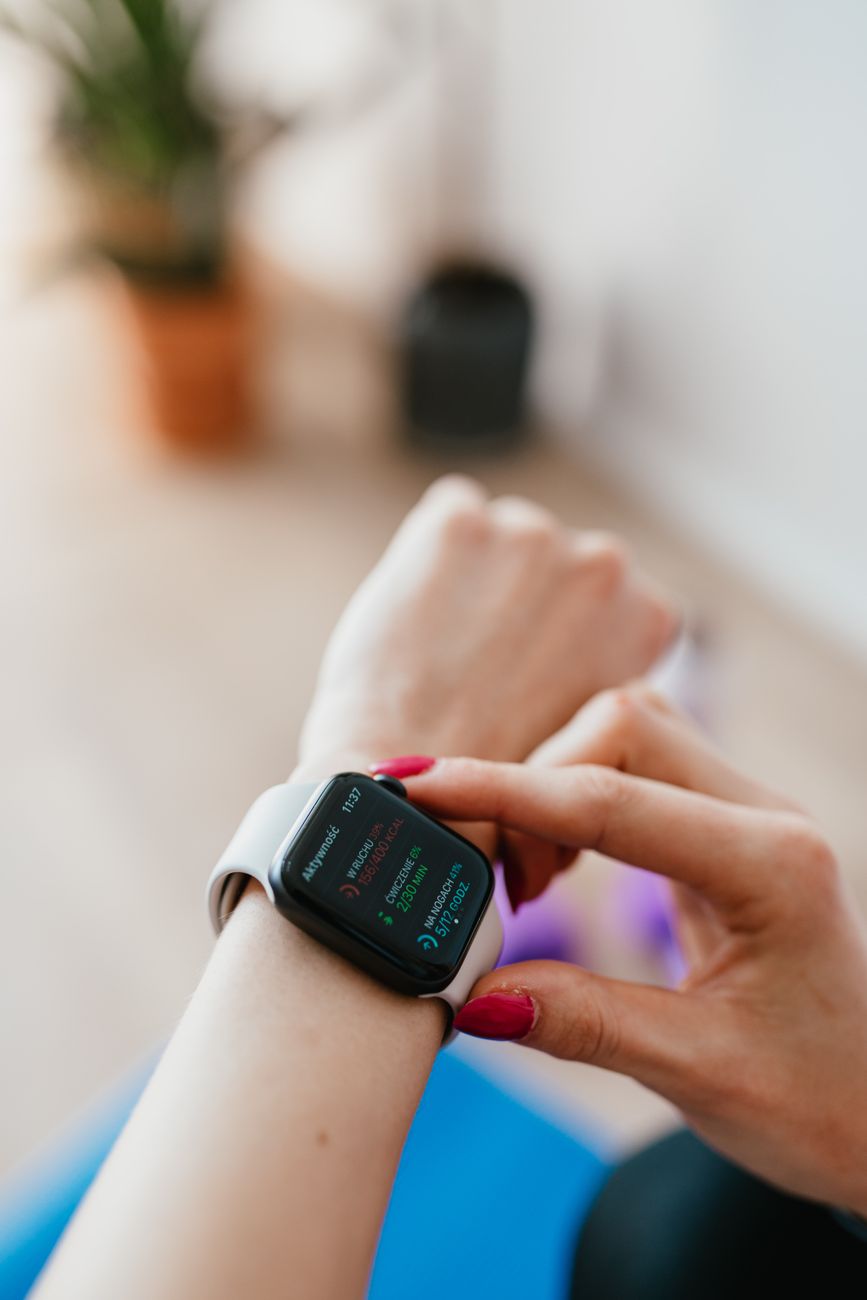
I’ve been thinking about Vogue Williams’s phrasing: too judgemental. It lands differently than “inaccurate” or “annoying” or “I got bored of charging it.” A device that judges you. A thing on your wrist that wakes you at 7am with a readiness score of 47 and no explanation, no context — just the number and the implication that you are, somehow, insufficiently prepared for your own day.
What makes a number judgemental is the story it tells about you that you didn’t ask to hear. Your Oura ring doesn’t know you were up at 3am because your kid had a nightmare. Your Whoop doesn’t factor in the fight you had with your partner, the email from your boss, the fact that you took the stairs twice. It just sees the data and draws a line. And you, because you spent four hundred dollars on the thing and because the whole wellness economy has spent a decade telling you that more information is always better, believe the line.
Brad Stulberg, the author of The Way of Excellence and someone who has spent his career inside peak-performance culture, put it plainly:
This optimisation stuff can make you super fragile.
— Brad Stulberg, author of The Way of Excellence
His argument — one I keep returning to — is that constant self-measurement doesn’t build resilience. It trains the opposite. If you need a green sleep score to feel okay about the day ahead, what happens when the scores stop being green? What happens when life, which is messy and variable and indifferent to your HRV, actually arrives?
Stulberg’s framing cracked something open for me. The fragility isn’t in the drink or the bad night’s sleep — it’s in the person who’s been conditioned to experience a normal fluctuation as a failure. Bartlett’s three-day recovery wasn’t chemical. It was existential. His system broke because his metrics broke, and his metrics are how he knows he’s alive.
This is the point where the health-tracker backlash stops being about gadgets and starts being about what the analogue revivalists have been saying for a while. Emma Beddington, in the column that crystallised the backlash, drew the line explicitly: the rebellion against optimisation is the same impulse driving the return to film cameras, to print books, to hobbies that produce nothing except pleasure. “We aren’t perfectible,” she wrote. “We’re fallible, finite flesh and blood. Things fall apart; the metrics cannot hold.”

I don’t think it’s a coincidence that searches for “analog hobbies” have jumped 136 per cent in six months, or that Fujifilm’s 2026 trends report found 61 per cent of Australians are regularly creating content they never intend to post. There is a through-line here: the watch coming off the wrist, the phone left in the other room, the photograph developed but never uploaded.
Greg James, for all the chaos-goblin energy of his anti-optimisation cult, landed the actual thesis: “Optimisation is killing fun. We have to absolutely rail against that.”
What I keep coming back to is how much this mirrors what therapists are starting to call “longevity fixation syndrome” — an unofficial diagnosis for the compulsive, anxiety-driven obsession with extending lifespan through constant measurement. The Guardian profiled a man earlier this year who had spiralled so deeply into tracking his biomarkers that he described feeling “crushed by the pressure I put on myself.” The tools meant to give him control had taken it instead.
I am not anti-science. I am not arguing anyone should throw out their blood-pressure cuff or stop getting their skin checked. But the gap between a health tool and a health parasite is narrower than the wellness industry would like us to believe — and it is measured not in accuracy but in anxiety. The question isn’t whether your tracker is right about your sleep. The question is whether knowing is making you well.
There’s a statistic I keep on my desktop because it makes me feel slightly better about everything: Nobel Prize-winning scientists are three times more likely than the general population to have a serious hobby — painting, woodworking, playing an instrument. These are not people who reject rigour. They are people who understood, before the rest of us, that the best thinking happens when you stop measuring for a while.
Maybe that’s what the backlash is, really. Not a rejection of health but a reclamation of it. Health without the spreadsheet. A long walk without the step count. A couple of glasses of wine on a Tuesday without the three-day existential audit.
The metrics cannot hold, and thank God.

Brisbane-based GP turned health writer. Covers women's health, fertility and the gap between clinic and culture.
The Lifestyle Desires brief
Style, food, travel and wellbeing — weekly in your inbox.
Subscribe