Why wearing colour to the office still feels like a dare
Wearing colour to the office still feels risky because work clothes are read as competence, not decoration, even in relaxed Australian offices.
Before you say a word, some clothes have already entered the room. You feel it in that thin pause after the lift doors open, before the first hello, when everyone clocks the outfit and politely pretends they haven’t. I kept thinking about that pause while reading Vogue’s Alexandra Hildreth’s week-long experiment in office colour: no black except shoes, at least two colours in every outfit, and each look loosely borrowed from the men’s spring 2027 runways. Written down, it sounds like a game. In real life it feels closer to exposure therapy if your work wardrobe has slowly calcified into navy, charcoal and the sort of beige that insists it is just being sensible.
Colour was not, to my mind, the reason Hildreth’s piece travelled. The charge was the way a bright shirt, a pistachio knit or a pair of improbable trousers can turn a Tuesday into a small office happening. We tell ourselves work has relaxed: fewer heels, fewer ties, waistbands with a private life. Then colour walks in and half the room behaves as though someone has wheeled a karaoke machine into the boardroom.
Different workplaces read that signal differently, which is the useful part. For Mulan Wai, the corporate law graduate profiled by Fashion Journal, colour is not unserious. The sharper problem is that offices still ask women, particularly young women, to translate personality into a dialect of restraint. Her professional wardrobe leaves room for wit. Plenty of workplaces say they want individuality. They mean it right until individuality becomes visible.
The room notices before anyone says it out loud
Anyone looking for proof that clothing still operates as a live signal at work would not need to read far into Hildreth’s experiment.

Her moodboard pulled from Celine, Willy Chavarria, AURALEE, Comme des Garçons, Ralph Lauren and Sacai, labels that can make colour look architectural rather than chirpy. That matters more than it sounds. On a runway, saffron or lilac can read as authority because the cut is already doing half the talking. Under office fluorescents, colour has to survive tired carpet and the suspicion that you are trying a bit hard.
“Those are goth shades. I want you in lime green.”
colleague, via Vogue
Funny line. Also a small tell. Nobody says that about your grey knit. They say it when your clothes have broken the neutral pact and made everybody aware that there was a pact. I am less convinced this is about style bravery than about office life being one of the last places where adults are still graded, quietly and in public, on whether they look manageable. A bright outfit can read as confidence. It can also read as appetite, mood, self-authorship. Some workplaces do not know what to do with any of that before 10am.
Long before dopamine dressing became the phrase of the month, office clothes were already asking permission. Even in adjacent men’s coverage, the question is still there. Earlier this winter, Esquire asked whether shorts can ever really pass an office dress code and landed, sensibly, on the old instruction: read the room first. That is the code underneath the code. We call it personal style. We police it like group etiquette.
Relaxed dress codes, strict readings
Australian offices love describing themselves as casual. True enough, until someone tests what casual actually covers.

What stayed with me in ABC’s reporting on workplace dress codes was not the obvious point that employers can set standards. We know that. It was the word “reasonable”, doing a heroic amount of work in office culture. Reasonable has always been shaped by gender, seniority, body type and industry folklore. The policy may be neutral. The reading rarely is.
“Your corporate wardrobe is only as restricted as your imagination.”
Mulan Wai, Fashion Journal
Wai’s line gets at the practical question underneath all this: how do you stop colour from looking like costume at work? Not by dressing less vividly, I suspect. By understanding that professionalism is a language with more than one accent. Her clothes work because they are composed, not apologetic. Tailoring supplies the frame; colour behaves like a point of view rather than an apology pinned to a safe outfit.
Legal boundaries still sit behind the softer chat about self-expression. Cecilia White, an HR and recruitment director quoted in the ABC piece, is blunt enough about it.
“a dress code policy is perfectly reasonable and perfectly lawful.”
Cecilia White, via ABC News
After that sentence, the more useful questions begin. Reasonable for whom, in which role, against which body? This is where office colour stops being shopping advice and starts looking more like social anthropology. A bright knit on a senior editor may read as flair. On a junior staffer, the same knit can still be processed as a test of judgement. I might be wrong about this, but corporate culture remains oddly feudal: some people are allowed to break form because they have already proved they understand it.
Why one bright thing feels safer than a full bright look
The most useful fashion advice around office colour is also the most revealing. Start small. One shoe. A scarf. A plum shirt under the jacket. A lipstick that does the talking while the rest of you acts innocent.

A similar compromise turns up across Broadsheet’s work-wardrobe advice, Corporette’s conservative-office take on dopamine dressing and Marie Claire UK’s styling guide to prints at the office. None of them tell you to abandon colour. They tell you to manage it: tonal dressing, one pop against navy, brightness held inside clean lines, print balanced by shapes the office already trusts. Make the new thing legible inside an older idea of polish.
Useful advice, yes. Also a confession. The office still rewards restraint first and self-expression second. Only after you have provided evidence that you understand the rules does the brightest version of you become welcome. That is why a red flat or moss-green knit feels easier than a full saffron suit. The small move signals taste. The large one risks being mistaken for personality.
No part of me wants every Monday to look like an art-school crit. Truly, nobody needs that before coffee. What interests me is the emotional maths behind the so-called sensible option. When women ask how to add colour to workwear, they are often not asking about colour. They are asking how to widen the space between competence and conformity without being punished for the attempt.
Runway references translate unevenly for the same reason. Hildreth could borrow the spirit of those spring 2027 collections, but the office strips fantasy down to social residue. A powder-blue shirt at Celine may suggest studied ease; at your desk it may invite questions about whether you have a presentation later, a date after work, or some newly acquired confidence the room has not approved. Clothes are never just clothes in a workplace. They are office gossip in textile form.
Men’s style media is circling the same problem from another direction. GQ’s recent case for “anti-corporate” dress pants sells rebellion only after promising your boss will not object. That is the whole market, really: clothes that let you feel less obedient without ever looking unhireable. The office will tolerate freshness. It still hates ambiguity.
Colour is not the opposite of seriousness
Assuming the neutral wardrobe is apolitical and the colourful one is performative is the mistake. Both are performances. One has simply been normalised for longer.
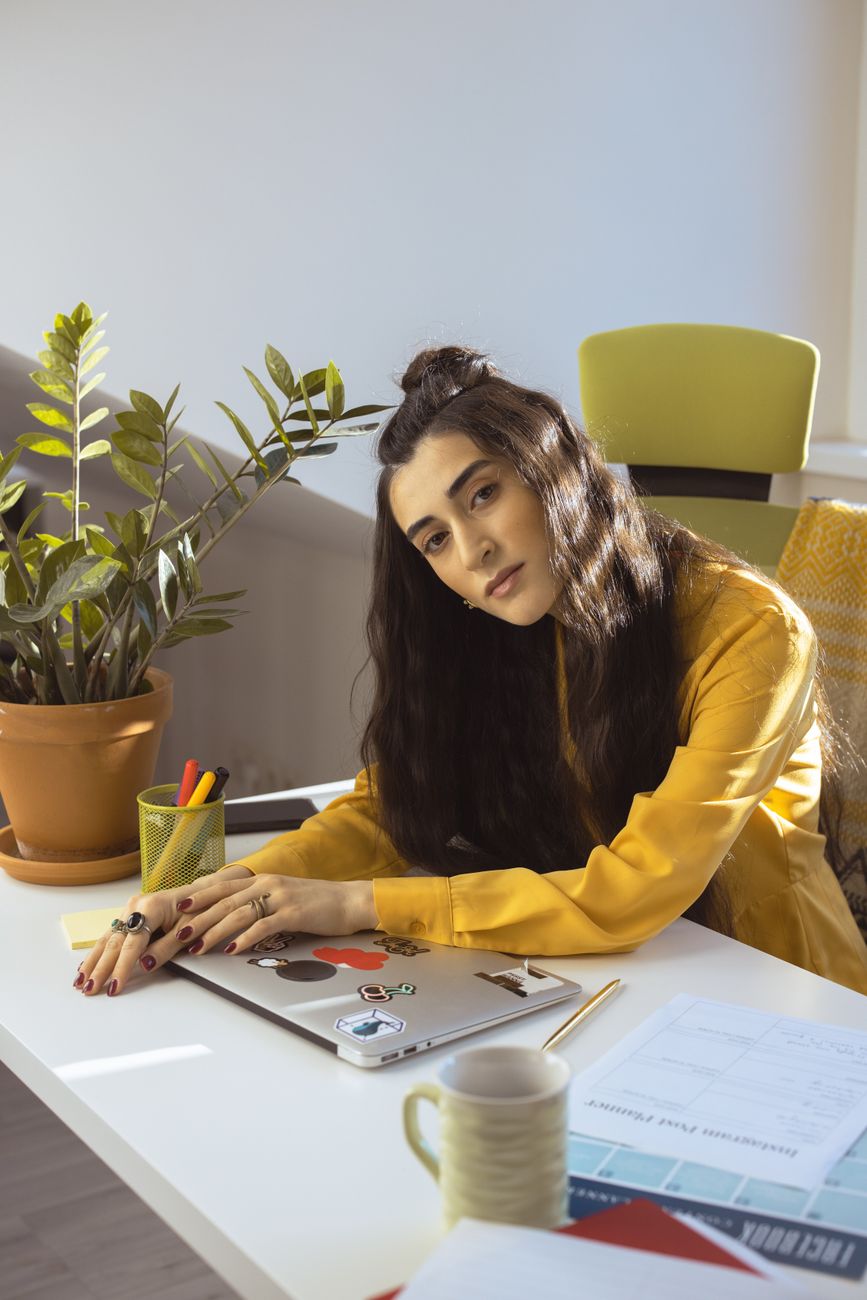
Reading around this story, I kept noticing how often office dressing gets discussed as an efficiency problem when it is really a visibility problem. We pretend the black trouser, the camel coat and the pale blue shirt are neutral because they lower friction. They also lower scrutiny. They let you enter the room without having to narrate yourself. Colour asks for a different bargain: I will still do the work, but I am not willing to disappear while doing it.
Hildreth’s experiment landed for that reason. It did not offer a new styling formula. Nor did 2026 suddenly discover blazer chromotherapy. It landed because many of us recognised the feeling underneath it, the faint absurdity of being grown, employed, theoretically autonomous and still slightly embarrassed by a cardigan the colour of sherbet. The office, for all its talk about authenticity, remains devoted to managing surfaces.
By degrees, the uniform is loosening. Vogue’s recent summer office outfit piece and Marie Claire Australia’s editor-approved workwear brands both assume a reader who wants elevated everyday clothes rather than strict corporate drag. That feels true to the Australian city office I know, where the mood is less banker than creative professional with a Slack channel. Even there, colour tends to arrive carefully, laundered through good fabric, expensive shoes or a cut so clean nobody can accuse it of whimsy.
Maybe that is the answer to the two questions that kept tugging at the reporting: how do you keep colour from feeling like costume, and why do small accents feel safer than a full look? Offices are machines for assigning meaning, and bright clothes are meaning-rich. Texture, tailoring and context do the diplomatic work. They tell the room the colour is intentional, not accidental; controlled, not chaotic; professional, not merely cheerful. I do not especially love that distinction. I recognise it.
Which leaves the dare itself. I do not think wearing colour to work should count as rebellion in 2026. Yet for many people, especially women working inside conservative or semi-conservative codes, it still does. Not a dramatic dare. A tiny one. The kind you register when you catch your reflection in the lift doors and realise your outfit will be discussed, even if only silently, before lunch.
Maybe that is why the safest work wardrobe so often ends up monochrome. Not because black is better, smarter or more elegant, though sometimes it is all three. Because black asks less of the room. Colour asks everyone else to reveal what they think professionalism looks like. That is why it still feels brave.

The Lifestyle Desires brief
Style, food, travel and wellbeing — weekly in your inbox.
Subscribe