Why the weighted blanket returns every winter
Weighted blankets keep resurfacing each Australian winter because they promise warmth, pressure and that old-fashioned feeling of being held.
Every June I relearn the same thing about winter sleep: before I am looking for a better app or a more virtuous evening routine, I am looking for weight. Actual weight. Something heavier than the cotton coverlet that felt fine in March, something that pins the corners of the bed down and tells my shoulders, in plain physical language, that the day is over.
Which is probably why the weighted blanket keeps turning up each Australian winter with such odd emotional force. Sold as sleep technology, anxiety support, décor and self-care purchase all at once, but the feeling it trades on is older than any of that. Pressure. Containment. The body recognising a border.
The sceptical case, though, arrives almost as soon as the marketing copy does. Intimate promise, maybe a little sentimental — while the evidence is patchier and more particular. The strongest research does not say every healthy adult will sleep better under a heavy blanket. Some people report relief, some sleep studies show benefits, and the effect seems tied to context, habit and personal tolerance as much as weight itself.
Both sides of this tension are visible if you look. Testers and editors talk drape, breathability, the right kind of cocoon. Clinicians and evidence-watchers ask whether a product can carry more meaning than the data can quite support. Caught somewhere in between is the rest of us, standing at the end of the bed on a cold night, deciding whether comfort can be purchased by the kilo.
The promise is physical
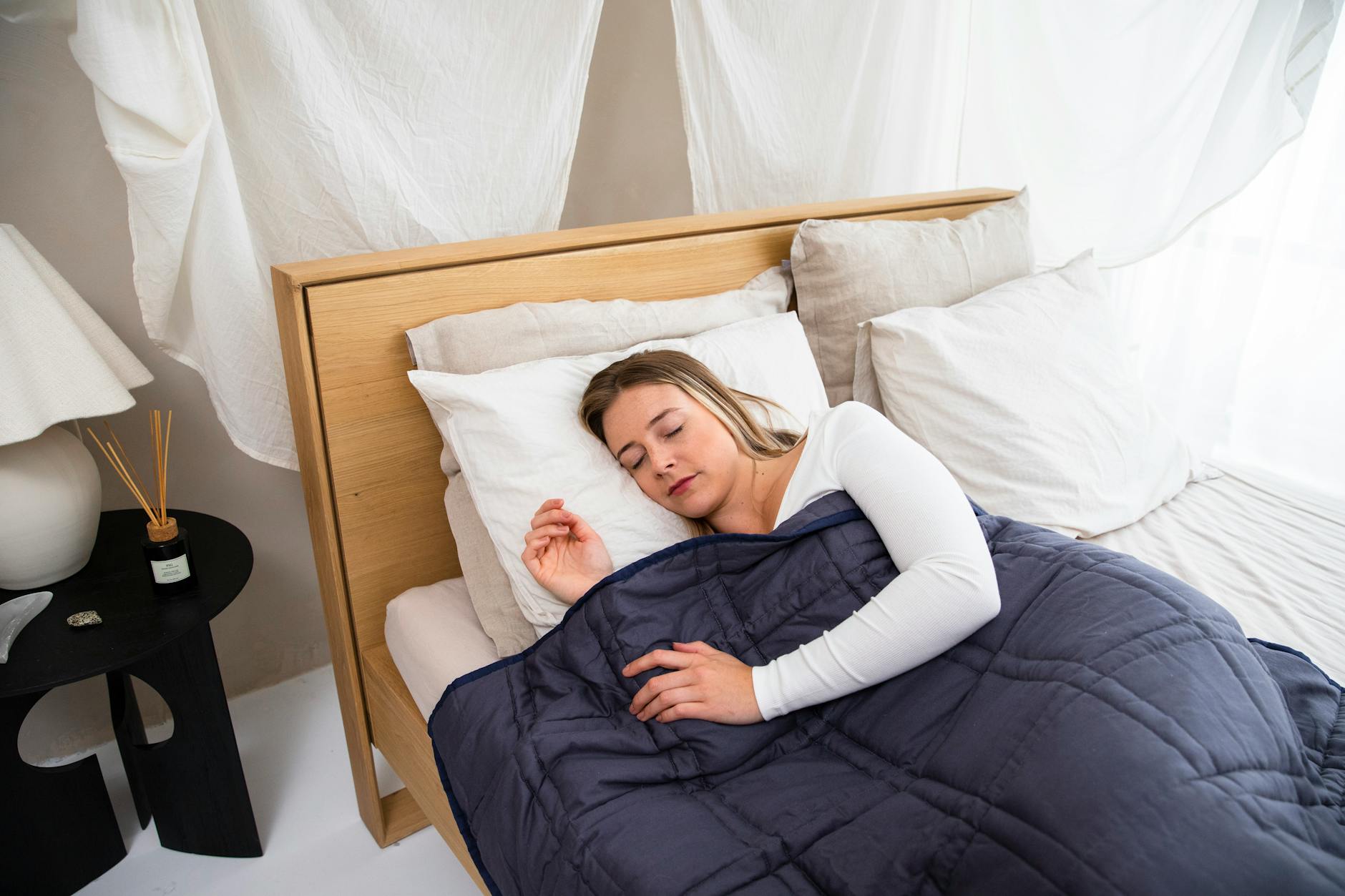
The consumer case for weighted blankets is not complicated, which is part of why it has stuck. Wirecutter’s recent guide says its staff tested 20 weighted blankets, hauling them around, sleeping under them and judging everything from heft to washability. The old rule of thumb, also repeated there, is to start at roughly 10 per cent of your body weight. Tidy advice — maybe too tidy — but it gets at the appeal: the blanket is meant to be felt, not admired from across the room.

What people buy, though, is not just pressure. They buy a version of bedtime that feels more deliberate. Wirecutter put it bluntly:
“Sometimes you just want a hug—or, at the very least, a big, fluffy cat to curl up in your lap.”
— Wirecutter, The Best Weighted Blankets
That is not medical language. It is emotional language, and it probably explains the product better than any study abstract could. When a blanket works, it turns sleep from a blank necessity into a small ritual. You notice the downward pull across the thighs first, then the chest, then the way the usual midnight fidgeting loses momentum. I might be overstating it, but this is the part of the pitch Australians seem to recognise at once. Winter here is not Scandinavian. It is colder inside than we think it should be, with draughty bedrooms, old weatherboards and a heater you are never quite sure you trust all night.
Stepping back, the practical view is simpler. A blanket can feel soothing, or it can feel like expensive clutter — depends on fabric, fill and whether you can live with it past the first week. Testing language matters more than the generic wellness copy, always. Weight is only one variable. So are stitching, outer fabric, and whether the thing can be moved without making the bed feel like a gym session.
The evidence is thinner than the copy
By the time a product is being cast as an answer to modern anxiety, I want the science to be dull and specific. Glamour is not a useful research method. The best evidence in the bundle is a 2024 systematic review and meta-analysis of 426 patients, which found weighted blankets showed some promise for symptom management in particular patient groups, including anxiety and insomnia, but not the sort of universal, one-size-fits-all effect that sales pages love.
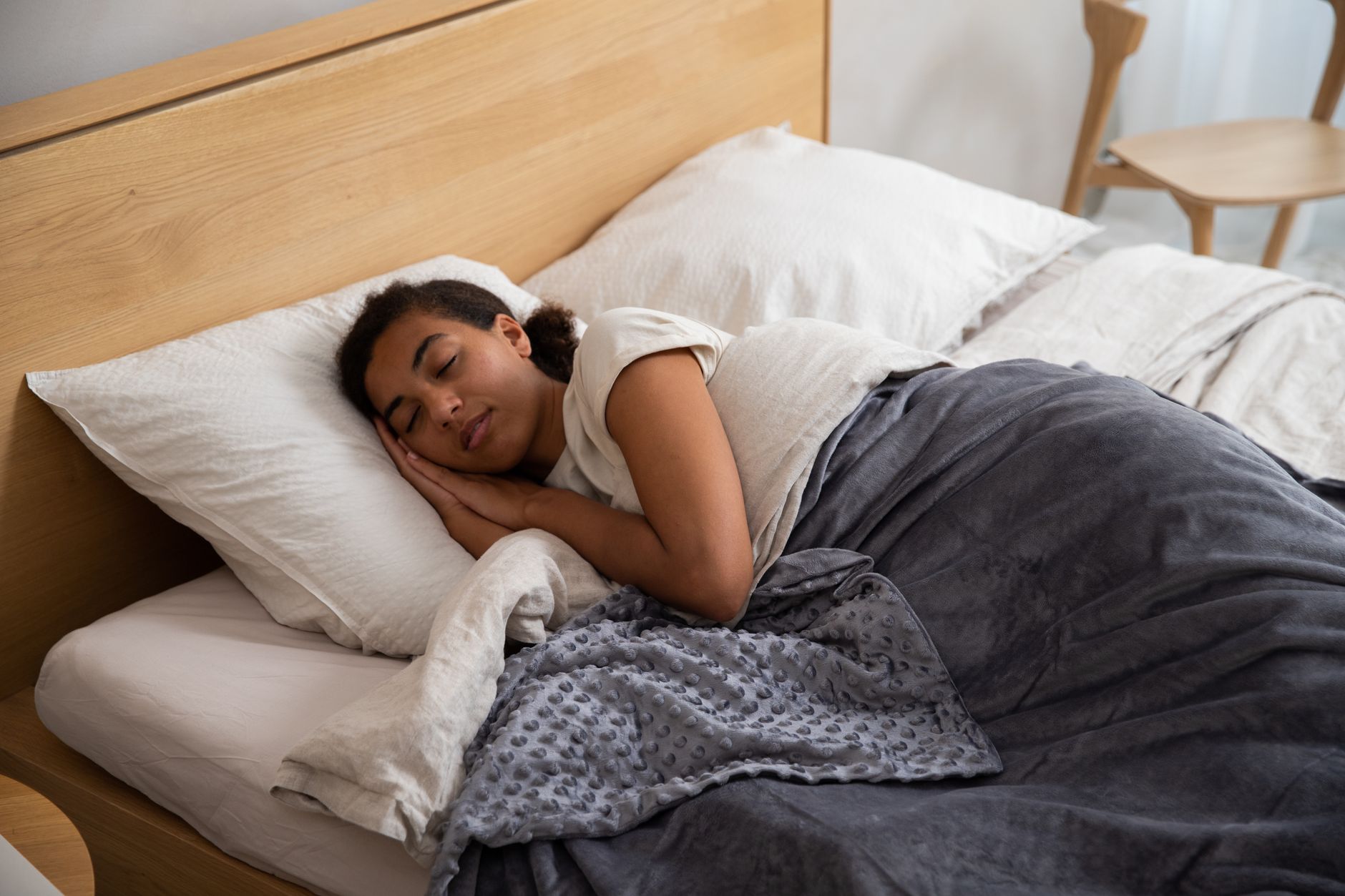
Enter the sceptic view. In The Conversation’s explainer on weighted blankets and anxiety, Craig Jackson cuts through both the hype and the debunking reflex.
“The real question isn’t whether weighted blankets work, but whether they work for you.”
— Craig Jackson, The Conversation
I like that sentence because it refuses two lazy positions at once. It does not pretend the effect is mystical, and it does not sneer at relief simply because relief can be hard to measure. Plenty of sleep rituals work through expectation, repetition and bodily association. A hot shower does. Reading four pages before bed does. The old family throw rug at the end of the couch probably does. If a weighted blanket helps someone settle because the pressure cue becomes part of the nightly wind-down, that still counts as a real experience. It just is not the same thing as a clinical cure.
Somewhere around here the piece stops being a shopping guide. Not which blanket wins a star rating. Why so many adults want a bedtime object that feels held, slightly contained, and a little separate from the noise of the day. That desire makes sense to me. What needs resisting is the temptation to make it sound more scientific than it is.
The hot-sleeper objection
The trouble with all cocoon stories is that they sound lovely right up until 2.14am, when you are one overheated ankle away from flinging the whole thing onto the floor. The user-affected case is not theoretical. Anyone who runs hot, sleeps restlessly or dislikes restriction can experience the same downward pressure as comfort for about twenty minutes, then as claustrophobia.

This is why the Australian winter framing matters. Our bedrooms are strange ecosystems: cold in the evening, stuffy by dawn, rarely insulated well enough to stay in one mood for long. In the research bundle, Sleep Dreams Online’s note on heat and weighted blankets is more retailer than independent authority, so I would not lean on it for grand claims. Even so, it points to the live concern consumers actually have: whether breathability, knitted construction and fabric choice can stop a heavy blanket from turning into a personal sauna.
The partial answer from the insider side is yes, sometimes, if the design is doing more than adding bulk. Open-knit styles, cotton shells and lighter fills tend to read as liveable in a way dense plush blankets do not. The local market has noticed this. Rather than the clinical-looking weighted duvets that first defined the category, you now see the softer retail merge: the Oodie weighted blanket, the Oakleigh Home 9kg knitted weighted blanket, the DreamZ chunky weighted throw blanket. These are sold as bedroom atmosphere as much as sleep gear.
Still, atmosphere does not solve physiology. If you hate compression, if you wake easily, if you spend half the night kicking one foot out for temperature control, a weighted blanket may simply be too much object. That is not failure. It is exactly the point Jackson was making. The blanket cannot be separated from the person using it.
How the blanket became a room mood
One reason weighted blankets keep resurfacing is that they now live in two consumer categories at once. They belong to wellbeing, yes, but they also belong to interiors. The blanket is no longer only something you tuck under the doona. It is something you drape across the end of the bed, fold over a boucle chair, photograph in winter light, and read as evidence that your home is taking care of you.

That crossover is all through the local coverage. Vogue Australia’s weighted blanket roundup compared eight options with the language of slumber and self-styling. Gladys Lai described the category as a chance to “relish the feeling of being securely cocooned.” Homes To Love, in its piece on chunky knit blankets, treated the throw blanket as an interiors essential, the sort of finishing layer that makes a room look inhabited rather than staged. Janet Guan’s line about winter sending us back toward the warmth of home is familiar magazine language, but it lands because it matches the moment.
“With winter taking centre stage, we seek solace in the warmth of our homes.”
— Janet Guan, Homes To Love
What the weighted blanket does, in that context, is slot into a mood economy where a single object can mean a few different things — sleep support, a room upgrade, or the feeling that you are looking after yourself properly. Few winter products have that kind of range. It helps explain why the category keeps showing up alongside bedroom refreshes, robe sales and the annual turn toward hibernation aesthetics. Australians have not all read the deep-pressure-stimulation literature. The object just makes emotional sense inside the season.
I think that is why the blanket keeps coming back. Not as a miracle. Not even as a particularly novel product anymore. It returns because cold weather still exposes an old, slightly embarrassing human wish: to be steadied by something simple and physical at the end of the day. A heavier blanket will not organise your nervous system, repair your sleep hygiene or turn winter into a Scandinavian fantasy. But it can make a bed feel more decided. Sometimes that is enough. Sometimes that is the whole purchase.

The Lifestyle Desires brief
Style, food, travel and wellbeing — weekly in your inbox.
Subscribe