When the guesthouse becomes the showroom
Design guesthouses are turning brand worlds into places you can sleep inside, and Vipp’s new upstate retreat shows how aspiration now arrives furnished.
I keep coming back to the odd luxury of paying to sleep inside an advertisement. Not the blunt version, not a logo on a robe, but the prettier one: warm timber, a low sofa, a kitchen so crisply arranged you begin to wonder whether your own life might come into focus if you stood in it for a weekend. That is what sits inside Vipp’s new upstate New York guesthouse. It is a bookable house, yes, but also a carefully staged way to live inside the brand before deciding whether you want any of it back home.
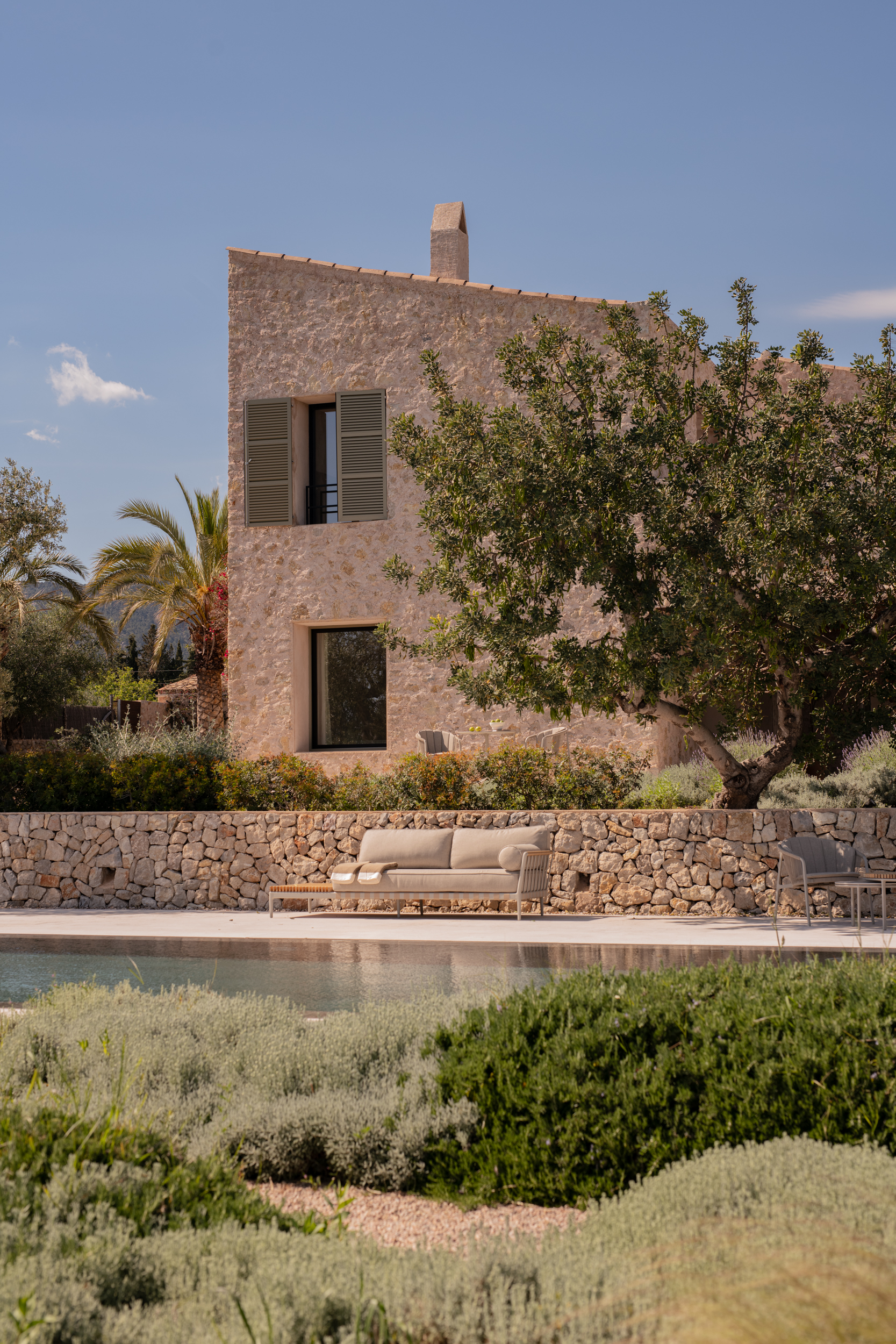
On paper, the facts are tidy enough. Set on 16 acres about two hours north-west of Manhattan, the 1,200 square foot Vipp Pavilion Upstate New York is the company’s first US guesthouse and the latest addition to a portfolio that now spans 15 stays, a run that began in 2014. The messier point is the better one. A design company once famous for a pedal bin is no longer really selling objects. It is selling atmosphere. Maybe even permission. A version of daily life you can try on overnight.
Look at it another way and the same house starts to feel like a warning flare for the design world. If brands keep turning homes into experiences, those experiences have to do more than flatter the catalogue. They have to work as places in their own right. That friction, between retreat and retail theatre, is what makes this read as a home story rather than a travel one.
A house that knows how to hold a gaze
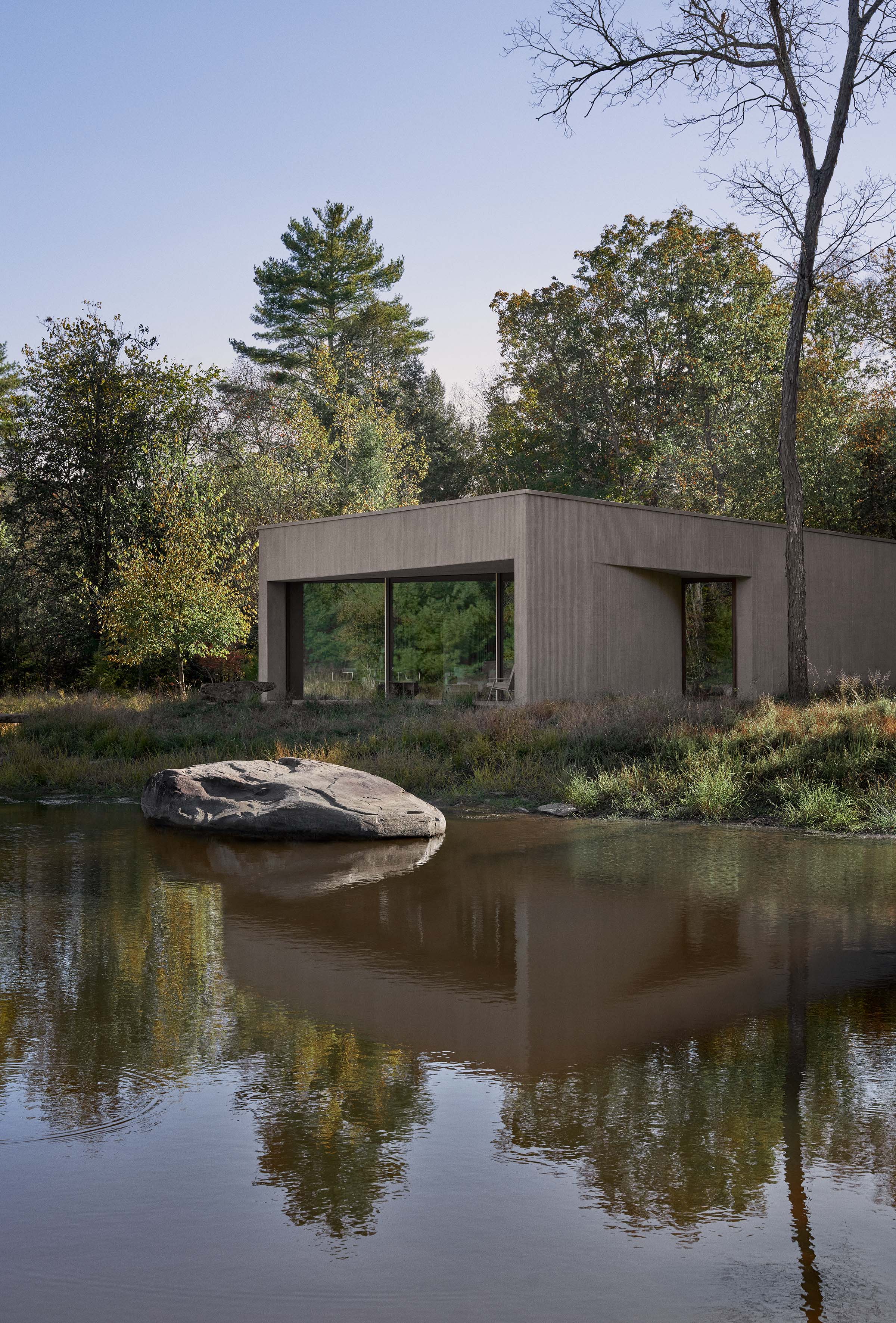
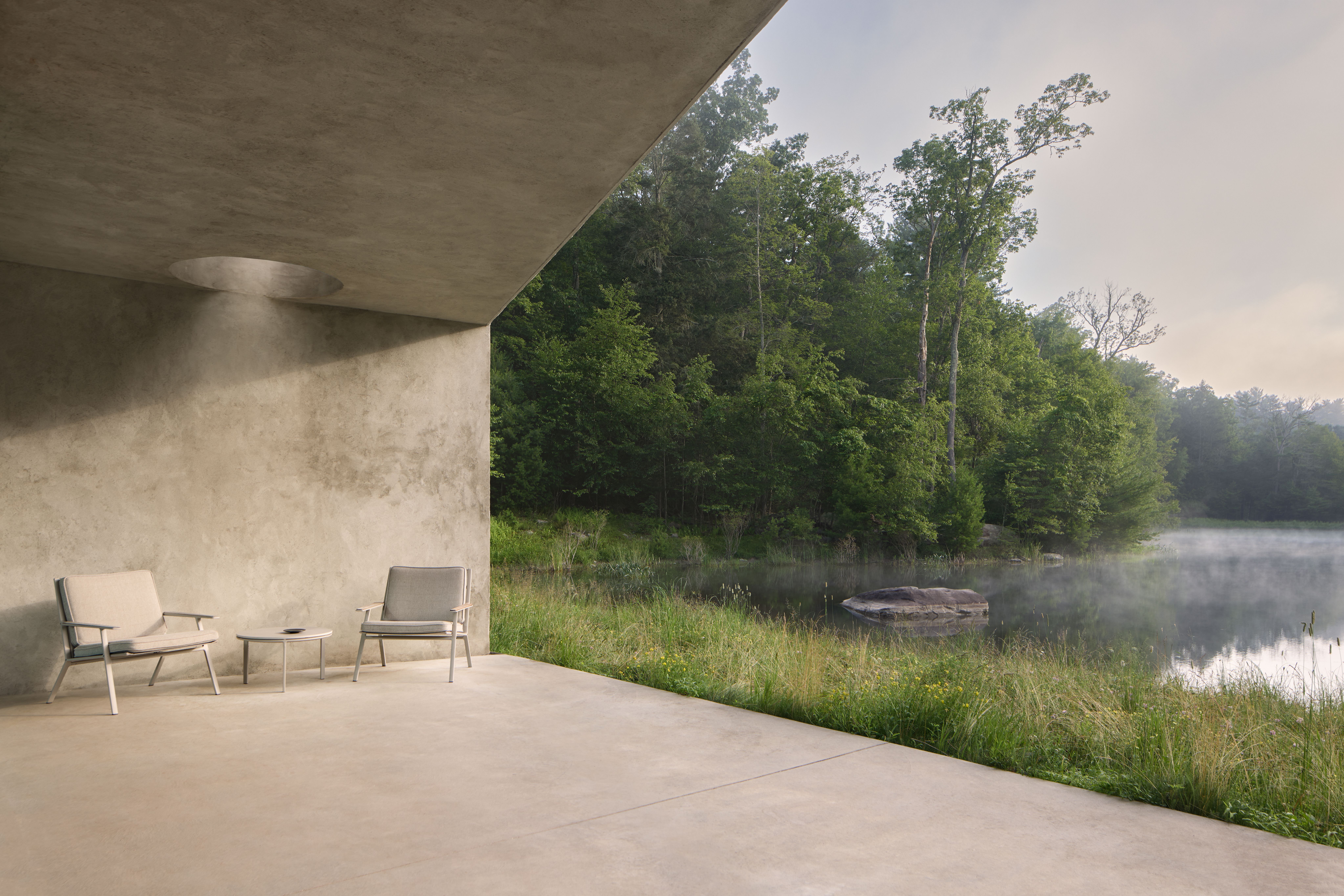
What hits first is the restraint. Johnston Marklee’s design, as reported by Dezeen, is built from two tangent ellipses, curved just enough to feel softened by the site rather than dropped on top of it. Skylights pull light down from above. Long views do the rest. The palette is so measured that shadow ends up doing part of the decorating. And because the pavilion is only 1,200 square feet, it cannot hide behind scale.

Smallness matters here. It keeps the house from tipping into spectacle. A big branded residence can feel like a campaign shoot with plumbing; this one, at least from what Vogue saw on site, seems to work harder at intimacy: curved rooms, light falling from above, the line between architecture and furnishing kept deliberately blurry. The appeal is not abundance. It is control.
When Vogue spoke with Vipp co-owner Sofie Christensen Egelund, she put it this way:
“The very first thing we communicated with the architect was that this should feel like a livable sculpture…”
— Sofie Christensen Egelund, Vogue
Sure, it is good brand language, though it also catches a broader mood in home design right now. Less maximal. Less chatty. Less desperate to prove taste through accumulation. A house that edits itself. A house that makes absence feel expensive.
The soft sell lives in the floor plan
Once the guesthouse registers as a showroom, the objects inside stop seeming incidental. Vogue notes a black V3 Kitchen, a Loft sofa and, because Vipp’s origin story still clings to it, the pedal bin that trails the brand like a founding myth. None of it is arranged in a hard-sell way. That is the point. The room persuades before the products have to.
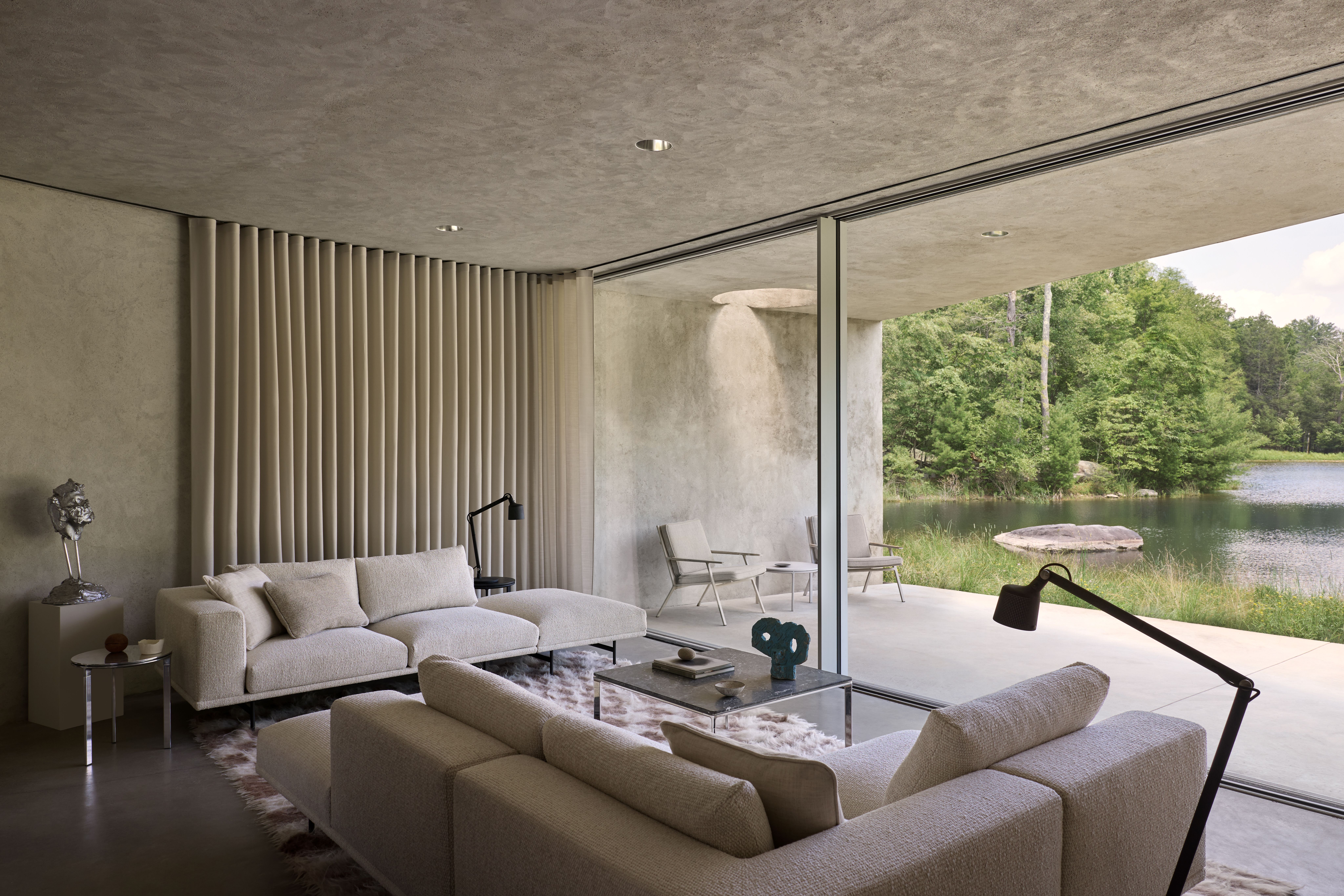
More than furniture, a stay like this gives you proportion. You find out how the kitchen sits against the sofa, how blackened metal behaves in pale daylight, how much quieter a room feels when fewer decisions are competing with each other. That comes closer to the way people really buy into design than the old showroom model, where you pace across polished concrete and try to imagine the thing at home.
Elsewhere, the same logic is showing up well beyond hotels. In a recent Homes To Love piece on immersive workspaces, the showroom is no longer just a place where products wait to be chosen. It has become a full setting, something readers and shoppers want to move through with their bodies. Mood does as much selling as the object. Vipp has simply pushed that idea to a cleaner conclusion. If a chair becomes easier to want after forty-eight hours beside a pond, why keep the customer on the retail floor?
Here the home angle sharpens. A hotel can get away with fantasy. A home brand cannot, not for long. If you are asking someone to live inside the dream, even briefly, the details have to hold up at human scale: where the bags land, where the tea gets made, whether the bench feels cold at 7 am, whether all that discipline leaves any room for ordinary mess.
Luxury is tired, restraint is not
Part of what makes the guesthouse feel timely, I think, is its read on how exhausted the old luxury vocabulary has become. Readers are not especially seduced by excess anymore. They respond to curation, to the suggestion that somebody else has already done the noisy part of choosing. The house does not need gilding or a twelve-course reveal. It needs stillness. Confidence. The feeling that every finish was argued over.
Across lifestyle coverage, you can see the same mood well beyond interiors. Gourmet Traveller’s recent read on Copenhagen’s independent luxury hotels was really about status shifting away from flash and toward something quieter, more private, more design-literate. From the fashion side, Vogue’s reporting on brand-heavy summer pop-ups made a related point: people want the brand world, not just the branded item. They want to step inside the mood board.
I am not fully persuaded that hospitality is merely a side lane for a design label. In Wallpaper’s review framing, Egelund says:
“We’re not hoteliers. We’re curious to know how people feel about our products.”
— Sofie Christensen Egelund, Wallpaper*
Honest, yes, and maybe too honest. The line gives away the arrangement. The stay is part research, part seduction; the guest becomes both visitor and market intelligence. That is not automatically cynical. Good design has always depended on watching how people live. Still, it blurs the cosy line between hospitality as care and hospitality as brand extension.
Part of the reason the pavilion lands now is that we are in a period of luxury fatigue, but not design fatigue. People still want beautiful rooms. They still want places that feel edited and calm and a little removed from the mess of ordinary retail culture. What they do not want, I suspect, is to feel shouted at. Vipp seems to understand that the softest sell might be a weekend away.
What gets sold when the night ends
A home reader might ask a slightly different question. Not whether the guesthouse looks good in photographs. Of course it does. The better question is what kind of domestic desire it manufactures. A house like this teaches you to want less clutter, fewer materials, more daylight, more conviction. It sells a choreography before it sells a product.
Beyond the obvious travel fantasy, these branded stays compress architecture, styling, retail and content into one encounter, then leave the guest to finish the persuasion alone. By checkout, you are not meant to remember every object. You are meant to remember the feeling of a house in which nothing seems accidental.
Seen that way, the appeal is easy to understand for a design brand and for everyone else as well. Homes have become one of the last acceptable places to project control, especially after a few years in which the outside world has felt badly lit and overfurnished with bad news. Vipp’s guesthouse offers a gentler promise: not reinvention, exactly, but a more coherent version of daily life, staged well enough that you start to wonder whether coherence can be purchased.
By comparison, the ordinary showroom now looks thin. A shelf of samples cannot compete with a dawn kitchen, a dark tap, a quiet bench seat, the window line over water. The home category has been edging this way for a while, through studio-houses, office-showrooms and restaurants that behave like catalogues. The guesthouse simply makes the logic impossible to miss.
What stays with me is not the fantasy of staying somewhere beautiful, but the sharper realisation that beauty now arrives bundled with strategy. The house is lovely. The sales pitch is lovelier because it barely sounds like one. Maybe that is the new showroom: not a room where things are displayed, but a room that asks you, very politely, to picture yourself as the sort of person who belongs there.

The Lifestyle Desires brief
Style, food, travel and wellbeing — weekly in your inbox.
Subscribe