Why tinned tomatoes still decide how dinner tastes
A blind taste test of 26 tinned tomato brands finds cooking erases every distinction shoppers pay for — but brand loyalty runs deeper than flavour.
The garlic hits the oil and the kitchen fills with something that isn’t really a smell so much as a memory — Wednesday, 7pm, whatever’s in the cupboard. You reach past the stock cubes and the half-empty bag of arborio rice and your hand finds a tin. You don’t think about the brand. You think about dinner.
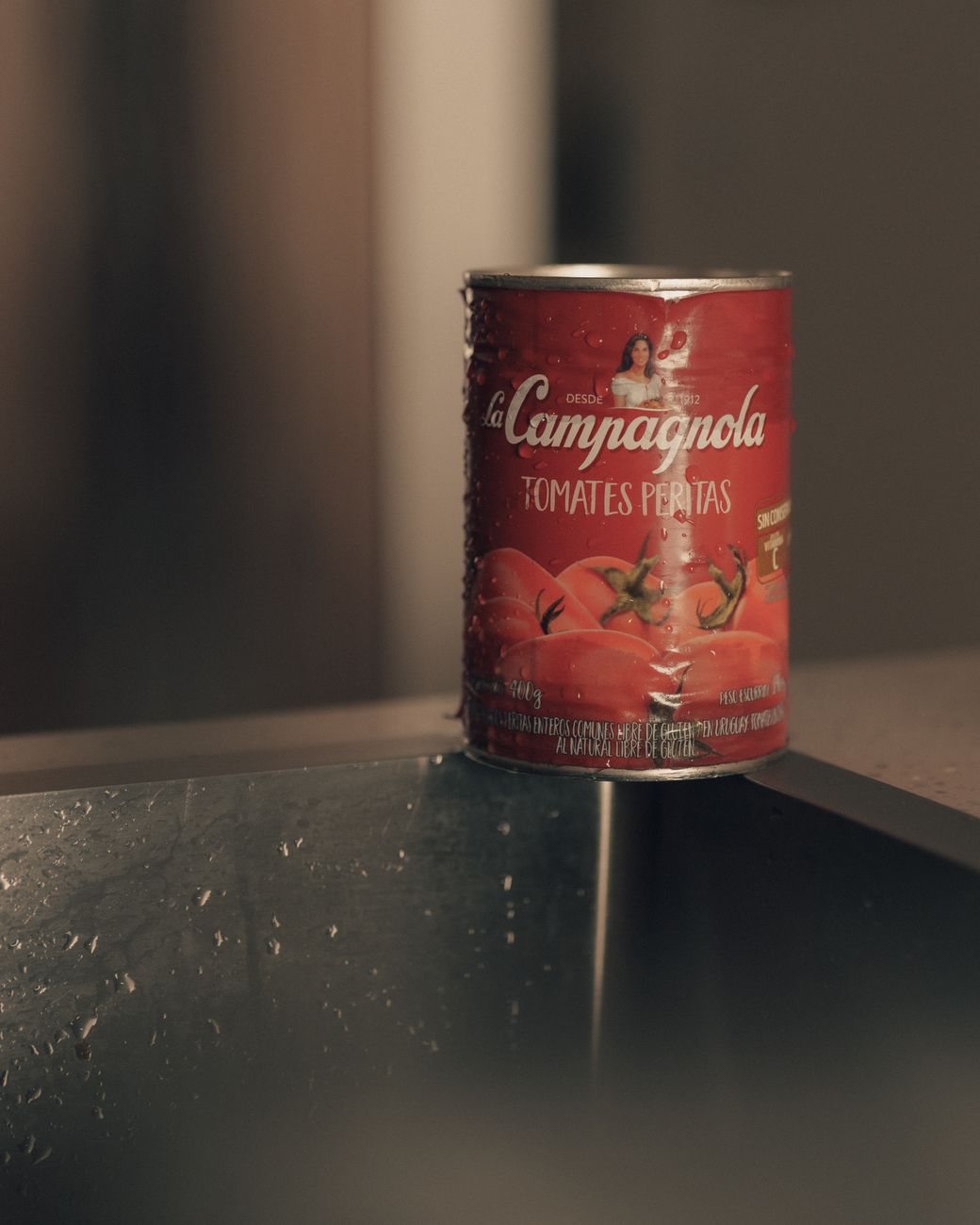
Except you do think about the brand. I know this because I’ve watched myself do it — stood in the aisle at Leo’s in Kew, holding a $2.30 tin of Mutti Polpa in one hand and a 95-cent Aldi Remano in the other, running a calculation that has nothing to do with money and everything to do with what kind of cook I think I am. The Mutti tin says something. It says I care about tomatoes. It says I’ve read things. The Aldi tin says I was in a hurry, or worse, that I couldn’t tell the difference.
Nicholas Jordan, a Guardian Australia food writer, has just run a blind taste test of more than 26 tinned tomato products from Australian supermarkets.
He assembled colleagues, lined up the tins, spooned out samples raw and cooked, and asked them to score each one. The results, he wrote, “end my long-term relationship with Mutti.”

Jordan wasn’t trying to find the best tin. What he wanted to know was whether the differences people think they taste — the sweetness of an Italian San Marzano DOP, the depth of a slow-cooked pomodoro, the alleged superiority of the $4-plus tin — survive a pan of garlic and olive oil. They don’t.
Raw, the tasters found clear variation. Some samples were vegetal and underripe; others had a legume-like quality Jordan described as “undesirable in a pasta.” Scores ranged from 3/10 to 7/10. But once all 26-plus tins had been briefly heated in oil with garlic, every single sample was unanimously described as “tasty.”
Not one taster could pick a favourite. The cooking process had collapsed every distinction that brand, price and country of origin had promised.
The brand of tinned tomatoes you buy has very little influence on a sauce.
— Nicholas Jordan, The Guardian
I find this genuinely disorienting. Most of us who cook have a tin we reach for — not because we’ve done the work of testing 26 alternatives, but because someone told us, or we read it somewhere, or the tin looks right. Mutti’s navy-and-gold label, with its Italian flag and confident serif type, has done a lot of heavy lifting in Australian kitchens. It is, by some accounts, the best-selling tinned tomato brand in the country’s supermarkets. Costs more. Looks like it should taste more, too.

Here’s the part that really got me. Mutti didn’t fail to distinguish itself — nobody even noticed. Tasters who’d given some raw samples 3/10 scores later described the cooked version of those same tins as perfectly fine.
Something about heat and fat and garlic, apparently, absorbs the difference between a tomato grown in Italy’s San Marzano valley and one grown somewhere else, processed in a factory, shipped 15,000 kilometres and stacked on a shelf in Brunswick. That’s a lot of supply chain to erase with one clove of garlic.
Jordan wasn’t the first to look at this. In November 2025, CHOICE ran its own blind taste test of 18 tinned tomato products, using a tasting panel and a formal scoring matrix that rated appearance, aroma, texture and flavour. Mutti Organic Chopped Tomatoes took the top spot with 80 per cent, retailing at $2.95 a tin. Aldi’s Remano and Black & Gold came last, scoring 48 and 58 per cent respectively, at around 95 cents each. When the CHOICE findings were syndicated across Australian food media, the headline was straightforward — here is the best tin of tomatoes on the shelf.
These two tests — CHOICE and the Guardian — look like they reached contradictory conclusions. They weren’t asking the same question. CHOICE tested the product as it comes out of the tin: raw, unadorned, assessed on sensory qualities a trained panel can describe. Jordan tested the product as it’s actually used: tipped into a hot pan with garlic, stirred, and served over spaghetti at 7pm on a Wednesday. The first test measures the tomato. The second measures dinner.

The gap between these two questions is where most home cooking lives. I have never tasted a tin of tomatoes raw. I have never spooned cold pomodoro into my mouth and assessed its aroma profile. The tomatoes I cook with pass through a pan with garlic and oil and salt, and by the time they hit the pasta, the thing I am tasting is mostly those three ingredients, plus whatever the tomatoes brought as a base note.
Margaret Rafferty, the CHOICE content editor who oversaw the 2025 panel, pointed out that their testing methodology is designed for product comparison — helping shoppers decide which tin to reach for when the whole point is differentiation. But the Jordan test asks a different, maybe deeper question: does differentiation even matter once dinner is on the table? The two studies sit oddly together, and the space between them is where the real insight is.
When I publicly broke up with Mutti tinned tomatoes, it was like I’d entered a church and said God isn’t real.
— Nicholas Jordan, The Guardian
That line. It’s the closest anyone has come to describing what’s actually happening in the tinned-tomato aisle. Nobody who buys Mutti is just buying tomatoes. They’re buying a small, affordable signal of competence — the culinary equivalent of having a good book on the coffee table. The tin says: I cook properly. I know things. I am not the person who reaches for Dolmio.
And I get it. The ritual matters. The $2.30 you spend on a tin of Mutti is not wasted money if what you’re buying is the feeling of doing it right — the brief, private satisfaction of tipping a tin you respect into a hot pan, knowing the meal will taste the way it should, even if that belief is doing more of the work than the tomatoes.

One of Jordan’s taste-test participants, asked to describe a sample that had scored a middling 5/10, shrugged and said: “It’s a tomato. I’d eat it.” It is the most honest thing anyone has said about tinned tomatoes. It’s also the thing home cooks don’t want to hear, because it collapses the whole hierarchy of effort and discernment into a single truth: you could use the 95-cent tin and nobody at the table would know.
I’ve been thinking about this line for days. It’s not really about tomatoes. It’s about all the small decisions in cooking where we assume precision matters and it might not — the brand of salt, the age of the balsamic, whether the pasta was bronze-die extruded in Gragnano or stamped out in a Melbourne factory. The tomato test suggests the answer, more often than we’d like, is: it’s a tomato. I’d eat it.
But here’s what I keep coming back to. Knowing that brand doesn’t change the cooked sauce doesn’t seem to change my behaviour in the supermarket. I still reach for the navy-and-gold tin. I still feel the small unease when there’s only the 95-cent Remano left. The taste test gave me information. It didn’t give me permission.
Jordan ended his relationship with Mutti. I’m not sure I can. Not because I doubt his findings — I don’t — but because cooking, at its quietest, is a series of small loyalties you don’t examine too closely. The brand of tomatoes you buy, the olive oil you pour, the knife you use. Most of it doesn’t change the sauce. But it changes the cook.

Melbourne restaurant critic and drinks writer. Files from kitchens, bars and the long lunches in between.
The Lifestyle Desires brief
Style, food, travel and wellbeing — weekly in your inbox.
Subscribe