The tomato that makes summer taste real
Heirloom tomatoes in Australia have a short, glorious season. Here is how to buy them, cook them and understand the growers keeping flavour alive.
The first time I ate an heirloom tomato I was standing in a car park in Daylesford, the bitumen still giving off heat, with a paper bag on the bonnet and juice running down my wrist. It had been sold to me half an hour earlier with the sort of casual confidence you usually get from cheesemongers and wine people, not produce sellers: just slice it when you get home, salt it, don’t fuss. I bit in before I made it home. Sweet, green, sharp and faintly floral all at once — my first thought was rude. My second was that most of the tomatoes I’d grown up with had been red water balloons.
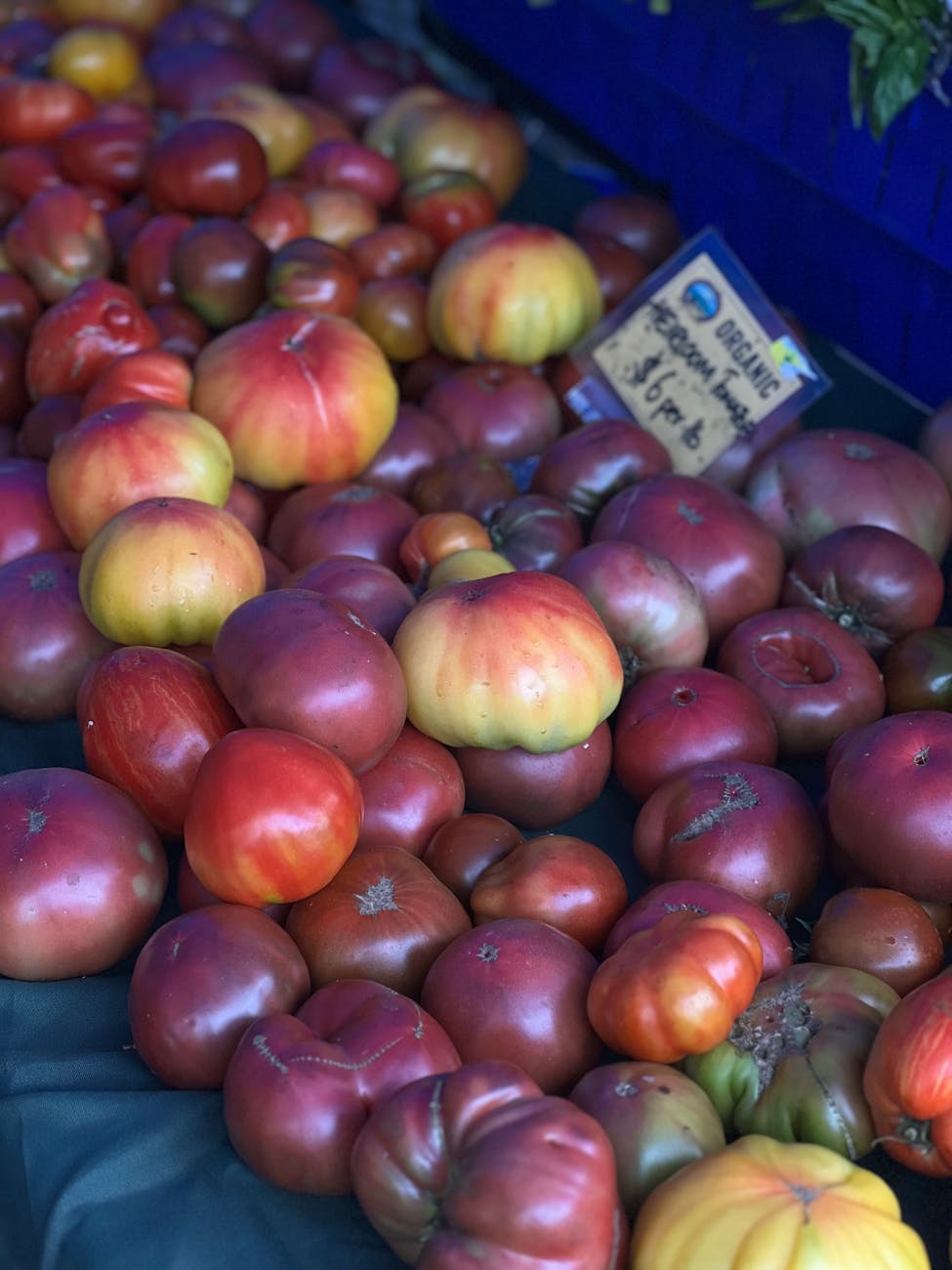
For the home cook, that’s the whole argument right there. Nobody needs a glossary to clock the gap between a fruit that tastes awake and one that has spent a week behaving itself in cold storage. You see it at farmers’ markets every summer: people lifting odd, ribbed, streaked tomatoes as if they might bruise under a hard look, then buying them anyway. The entire appeal is that they are not built to last forever.
The analyst version is harsher. More useful too. In Scientific American’s reporting on tomato-flavour research, and in the Science paper behind that work, the problem isn’t romance or memory. It’s breeding. Over decades, growers and retailers selected for yield, transport, shelf life and the kind of visual steadiness that keeps supply chains humming. Flavour got left behind. What we call heirloom taste — that sharp, green, complicated lift — is the return of compounds modern agriculture spent decades learning how to mute.
At the stall, not the shelf
Start with the seed, not the salad. As Bon Appétit explains, heirlooms are open-pollinated varieties, which means the plant grows true from saved seed rather than splintering into something else the following season. Food & Wine points to the common rule of thumb that a line should be at least 50 years old to count as heirloom, though the spirit of the category matters about as much as the deadline. These are tomatoes handed along, kept going, selected because someone thought: this one is worth remembering.
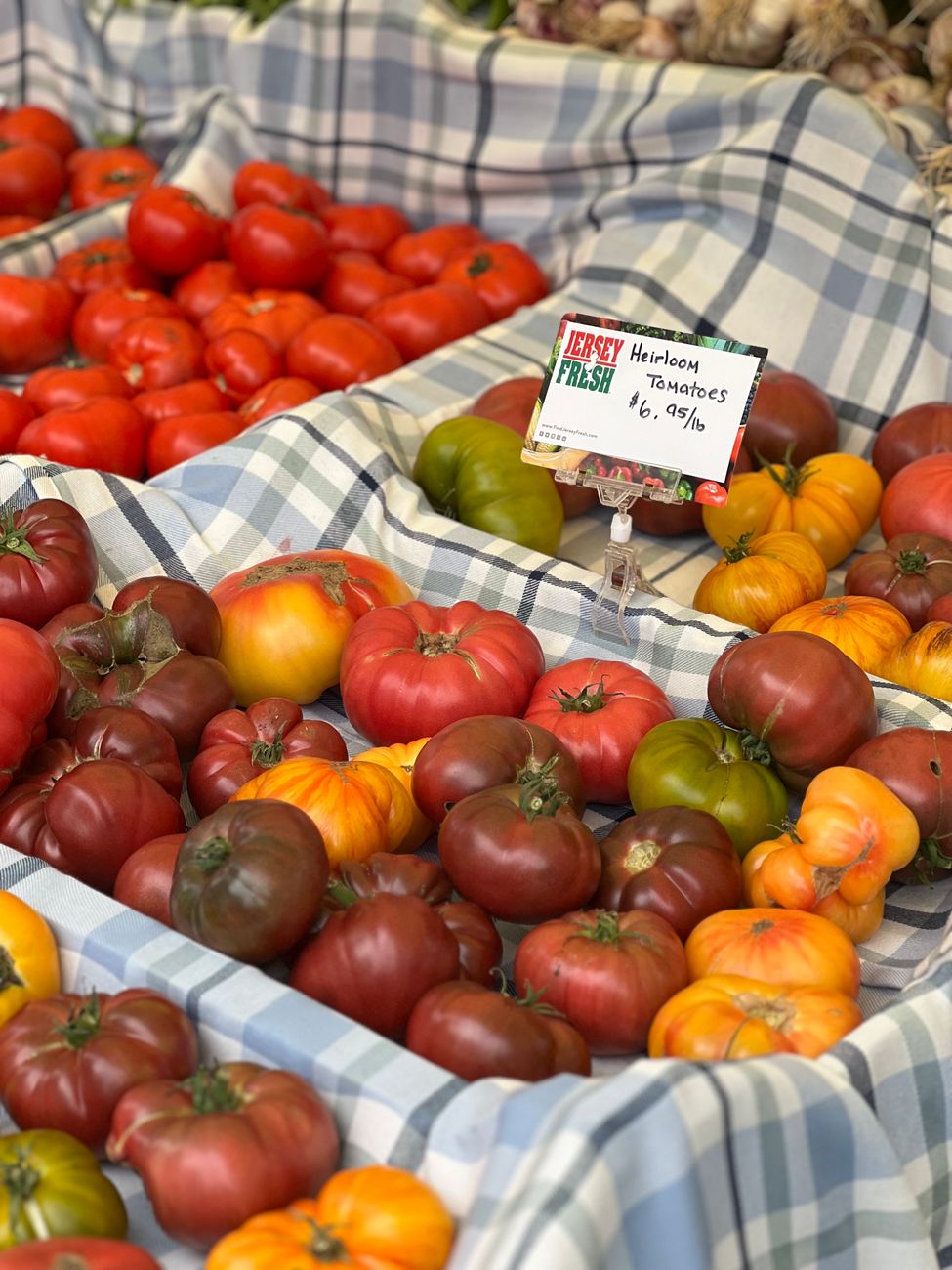
Which is why heirlooms tend to look unruly. They’re not standardised for the shelf. They bulge, pleat, split at the shoulder, turn up in muddy rose, acid yellow, oxblood and green. Food & Wine notes that Seed Savers Exchange lists more than 3,000 open-pollinated tomato varieties in its yearbook, which tells you the category is less one thing than a family reunion. A Brandywine and a Cherokee Purple may both be heirlooms, but they do not arrive with the same acidity, the same shape, or the same small theatre of summer around them.
For cooks, this matters because “heirloom” is often a mood before it’s a botanical description. The real question at a market isn’t whether the sign says heirloom in curly chalk. It’s whether the grower can tell you what the tomato is, where the seed came from, and why they bothered to keep growing it. That’s the insider test hiding inside the shopping one. Seed saving leaves a trace of human attention on the fruit.
Benjamin Pauly, the founder of a Florida seed company, offered the cleanest version of the whole thing in Food & Wine’s piece:
“If it tastes good, it is good.”
— Benjamin Pauly, Food & Wine
It sounds almost too neat. But I think cooks understand it better than gardeners sometimes do. We’re not awarding moral points for wrinkles. We’re looking for flavour, and for the fact that flavour usually comes attached to season, fragility and a person who decided it was worth the trouble.
The thin skin problem
Heirlooms feel soft, thin-skinned and slightly impractical for a reason. A tomato can be a wonderful eater or a wonderful traveller. Rarely both at the same time. The industrial tomato learned how to be shipped, stacked, cooled and sold with less drama. The heirloom stayed delicious and difficult.
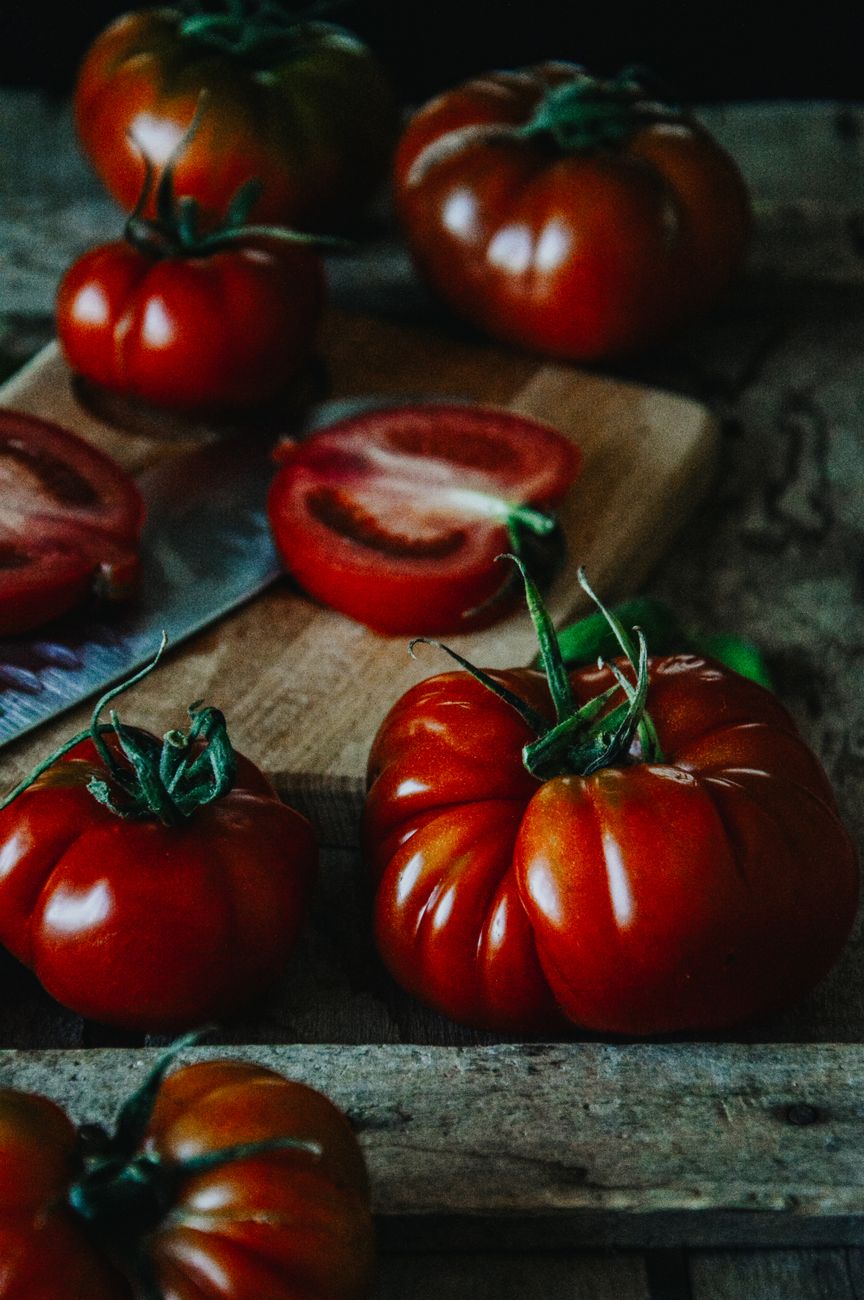
In the research covered by Scientific American, 170 volunteers tasted fruit from 152 heirloom varieties. The winning tomatoes didn’t just have more sugar. They also carried higher levels of the volatile compounds that give tomatoes their green, fruity, floral, almost spicy lift. That’s the part many supermarket tomatoes miss. They can look red enough. They can even feel respectable. Cut into them and the room stays quiet.
Harry Klee, the University of Florida researcher at the centre of the work, put it with almost comic brutality:
“They’re kind of like light beer. Even if all the chemicals are there, they are at lower levels.”
— Harry Klee, Scientific American
What I like about that quote is that it refuses food-writer mysticism. No one needs to pretend heirlooms are magical. They’re just fuller. Breeding for firmness, uniform ripening and transport discipline did exactly what it was supposed to do. It gave supermarkets a tomato that could travel. It didn’t give the rest of us lunch.
The home cook and the analyst land on the same thing from different directions. One says: I know a good tomato when I taste one. The other says: yes, and the reason you know is measurable. The gap isn’t preciousness. It’s that a fruit designed to survive a logistics chain ends up tasting thinner than a fruit designed to be eaten close to where it was grown. Once you understand that, the old supermarket disappointment stops feeling mysterious. It starts feeling engineered.
Seeds that remember a place
From the grower’s side, the view is less sentimental than the farmers’-market romance suggests. Heirlooms aren’t a purity cult. They’re a choice, and sometimes a gamble, made inside weather, disease pressure and a cashflow spreadsheet. The most useful voices in this conversation tend to be growers who love heirlooms without pretending they solve every problem on the farm.

In Civil Eats’ long-running tomato debate, California farmer Bill Crepps says plainly that he grows heirlooms for variety but still leans on hybrids for disease resistance. That’s not a betrayal of flavour. It’s farming.
“I grow heirlooms for their variety, but I rely on hybrids for their disease resistance.”
— Bill Crepps, Civil Eats
In Australia, that tension matters because every romance about produce has to survive an actual summer. In a SAGE Project account of producing heirloom tomatoes, grower Adrian Cram describes the work in practical terms: seed, care, observation, adaptation. The romance comes later, when the crate hits the table and somebody starts reaching for the salt. Before that there’s weather, fungal pressure, inconsistent yield and the simple fact that thin-skinned fruit is more vulnerable than a workhorse hybrid bred for trucking.
Seen locally, heirlooms make more sense as a seasonal crop than an all-year promise. Even wholesalers talk this way. Virgona Provedoring’s seasonal guide places peak tomato season in Victoria between October and April, which feels right to anyone who has wandered a market in January and seen the stall tables go suddenly operatic. Piles of striped fruit. Misshapen oxhearts. Tomatoes that look as if they spent their adolescence outdoors, because they did.
So the insider question isn’t whether heirlooms are better in some abstract, moral sense. It’s when they make sense. When does flavour justify the lower yield, the shorter window, the extra risk? Growers answer that locally, not ideologically. One line might suit a dry patch and a patient customer base. Another may collapse under disease pressure and never return. Seed saving isn’t just about heritage. It’s about selecting, year after year, for what survives in a place without becoming boring on the plate.
A tomato wants very little from you
Dinner is where the user-affected question lands. Once you’ve found an heirloom tomato, what are you supposed to do with it besides admire it and photograph it and carry it home as if it were glass? The honest answer is unsatisfying: less than you think.

A good heirloom tomato is already doing the heavy lifting. It doesn’t need a syrupy glaze or a lot of balsamic stage makeup. Knife, salt, maybe olive oil, maybe torn basil if the basil is behaving itself. In peak weather I like it on toast rubbed with garlic. If the fruit is especially fragrant, I’d rather eat it standing at the bench than wait for a composed salad. That impatience is part of the point. These tomatoes are here for a short season and then they are gone.
Hidden inside that brevity is something that looks a lot like politics. Heirlooms remind cooks that seasonality isn’t a branding exercise. It’s a limit. You can’t have the exact same tomato in July that you had in late January and pretend nothing has been lost. The market has taught us to expect sameness. The heirloom refuses. Here I am, now, and not for long.
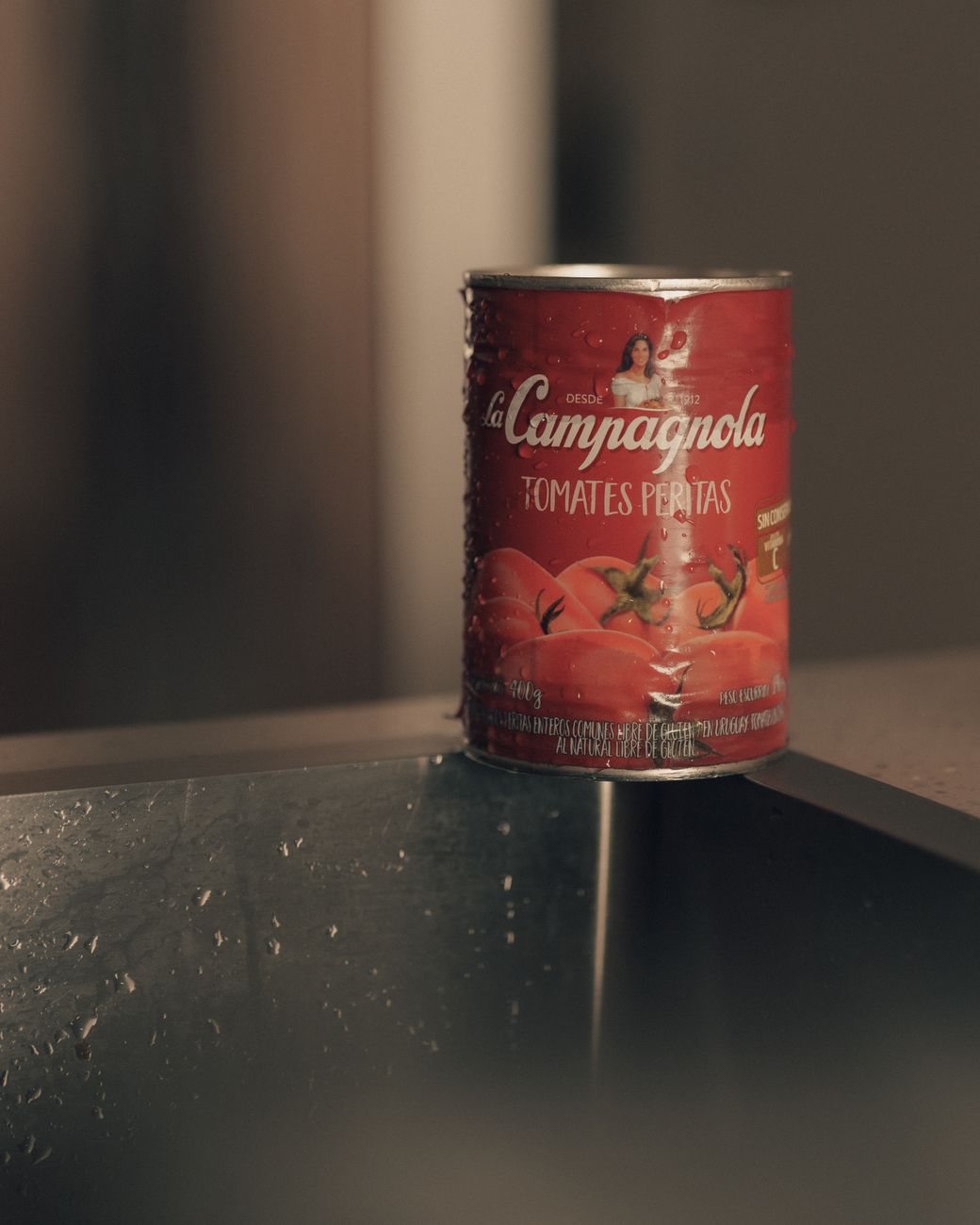
Waste shifts too. A split tomato isn’t a failure. It’s tonight’s lunch. The Conversation AU recently wrote about cooking with ingredients too good to waste, and tomatoes fit that philosophy beautifully. The fruit that’s too soft for slices can become a pan sauce, a rough gazpacho, or a bowl of panzanella where stale bread does the work of catching every last bit of juice. The same quality that makes heirlooms hard to standardise makes them generous in the kitchen.
I keep coming back to what heirloom tomatoes are actually asking of us. It’s not a lecture. Nobody’s telling you to churn butter or move to a farm or start cornering friends about seed libraries. They just ask you to notice the difference between a fruit bred to travel and a fruit bred to taste good. Once you notice it, you can’t quite un-notice it.
Maybe that’s what heirloom tomatoes can teach Australian cooks, beyond the obvious lesson that summer is better with a serrated knife and a little salt on the bench. They show how much flavour depends on season, on distance, on the odd stubbornness of growers who keep seeds because a variety tastes of something worth saving. They also show how quickly we accept the bland version of a thing when blandness is what the system delivers at scale.
I’m not romantic enough to think heirlooms will rescue the national tomato. Some days you need the reliable hybrid. Some weeks you need the cheap punnet. I’m very fond of a practical kitchen. But every summer, when the good crates arrive and the tomatoes look a bit unruly and faintly impossible, I remember that first bite in Daylesford. The juice, the heat, the brief shock of a tomato tasting fully like itself. That’s not nostalgia talking. That’s flavour, in season, with somebody’s labour still attached to it.

The Lifestyle Desires brief
Style, food, travel and wellbeing — weekly in your inbox.
Subscribe