What supermarket shortbread gets wrong when it forgets the butter
Supermarket shortbread turns waxy and strange once butter gives way to oils, starches and fancy tins, which is why the best biscuits still taste plain.
In the biscuit aisle, the person I keep thinking about is not me, though I am easy prey for a blue tin and a bit of faux-tartan nostalgia. More often it is the supermarket buyer, the poor soul whose week probably involves shaving cents off recipes without letting shoppers feel the loss too quickly. Shortbread makes that job awkward. A pot of soup can absorb compromise. Pasta sauce can drown it in tomato and salt. Shortbread cannot. There are too few places for a manufacturer to hide.
After enough handsome packets, I know the little jolt of disappointment by heart. First comes sweetness, then almost nothing. The biscuit snaps, but not cleanly. A film stays on the tongue. Neat, orderly, faintly waxy. Here the packaging is pulling harder than the dough. In late May, when the kitchen starts asking for things you can eat with tea while the light goes early, that feels like a small betrayal. Shortbread is meant to taste like thrift turned into comfort, not thrift in a nicer outfit.
Meanwhile, the historian reads the shelf more sternly than the shopper does. In Neil Buttery’s short history of the biscuit, shortbread’s old discipline is plain: the classic formula is the 1:2:3 ratio of sugar, butter and flour. Butter is not decorative in that equation. It is what makes the biscuit short in the first place, giving it that crumbly, sandy collapse that stops just shy of greasiness and never wanders into cake. For me, that is the real objection to cost-engineered shortbread. Once butter slips out of the driver’s seat, the biscuit may still be sweet and tidy and shelf-stable, but it has started turning into something else.
The packet with the tartan lid
Reading Tom Hunt’s Guardian tasting, what surprised me was not simply that some cheap biscuits beat expensive ones. The better versions kept faith with the old logic. The disappointing ones wandered. Fancy tins, embossed lids, stately fonts, plenty of performance around Scottishness, then a biscuit that had missed the point.

Price and quality do not move together in packaged biscuits the way supermarkets would sometimes like us to believe. Again and again, Hunt’s tasting lands on the same rude little truth: a cheaper shortbread that stays close to butter, flour and sugar can taste more honest than a pricier tin padded with oils or odd textural fixes. Asked which ingredient gets cut first when a biscuit is cost-engineered, the answer is blunt. Butter goes first, or enough of it does that you notice.
In that Guardian piece, Hunt put it more crisply than most packaging copy ever could:
“Don’t be fooled by fancy packaging.”
— Tom Hunt, The Guardian
Nearly everyone who buys shortbread has been fooled by fancy packaging at least once, which is why that line lands. Shortbread attracts costume. Navy tins, cream cartons, gilt edges, serif fonts trying to whisper Edinburgh drawing room. In Australia we get our own version of the same theatre, especially once the weather cools and supermarkets start angling for pantry luxuries that feel right with tea, or an after-dinner whisky, or brought to somebody’s place instead of flowers. Personally, I love a tin. I just do not love it when the tin is where the money went.
The rule that still matters
Here is where the story clears for me. In British Food: A History, Buttery writes about shortbread as an old celebratory bake, something with lineage and proportion and a reason for being. That older recipe logic still explains the texture better than any front-of-pack promise.

Move sugar a little and the architecture survives. Take butter away and it does not. Butter coats the flour, limits gluten, carries aroma and gives shortbread that precise, tender crumble that feels almost sandy before it melts away. If a biscuit tastes blunt, chalky or faintly slick, that is not nostalgia talking. That is structure. The old ratio still answers the question because the mouth notices texture faster than it notices branding.
Maybe this is why good shortbread feels oddly serious for such a small thing. A cook, or a manufacturer, has almost nowhere to hide. No spices to distract you. No jam centre. No chocolate curtain. Onto the plate comes a biscuit with its workings exposed. When it is done well, the simplicity feels satisfying. When it is not, the whole thing turns a bit mournful. You are tasting decisions, not just dessert.
Perhaps that is also why shortbread survives each new cycle of snack fashion. It is not trendy food. It does not pretend to be virtuous. Shortbread trusts butter, and that reads now as a kind of confidence. Not swagger. Something quieter. The sort you notice when you break a finger of it in half and find clean crumbs on the saucer instead of dust and grease on your thumb.
What the label is hiding
Of the three perspectives, the sceptic is the one I recognise most readily. This is the person who turns the packet over and reads the ingredient list before deciding whether the front has earned its tone. On shortbread, that habit is worth keeping. “All-butter” is a meaningful promise when it is true, but it is not a halo. A biscuit can still be padded out with starches, raising agents or other fixes that smooth over what the recipe lost on the way to the shelf.
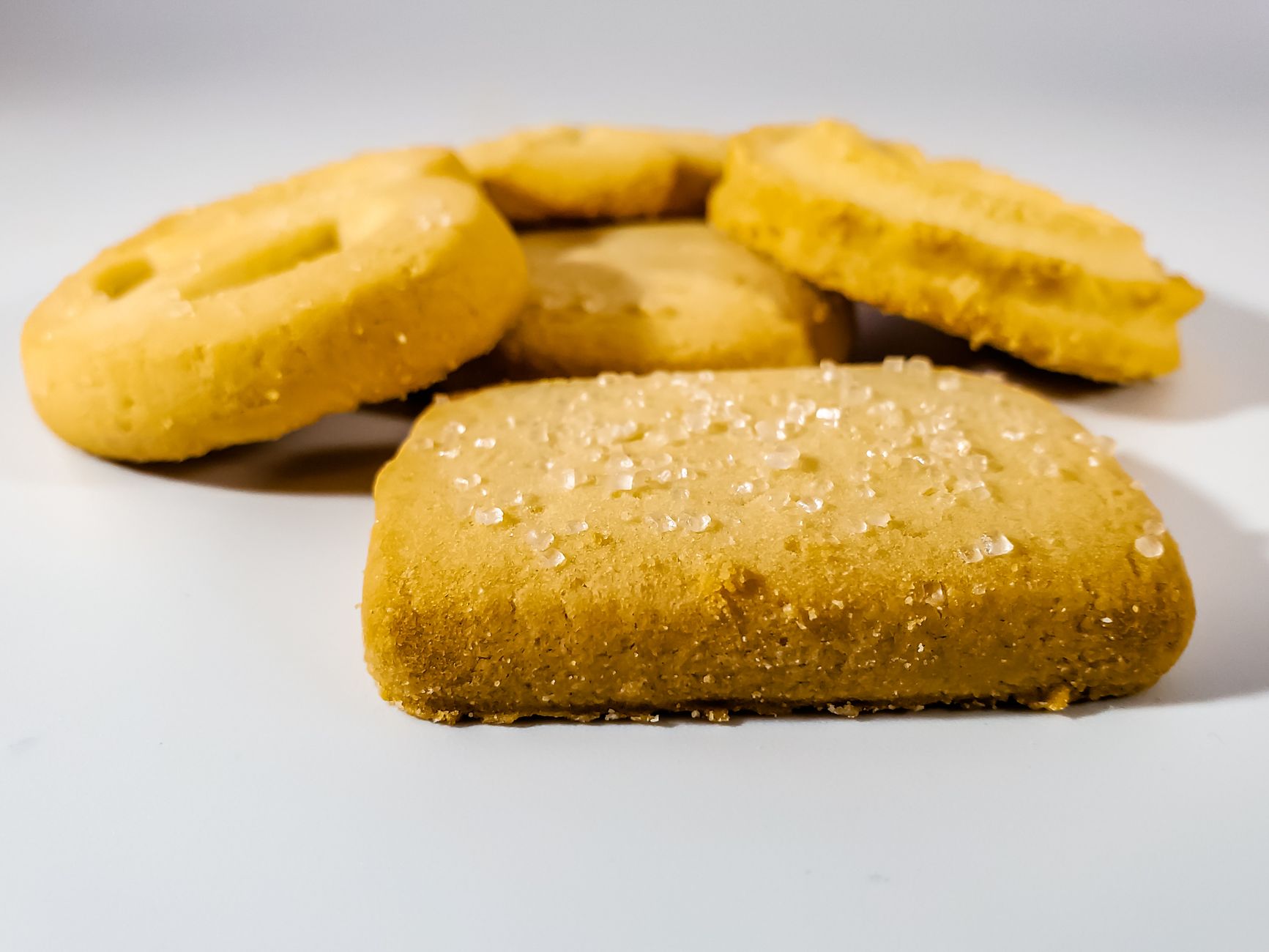
Off is the word for a lot of supermarket shortbread. Not disastrous. Just off. Oils and margarine do not announce themselves with a siren. They arrive as a texture that sits heavily, a flavour that never quite opens, an aftertaste that feels flat rather than dairy-sweet. Hunt’s tasting keeps rewarding biscuits that stay close to the rule and punishing the ones that get too clever. The sceptic is not being precious. They are reading the label as a record of substitutions.
To me, the broader consumer lesson sits there in plain view. The foods most likely to disappoint are often the simple ones dressed up as premium. If a frozen meal tastes average, we shrug; a frozen meal has a lot going on. If shortbread tastes average, the disappointment bites harder because the whole point was clarity. Flour. Butter. Sugar. Maybe a little salt. That is it. Once a manufacturer starts fiddling, the biscuit becomes a referendum on each fiddle.
Purity for its own sake does not interest me much. Food writing can get pompous quickly when it starts sounding as though the only acceptable biscuit is one baked by a saint in a stone cottage. Supermarket food exists because most of us live ordinary lives with budgets, children, workdays and a low tolerance for hand-beating butter after dinner. More useful is the question of honesty. Is the packet telling the truth about what it is selling? There is a difference between a basic biscuit and a counterfeit luxury.
A biscuit for mean times
Step back from the packet and the economics come into view. BBC News reported that UK food inflation was running at 3 per cent in April, and the argument over voluntary caps on essentials gave a tidy, slightly brutal picture of how much pressure sits inside a supermarket shelf. When prices are meant to stay friendly and margins are meant to survive, recipes start absorbing the fight. The politics in that reporting are British. The logic is familiar.

Back in Britain, when the government floated the idea of price caps on basics, the BBC’s reporting carried one of the clearest expressions of retail alarm:
“completely preposterous”
— Stuart Machin, via BBC News
Granted, the quote is about milk, bread, eggs and supermarket margins, not a tin of biscuits. Still, it tells you something about the atmosphere in which these products are made. Retailers will always say shoppers want lower prices, and shoppers will always say they do until the lower price starts showing up as oils, starch, a flatter aroma, a biscuit that tastes more engineered than baked. The Guardian’s reporting on those proposed caps makes the pressure plain. Its later analysis of the food system makes the bigger point: supermarkets are being asked to perform affordability inside a food economy that does not make honesty cheap.
Few foods expose that tension so clearly. Shortbread sits in the category of treat, not staple, while being structurally as plain as a staple. It is pantry food pretending, on its best days, to be a small ceremony. That is why the loss of butter feels larger than the cost of butter. Something emotional goes missing with it. The biscuit no longer tastes like a modest luxury you chose on purpose. It tastes like a compromise that arrived wearing dress shoes.
Besides, I do not think every good supermarket biscuit needs to be expensive. The nicest point in Hunt’s tasting, really, is that some of the least showy options were the ones most worth eating. That feels right to me. The best shortbread should taste plain in the noble sense of the word. Direct. Toasty around the edges. Dairy-led. A little salty if someone in the factory has any courage. The kind of thing that makes an afternoon tea feel as though somebody cared, even if the somebody was just you grabbing a packet on the way home because the air had turned cold and dinner was still an hour away.
Which is why I am less interested in declaring winners than in defending the principle. Shortbread stops being comforting the moment the butter disappears, or the moment butter is kept only as branding while cheaper fats do the work behind the scenes. At that point the biscuit is still edible. Plenty of things are edible. But shortbread should offer more than that. It should taste like the recipe means what it says. On a winter shelf, in a good tin or a plain sleeve, that still feels like a standard worth keeping.
Standing there next time, weighing up the nice-looking tin against the plain packet, I will probably still be seduced by the nicer lid. I am not immune. Still, I will turn it over. I will look for butter high in the list and for the absence of too much rescue work. Shortbread is one of those foods whose whole charm lies in how little it needs. When it forgets that, you can taste the mistake almost at once.

The Lifestyle Desires brief
Style, food, travel and wellbeing — weekly in your inbox.
Subscribe