Why Sydney keeps falling back in love with the corner shop
Sydney corner-shop conversions are turning old shopfronts into bright homes while keeping a little neighbourhood memory alive on the street.
After dark, a Sydney corner shop can feel almost embarrassingly moving. The business may be gone, but the building keeps its public posture: windows to the street, the angled pull of the corner, that sense that life sits a little closer to the footpath than it does in an ordinary terrace. I keep coming back to the thought that people are not really chasing quaint retail nostalgia in these conversions. They are after a less lonely way of living in the city.
No wonder the two recent Sydney projects spotlighted by the Sydney Morning Herald have stuck with me. One is an 1888 Camperdown shop turned by Downie North into a 100-square-metre, three-bedroom home and workspace. The other is an 1890 Marrickville corner building that moved through 17 businesses before settling into family life. Both were shortlisted for NSW architecture awards. Neither feels embalmed.
Still, the romantic version of this story is the easiest one to distrust. Seen from the analyst’s side rather than the architect’s, the obvious question is whether the corner-shop revival is just inner-city longing with better joinery, a tasteful way to sentimentalise neighbourhood character while the city gets dearer and more anonymous. I think the answer sits somewhere more useful. These projects suggest a small, stubborn kind of density that does not flatten the street just to make modern life fit.
The corner site as a loophole
Sydney is full of homes that feel compressed the moment you walk in. Tight terraces. Deep plans. Rooms that borrow light from somewhere else and never quite pay it back. A corner shop offers a different proposition. In a city where space is rationed so carefully, it can feel like a loophole.
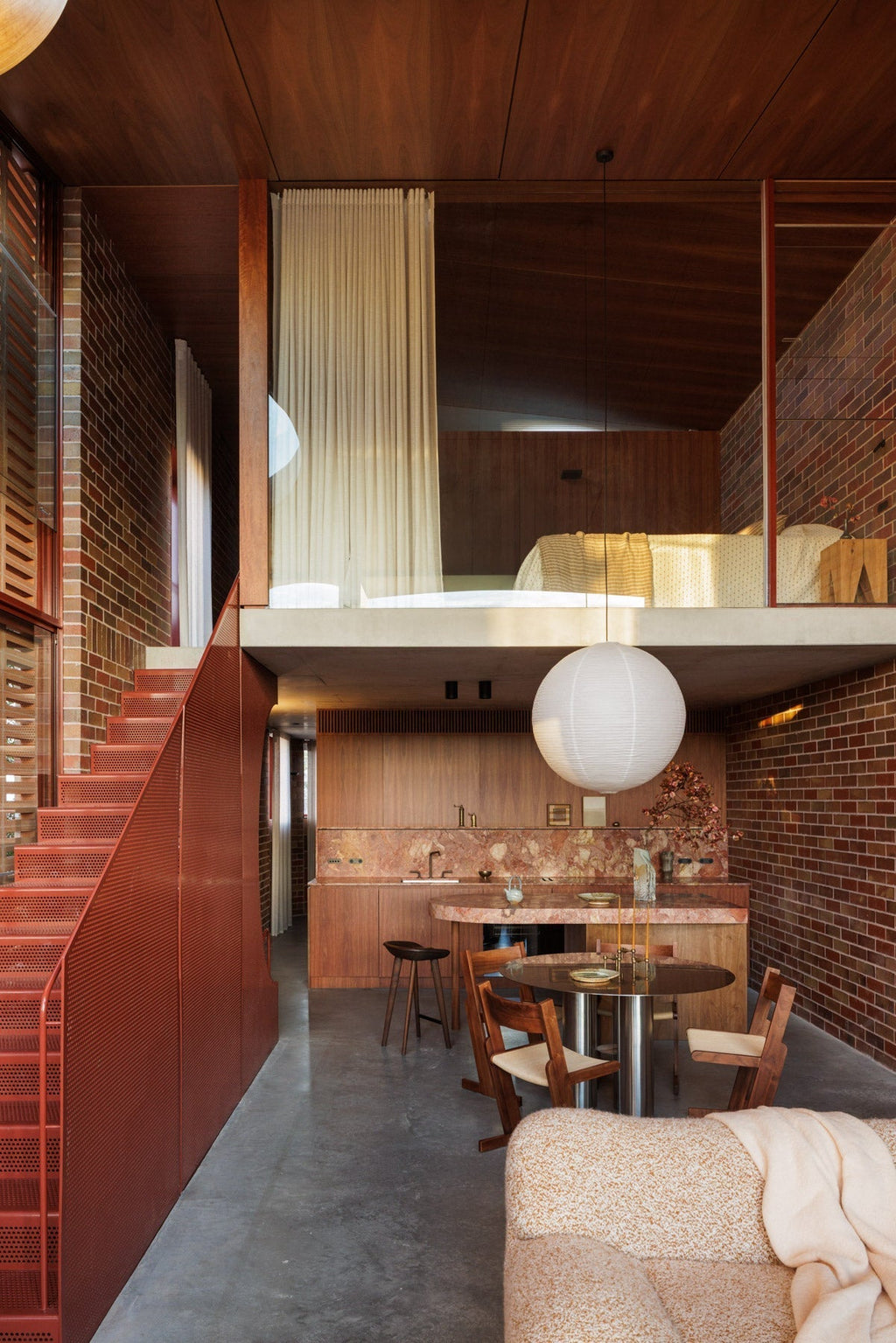
The Australian Institute of Architects’ project note on The Corner Shop House describes the Camperdown conversion as higher-density urban infill, and that phrase matters. It sounds technical, even slightly bloodless, but it names a way of adding life instead of subtracting it. Rather than scraping away the old street edge and replacing it with a sealed private box, the project keeps the public face of the building intact and asks more from it. Downie North’s own project page shows the same idea in a more visual register: a home that still reads as part of the corner before it reads as a retreat.
Part of the charge is that these places hold onto a shape many of us still read instinctively. Even if you never bought milk or cigarettes from this particular shop, you understand what a corner building once did for a neighbourhood. It watched the street. It gave the block a front door. Daily life had a centre of gravity.
For architects, that inherited shape is not a burden so much as a prompt. In the Herald piece, Catherine Downie calls the corner condition a “gift for an architect”.
“gift for an architect”
— Catherine Downie, Sydney Morning Herald
In other words, she is answering the insider’s question at the centre of this story: what makes a corner shop worth all the bother? Not charm. Possibility.
Light, air and a bit more permission
What these buildings have, and terraces often do not, is exposure. More than one facade. More than one direction for the day to arrive from. More chances for a house to breathe like a city building instead of hiding from the street.

Downie puts it plainly in the reporting: a corner gives you three facades, not the usual two long side walls. That sounds like architect talk until you translate it into daily life. Three facades means more sun moving through the rooms. More outlook. More ways to separate sleeping, working and living without making a home feel pinched.
Will Blackwell, the owner and builder of the Camperdown site, reaches for a less technical version of the same idea when he says the building offered a “bigger canvas to do something a little more architectural”.
“bigger canvas to do something a little more architectural”
— Will Blackwell, Sydney Morning Herald
I like that he says architectural rather than luxurious. That difference contains the whole mood here. The fantasy here is a home that can do more than one thing at once, domestic, working, street-facing, and still feel composed. In a city where compact living is now ordinary rather than aspirational, that reads less like indulgence than a brief for survival.
Here, the sceptical reading softens. If these conversions were only about aesthetics, they would stop at the facade. Their appeal comes from the way a difficult old commercial shell can become something open and usable without losing the conditions that made it interesting in the first place.
The street does not entirely disappear
Then comes the social question: what survives when a shop becomes a home? Not the transaction, obviously. Nobody is pretending these places are still selling anything. But some forms of public contact can remain, and that is what separates a compelling conversion from a private fantasy with heritage trim.

In ArchitectureAu’s account of The Corner Store by Ian Moore Architects, the enduring pleasure of the type is that it can keep a civic edge: gallery windows, ground-floor work areas, openings that acknowledge the footpath rather than turning away from it. That detail matters more than any style label. A city gets flatter, emotionally and visually, when every renovation behaves as if privacy were the only virtue worth paying for.
Back in 2022, a 2022 essay for Changing Sydney made a similar case more directly, arguing for the corner-store dream as a neighbourhood value, not just an architectural one. That seems right to me. What these buildings preserve is not commerce in the literal sense but a form of proximity. They let the house keep speaking to the street.
Even so, the analyst’s worry is worth keeping in the room. Something does disappear when the old shop goes domestic: the errand, the informal encounter, the cheap convenience of a place you can duck into on foot. A beautiful conversion is not the same as a useful local business. I do not think that tension makes the projects hollow. It makes them honest. They are trying to salvage one social quality from another era, visibility, exchange, a sense of neighbourly regard, even when the economics of the original shopfront no longer hold.
Neil Mackenzie, reflecting on the Marrickville project, gets closest to the ethical version of this when he says “Our time here is a small blip”.
“Our time here is a small blip”
— Neil Mackenzie, Sydney Morning Herald
Modest sentence, but it carries the right kind of humility. These buildings existed before their current owners and they will outlast them too. Good renovations understand that. They do not confuse possession with authorship.
What the family version proves
More than anything, I trust the user-affected perspective, because magazine architecture can say almost anything about itself until daily life turns up with school bags, work calls and the clutter of a Tuesday. The question is not whether a converted corner shop photographs well. It is whether it can absorb ordinary family mess without losing the thing that made it special.
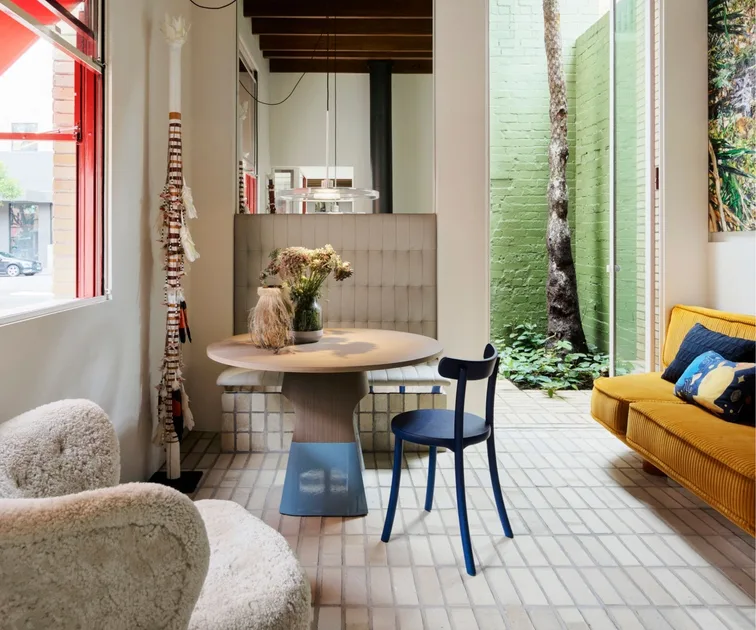
So I kept circling back to the later Sydney Morning Herald report on the Marrickville home. The headline’s emphasis on kid-friendly touches sounds almost casual, but it answers the practical question the whole typology invites: can a place that still feels half public, half civic also feel soft enough for family life? Evidently yes.
Perhaps that is the deeper reason Sydney keeps falling back in love with these buildings. They offer a version of urban domesticity that does not ask us to choose between intimacy and openness. You get compact rooms that do not feel mean, old fabric without full reverence, and adaptability without the showroom mood.
I am less interested in the design fantasy, if I am honest, than in the civic one hiding underneath it. A good corner-shop conversion suggests that density does not have to mean blankness, and preservation does not have to mean stasis. You can keep the memory in the walls, keep some light on the street, keep the neighbourhood legible, and still make a home that belongs to the present.
To me, that is more than nostalgia. It is a quiet argument about what kind of city Australians still want to live in, one where the line between private comfort and public life is a little more porous, and a lot more human.

The Lifestyle Desires brief
Style, food, travel and wellbeing — weekly in your inbox.
Subscribe