When Perth changed the mood at fashion week
Australian Fashion Week 2026 felt sharper when Perth arrived, bringing designers, stylists and a city-sized confidence Sydney could not fake.
By the second day of Australian Fashion Week, I had stopped thinking about Sydney as the main character. Sydney Harbour was still there, obviously, doing its best expensive postcard routine, but the names giving the week its shape kept arriving from Perth. Not one breakout dress. Not one famous face in the front row. More like a shift in temperature. Sharper lines. Better timing. A self-possession that felt almost suspiciously calm. Reading Teagan Sewell’s diary for The West Australian, I got the same impression again and again: the people from Perth were not hunting for the scene. They already seemed to know where it was.
That part is easy to flatten if you turn fashion week into a scoreboard. Perth was not a plucky interstate subplot this year. It arrived as a network. Sewell, who styles and works as fashion director at Claremont Quarter. L’IDÉE WOMAN. The model Nabila Leunig. A wider cast of local creatives who looked as if they had been speaking the same visual language long before the lights went up. None of it felt newly invented. Sydney was simply where the rest of the country noticed.
Still, some of Perth’s clarity came from the week itself. AFW’s 30th edition was staged at the Museum of Contemporary Art after 13 years at Carriageworks and spread across 39 designers and 27 shows. Across Vogue’s industry read and Refinery29’s dispatches, the new shape of the event came through as leaner, more trade-minded and less attached to theatrical noise for its own sake. If the brief had shifted from being loud to being legible, Perth was always going to travel well.
Visually, the venue change mattered too. Carriageworks taught everyone to expect industrial drama and a certain east-coast hardness. At the MCA, at least in the mood described by Marie Claire’s week opener and Vogue, labels stood in cleaner light. Perth’s preference for polish, occasion and social confidence did not need much translating there.
The room changed first
L’IDÉE WOMAN’s runway return was the clearest example, four years after its debut and built across 30 looks. Before you even get to the clothes, the reporting around the show circles the same point: this label arrived with its own atmosphere. Broadsheet’s interview with Pip Edwards caught that better than most runway copy. She talked about movement, pulse, the way occasionwear has to live on a body rather than hang there politely. That feels very Perth to me. Social clothes. Clothes for being seen in, yes, but also for women who have somewhere real to go after dark.
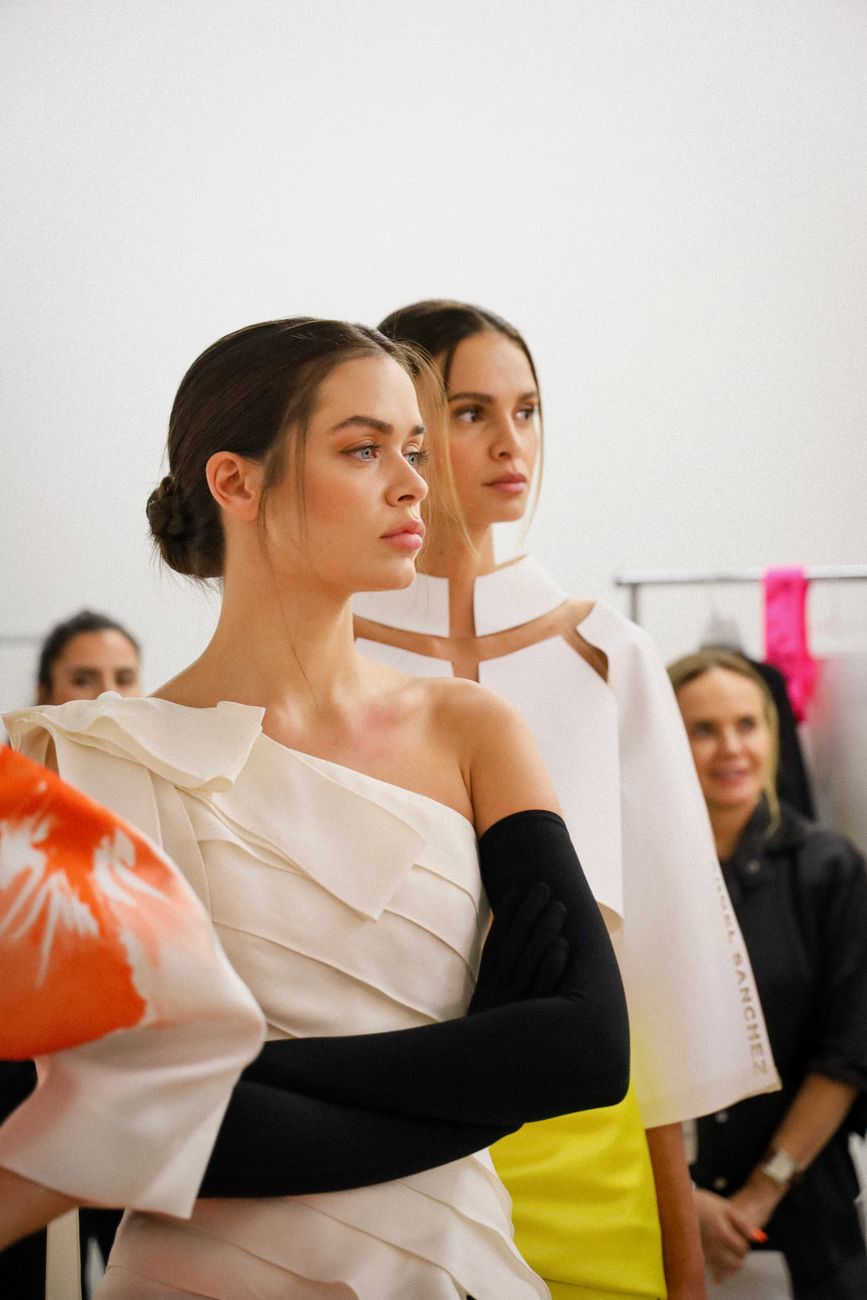
“In any fashion show, it’s about energy and, with L’Idée, the pleats are the heartbeat.”
— Pip Edwards, Broadsheet
I like the quote because it sidesteps the mushy shorthand that clings to Australian fashion coverage. Too often the national default is resort ease, beach gloss, prettiness that disappears the second you ask it to hold a room. This year, Refinery29’s trend report and Vogue’s recap suggested a different drift: more texture, more eventwear, more appetite for evening. Perth labels sat in that lane without looking as if they had scrambled to meet the brief. They already knew the silhouette.
Elsewhere, the noise around Mariam Seddiq or Iordanes Spyridon Gogos could easily have swallowed the rest of the week. Both mattered. But Perth lingered for a different reason. Not singular spectacle. Coherence. The west did not win the room by yelling over it. It kept making the same case, from show to show and from person to person, until ignoring it started to feel wilful.
Distance as taste
What stayed with me in Sewell’s reporting was the retail eye behind it. A fashion director at Claremont Quarter is not paid to confuse novelty with value. She has to know what women will want once the show venue empties and the after-party breaks up into damp footpaths and ride-share queues. From that desk, Perth fashion reads less like Sydney’s remote cousin and more like a city that has trained itself to edit harder. Distance can do that. If you are not swallowed by the east-coast churn every night, you get choosier.

There is also a civic tenderness in the Perth fashion orbit that eastern scenes sometimes press flat in the name of sophistication. In the same West Australian diary, model Nabila Leunig did not hedge her loyalties.
“I’ll always be a Perth girl at heart.”
— Nabila Leunig, via The West Australian
Later in the piece, she pushed the thought further.
“Community first always and championing local creatives and talent!”
— Nabila Leunig, via The West Australian
Normally I would flinch at that line, because fashion people can turn “community” into a scented-candle word in about four seconds. Here it lands. The evidence is sitting all around it: Perth-heavy casting, Perth-heavy backstage muscle, a label built by Breeana Smith, framed by Sewell, voiced by Leunig, then dropped into a week that kept rewarding strong points of view. What I kept asking was whether distance sharpens taste or merely romanticises being overlooked. In this case, I think it sharpens taste. What convinced me was how little interest these people seemed to have in performing outsider status.
A city that travels as a pack
Maybe that is the real difference. Australian fashion has never been short of talented people from Perth. What it has lacked, at times, is a durable east-coast story about Perth as a functioning scene. Scenes are harder to package than star turns. You have to notice the connective tissue. The backstage favours. The stylists who keep returning to the same designers because the clothes make sense on real women. The models who carry local identity into national rooms without sanding it down. What travelled to Sydney this year was not one founder’s dream. It was an ecosystem that had learned how to move together.
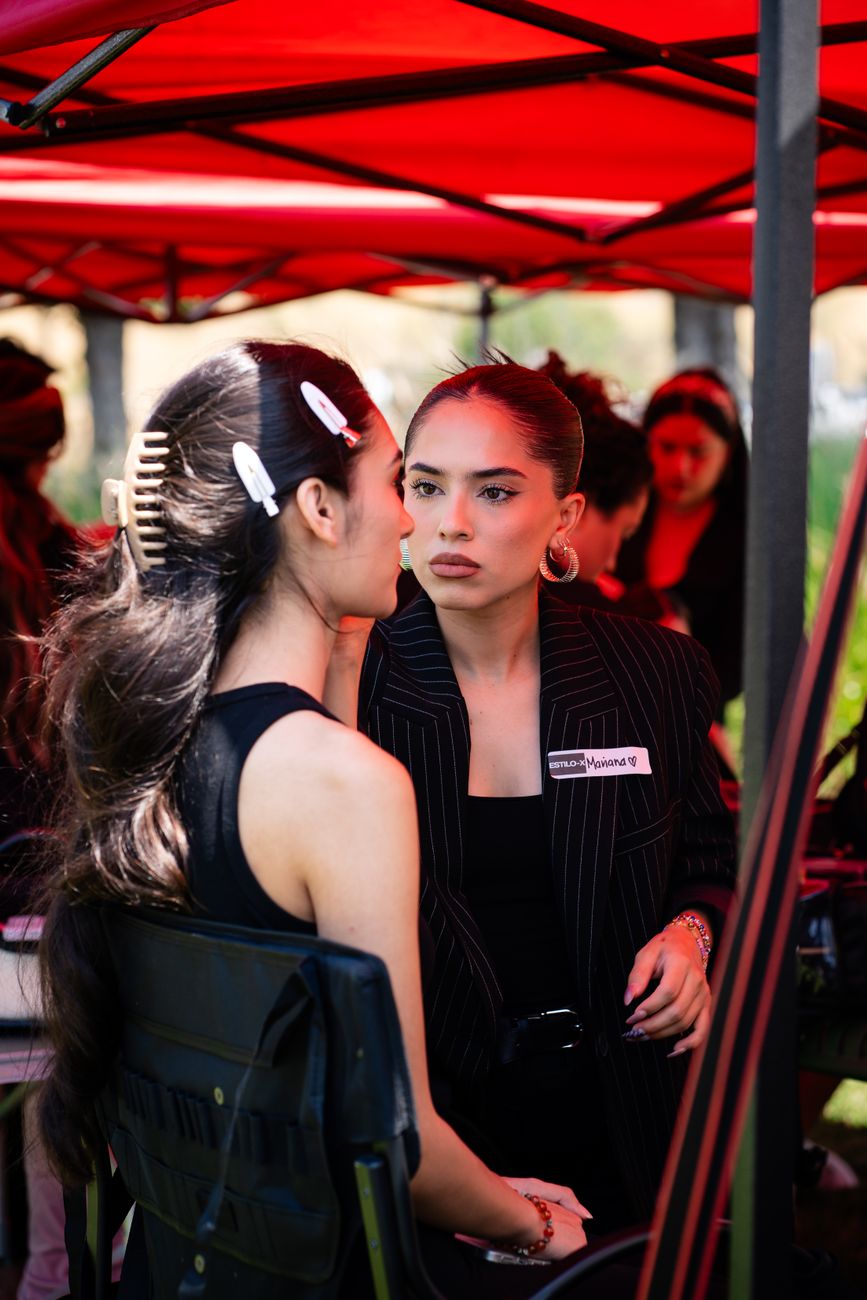
I might be wrong, but Sydney and Melbourne fashion circles can still confuse volume with authority. Perth cannot afford that mistake. A smaller, more isolated scene has to make each appearance count, which usually produces cleaner instincts. You could see it in the ideas attached to Perth names around AFW 2026: pleats that move, occasionwear that photographs well without dying on the body, styling that feels social instead of editorially iced over. That is not narrowness to me. It is discipline.
Broader coverage backs that up. WWD’s coverage of the 30th year treated the week as a business story as much as a cultural one. Vogue’s overview framed the event as an inflection point. Even the image-heavy packages, from ELLE Australia’s street-style coverage to The Guardian’s gallery, showed a week edging away from old resort cliches and toward something tidier, less ironic, more composed. Perth did not invent that turn, but it looked unusually ready for it.
What the reset rewarded
So the practical question hanging over the week is this: was Perth genuinely ascendant, or did the new AFW simply make a city like Perth easier to read? I suspect both are true. The move from Carriageworks to the MCA, the council-led reset, the buyer and export talk humming underneath the glamour, all of it favoured labels with a crisp commercial identity. Perth happened to bring several versions of that identity at once.

Another thing I kept noticing: the week’s new maturity was not solemn. The Guardian’s reporting on older familiar faces returning to the runway hinted at an industry easing off its obsession with novelty for novelty’s sake. Perth, with its fondness for women dressing for actual lives rather than mood boards, felt neatly aligned with that shift.
It matters outside the industry bubble for a reason. Fashion weeks can be vanity projects for insiders. Sometimes they are. They are also crude maps of cultural power. They show which cities trust their own taste, which industries can organise themselves, which aesthetics are mature enough to travel. For years Perth has been handed the same backhanded compliment in national style coverage: interesting, promising, a little removed. This year it looked less removed than self-possessed.
And that, for me, was sharper than any single hemline. Not a west-coast novelty act. Not a checklist of standout looks. A city arriving at Australian Fashion Week as if it had stopped asking permission some time ago. The week noticed. So did everybody else.
The Lifestyle Desires brief
Style, food, travel and wellbeing — weekly in your inbox.
Subscribe