Melbourne's new Italian rooms want you to stay
Melbourne Italian restaurants are swinging back to meatballs, late pours and family-room warmth, a clue to what diners want in 2026.
You can usually tell when Melbourne is a little off its axis by the way it orders dinner. Hunger is not the issue. Showiness is. Instead, the city starts looking for a room that knows why you left the house: a plate the size of your forearm, a waiter who has seen this exact kind of Thursday before, a wine list that makes another glass feel sensible rather than wild. Across Broadsheet’s roundup of five new Italian openings, from the CBD to Richmond, that is the mood. Not novelty. Care.
What I keep coming back to is how familiar the line-up looks on paper: Roma, The Florence, Nonna’s House, Spaghetti Club, Cambio Vita. Meatball subs. Woodfired pizza. Late pours. Plenty of rooms lean on the word trattoria without pretending to be exact copies of one in Rome. Repetition here is not a weakness. It is the argument. These places are not really selling Italian as a category. They are selling Italian as a way to make dinner feel generous, readable and a little forgiving.
Still, there is a colder way to read it. Time Out Melbourne’s recent look at the city’s dining trends says diners are chasing specific authenticity, intimacy and value, which sounds like market logic in a good wool coat. Maybe this is not a love letter to red-sauce comfort at all. Or maybe it is simply a polished response to a cautious year. Then again, “nonna vibes” might just be what hospitality calls the pitch when rent is real, bookings are softer and a room has to earn its keep before the tiramisu arrives. I don’t think that ruins the romance. If anything, it explains why the romance now has teeth.
The room arrives first
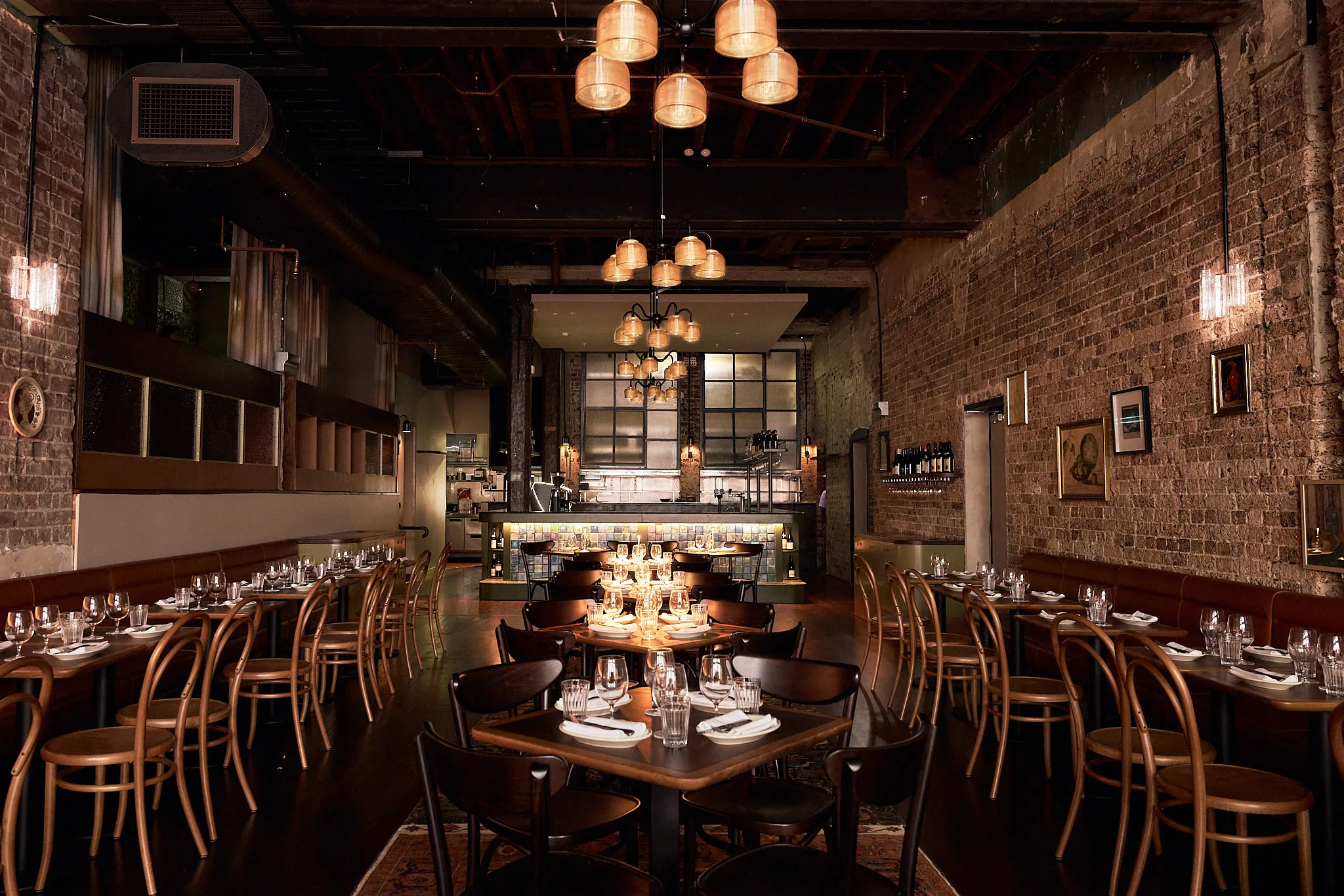
Most of these openings understand something simple: people decide how they feel about a restaurant before the first plate hits the table. Roma’s Collins Street opening leans hard into that old-city trick. Terrace. Trattoria cues. A bit of Roman fantasy. Just enough scene-setting to make dinner feel like an occasion, never so much that it tips into costume.

At heart, the insider case for this kind of room is almost boring in its practicality. Melbourne hospitality people have known forever that diners forgive a lot when a dining room lets them borrow a more appealing version of themselves for two hours. You can hear that in Con Christopoulos talking about the Roma site.
They ticked all the boxes.
Con Christopoulos in Broadsheet
On first read, the line sounds plain. Those boxes are not only lease terms or kitchen shape. Emotion matters too. Does the room promise a story? Can it hold a date, a family lunch, a slightly loose post-work dinner that becomes something longer? Melbourne’s grand Italian institutions have always understood that. The AFR’s recent piece on Florentino’s reset made the broader point neatly: the city’s durable Italian rooms survive because they keep making formality feel pleasurable instead of dutiful.
Seen that way, this wave feels less like retro mania than selective retrieval. Melbourne is not reviving the red-check tablecloth. It is reviving the feeling of being expected.
Another glass, obviously
If Roma is about the promise a room makes before you sit down, The Florence is about what happens after you should probably have gone home. A late-night Tuscan bar on Flinders Lane with a 250-bottle list and a 1am close does not just feed you. It keeps nudging the night along. Right now in Melbourne, that extra hour is half the point.

One question from the research bundle was almost comically ordinary, which is usually a sign it matters: can Italian still feel special if it isn’t formal? I think yes, and the best evidence is spatial rather than culinary. Mostly, these places are built for elasticity. You can go in intending to split a pasta and wind up staying for another bottle. You can book a proper dinner or just circle the bar. Even the appetite for smaller rooms, including places like Julietta, trades on closeness rather than grandeur. Thirty-five seats is not a compromise if the room knows what to do with them.
Bruno’s story about taking the upstairs space at The Florence gets at that appetite for possibility better than any trend piece could.
If upstairs becomes available, let me know.
Matteo Bruno in Broadsheet
You can hear the instinct there. Not scale for its own sake. Give the room enough corners and people will make a night out of them. I am not fully sold on the lazy claim that Melbourne is simply getting more casual. Casual is the wrong word. Lingerable is closer. People are choosier now about what counts as a worthwhile evening out, and the restaurants getting traction are the ones that make staying feel built into the plan.
The nonna signal
Then there is the nonna business, which can go twee in a heartbeat if you are not careful. Yet it keeps landing because it offers something sharper than nostalgia. Gourmet Traveller’s survey of new Melbourne openings and Time Out’s trend piece both end up in roughly the same place: diners respond to restaurants that show where their flavours, rituals and references come from, even when the staging is a little deliberate.
It also helps explain why Nonna’s House reads as more than branding, and why the wider nonna-coded aesthetic keeps turning up outside restaurants too, right down to the supermarket theatre of a literal “Nonna’s house” build. The analyst question was why specific authenticity is winning now. For me, the specific part does most of the work. Generic Italian can feel like wallpaper. A room with regional cues, family language and one or two concrete fixations feels inhabited.
Fleming put it well while talking about Spaghetti Club.
It’s not about replicating the dishes exactly.
Michael Fleming in Melbourne Insider
That, for me, is the whole case. These openings are not trying to preserve Italy under glass. They are trying to translate the emotional shorthand of Italian dining into a Melbourne register: generous plates, a bit of noise, some theatrical oven heat, enough looseness that ordering the obvious thing does not feel embarrassing. The meatball sub is not a gimmick if half the table wanted it before anyone spoke.
Underneath it sits a class question too. Gourmet Traveller’s recent look at luxe-for-less lunches suggests diners still want polish, but on terms that feel achievable. Italian has always been excellent at that trick. A beautiful room, a carafe, a bowl of pasta, maybe something crisp from the fryer: it can feel indulgent without dragging in the heavy manners of fine dining. Comfort, yes. But comfort with theatre.
Not nostalgia, exactly
What still persuades me about this Italian run is that it is not really backwards-looking, even when it borrows old-room language. The category has become a flexible code for belonging. A trattoria. A wine bar. A sub shop. A family-style room inside a suburban landmark. The through-line is not museum-grade tradition. It is recognisability. Each venue gives diners a quick answer to the quiet question hanging over so many bookings: what kind of night am I walking into here?

Which is why these openings feel like a rebuttal to trend-piece thinking. Trend pieces assume diners are chasing the next thing. I am not sure they are. Not in the tidy way restaurant media likes to imagine, anyway. The livelier truth is that people still want surprise, but inside a format they already trust. Woodfired pizza, yes, but maybe with a sharper wine programme. A neighbourhood room, yes, but with enough polish that you could take someone you are trying to impress. Broadsheet’s larger guide to Melbourne’s best Italian restaurants has always read less like a cuisine index than a map of how the city likes to socialise, and this new batch mostly extends that logic.
Diners get ease without boredom. Operators, meanwhile, need rooms that can hold different versions of the same customer: office spillover at six, a date at eight, someone still talking over amaro at 10.30. For the city, Italian remains the house language of reassurance whenever the mood turns uncertain.
So these openings feel less like fashion than argument. Melbourne keeps falling for Italian not because it has run out of ideas, but because this is still the format that turns appetite into atmosphere most fluently. You go for dinner. You stay because the room has made a case for one more glass. On a cold night, that comes close to civic wisdom.

The Lifestyle Desires brief
Style, food, travel and wellbeing — weekly in your inbox.
Subscribe