How to style textile art at home without flattening the room
Textile art at home works best when you use scale, texture and restraint. Here's how to hang a woven piece so a room feels warmer, not themed.
I keep thinking about the rooms that have all the right objects and still feel oddly mute. The sofa is fine. The lamp is fine. The rug cost enough to be memorable. Yet the walls sit there, hard and a bit over-explained. If you want to change that in an hour or two, textile art is one of the quickest ways I know. A woven piece softens a room fast. It also makes it feel lived in.
Partly that is why the category has taken off. In Vogue’s report on the recent textile-art swing, searches for “wall tapestry” were up 40 per cent, while “vintage tapestry” had risen 110 per cent. Emma Lang, an art consultant and founder of SOTA, reckons the appetite comes from a backlash against rooms that look too algorithmic.
“I think they’ve become more popular due to the rise of AI.”
Emma Lang, quoted in Vogue
You do not need a gallery-sized house for this. Or a saintly level of confidence, honestly. What you need is the right wall, the right scale and a little restraint. Give yourself a tape measure, some painter’s tape and a clear hour.
1. Start with the wall that feels too clean
The best spot is usually the one that looks polite rather than finished. For me that is often the wall above a console, the stretch beside a dining table, or the bit of bedroom plaster over a bedhead that reads blank by 4 pm.

Stand in the doorway first. If the wall is the first flat thing your eye hits, it can probably carry textile art. If the wall already has a bookcase, a busy print and a swing-arm lamp, leave it alone. Textile pieces work hardest where there is a little quiet around them.
Before you shop or rehang anything, mark out a rough rectangle with painter’s tape. It stops you buying a beautiful piece that disappears once it is on the wall. It also tells you whether the room wants a single drop, a wider horizontal work or something framed and more contained.
2. Match the format to the room, not the trend
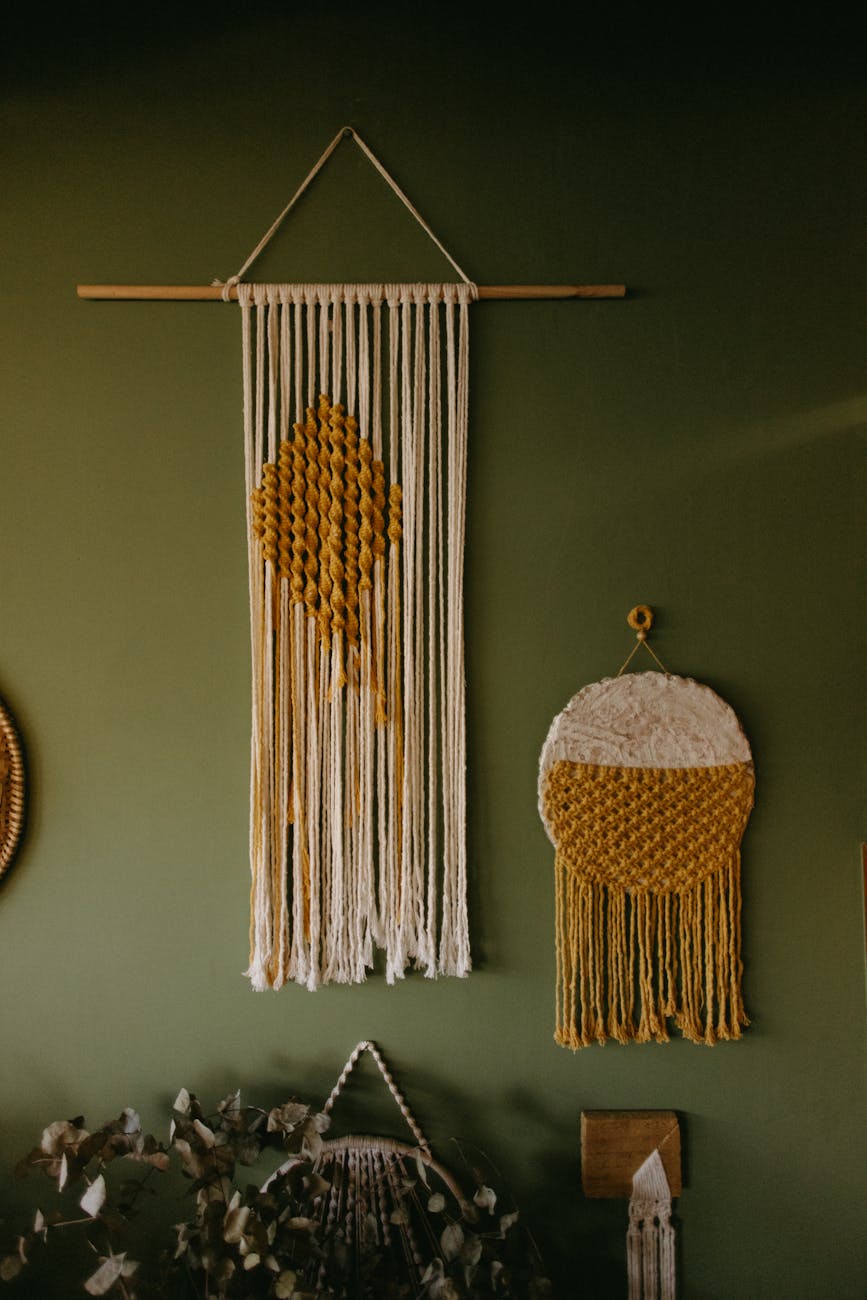
Not every room wants a bohemian wall hanging. Some need a flat framed fragment of cloth. Some want a quilt. Some want a narrow woven panel with a bit of weight at the bottom. Trend compliance is not the goal here. Texture with shape is.
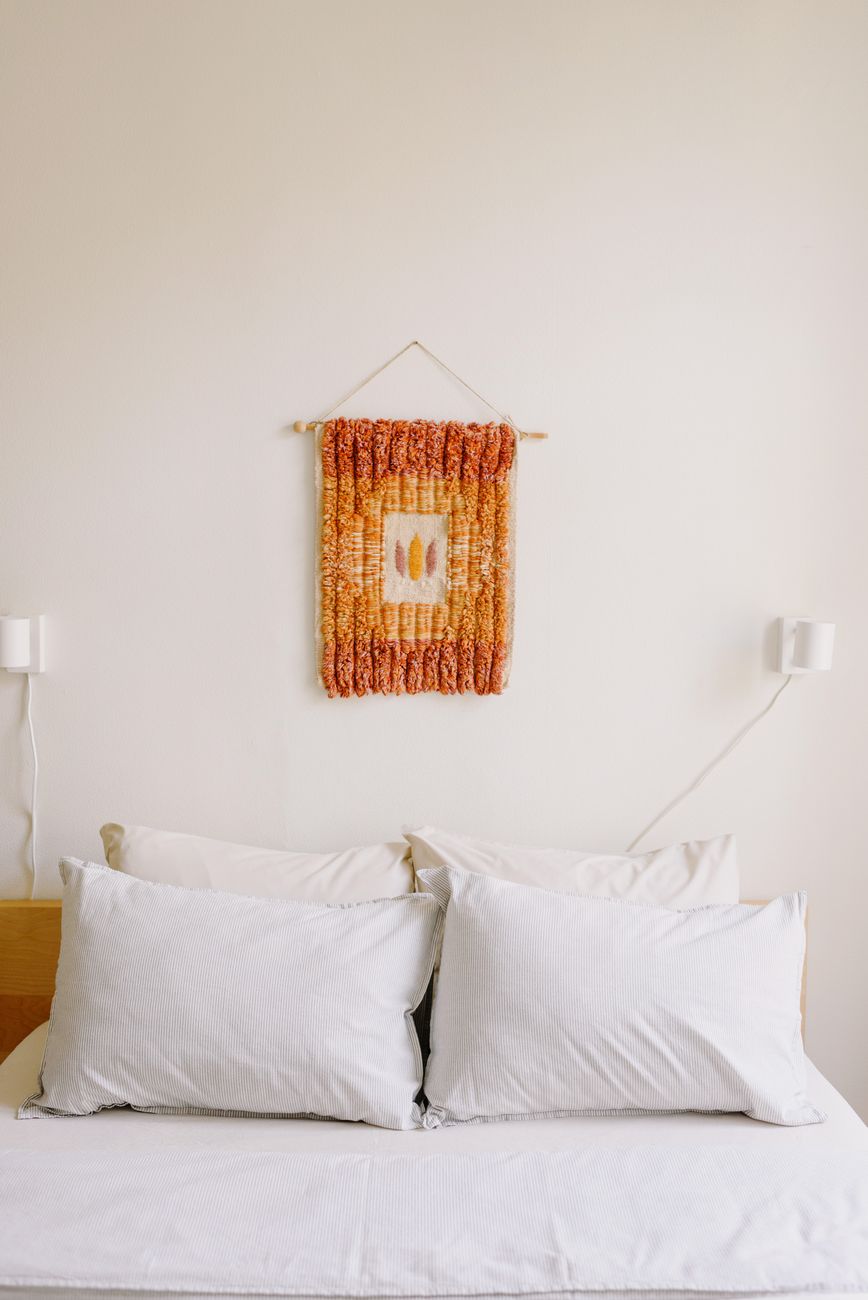
Rooms that already carry pattern in curtains, bedding or upholstery do better with quieter textile art. Raw linen, say. Faded wool. Stitched grids, old suzani pieces in washed tones, or a small framed fabric panel. A room that is mostly timber, plaster and straight lines can go fuller and softer. That is where tassel, pile, fringing or knotting start to earn their place.
I would also pause here and ask whether you want art or atmosphere. A collectible piece can anchor the room. A more decorative woven work can simply warm it. Both are valid. They just need different expectations.
3. Let scale do most of the work
People often overthink colour and underthink size. Reverse that. A modestly interesting textile in the right proportions will do more than a perfect one that is too small. Tiny work on a broad wall always makes the room feel apologetic.
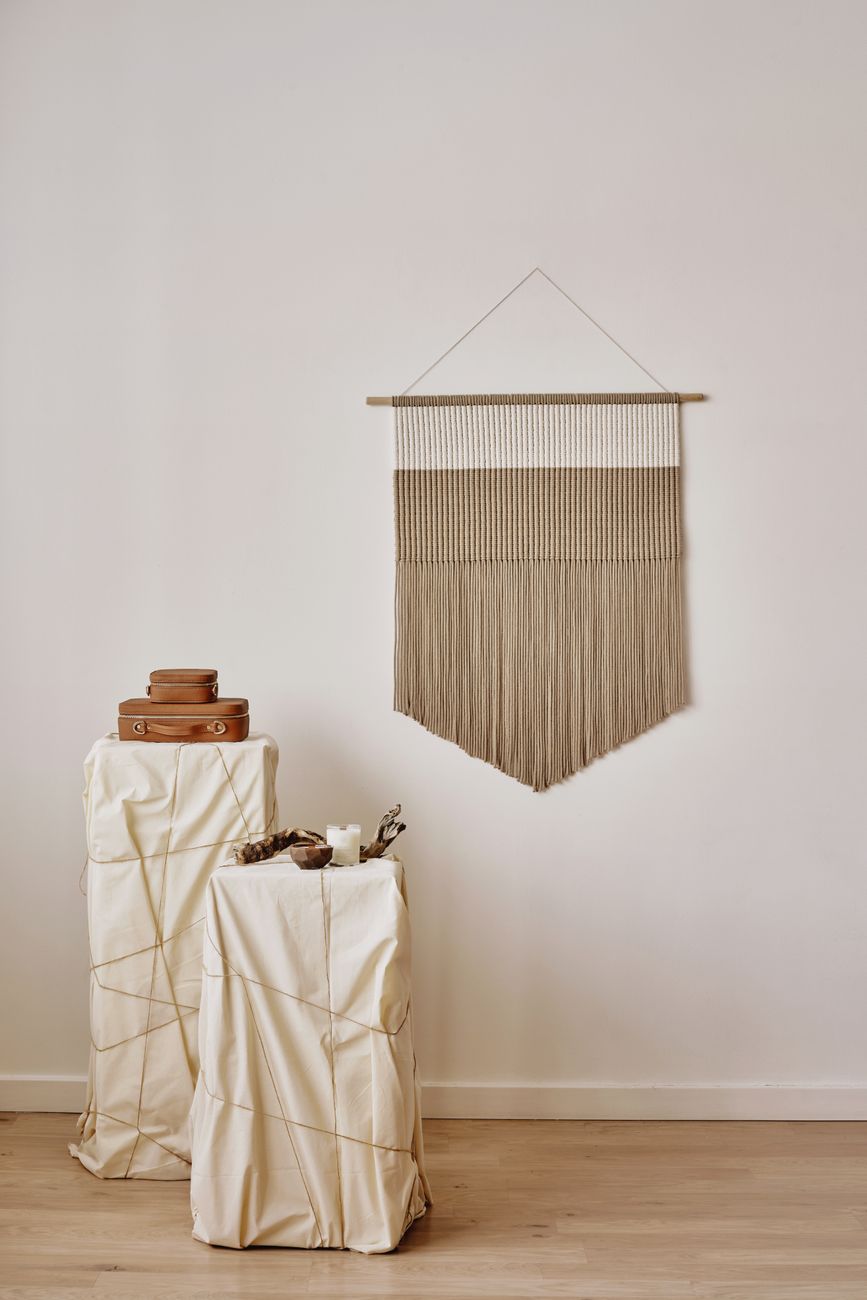
Vogue’s 2026 interiors survey notes that some contemporary textile works are stretching to two metres wide, with custom pieces even larger. That does not mean you need a monumental wall piece. It means the mood of the moment is generous scale. For most living rooms, I would aim for a piece that covers about two-thirds of the width of the furniture beneath it. Narrow hall? Awkward corner? A vertical drop beats anything square.
Unsure? Go slightly larger than feels comfortable on the first read. Textile art has less visual aggression than glass-framed art. It absorbs light instead of throwing it back, so it can carry a bit more size without shouting.
4. Hang it where the room sounds a little hard
Textile art is not just visual. It changes the acoustic feel of a room as well. Hard floors, stone benches, big windows, very little softness — those rooms shift the most.
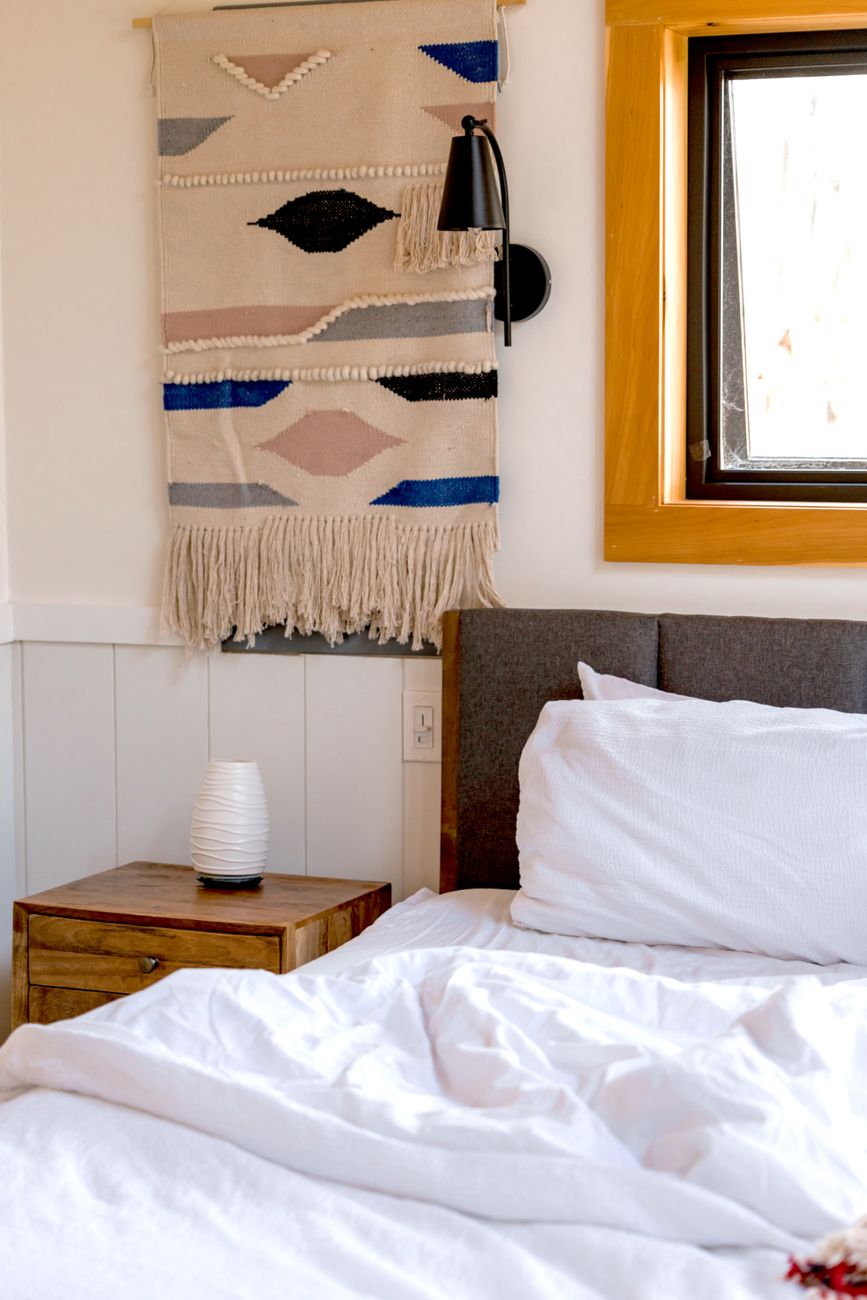
Dining rooms, entry halls, living areas with lots of straight architecture. James Thurstan Waterworth told Vogue that layering textiles brings warmth, tactility and narrative, and that word narrative is the one that stuck with me.
“Layering in textiles brings warmth, tactility, and narrative, making an interior feel collected and personal, rather than overly designed.”
James Thurstan Waterworth, quoted in Vogue
Try hanging the piece where the room still feels a bit echoey or formal. Keep describing the space as clean, crisp or minimal? That is often code for needing one softer note.
5. Let the rest of the room step back half a pace
Once the textile is up, resist the urge to explain it with twelve matching accessories. Good intentions drift into themed territory fast. A woven work looks better when the room gives it one or two quiet echoes, not a full costume change.
Repeat one quality, not the whole palette. Rust and ochre through the piece? Maybe that means a clay lamp base or a tobacco linen cushion, not six new terracotta objects. Chunky and nubby? Let that texture answer a bouclé chair or a wool throw, then stop. Homes & Gardens’ read on 2026 interiors is useful here because so much of the year is about tactile contrast rather than perfectly matched sets.
Rachel Chudley captured the feeling of it in Vogue’s broader trend forecast:
“The world feels rather cold and dark at the moment, and everyone wants warmth and cosiness—creative, textural works on their walls help achieve exactly that.”
Rachel Chudley, quoted in Vogue
Warmth is the aim. Decoration is only the method.
6. Give it more breathing room than framed art needs
A woven piece already has edge detail, shadow and movement. It does not need to be crowded by sconces, stacks of ceramics or another artwork jammed shoulder to shoulder. Leave a margin around it so the fibres can read from across the room.
This is where plenty of homes go sideways. We buy something soft and handmade, then hang it inside a traffic jam of objects. Shelf styling creeping upward until it almost touches the bottom fringe? Pull it back. Console beneath the work groaning with vases? Edit it to three things and live with the empty space for a week.
Lately I have been noticing the same appetite for looser, more tactile rooms in Australian interiors coverage, including recent Melbourne Design Week highlights from Homes To Love. The local lesson is not that every room needs a statement piece. It is that homes are starting to look better when they show a hand, a fibre, a bit of irregularity.
7. Troubleshoot the room, not just the artwork
If the textile piece suddenly looks too busy, the problem is often elsewhere. Your rug may already be doing all the talking. The sofa cushions may be fussier than you realised. Or the wall colour may be too cold for the fibres you chose.
Work looking small? Lower it first before you replace it. Pieces hung too high nearly always feel meaner and more nervous. Feeling childish? Remove one adjacent decorative object and add a plainer lamp or chair beside it. Flat even after hanging? The issue may be lighting. Textile art needs side light or lamplight to show shadow and stitch. Dead overhead lighting will erase half the reason you bought it.
Renters have a slightly different problem, which is fear. Fair enough. Start with a lighter framed textile, or hang a larger piece from a discreet timber rail so the wall reads considered, not temporary.
8. Add one more soft note, then stop
Once the textile art is working, you do not need to keep going until the room becomes a mood board. Add one companion move at most. A wool throw at the end of the sofa. A lamp with a parchment shade. A bench seat in washed linen. Then leave the room alone and notice what changed.
The change is rarely dramatic. It is subtler than that. The room stops looking flat under evening light. It feels less like a render and more like somewhere a person actually exhaled. That is the real trick of textile art at home. Not that it fills a wall, but that it gives the whole room a pulse again.

The Lifestyle Desires brief
Style, food, travel and wellbeing — weekly in your inbox.
Subscribe