What a stylish home looks like on a tight budget
A stylish room rarely comes from buying more. Start with a tighter palette, better light, one solid second-hand piece and a little restraint.
The easiest way to make a tight-budget home feel styled in 2026 isn’t buying a roomful of decor. It’s making fewer choices, more deliberate ones. A weekend and a few hundred dollars. That’s enough to make a living room or bedroom feel calmer, more expensive, more like you — on a very Australian budget, with the rental bond still hanging over your shoulder and the overhead light still rude.
I learnt this the boring way. Standing in one of those bright homewares aisles where everything looks helpful until you bring it home and it all starts arguing with itself. Cheap style usually fails not because the pieces are cheap, but because there are too many of them. Homes To Love puts it plainly via Melissa Penfold: “The key to revamping your home’s decor without emptying your pockets is to try and focus on small changes.” That sounds almost too simple. It is also, irritatingly, true.
Two to four hours for the first pass. Another hour a week later once the room settles. Here’s the version that tends to work.
1. Decide what the room is meant to do before you buy anything
Before cushions, before lamps, before a late-night Marketplace spiral — stand in the room at the time you actually use it. Morning coffee? Working from the sofa? Dinner with friends? Winter light makes the flaws obvious fast. The glare. The lonely corner. The chair that collects clothes. A stylish room is rarely the one with the most objects. It’s the one that has made up its mind.
Write one sentence. Mine usually ends up something like: this room needs to feel soft enough for reading and tidy enough for people to drop in without warning. Once you have that line, half the impulse buys go dead on the shelf. Woven stool, chrome lamp, striped throw — if it doesn’t serve the sentence, leave it there.
2. Shrink the palette to three colours and repeat them on purpose
Cheapest styling move I know. IKEA Australia recommends working with a three-colour palette, and that limit matters because it stops the room turning into a souvenir shop. I work in one base tone, one warmer note, one darker anchor. Chalky white, tobacco, olive. Oat, rust, black. You don’t need designer paint names. You need repetition.
Look at what’s already fixed and annoying: the floorboards you can’t sand, the beige rental carpet, the grey sofa you bought in a hurry in 2021. Start there. If the biggest piece in the room is cool-toned, don’t fight it with six competing warm colours because a trend report told you terracotta is back. Repetition is what makes a budget room look considered. One olive cushion means nothing. Olive in a cushion, a second-hand vase, the leaves of an actual plant — that begins to read as intent.
Home Beautiful quotes designer Jono Fleming: “If you still love it, keep it. If you don’t love it, but you need to live with it, change what’s around it.” I’d pin that above every Australian rental inspection report.
3. Spend your best money on lighting, because the ceiling light is not on your side
Most tight-budget rooms aren’t ugly. They’re overlit. That harsh oyster light can make decent furniture look defeated by 6pm. One purchase this month: a lamp with some height, or a wall washer that throws light sideways instead of straight down.
Not three matching lamps. That’s not mood, that’s a lighting aisle. One proper source is often enough. Put it near the chair where you scroll, or beside the sofa where the room goes flat after sunset. Better shadows, better texture, fewer corners that feel like an afterthought. If you’re renting, this is especially useful — light is one of the few things you can fully control without asking an agent.
I keep coming back to lighting because it makes every cheaper object behave better. Flat-pack shelves look calmer. Linen blends look richer than they are. Even the odd laminate side table gets a grace period.
4. Use curtains and height to cheat the bones of the room
There is almost nothing glamorous about spending money on curtains when you’d rather buy a chair. Still. The Design Files put it neatly: “Curtains are a small thing that can really make a big impact in a rental.” Hung high and wide, they soften a room, hide miserable window proportions and add the sort of vertical line that reads as finished even when the room isn’t.
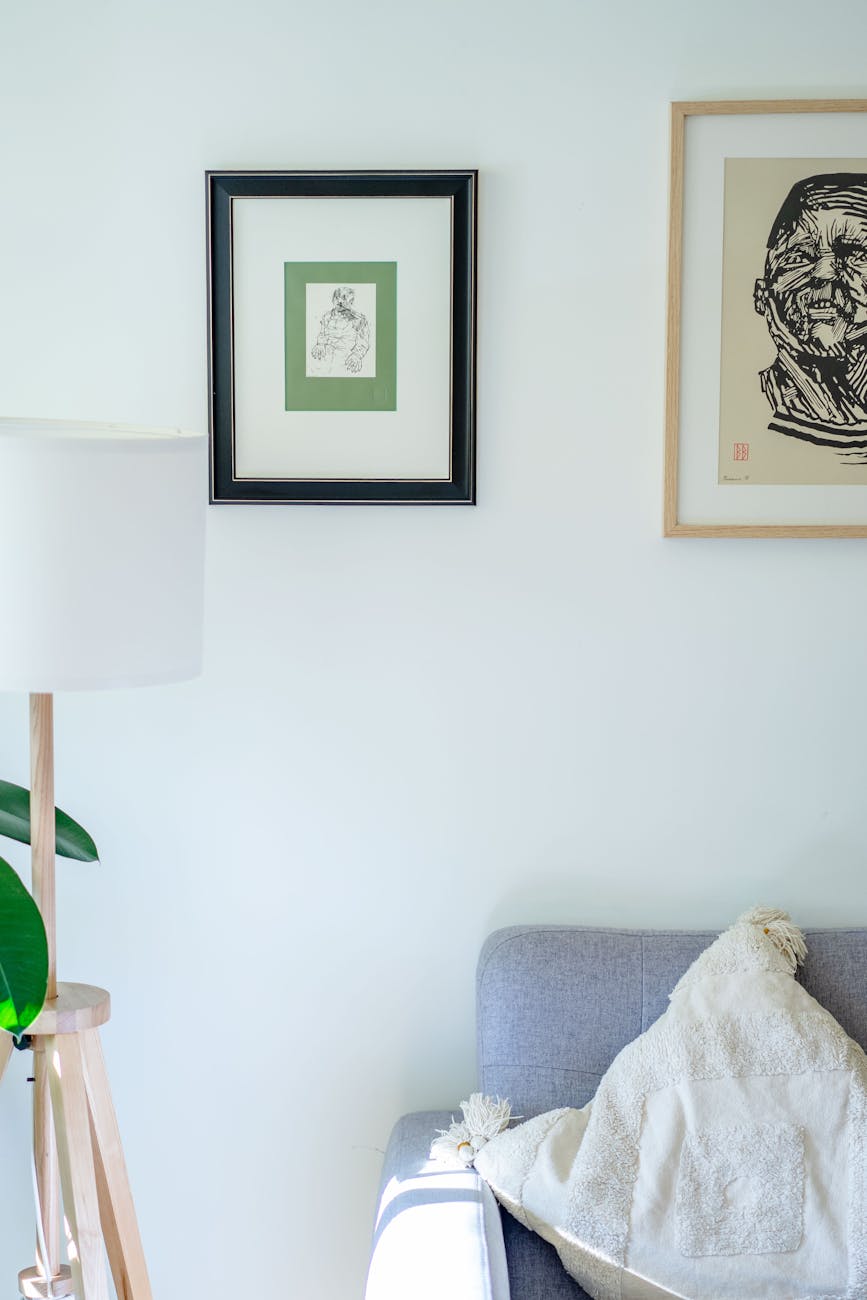
Can’t afford curtains? Steal the principle. Raise what you can. Hang art a touch higher. Move a mirror so it catches window light instead of reflecting the television. Stack books vertically in one spot rather than scattering them everywhere. Style on a budget is often just giving the eye somewhere calm to land.
I’m less convinced by tiny decorative filler. A room doesn’t need twelve little gestures. It needs one or two moves with conviction.
5. Buy one second-hand piece with weight, not five trendy bits with no history
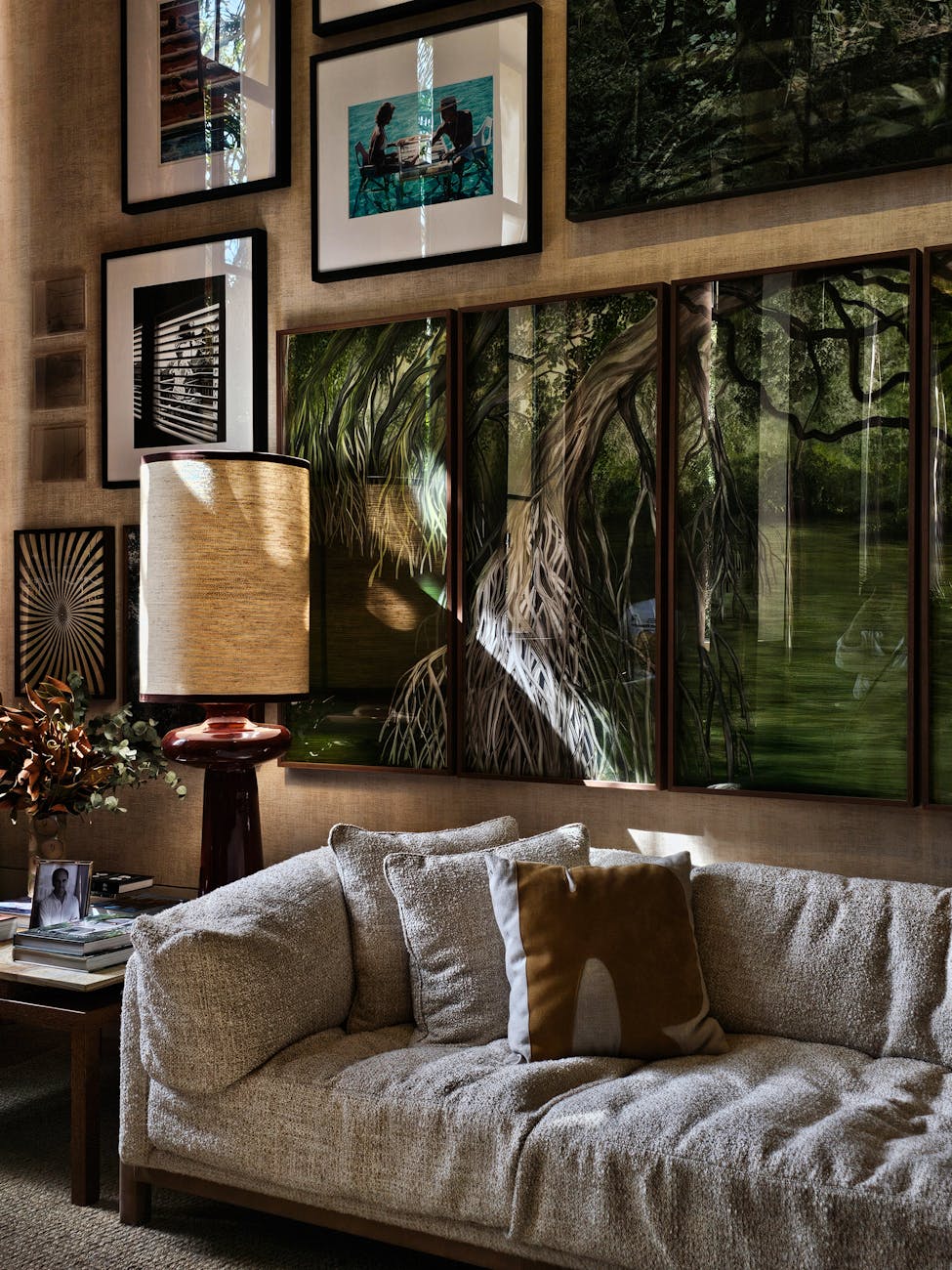
The best cheap rooms nearly always contain one thing that looks as if it existed before the algorithm found it. A timber side table from Marketplace. A heavy ceramic lamp base from an op shop. A dining chair someone was about to leave on the kerb. Australian homes look better, to my eye, when everything isn’t arriving in the same delivery window.
Here’s where a budget has to be honest. Better Homes & Gardens Australia recently tested room updates at about $300 a room, which feels realistic precisely because it forces you to prioritise. If you have $300, put $180 into the piece that gives the room a spine. The rest goes on the support act: paint for a small table, a lamp shade, curtain tape, cushion covers instead of whole cushions. One solid second-hand find and a few tidy supporting choices outlasts the cheaper thrill of a trolley full of trend pieces.
Measure first. Then look at the listing again in bad daylight. Seller’s photo dark? Ask for another one. Scale vague? Ask for the width. Nothing burns a small budget faster than dragging home a bargain that blocks the door swing.
When you shop second-hand, carry the palette from step two in your head. Not every bargain is yours. Some bargains are just clutter at a discount.
6. Edit around the ugly thing you cannot replace
Every budget room has an adversary. The rental blind. The dark sofa. The pine wardrobe. The office chair you need for actual work. The mistake is trying to erase it. Better to reduce its authority.
Bulky sofa? Pull attention to the floor with a bigger rug rather than more objects on the sofa itself. Orange pine dining table? Cool the rest of the room down and stop pretending it’s mid-century teak. Bedroom with zero architectural charm? Lean into bedding with texture instead of buying bedside accessories that’ll only make the room feel busier.
This is where Melissa Penfold’s point about small changes feels most grown-up. Stylish rooms aren’t full renovations in miniature. They’re edits. A swapped lamp. Fresh pillow covers. A tray that corrals the visual noise. An empty surface left empty on purpose.
7. Finish with texture, then stop before the room starts pleading for approval
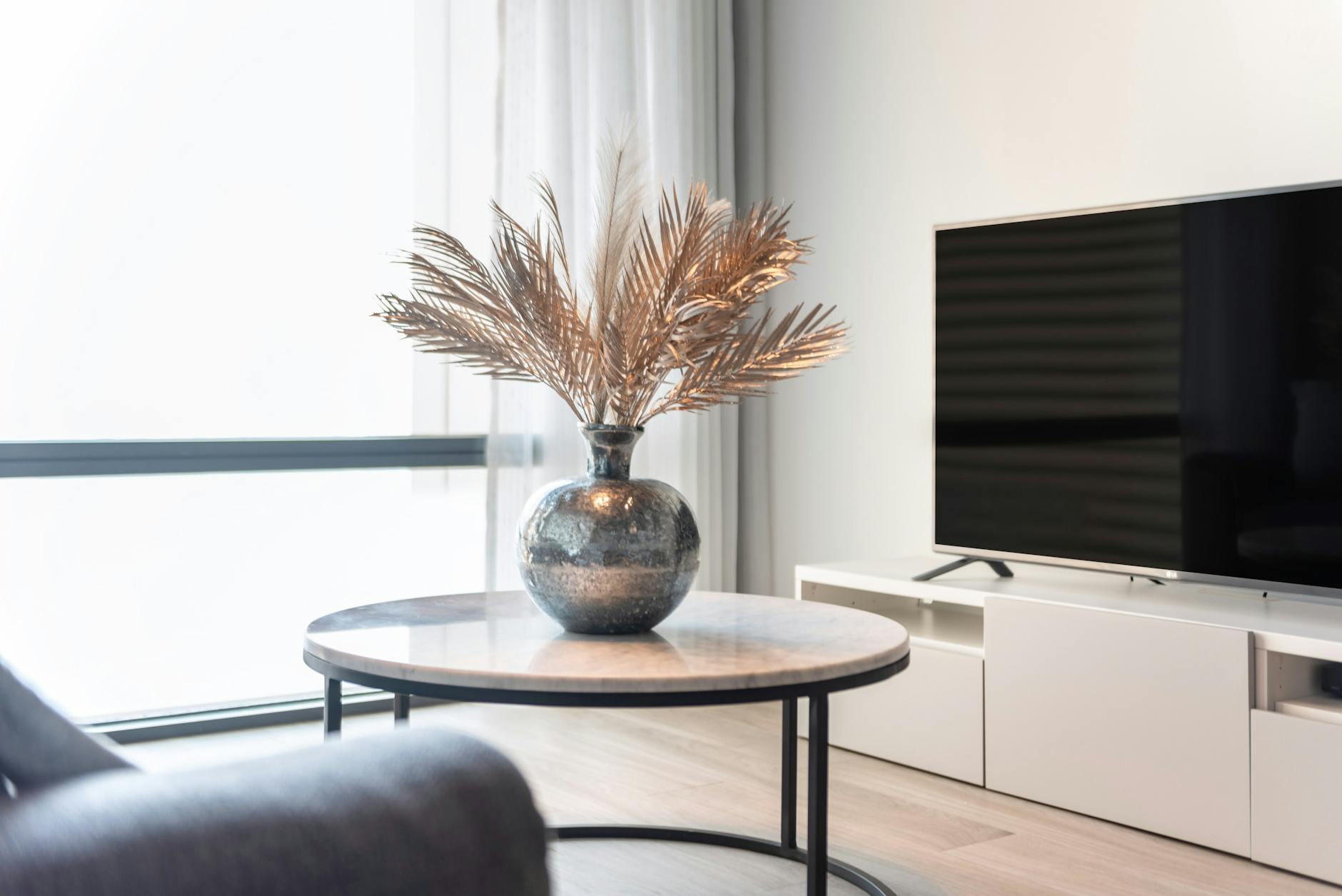
Once the big moves are done, add softness rather than stuff. A washed cotton coverlet. A nubby cushion. A timber bowl. A branch clipped from the garden if you have one. Texture does more work than novelty — it changes how a room catches light, how it feels to sit in. That’s what makes a home look styled instead of simply purchased.
Then stop. This is the bit I still get wrong. A room on a tight budget can cross into panic-buy territory in about nine minutes, especially online, where every blank corner suddenly looks like a moral failure. Leave one surface clear. Let one wall breathe. If the room feels slightly underdone on day one, that’s often a good sign. You’ve left space for the home to become itself instead of forcing it into a mood board by Sunday night.
A stylish home on a tight budget in Australia doesn’t look expensive so much as decided. It knows what it’s doing. Fewer colours. Better light. One piece with a bit of soul. Curtains if you can manage them. Enough restraint to leave the rest alone. Not glamorous. Still good.
If it still feels flat
Go back through the room and check three things. Is the palette actually limited, or did stray colours creep in through art, books and bargain cushions? Is the lighting doing any real work after dark? Have you mistaken more for finished? Most stalled rooms improve when you remove two small objects and move one larger thing.
If the room feels cold rather than plain, the fix is usually softness, not colour. A shade, a throw, a curtain panel, a timber note that brings a bit of dry warmth back in.
What to do next
Start with one room only. The living room is usually the best training ground — the changes are visible fast. Photograph it before you begin, then again a week later. The camera is blunt in a helpful way. It’ll show you whether the room feels calmer, taller, more coherent. Which is the whole point.

The Lifestyle Desires brief
Style, food, travel and wellbeing — weekly in your inbox.
Subscribe