The martini trolley is back, and not ironically
The martini trolley revival is less about retro kitsch than a new appetite for visible hosting, small rituals and rooms that know company is coming.
The martini trolley is the rare piece of furniture that can make a room sit up. One minute everyone is half-listening, thumb on stem, ice already thinning in the glass. Then the wheels arrive. A chrome rim catches the light, brass flashes, and a napkin sits folded with almost silly care. Someone lifts a bottle from its cradle, somebody else pauses mid-sentence, and the whole table consents to a tiny interval of theatre before the pour.
My first instinct is usually to mistrust an object that knows it looks good under low light. The home sector has spent years trying to sell us stage sets disguised as essentials, and the bar cart has often sat in that category: too many bottles, too much brass, nowhere to put the actual snacks. If you live in a narrow terrace or a Sydney apartment whose “dining zone” is really the end of the sofa, the skeptic’s question comes fast. Is this glamorous, or is it just clutter with a decanter?
But the martini trolley revival in London and Beverly Hills is interesting precisely because it makes that objection feel a little dated. What is returning is not the old idea of a novelty cart trundled out for effect. It is the older, more persuasive idea that hospitality should be visible. You should be able to watch care being assembled in front of you, olive by olive, and to feel, if only for a minute, that the room has bothered to prepare itself for your arrival.
That is the analyst’s read of it, and I think it holds. The Financial Times’ look at how the cocktail cart regained its cool placed the trolley inside a broader appetite for ritual and polish after years of pared-back everything. The practical-host skepticism still matters, and it should. By the third drink, nobody wants to be trapped in a museum of glassware. Still, what the trolley’s return says, plainly, is that hidden labour has stopped feeling like good hosting. Rooms feel warmer when the gestures inside them are visible. The trolley makes every gesture legible.
The room pauses
In hotel bars reviving tableside martinis, the trick is not extravagance. It is pacing. At The Connaught’s long-running service, which Vogue notes dates back to 2008, the martini trolley works because it slows the interaction down without making it stiff. The guest sees the bottle, the chill, the choices. The bartender performs precision, yes, but the performance is hospitable rather than showy.

At The Connaught’s tableside ritual, assistant director of mixology Giorgio Bargiani described the appeal with unusual plainness:
“It’s a very engaging and dedicated service that guests love in its entirety, and has created a truly timeless attraction.”
— Giorgio Bargiani, Vogue
Timeless is an overused word in interiors, but here it lands because the trolley solves a genuine service problem. How do you make an expensive drink feel worth lingering over when every good bar now knows how to chill a glass properly? You make the making part of the pleasure. That is also why Kitty’s Cosmopolitan Club’s refrigerated martini service in Chicago feels less like cosplay and more like a modern answer to the same brief. Eater reports a station held at minus 16 degrees Fahrenheit, martinis starting at $34, and a $90 upgrade if you want better gin. Those details are not nostalgic. They are operational. The cold is the point. The trolley merely lets you see it.
Sebastian Hinsch, speaking in Vogue’s feature on the comeback, put the business case in emotional terms:
“This interactive, immersive experience struck a chord immediately.”
— Sebastian Hinsch, Vogue
That insider perspective matters because it answers one of the obvious questions in the background of all this chrome. Does the trolley lift martini sales, or does it only lift attention? Probably both. Yet the better clue is that bar teams keep talking about engagement before they talk about margin. The trolley succeeds when it gives guests a felt sense of participation. They are not just handed a finished object. They are invited into the final act.
Glamour leaves the hotel
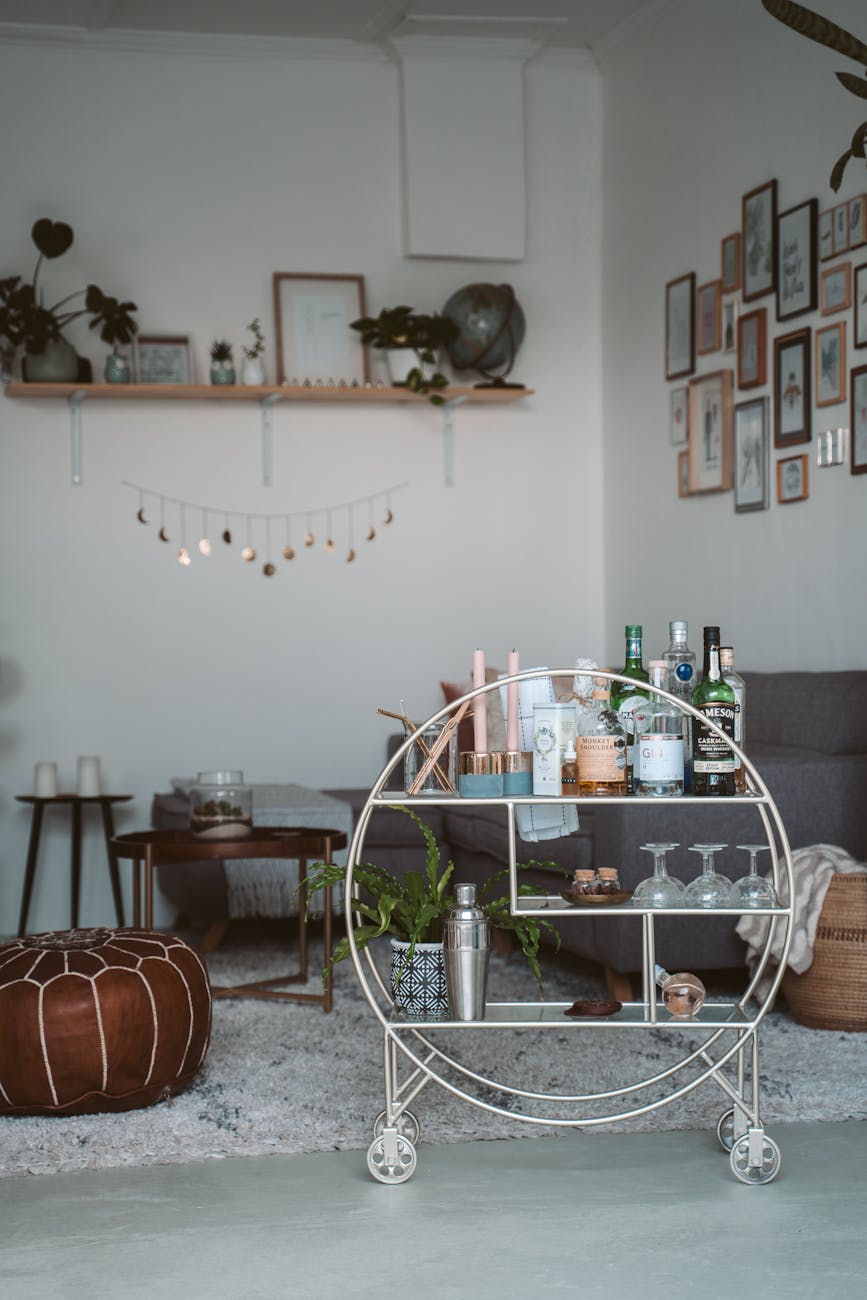
Seen that way, the trolley’s drift into home life makes sense. It is part of the same post-minimalist swing that has brought back patterned lampshades and skirted sinks. Heavier glassware. Dining rooms that want to look as though people actually sit in them. For a long time domestic taste prized ease so aggressively that entertaining almost disappeared into logistics. Good hosts were meant to produce abundance without appearing to organise it. The bar trolley, by contrast, admits that the work is part of the atmosphere. I walked through a friend’s place in Marrickville last month — narrow terrace, one living space, the kitchen bench doubling as everything — and she’d parked a small brass cart under the stairs. Five bottles, two coupes, a bowl of lemons. The room worked differently because of it.
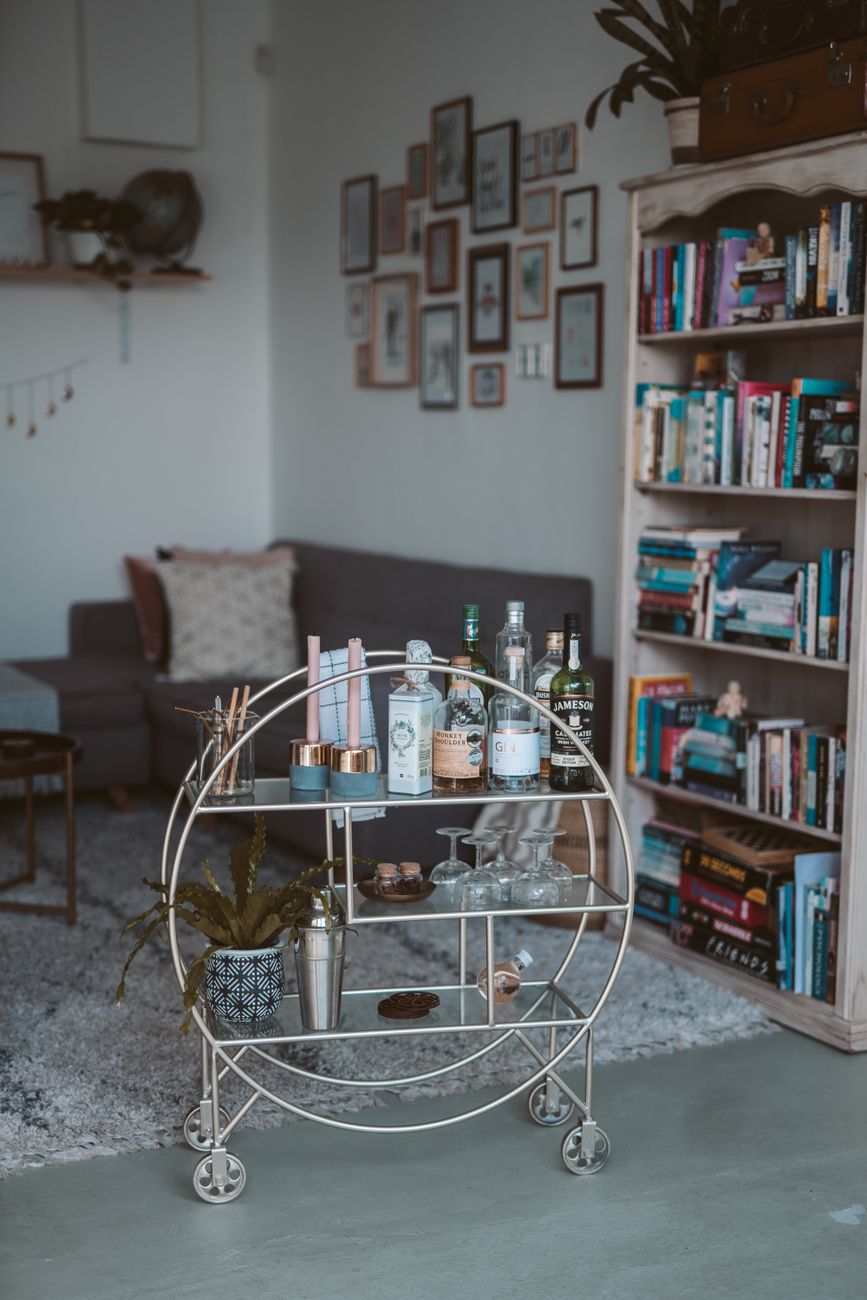
That is why Hannah Chamberlain’s advice on setting up a bar cart like a pro lands as cultural commentary as much as service. She is not arguing for more stuff. She is arguing for a ritual that feels seen.
“There’s something very special about watching someone make it just for you with precision, care, and panache that feels uniquely luxurious.”
— Hannah Chamberlain, Imbibe Magazine
I keep circling the word panache. Old-fashioned, sure. A little theatrical. Which is exactly why it feels current again. Entertaining has become self-conscious in a different register from the old aspirational dinner party. People want a room that photographs well, certainly, but they also want one that can produce a small, memorable moment without hiring a bartender or pretending to live in a hotel lobby. A distillery-side argument for martini service as ceremony makes the same case from the drinks world: what lingers is the sense of occasion, not just the recipe.
The question answers itself. Efficiency has started to feel emotionally thin. Hidden prep reads as indifference. After a decade of stripped-back “effortless” hosting, there is genuine pleasure in watching a host take two extra minutes and let the gesture show. The trolley is not only about glamour. It is about making care visible again.
The practical host objects
Yet the small-space reader is not wrong to push back. Most homes do not need another freestanding unit with wheels. Plenty barely need an armchair. The home version of the martini trolley fails the moment it becomes a dumping ground for every gifted bottle, novelty swizzle stick and cocktail book you never open. This is where lifestyle trends usually lose me. They ask you to confuse accumulation with atmosphere.

The skeptic’s best question is also the most useful one: when does a bar cart become clutter rather than glamour? My answer is annoyingly simple. When it stops doing a job. In a good bar, the trolley is not decorative surplus. It carries the cold glassware, the preferred gin, the twist, the olives, the small instruments that let the drink arrive intact. At home the same rule applies. If the cart cannot save you a trip, free the kitchen bench, or make two guests feel unmistakably welcomed, it is scenery.
That is why the trolley’s migration into domestic life will never be total, and should not be. Some houses want a built-in drinks cabinet. Some want a tray that comes out once a month. Some want nothing more than a freezer-cold coupe and somewhere to put the lemon peel. The point is not that every Australian home suddenly needs brass wheels in the lounge. The point is that even the skeptical host can feel the appeal of a setup that signals intention. A house changes when one corner of it says, quietly but clearly, we knew you were coming.
There is also a class question hanging around this trend, and pretending otherwise would make the piece too neat. The trolley can certainly be used as a shiny proxy for status. So can a stone kitchen island. So can a sofa the colour of bone. What saves it, sometimes, is that its performance is legible. You can tell whether somebody has styled a cart for Instagram or actually thought about how people move through the room, where the ice lives, who is mixing, who is pouring, where the empty glasses go. Good hospitality still gives itself away in the logistics.
What the trolley teaches the room
So the home lesson is not “buy a trolley”. It is simpler and harder. Let service shape the room. If you are going to make drinks in front of people, give the ritual a proper surface. Leave breathing space around it. Keep only what earns its keep. The best trolleys, like the best shelves and sideboards, understand proportion. They do not beg to be admired from every angle. They hold the right things at the right height and let the hand find them quickly.

A martini trolley teaches a few things at once. Material honesty — glass should look like glass, metal should catch the light cleanly. Editing — three bottles you genuinely pour beat twelve you keep for display. Circulation — people need room to approach, hover, accept a drink, drift away. And ceremony does not have to mean fuss. Often it is just a matter of putting the right objects in the open instead of making the kitchen perform all the labour offstage.
What people are responding to when they share trolley pictures, save hotel-bar references, or start wondering whether the neglected drinks cart in the spare room deserves a second life is not really retro glamour. Not even when the brass gleams and the olives arrive on silver picks. They are chasing a version of home entertaining that feels composed in public, a little generous, slightly slower than the week that led up to it.
For years, tasteful homes were asked to make effort disappear. The martini trolley proposes something more adult. Let the room show its workings. The guest can watch the care happen. The glass can arrive very cold, exactly where a hand was already waiting.

The Lifestyle Desires brief
Style, food, travel and wellbeing — weekly in your inbox.
Subscribe