
Choline and anxiety: what this brain study can’t prove
Choline and anxiety now sit in the same headline, but the UC Davis-backed study found a brain signal, not proof that supplements will calm you.
If you spend enough time around women’s health headlines, you start to recognise the sugar hit of a nutrient story. It offers a version of relief before you’ve even read the second paragraph. Maybe the reason your chest has been tight for months, or your sleep brittle, or your thoughts louder than you’d like, is not the shapeless mess of modern life but one overlooked molecule with a clean label and a place on a shelf. That is the mood hanging around a new Molecular Psychiatry paper, Transdiagnostic reduction in cortical choline-containing compounds in anxiety disorders on choline and anxiety, and I understand the appeal.
At the centre of it, amplified by UC Davis Health, is a pooled look at 25 published datasets comparing brain scans from 370 people with anxiety disorders against 342 controls. On average, cortical choline-containing compounds were about 8 per cent lower in the anxiety group. In the media version, that can sound like anxious people are walking around with a missing ingredient. On the page itself, it sounds narrower and more interesting: a repeated chemical pattern, measured through brain imaging, that may tell us something about how anxiety sits in the body.
By the third paragraph of most consumer explainers, though, the chemistry is already halfway to the chemist. The McGill Office for Science and Society has been one of the clearer sceptical voices on choline for a while, and its warning belongs beside every glowing headline.
“Choline is not a miracle nutrient, but it certainly deserves more respect than it typically receives.”
— Sophie Tseng Pellar, McGill Office for Science and Society
To me, that is about the right register. Respect, yes. Mythmaking, no. The real value of this study is not that it gives anxious people a new wellness errand. It shows, with decent statistical weight, how quickly a careful biomarker story can be flattened into lifestyle advice before readers are told what the science can and cannot do.
What the scan can actually see
From the team’s own vantage, the finding is fairly disciplined. The paper is not measuring how much choline you ate last Tuesday, and it is not diagnosing anxiety from a blood test. Instead, it looks at total choline-containing compounds, often shortened to tCho, through proton magnetic resonance spectroscopy, a technique that lets researchers infer something about membrane turnover and cellular metabolism in the brain. Strongest evidence showed up in the prefrontal cortex, the region the UC Davis summary ties to emotional regulation and decision-making.
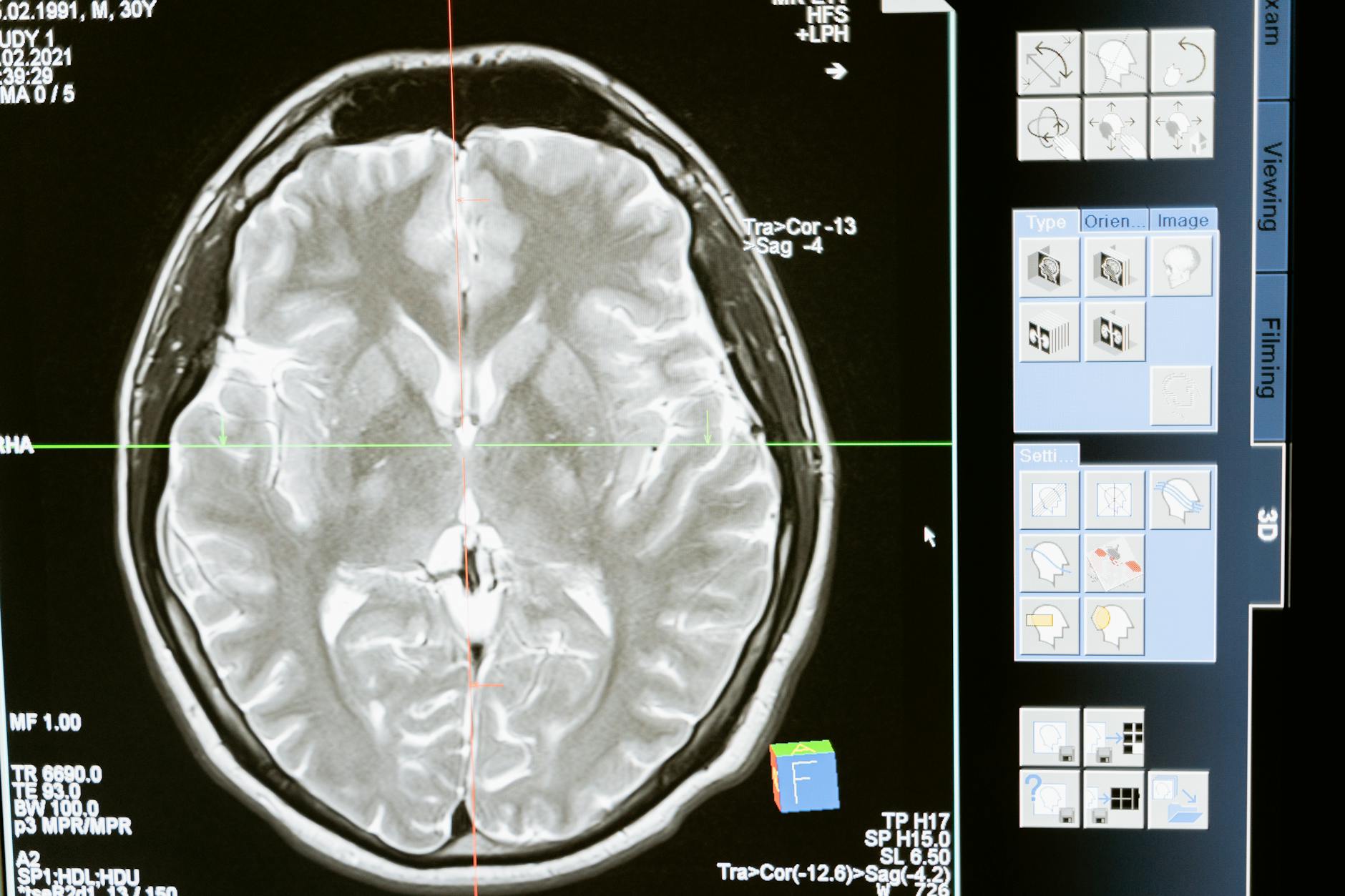
More to the point, “lower choline” is doing a lot of work in the popular retelling. In the study, it is not a breezy synonym for deficiency. It is a neurochemical signal found across 25 datasets, with the stronger association appearing in the higher-quality studies, where the effect size reached Hedges’ g of -0.64. That is not trivia. Nor are the authors clutching at a random wobble in the data. Even so, it is not an instruction sheet. The study does not show that low dietary choline caused anyone’s anxiety, or that lifting intake would shift symptoms in a meaningful way.
In the UC Davis Health summary, co-author Jason Smucny is careful about what the signal does and does not mean.
“This is the first meta-analysis to show a chemical pattern in the brain in anxiety disorders.”
— Jason Smucny, UC Davis Health
Slow that sentence down and it stays useful. A chemical pattern. Not a cure. Not a protocol. Not proof that eggs, lecithin or capsules should now become part of every frazzled woman’s morning routine. One of the more compelling ideas in the study is that the lower tCho signal may reflect chronic arousal and altered neurometabolic demand, something closer to the wear of a nervous system that has been running hot than to a tidy missing-nutrient plot. Less marketable, sure. More faithful to the evidence too.
Richard Maddock makes the same point in the university’s own coverage, and I wish that line were travelling as far as the headline did.
“We don’t know yet if increasing choline in the diet will help reduce anxiety. More research will be needed.”
— Richard Maddock, UC Davis Health
Here is the load-bearing caveat. We do not know whether the signal is a stable trait, a state effect, a downstream consequence of stress biology, or a piece of several overlapping mechanisms. We do not have a supplementation trial here. We barely have the beginning of the right question.
The supplement aisle is already listening
Then comes the part that feels culturally familiar. Once a study contains a nutrient, the consumer rewrite starts almost on cue. Earth.com pushes the finding towards food and nutrient language in its framing. Verywell Health goes further, asking whether a lack of choline could be causing anxiety. Neither outlet is inventing the study. Both are doing something more familiar than that: converting a nuance-heavy paper into a form readers recognise as actionable, personal and maybe even fixable.
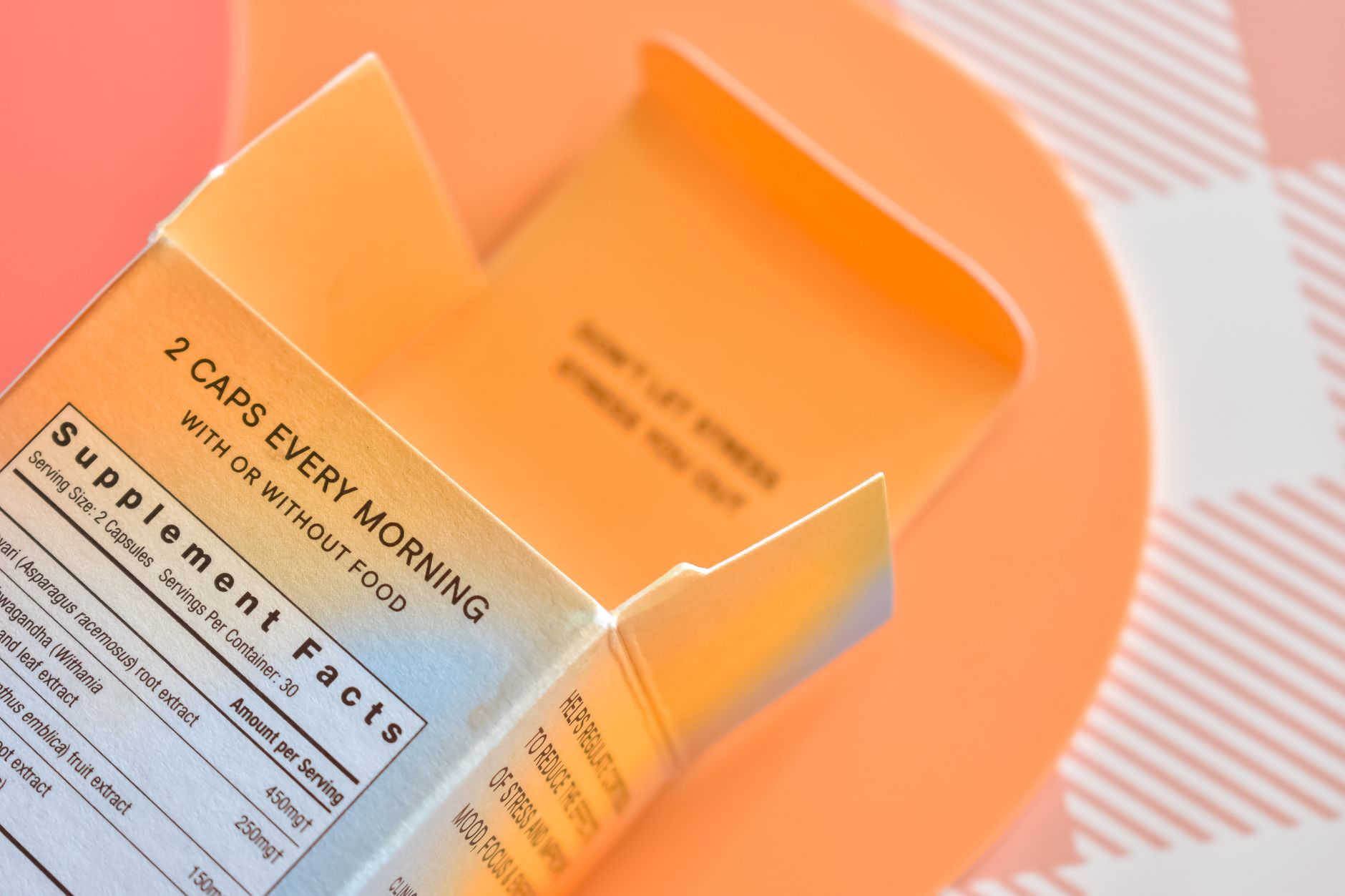
Part of me gets why this happens. A nutrient is easier to live with than a system. It is easier than talking about the strange social hum of being overextended, hyper-alert, under-slept and told to keep optimising anyway. It is easier than admitting that anxiety can be clinical, chronic and bound up with things no breakfast can settle. Wellness media knows this. Readers do too. So a biochemical clue becomes a shopping question because shopping feels simpler than uncertainty.
Adjacent coverage shows the broader pattern. GQ’s recent piece on l-theanine is not about this paper, but it shows the same consumer grammar: mood first, molecule second, purchase possibility close behind. None of that makes the reporting dishonest. It does, however, show how the wellbeing economy metabolises evidence. A study lands. The most cautious sentence is left at the door. The most purchasable sentence gets the light.
Then the regulator and clinician voices matter, even if they are less fun to read. The National Institute of Mental Health keeps the frame plain: anxiety disorders are real mental health conditions marked by fear, dread, panic, avoidance and physical symptoms that interfere with daily life. That sounds boring next to a nutrient hook. Good. Boring is underrated in health writing. Boring is how you stop people from confusing an early-stage biomarker paper with permission to self-diagnose, or worse, to self-treat because the packaging looked scientific.
So no, choline is not irrelevant. Scale matters. The brain uses it, and the study adds to a serious conversation about metabolism, arousal and psychiatric illness. I would not shrug that off. I am far less convinced, though, by the version of the story that turns one 8 per cent group difference into a new daily obligation for anxious people, many of whom are already carrying too much advice and too much blame in their handbags.
If I were putting this in the warmest possible clinical language, it would sound like this: keep the curiosity, but do not hand the finding your wallet. Ask what was measured. Ask whether cause has been shown. Ask whether any intervention has actually been tested. And if anxiety is shaping your sleep, work, eating, relationships or capacity to leave the house, ask a doctor or psychologist before you ask the supplement aisle.
Maybe that, more than anything, is what this choline finding can tell us about modern wellbeing advice. Not that science is useless, and not that nutrition never matters. We are still far too quick to turn a careful brain signal into a moral task for the person already suffering. The humane reading of this study is that anxious brains may leave a measurable trace. The less humane one is that the trace now becomes one more thing to manage perfectly. I know which version I would rather live with.

Brisbane-based GP turned health writer. Covers women's health, fertility and the gap between clinic and culture.
The Lifestyle Desires brief
Style, food, travel and wellbeing — weekly in your inbox.
Subscribe