The winter bedding swaps that warm a room
A colder bedroom does not need a full overhaul. The smartest Australian winter-bedding shift starts with what sits beneath you, then builds warmth in layers that still feel breathable.
Somewhere around late May, in an Australian autumn that has been dragging its feet, the bedroom turns on you. One night, always. Sheets that felt crisp in March go cold at 2am. The air at the window carries a metallic bite it did not have the week before. You go to bed fine and wake up negotiating with the doona like it has personally offended you. By now I think this is the real start of winter, not the calendar version — it lands the moment a bed stops feeling neutral. Mercifully, the fix is usually smaller than the panic-buy reflex wants it to be. Nobody needs to rebuild the whole room or turn it into a faux alpine lodge. A handful of material changes, made in the right order, can make the bed feel warmer and softer without tipping the bedroom into visual heaviness.
Winter-bedroom imagery still pulls from colder, better-insulated places, and that is where the confusion starts. The fantasy runs European: giant duvets, sealed windows, thick curtains, a kind of heroic bulk. Australian houses are less obedient. Bright and mild by afternoon, the floor still glacial at dawn, the heater doing its expensive little sprint just before breakfast. Layering works better here than force. A system you can edit, not a single act of insulation you are stuck inside until September.
Responsive warmth, then. Not maximal weight. Something you can pull up, fold back, live with. Less glamorous than a one-hit shopping spree, sure. Also much more convincing once the temperature starts ricocheting around the room.
The Australian advice that kept surfacing circles back to the same quiet observation: none of it begins at the decorative top of the bed. It begins lower down, where warmth actually lands. Hayley Worley of Sheet Society described sheets as a seasonal wardrobe change in ELLE Australia and that line has stayed with me because it explains the best winter beds at a glance. They do not look overfilled. They look edited. The room still has air, the bed still has shape. Swap out the breeziest layer first, add insulation where the body notices it most, then decide whether the room wants a coverlet or a throw. Sequencing matters. It stops the bedroom from sliding into the brand-heavy, overdone look that winter shopping stories keep mistaking for comfort.
Start with the base. Interior designer Kathryn Lea Barnes told 9Honey that she always suggests a fitted wool underlay mattress topper in winter, and it is the sharpest advice in the stack because Australian bedrooms are often colder from underneath than anyone admits. We talk about the quilt because it is visible. The real shock is that first contact with a mattress that has held the night air. A wool layer changes that mood immediately — the bed stops feeling like it is drawing heat out of you. Home To Love also points to Australian wool underlays around the 300 GSM mark as part of a properly warm setup, while Barnes notes winter inserts can run heavier again, up to 500 g/m² for a premium bamboo doona. Not every bed needs brute-force loft. It means the layer closest to the mattress should carry some of the load so the top of the bed stays breathable.
Sheets come next, and this is where most people feel the season first. Sheridan head designer Rebecca Burnard called good flannelette sheets a winter favourite in Home To Love, partly because they are relatively affordable and partly because they warm fast. Fair enough. But I understand the slight emotional resistance to flannelette, the way it can conjure a spare room from childhood or a school-camp kind of softness. The workaround is to think texture before nostalgia. Harris Scarfe’s buying guide places quality flannelette in the 170 to 200 GSM range, which is useful not because shoppers need another number to memorise, but because it frames the sweet spot: enough insulation to feel cosy, not so much heft that the bed becomes a prop. If flannelette still feels a little earnest, brushed cotton does some of the same work with a cleaner, less nostalgic finish.
Most winter beds go wrong right here, at the duvet.
We are sold one enormous insert as the solution to everything, when what most rooms actually need is gradation. A layer you sleep under. A lighter layer you can kick down with one foot at 3am. A top layer that finishes the bed without trapping you inside it. Every useful setup I have come across points the same way: warmth should be adjustable. That matters in households where one sleeper runs hot and the other starts shivering the second the temperature drops, but it also matters if you live in the sort of house that can feel arctic before dawn and almost reasonable by lunch. A bed you can tune beats a bed that can only overwhelm. Otherwise you end up doing that bleak winter dance — throwing half the bedding off at midnight, rebuilding it before sunrise.
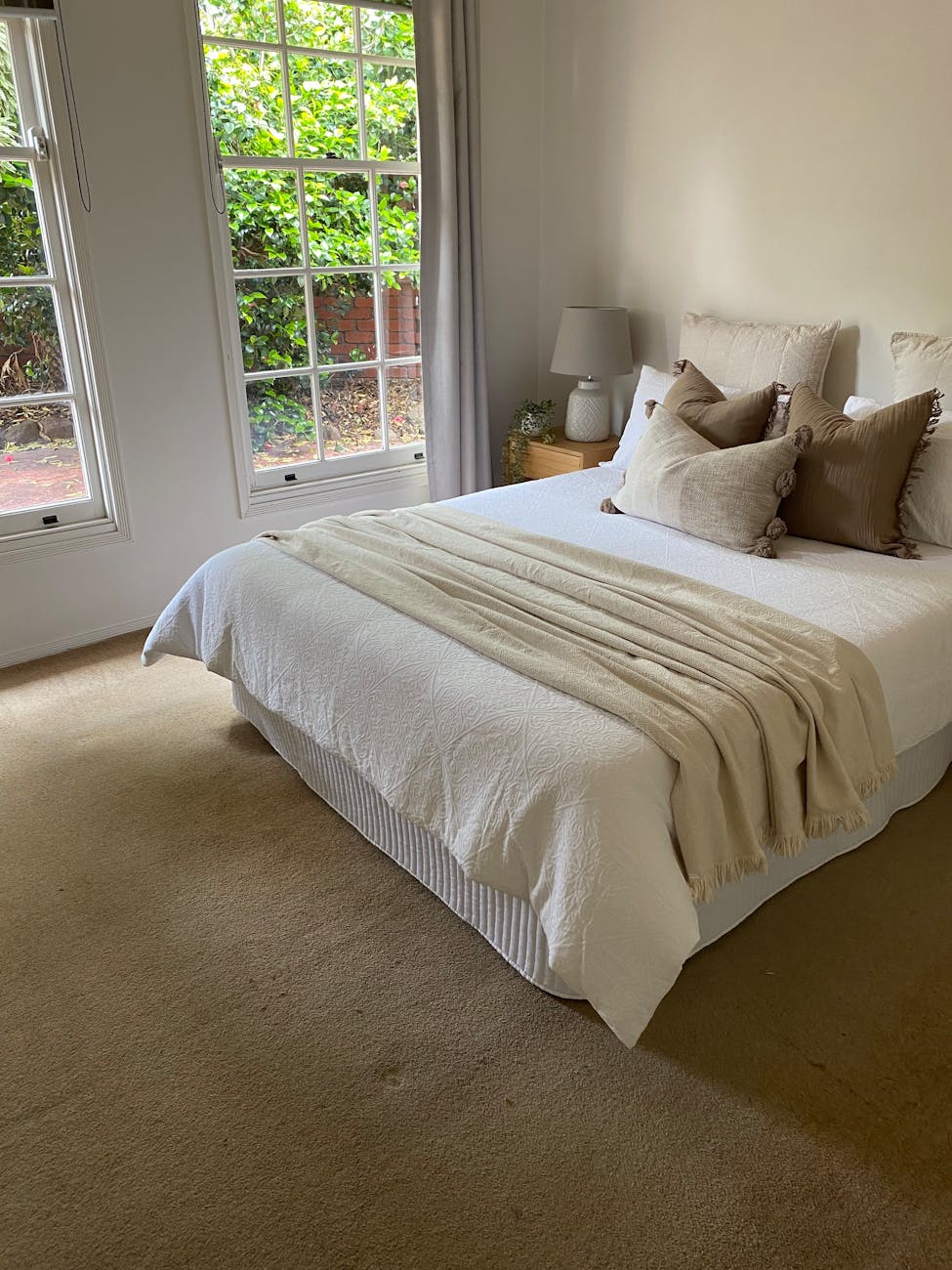
Styling helps, but only after function is sorted. Home Beautiful’s case for a cocooning bedroom is persuasive not because it encourages clutter, but because it treats softness as architecture. A quilted blanket or coverlet laid over the doona gives the bed visual depth and stops a plain insert from looking like a marshmallow under a sheet. A throw at the foot does another job entirely: it signals warmth before you are even in bed. Visual cues matter more than anyone admits. We read comfort before we feel it. I am less convinced by winter beds that try too hard, the ones with six novelty textures and the vague energy of a display suite. Too much styling makes a bedroom feel staged rather than restful. Better, I think, to build warmth from a couple of honest layers that earn their place.
I trust winter beds that look slightly lived in.
Not messy. Just softened.
The bedrooms that work best in this register favour materials over effects: cotton with a matte finish, wool with some body to it, a cover that falls properly over the mattress rather than sitting on top like borrowed clothing. Real Living energy, not showroom theatre. Winter is generous to rooms that stop performing and start settling. A good bed in May should look as though it belongs to the house that holds it, not to a rental chalet fantasy imported for three cold weeks and then abandoned. Texture does enough on its own. Pattern can step back. Colour stays restrained when the surfaces themselves feel warm to the eye and hand.
The room around the bed matters too, even if the bed is still the point of the whole exercise. Bed Threads recommends warmer lighting in the 2700K to 3000K range for a winter bedroom, which sounds technical until you remember how much mood is set by the lamp you switch on ten minutes before sleep. Blue-white light makes a room feel clinical no matter how good the linen is. Warmer light softens the edges. So does a rug beside the bed, especially in houses where timber or tile floors stay cold long after the sun is up.
Glamorous, none of this. Useful. That is the point.
The best winter-bedroom upgrades are the ones that make the room less hostile at the exact moments you use it most: late at night, early in the morning, halfway through a nap when the weather has shifted without warning.
Worley’s wardrobe-change analogy gives permission to edit, not just add. Her point in ELLE Australia is not that winter bedding should be heavier for the sake of looking seasonal. The bed should respond to the months the way the rest of the house does. Towels get thicker. The blinds close earlier. Soup appears. The bed can follow suit without turning dense or fussy. Sometimes that means retiring a light summer quilt for a proper winter insert. Sometimes it means keeping the same quilt and changing everything under it. Reading through the sourcing, the second option felt like the sharper move, especially for Australian homes where the weather swings from properly cold to bright and mild inside a single day.
Warmth and weight are not the same thing, though bedding marketing loves pretending they are. A bed can be heavy and still not feel cosy. Flat, airless, hard to move under. Good winter bedding has some loft to it — it insulates, but it also invites. Barnes’s advice about building from the mattress up gets at that distinction, and Burnard’s case for flannelette does too. The cosiest beds are not stacked into absurdity. They are layered with judgement. Maybe a wool underlay, warmer sheets, a medium-to-heavy insert and a coverlet you can strip off if the night turns. Maybe leaving the decorative pillows in the cupboard and letting the materials do the work. Either way, the room feels calmer when the bed looks intentional instead of over-equipped.
Brand-heavy winter shopping stories leave me cold for exactly this reason. They confuse acquisition with atmosphere. The truth is less thrilling and, for most people, cheaper: one or two smart swaps change the whole experience of a bedroom. The underlay. The sheets. The light beside the bed. Maybe a rug, if your feet keep finding the coldest patch of floor in the house. After that, the styling is just the visible proof that you sorted the practical stuff first. I might be wrong, but that is what makes winter bedding feel more adult to me.
Not the shopping-bag volume. The sequencing.
So if your bedroom has started to feel a little sharp around the edges this month, begin where the body notices things before the eye does. Put warmth under you. Put softness against the skin. Add one extra layer that can be removed without a wrestling match. Then step back and see whether the room still looks like itself. It should. A good Australian winter bed is not theatre. It is relief — a few colder months where the house feels less flimsy, and then, when the light changes again, it can be edited back with the same restraint it was built.

The Lifestyle Desires brief
Style, food, travel and wellbeing — weekly in your inbox.
Subscribe