The cancer too many women still cannot name
Uterine cancer is rising in Australia, yet awareness is thin. The gap is about symptoms, language and how women are heard.
I keep thinking about how ordinary the words sound until they are not ordinary at all. Uterus, womb, period, bleeding, menopause. The language sits in the same messy drawer as heat packs, GP scripts, iron tablets, pregnancy scares and the sort of symptoms women learn to negotiate before a work meeting. Then a diagnosis arrives and the drawer becomes a map no one thought to read.
At the centre of the latest Australian conversation about uterine cancer is that odd mismatch between scale and recognition. According to ABC’s report on rising uterine cancer rates, incidence has doubled over 25 years, yet the cancer still does not carry the instant public recognition of breast, bowel or cervical cancer. For many women it remains vaguely named, half-understood, pushed to the edge of the health vocabulary until it is suddenly personal.
Scott Crerar’s account of his sister Simone gives the numbers a family voice. She had symptoms, she sought care, and by the time the truth was clear the disease had moved faster than anyone around her seemed prepared for.
It just happened so quickly.
— Scott Crerar, ABC News
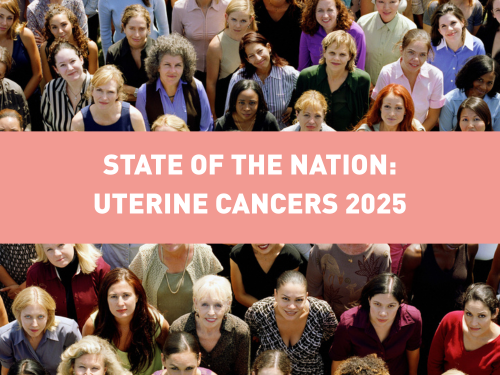
Clinicians and cancer researchers read the same story from a different angle. For them, the surprise is not only individual. The failure is systemic. ANZGOG’s State of the Nation uterine cancer work says 94 per cent of women are unaware of uterine cancer, a figure so stark it almost feels like a typo. No typo. A disease can be common enough to matter, but not famous enough to organise around.

The name is part of the problem
One reason uterine cancer catches women by surprise is that it slips between better-known categories. Cervical cancer has a screening programme, a vaccine story and a clear public-health script. Ovarian cancer has a frightening reputation. Breast cancer has pink ribbons, mammograms and decades of public messaging. Uterine cancer, often discussed as endometrial cancer when it starts in the lining of the uterus, sounds more anatomical than cultural.
Names matter. I do not mean that a better poster campaign is a cure. Language changes what we escalate. A woman who has been told all her adult life that bleeding can be irregular, stress-related, perimenopausal, hormonal or just one of those things may not hear an alarm bell when the pattern changes. She may hear inconvenience. She may hear ageing. She may hear, frankly, herself being dramatic.
Cancer Australia lists abnormal vaginal bleeding, including bleeding after menopause, among the symptoms people should discuss with a doctor, and its endometrial cancer information is clear enough once you go looking. The problem is the going looking. A symptom that sits inside a lifetime of being trained to tolerate discomfort needs a louder public script than a web page discovered after midnight.
Clare Scott, ANZGOG chair, put the funding problem bluntly in the ABC’s coverage.
Gynaecological cancers and uterine cancer have been under-resourced for 20 years compared to other types of cancer.
— Clare Scott, ABC News
Her line lands because it names something women often feel in the clinic before they can prove it in policy. The hierarchy of attention is real. Some diseases get pathways. Others get pamphlets and the hope that a patient, already worried, knows the right phrase to use.
The screening shadow
The awkward comparison here is cervical cancer. Australia has built one of the strongest cervical-cancer prevention stories in the world, through HPV vaccination, screening and a public language that has had years to settle into everyday life. That success is worth protecting. It also casts a shadow.
Uterine cancer does not have an equivalent population screening test. So when people hear “gynaecological cancer”, they can assume the system is already watching. The pap test, now the cervical screening test, becomes a kind of reassurance spillover. That reassurance should not travel. A normal cervical screen does not mean the lining of the uterus has been checked.
This is where the analyst’s view matters. The Australian Institute of Health and Welfare’s cancer data shows cancer burden at a national scale, while Cancer Australia estimated 3,343 new uterine cancer cases and 667 deaths in 2022. Those are not niche numbers. They are the kind of numbers that should make a health system ask whether low awareness is a side issue or part of the disease burden itself.
The policy question, as InSight+ argued in its analysis of gynaecological cancers, is why the cancers outside the cervical success story remain so poorly resourced. Not invisible to specialists. Invisible to the social machinery that helps people recognise risk early, ask sharper questions and get pushed through the system before delay becomes dangerous.
Risk without blame
The risk-factor paragraph is the hardest part of writing about uterine cancer. Medically, it is necessary. Culturally, it is treacherous. Obesity, diabetes, age, genetics and hormonal factors all belong in the discussion. So does the fact that ANZGOG says future diagnoses may be partly preventable. Public health cannot be too polite to say that.
Still, I wince at how easily prevention talk turns into blame, especially in women’s health. If a cancer is associated with body weight, the conversation can flatten into a moral lecture before the science has finished speaking. Link it too tightly to ageing, and younger women tune out. Tie it only to family history, and those without an obvious history may assume they are outside the frame.
This is why the newer age pattern is so important. ANZGOG and the ABC both point to incidence rising fastest among women aged 25 to 44. Nobody should read that as a reason for panic. Instead, the pattern means uterine cancer cannot be filed away as something that happens only after the rest of life has already happened. It belongs in midlife conversations, fertility conversations, perimenopause conversations, and in the vague, embarrassing, stop-start bleeding conversations women often have with themselves before they have them with anyone else.
The adjacent wellness culture does not make this easier. Recent coverage of perimenopause misinformation and women’s frustration with being dismissed by doctors sits uncomfortably close to this story, because both reveal the same gap: women are expected to self-advocate inside a system that has not always given them clean, trustworthy language. Too little information creates danger. Too much unfiltered information creates a different kind of danger. Somewhere between the two is a GP appointment in which a woman needs to feel that unusual bleeding is enough of a reason to come in.
What women are being asked to notice
A practical message here should not be a long symptom checklist taped to the fridge. Something more modest, and I think more useful, will do. Bleeding after menopause should be checked. Bleeding that is unusual for you should be checked. Pelvic symptoms that persist deserve more than a shrug. When the first answer does not fit what is happening in your body, it is reasonable to ask again.
That is not medical melodrama. It is literacy. The same literacy that breast cancer campaigns built around lumps and mammograms, and cervical cancer campaigns built around screening, has never quite been built for uterine cancer. We have left too many women to translate their own bodies in a language the public-health system has barely taught.
Scott Crerar’s grief sits at one end of that failure. Clare Scott’s funding call sits at the other. Between them is the ordinary woman trying to decide whether the bleeding is worth mentioning, whether the GP will take it seriously, whether she is overreacting, whether she has the right words.
ANZGOG’s national-response call is careful not to pretend one body can fix all of this.
No single organisation can tackle the rising burden of uterine cancers alone.
— Clare Scott, ANZGOG
That is the line I keep coming back to. Uterine cancer is not catching women by surprise because women are careless. It is catching them by surprise because recognition has been left too late: too late in funding, too late in public language, too late in the hierarchy of women’s cancers, too late in the appointment when a symptom is softened into something to watch and wait.
First, the disease needs a name women know before they learn it in a hospital corridor. Recognition also means treating abnormal bleeding not as an awkward detail, but as information. From there, the health system has to stop assuming awareness will somehow arrive on its own.
I might be wrong about many things in medicine. Bodies are humbling like that. But I am fairly sure of this: a cancer can be biologically complex and publicly simple at the same time. If more Australian women knew the name, knew the warning, and knew they were allowed to insist on being heard, surprise would no longer be doing quite so much of the disease’s work.

Brisbane-based GP turned health writer. Covers women's health, fertility and the gap between clinic and culture.
The Lifestyle Desires brief
Style, food, travel and wellbeing — weekly in your inbox.
Subscribe