Who Australian Fashion Week still imagines into the room
Australian Fashion Week's size report found just 1.75% plus-size looks, exposing the gap between inclusion talk, casting and who fashion invites in.
Fashion week always wants to be read as a forecast. Not only hemlines or handbags, but the body the industry still treats as its default customer. Watching the mood around Australian Fashion Week this season, what stayed with me was not one heroic dress. It was the narrowness of the fantasy. You can feel it before anyone opens a spreadsheet, in the way sample rails and casting choices quietly suggest who is meant to slip into the picture.
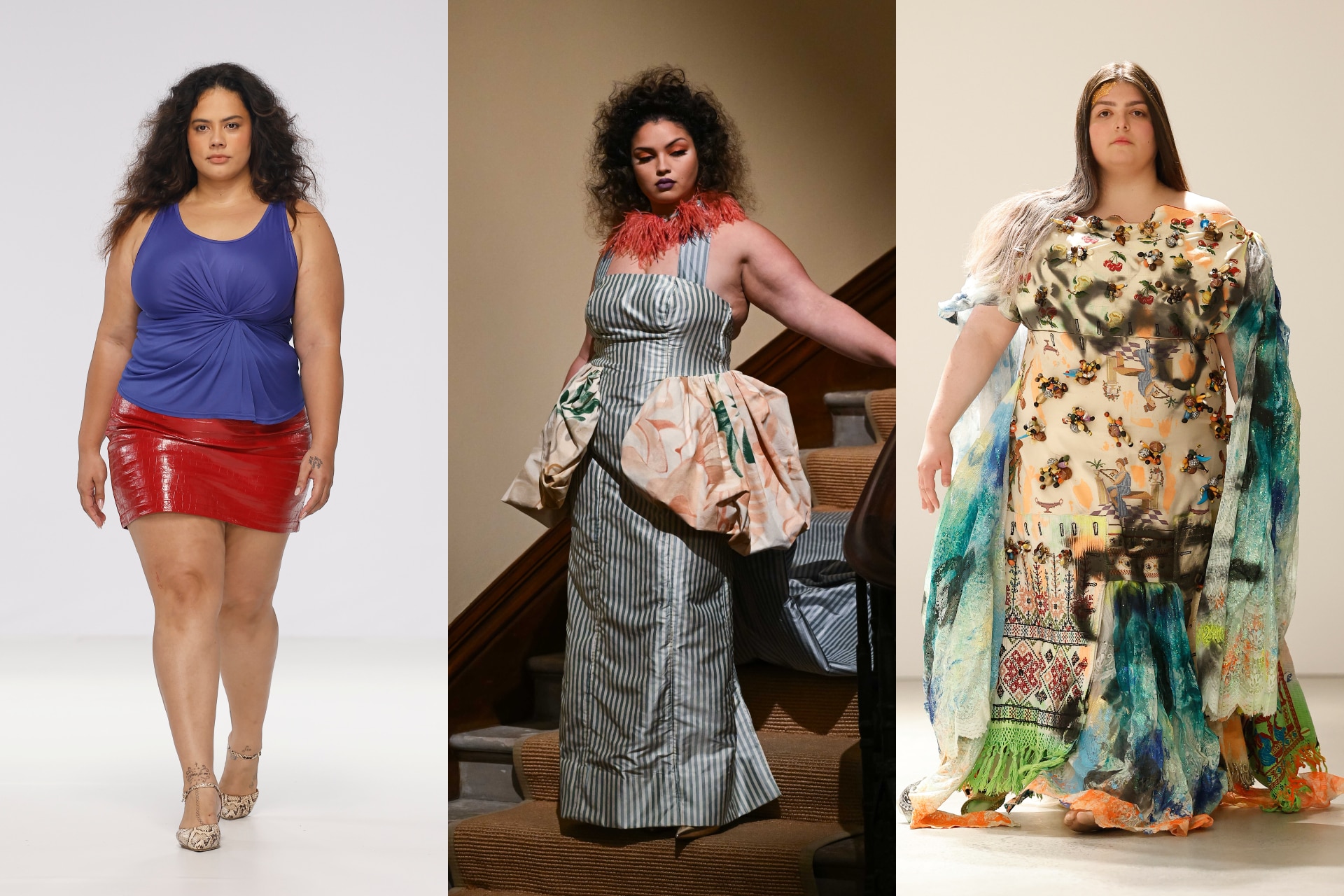
Then the spreadsheet arrived, and it said the quiet part out loud. In Vogue Australia’s 2026 size inclusivity report, 858 looks across 26 shows broke down to 88.58 per cent straight-size, 9.67 per cent mid-size and 1.75 per cent plus-size. For an industry that loves to speak about modern women in sweeping, reverent terms, those numbers are not a footnote. They are the story.
But the people most affected by the issue do not read those numbers in quite the same way fashion media often does. To the analyst’s eye, the report signals a market still lagging its own customer base. To curve shoppers and the models who have spent years saying this in public, it lands more intimately than that: another reminder that inclusion still arrives as a special project, not the baseline setting of the room.
That gap is why the report matters beyond runway gossip. Australian Fashion Week is not the whole local industry, and no catwalk can guarantee a better experience at the fitting room or the checkout. Still, runway casting is an invitation system. It tells viewers who a label imagines wearing the clothes, who editors photograph, who buyers remember and who gets asked to desire the thing in the first place.
The room and the rack
The commercial case for better sizing has already been made, and not subtly. Vogue Business’s global fall/winter 2026 size report found that 97.6 per cent of 7,817 looks across 182 shows were straight-size, with plus-size looks falling to 0.3 per cent. Meanwhile, Vogue Business’s consumer sizing survey argued that brands that keep getting sizing and representation wrong risk losing loyalty and relevance. Which is a polished way of saying shoppers notice when the fantasy and the actual garment refuse to meet.

That is the analyst view. The user-affected view is rougher around the edges, and more useful for that. It asks a plain question: what is the point of being told a brand sees you if the clothes, the campaign and the casting still treat you like an exception? The local report’s standout, Nicol & Ford, matters partly because it shows the problem is not impossible. It is solvable. What feels stubborn is the industry’s habit of presenting solvable things as if they were weather.
Outside the runway room, the labels that keep getting mentioned by Australian shoppers are rarely the ones making the grandest speeches about change. Commonry and City Chic surface because people can actually buy from them. If Only If has been noticed for extending its sleepwear sizing out to 24. Availability is not a glamorous word, but it is one of the clearest ways a brand says: yes, you were imagined here.
Sophia Brennan told Harper’s Bazaar Australia exactly how exhausting that feels:
Size diversity needs to not be an afterthought.
— Sophia Brennan, Harper’s Bazaar Australia
There is a reason that line bites. Afterthought is the right word for the fashion version of inclusivity when it shows up as one curve look in a 30-look show, or a short burst of enthusiasm that never survives the move from runway to retail. It is not only a casting failure. It is a planning failure. A merchandising failure. Sometimes, if we are honest, an imagination failure.
The token and the sample rail
The sceptical read is the one fashion keeps earning. In Vogue’s reporting on casting directors and body erasure, the people inside the machinery sound less surprised than weary. Once you hear that, it becomes hard to look at a single curve model in a runway lineup and call it transformation. It looks more like proof-of-concept inclusion, enough for a caption, not enough to reorganise the sample sizes, fittings and resources that make representation feel normal.
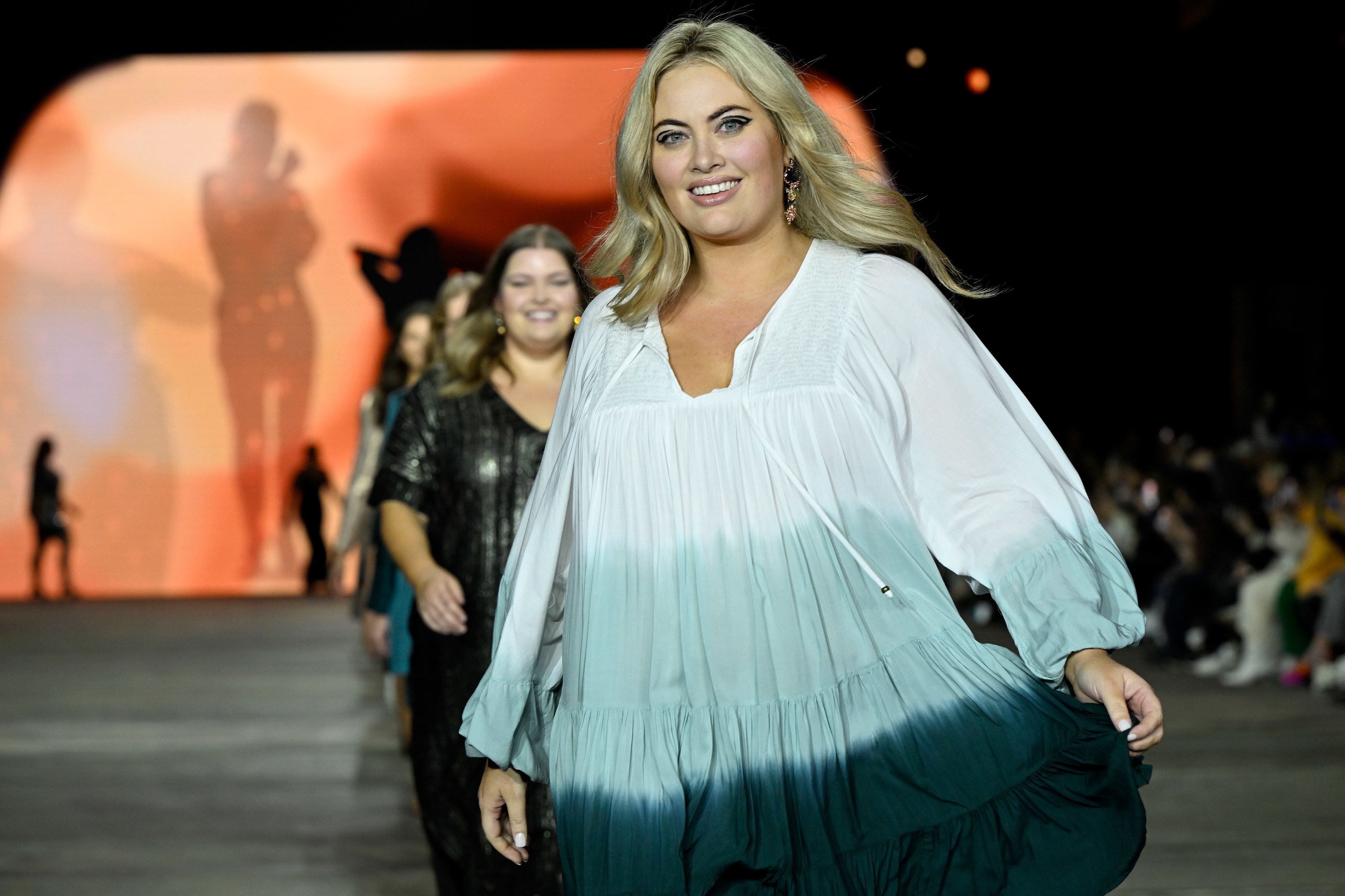
Australia’s 1.75 per cent plus-size share is less brutal than the global 0.3 per cent figure in the Vogue Business report. I can imagine some people in the local industry taking comfort in that. I would not. Comparative improvement is a seductive little trick. You clear a miserly bar and suddenly the conversation shifts from why the numbers are so thin to whether we should be grateful they are not worse.
There is a fashion-media habit worth naming here too. We are much better at celebrating the exception than tracking the baseline. A singular inclusive moment photographs beautifully. A season-long pattern of exclusion looks like admin. But admin is where taste becomes policy, and policy is what decides who gets fitted, sampled, stocked and seen. Vogue UK’s coverage of the broader body-diversity backslide suggests the chill is cultural as well as logistical, which is precisely why local fashion cannot keep pretending the problem begins and ends with one difficult sample rail.
That is why Robyn Lawley’s question from 2022 still hangs in the air:
what’s the harm in including a little more sizes?
— Robyn Lawley, 9Honey
The answer, if you read the industry with a colder eye, is that more sizes force more decisions. More patterns. More fittings. More fabric. More thought about how a garment falls once the old sample-size default is no longer the only body being served. That is work, and some labels still seem happier to outsource the problem to rhetoric. Inclusion sounds lovely in a media release. It is more demanding in a workroom.
The saddest part is that fashion has been told, repeatedly, that this is not simply an ethics debate. It is also a relevance one. The consumer sizing survey makes the commercial case in clean corporate language, but the emotional case is easier to grasp: nobody likes being marketed to as an idea while being excluded as a body.
By the time Bruna Lapinskas told Fashion Journal that runway and retail exclusion work together, she was really describing the invitation system again, only more plainly:
If you’re not showing curve bodies on runways, your campaigns or in stores, that audience will never feel invited in.
— Bruna Lapinskas, Fashion Journal
That is the line I keep circling back to, because it explains why the Australian Fashion Week report feels bigger than a single set of percentages. Runway casting is not just about whether one body type gets an occasional cameo in the national fashion conversation. It is about who the whole week trains itself to desire, photograph, buy and praise.
Fashion week likes to imagine itself as the future arriving early. This year’s numbers suggest something less flattering: a local industry still rehearsing inclusion as language while casting for a narrower past. I might be wrong about the speed of change. Fashion can move strangely fast once it decides an old rule has become embarrassing. But right now the embarrassment has not quite done its job.
What the Vogue Australia tally finally makes hard to dodge is the simple question underneath all the season’s expensive talk. Who still gets imagined into the room? In 2026, Australian fashion’s answer remains far too narrow. And once you see the maths, it becomes very hard to pretend otherwise.
Sydney-based fashion editor covering Australian designers, runway and the wider AU industry. Previously at Russh and Fashion Journal.
The Lifestyle Desires brief
Style, food, travel and wellbeing — weekly in your inbox.
Subscribe