After the noise, Jordan Gogos sounds clearer
Jordan Gogos after Australian Fashion Week looks less like a retreat than a pivot, with Parádeisos at UNSW turning scraps, colour and refusal into a longer argument about Australian style.
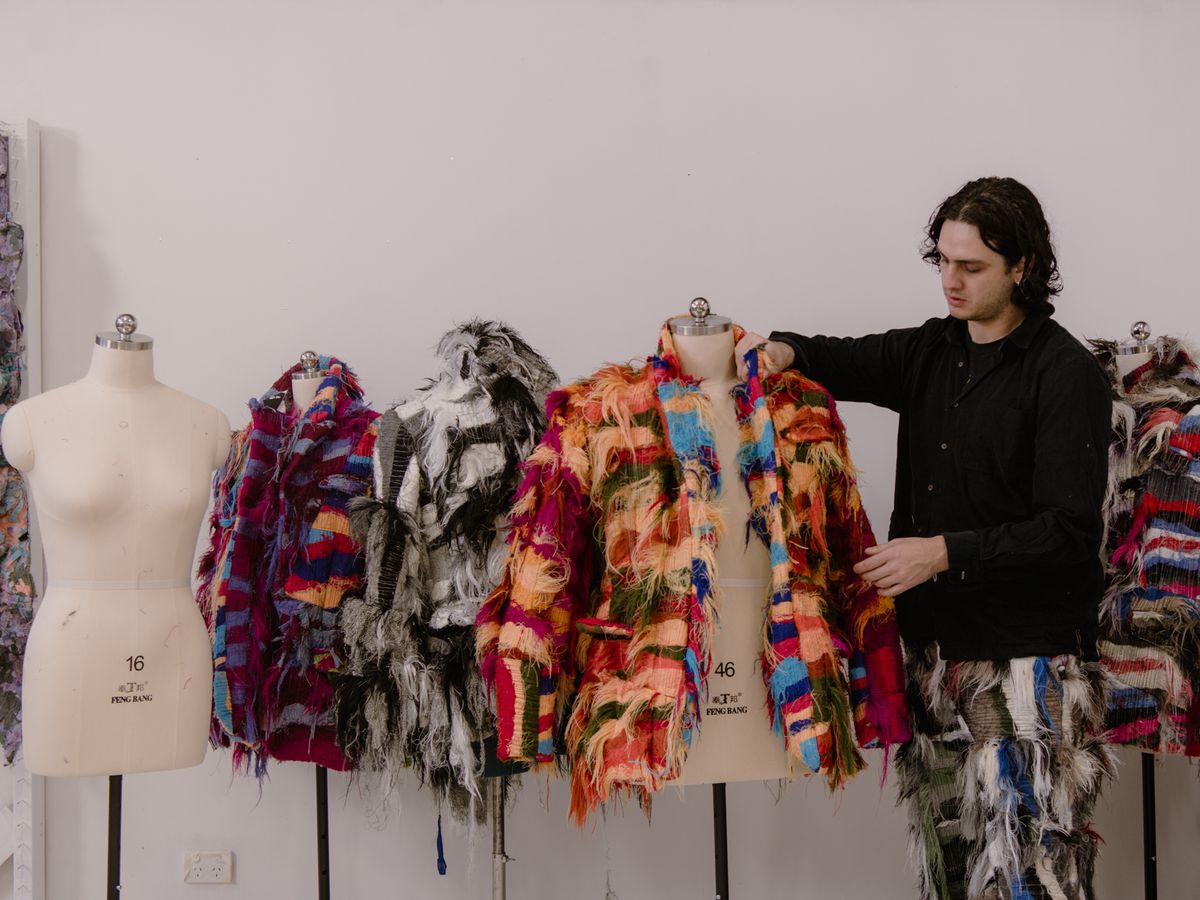
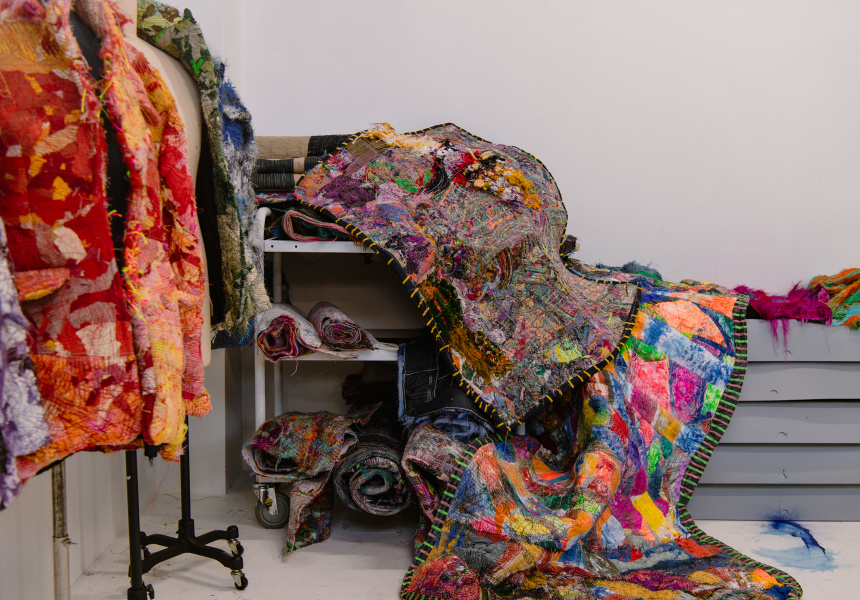
The part of Australian fashion that still holds my attention is the bit that refuses to steam flat. In the Australian Financial Review’s recent report from Jordan Gogos’s Sydney studio, the runway noise has already drained off, but the machines keep going, pressing scraps into fresh cloth and turning last season’s leftovers into next month’s proposition. That is the sharpest way to read Gogos now. Not as a Fashion Week character, and not as a chaos mascot rolled out whenever the local industry wants proof it can still be strange, but as a designer who keeps using mess as material.
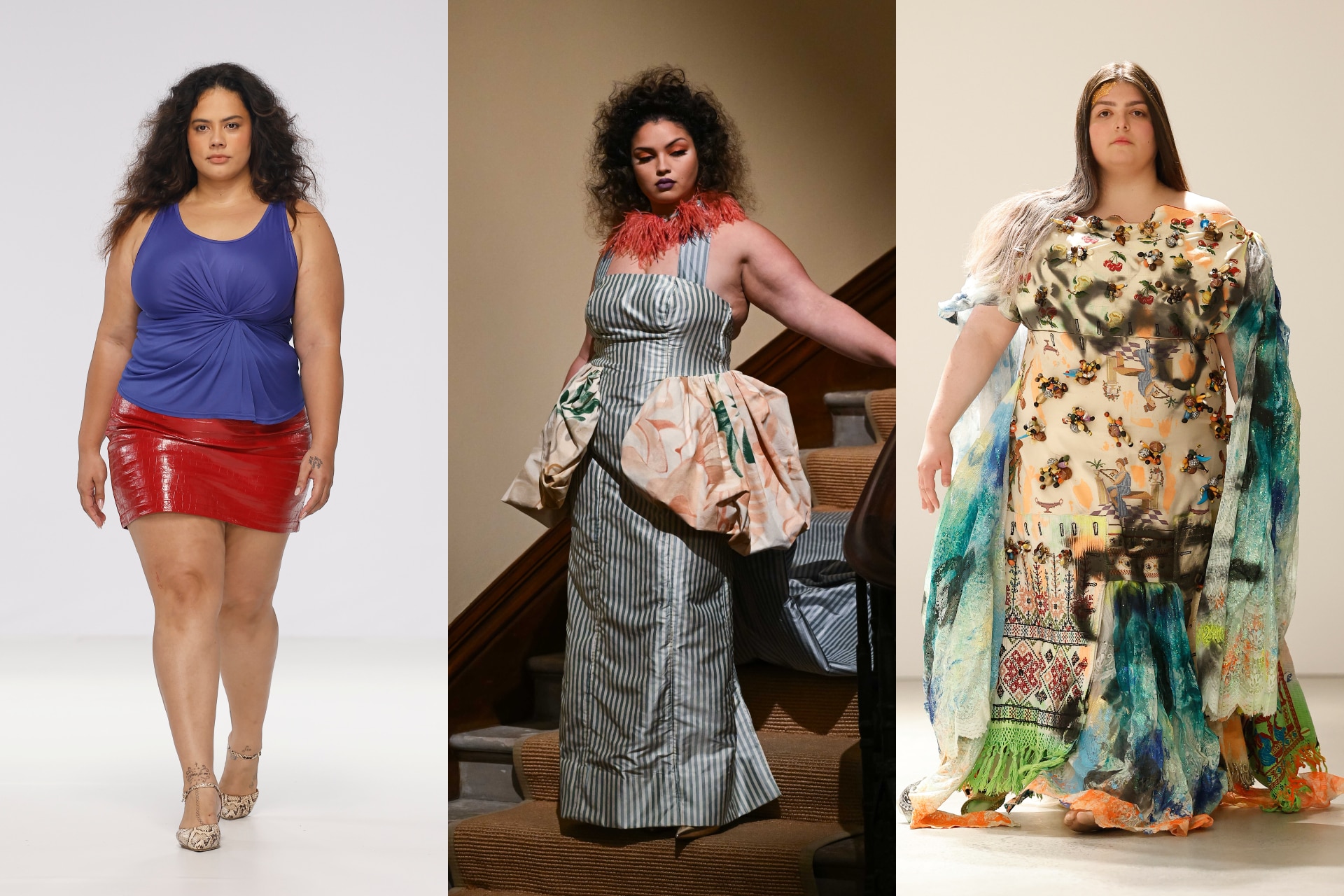
Six years running, Australian Fashion Week has had to find room for him. Since founding Iordanes Spyridon Gogos in 2021, he has built a practice that looks handmade even when the ambition is huge: colour clash, compressed textile waste, silhouettes that seem to arrive half a beat before your eye can organise them. Now that energy is being put inside an institutional frame. Parádeisos opens at UNSW Galleries on 29 May, giving the work its first public audience in three years and asking a different question from a runway show: what remains once the applause burns off?
That question matters because local fashion has spent the past few seasons trying to look grown-up. Bigger sponsors. Cleaner luxury cues. More export-friendly polish. Gogos has never seemed very interested in any of that. His clothes, and the room around them, make the case for Australian style as something more personal and less obedient: diasporic, collaborative, emotionally noisy, tied to the hands that made it. What he sounds like now, after the yearly pageant moves on, is clearer.
There is a cheap version of this story, with the enfant terrible still splashing paint on the banquet table. I do not think it is the useful one. The better version is about stamina, and about what happens when a designer keeps turning up with the same insistence until everyone else has to widen their idea of taste.
The mess is the method
Strip away the colour for a moment and speed is what remains. Plenty of designers can produce spectacle; fewer can turn impulse into method. In Fashion Journal’s conversation with him after AFW 2026, Gogos describes a practice with almost no lag between idea and action, the sort of temperament that makes sense only if you believe making is a form of thought.
In that interview, he puts it plainly:
I don’t sit on my ideas. I act on them, and bring them to life quickly.
— Jordan Gogos, Fashion Journal
A lot of local labels would love a line like that, but on Gogos it does not sound polished for effect. It explains why his collections can feel as if they arrived before the committee could even book the meeting. Australian fashion, at its most cautious, rewards designers who can translate themselves into orderly talking points: heritage, refinement, wearability, market. Gogos’s appeal is simpler than that. He sounds like someone who would rather keep making than wait around for permission. The work is intricate. The animating mood is blunt.
What lingers even more is the line from the same Fashion Journal profile about voice. Gogos does not frame his work as a bid to fit a lineage. He frames it as a way of dragging other lineages into view.
Because I believe in Australian culture and diasporic perspectives … I’ve always wanted to bring a different voice into fashion because I was never in fashion.
— Jordan Gogos, Fashion Journal
That last clause, “I was never in fashion,” keeps catching on the way past because it lands as biography and refusal at once. It says something about temperament, but also about the gate he thinks he approached from the side. Maybe that is why the work reads as communal rather than hermetic. Even in the clipped format of a post-show interview, Gogos sounds less like someone defending a brand than someone protecting a way of seeing, one that treats scraps, colour and cultural reference as live material instead of debris to tidy away.
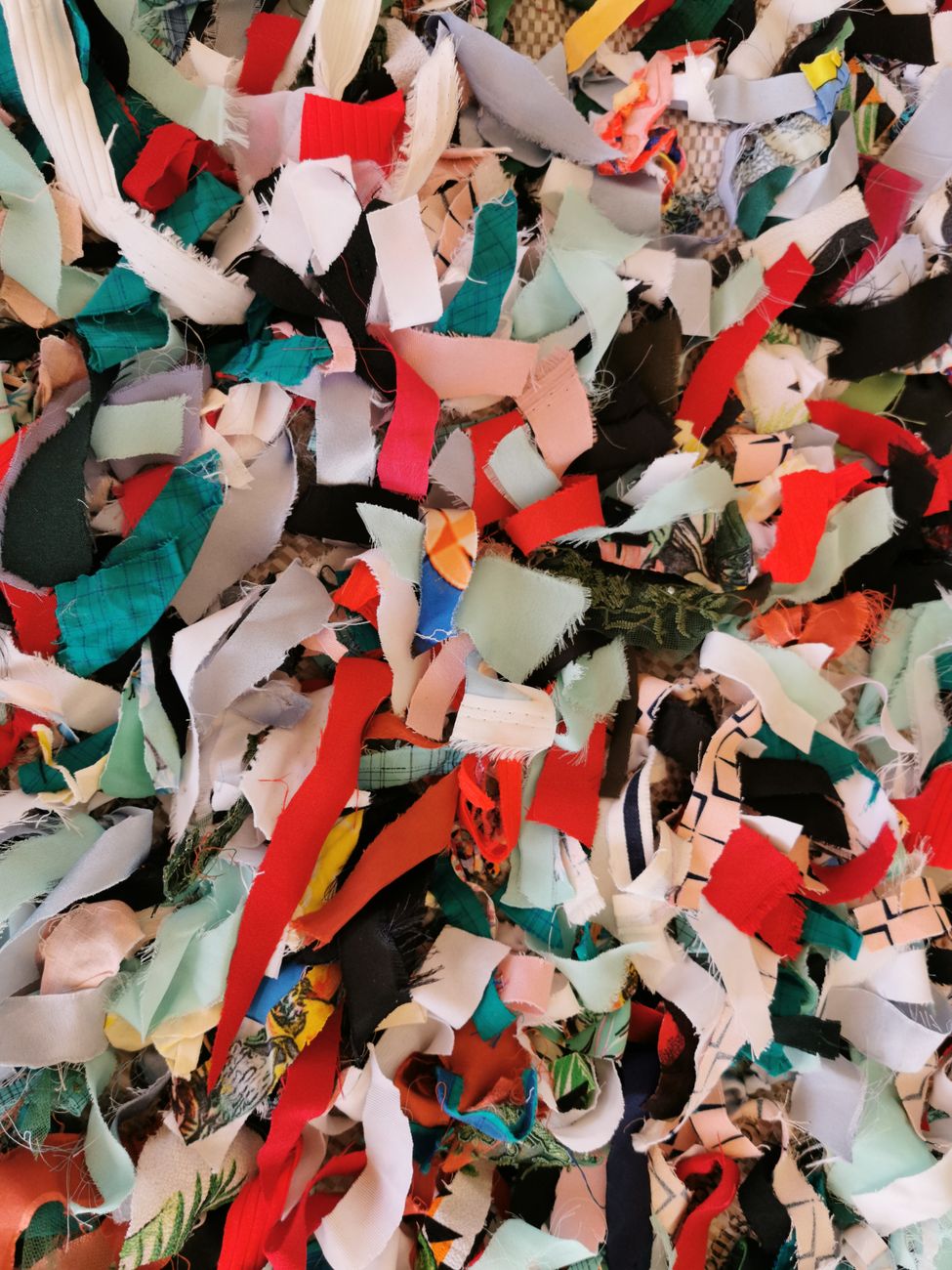
Back in the studio, as the AFR profile of this next chapter makes clear, that argument turns visible. Scraps are compressed. Offcuts are inventory, not embarrassment. What plenty of labels edit out, the evidence of excess, becomes the beginning of another garment. I am wary of turning every fashion story into a sermon about waste, but in Gogos’s case the material loop feels less like branding than worldview. Nothing is finished after one use. Nobody gets reduced to one neat category either.
After the runway
Every Fashion Week invents its own weather. For a few days everybody behaves as if the room will last forever, then the lighting rigs come down and the city shrinks back to ordinary scale. Gogos knows that rhythm better than most. Fashion Journal notes that 2026 marked his sixth consecutive year on the AFW schedule. That is enough time to understand both the rush of attention and the speed with which it vanishes.
Read that line again and it sounds almost amused:
For a moment, you ride it, until there’s nothing for you to ride.
— Jordan Gogos, Fashion Journal
Maybe cynical is the wrong word. Practical fits better. Runway attention spikes and then disappears. Designers who mistake it for a permanent climate start designing for the afterparty version of themselves, shinier every season and thinner at the centre. Gogos seems more interested in the work that has to live once the soundtrack is gone.
Put the same work in a gallery and the pace of looking changes. UNSW Galleries describes Parádeisos as part of the AFC Australian Fashion Week 2026 program, but the room change matters. A runway asks you to feel first and analyse later, if later comes. A gallery lets the eye double back. You sit with construction, repetition, obsession. A designer’s private logic gets more time in public.
Timing matters too. If this is Gogos’s first public audience in three years, then Parádeisos does not read like a lap of honour. It reads like a return on different terms. The local market has often known what to do with polished luxury, or at least how to sell the idea of it. It has been less certain with designers who bring too much biography, too much texture, too much evidence of hand and history. Gogos has made a career out of refusing that neatness. That is probably why he keeps lingering after the runway lights are packed away.
The point of not tidying up
Once clothes enter a gallery, they stop having to justify themselves as products. They can hold still. They can be read for texture, repetition, mood, the argument inside the material. For a designer like Gogos, whose work already treats remnants as part of the story, that shift matters. Parádeisos at UNSW Galleries is not a neat graduation from fashion into art. If anything, it makes his fashion practice look even more stubbornly itself.
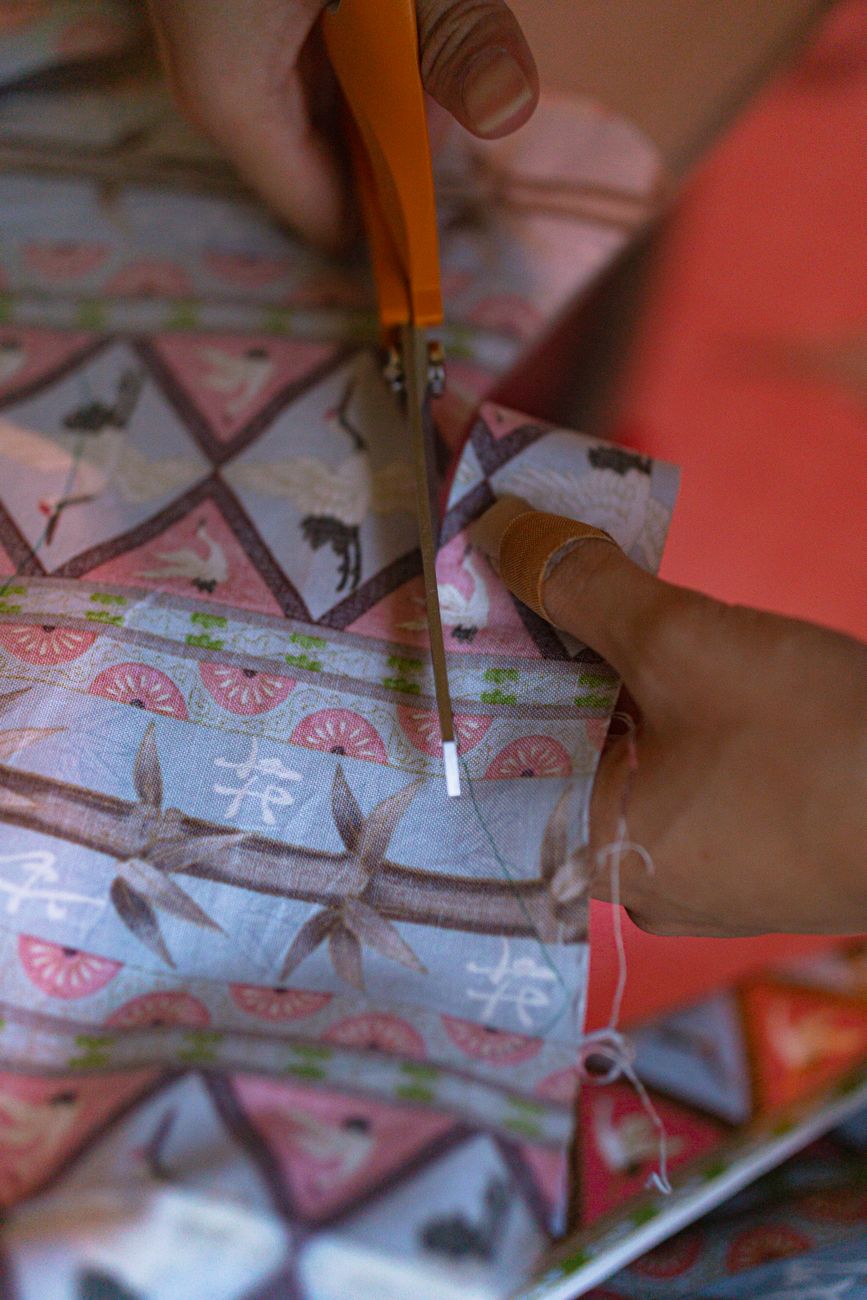
I doubt institutional attention will sand the edges off him. The useful thing about Gogos is not outrage. That word is lazy, and usually used by people who want the thrill of irregularity without changing their own taste. What matters is that he keeps insisting on a version of Australian fashion that can hold contradiction without ironing it flat. Craft sits beside spectacle. Waste sits beside luxury. He makes clothes, yes, but he is also making a case for a wider cultural appetite.
Listen to the way he talks about Australian culture and diasporic perspectives, and to the way the work keeps circling back to communal labour rather than solitary genius. That matters now. The strongest recent local fashion stories have not been about who can look most international, or most expensive, or most acceptable to a sponsor deck. They have been about designers who sound unmistakably from here while refusing the old fantasy that “from here” has to mean restrained, beachy or beige. Gogos’s practice is louder than that. Smarter too.
By the time UNSW Galleries gives Parádeisos an audience again on 29 May, the useful question will not be whether Jordan Gogos can still startle a room. We already know he can. The better question is whether the local fashion industry has become broad-minded enough to hear what he has been saying all along. After the noise, he sounds clearer.

Sydney-based fashion editor covering Australian designers, runway and the wider AU industry. Previously at Russh and Fashion Journal.
The Lifestyle Desires brief
Style, food, travel and wellbeing — weekly in your inbox.
Subscribe