What a small bathroom needs when money is tight
Small bathroom ideas on a budget start with light, storage and paint, not a fantasy reno or a trolley full of chrome organisers.
At about 7.10am, a small rental bathroom can feel almost personal: the damp bathmat that never quite dries, the strip of bench colonised by cleanser, sunscreen, stray bobby pins, the light that makes your face look tired before the day has properly begun. In older Australian apartments, the bathroom is often the room that gives the game away first. Not taste. Money.
With loose budgets, every small-room conversation drifts towards stone, custom joinery and brushed tapware in a velvet pouch. Tight money changes the question. What alters the feel of a cramped bathroom when you cannot justify a renovation, and maybe cannot even repaint without asking a property manager who signs “kind regards” like a threat?
Reading across Homes To Love’s advice on small-space editing, ABI Interiors’ budget bathroom ideas and ArchiPro’s practical cost breakdown, the answer is not “buy more things”. It is closer to this: let in more light, keep the floor visible, use finishes as the cheap bit of theatre, and edit until the room stops looking like a storage problem wearing a bath towel. Less glamorous than a reveal. More useful, which is probably why so many Australians keep searching for it.
When the mirror starts doing some of the work
Most cheap wins are visual before they are structural. You feel them before you can name them. The room stops pressing in. Your shoulders drop. The sink, apologetic half an hour earlier, begins to look deliberate. Light does that. Mirrors help. So does removing the heavy little objects that absorb what brightness the room had.
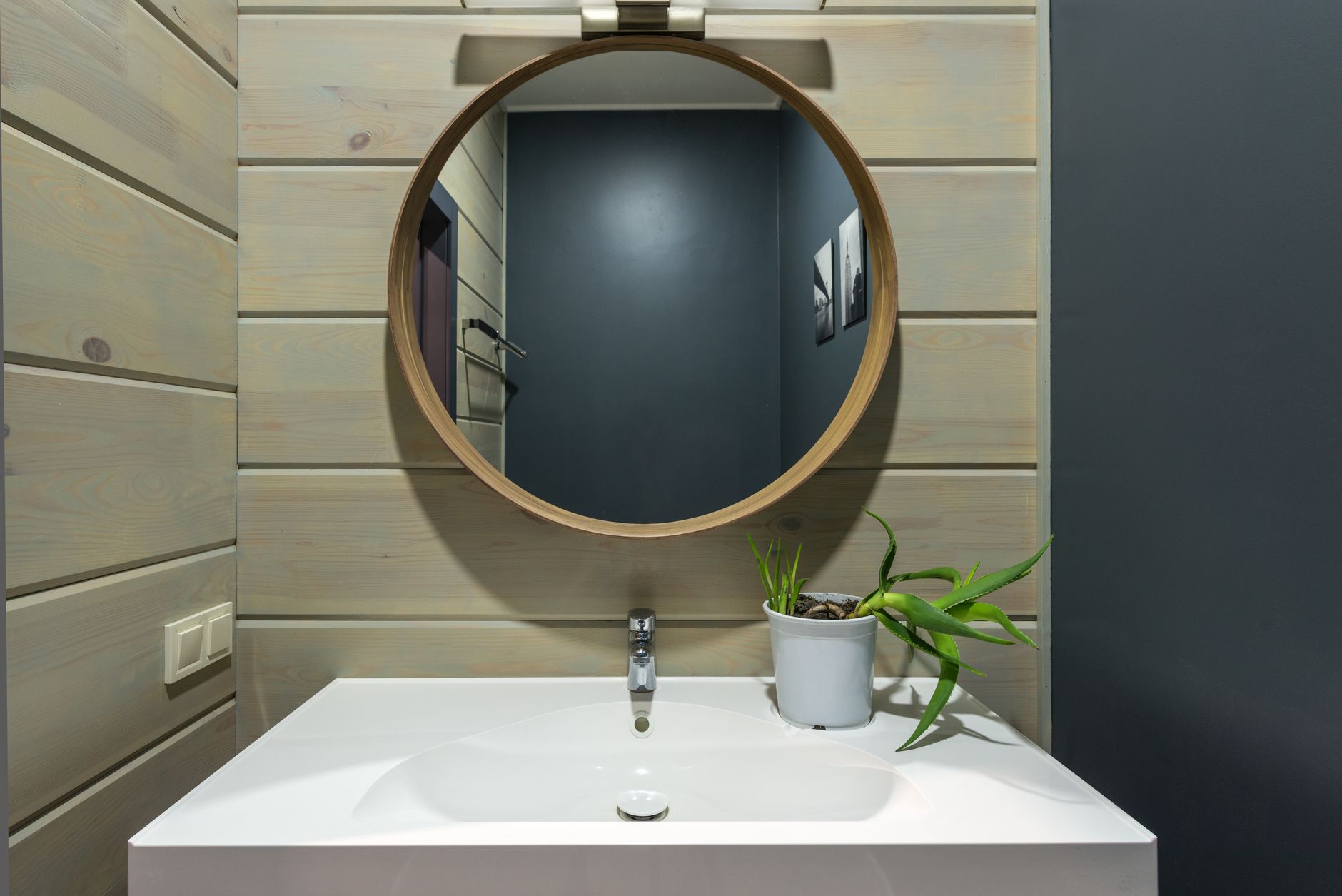
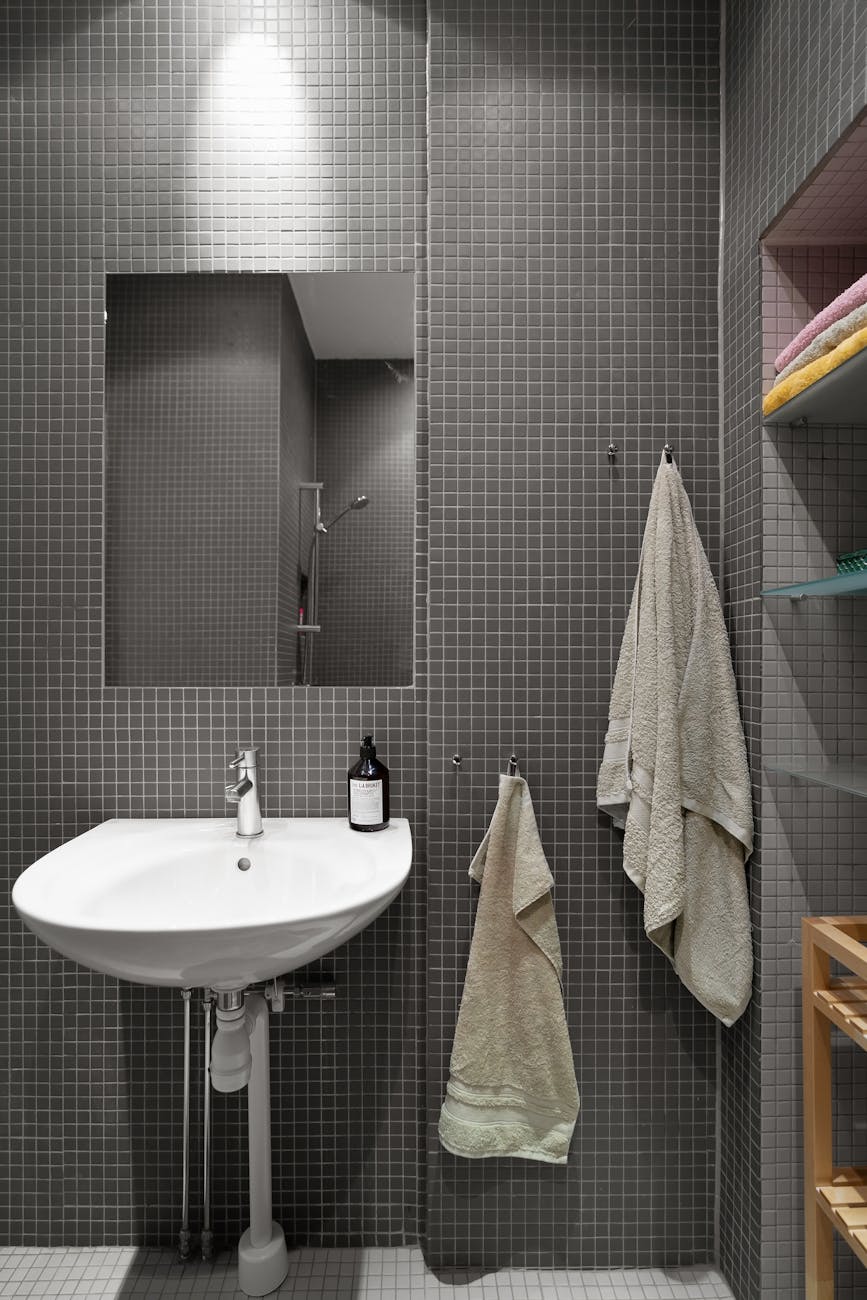
In ABI Interiors’ guide, Georgia Budden argues that a modest room looks larger the moment it is properly lit, and she is right in the plain, unsexy way that good advice often is. A bigger mirror is not a minor accessory in a small bathroom. It is a mood change. A glass shelf that catches light, a shower curtain that lets it travel, a pale towel instead of a charcoal one that swallows it: none of these are miraculous design secrets. They just refuse to fight the room you have. Even this mirror-heavy bathroom reference makes the case for scale over decoration.
“When a modest space is immersed in light, it instantly appears more expansive.”
— Georgia Budden, ABI Interiors
Renovation culture can get theatrical here. We are taught to chase “luxury” when what most of us want is relief. Relief from bad overhead lighting. From a mirror too meanly sized for the wall around it. From the visual clutter that starts before breakfast. Homes To Love’s broader small-space advice lands in the same place: impact comes from choosing fewer things, not cramming in more decorative proof that you have tried.
Owners might replace a dated mirror or wall light. Renters have to be more tactical: clear the sill, decant the products used every day, retire the three half-empty bottles staging a coup in the corner. I might be underselling how emotional this is. A bathroom that bounces light back at you feels less like a chore and more like a room.
Give the floor back its breathing room
What the room needs next is not extra storage so much as the impression that storage has not taken over the premises. In tight rooms, the eye goes straight to whatever is sitting on the floor: the freestanding caddy, the squat cupboard, the plastic basket of backup toilet paper, the scales you swear you use. Floating pieces matter more than they first appear to.
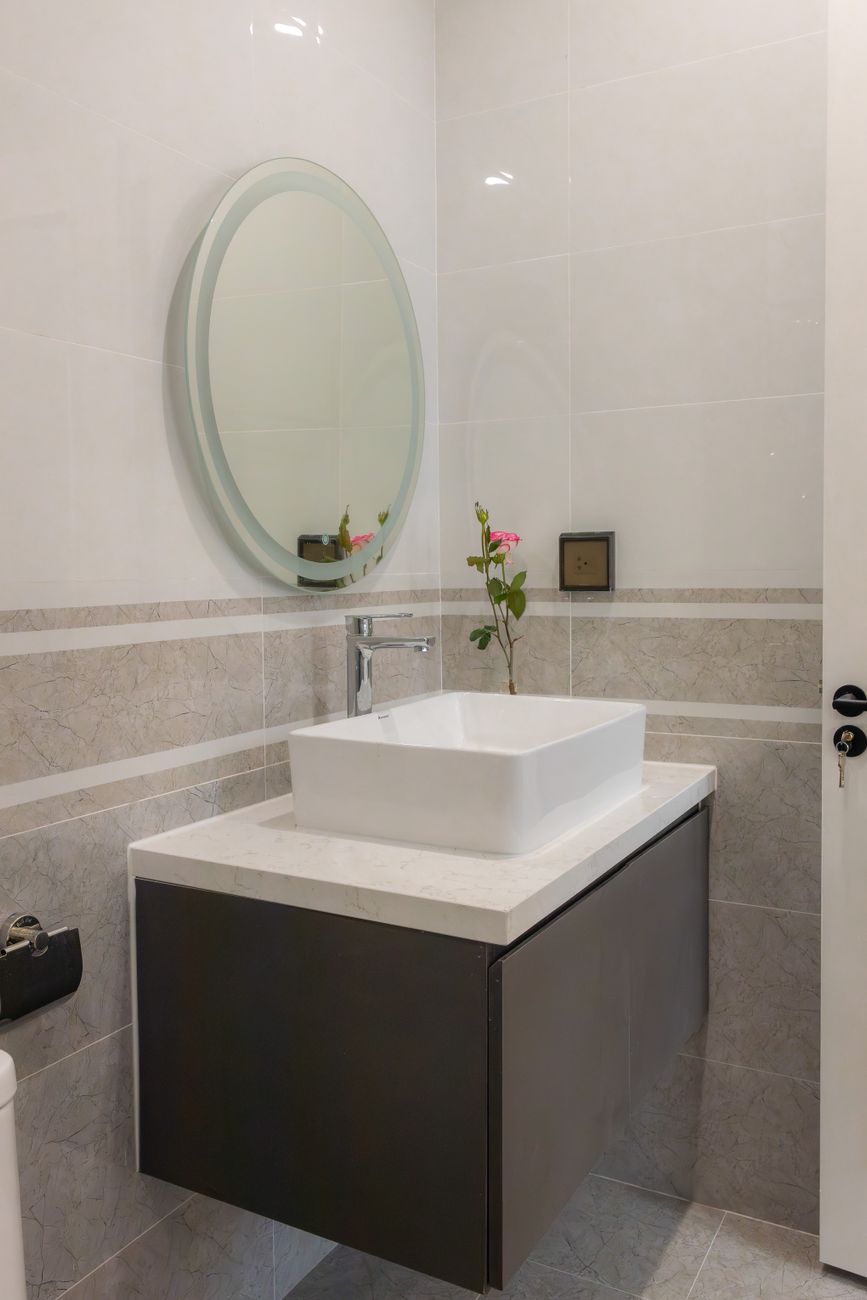
ABI Interiors recommends wall-mounted basins and tapware, while ArchiPro pushes the case for floating vanities and wall-hung elements. On paper, that can sound like design-speak. In a real room it is simpler: see more floor and the bathroom reads bigger, calmer, cleaner. You are not buying square metres. You are buying visual breathing room.
Allira Bell, the Temple & Webster stylist quoted in Homes To Love, puts the broader principle neatly:
“Smaller spaces often pose a few decorating challenges – the key to making the most of a room with a petite footprint is to carefully select pieces for maximum impact.”
— Allira Bell, Homes To Love
That stretches beyond furniture. In a bathroom, “maximum impact” can mean a slimmer vanity, yes, but it can also mean shifting the towel hook to somewhere less chaotic, or choosing one shelf that earns its keep instead of three that become altars to half-used skincare. Those small storage decisions are not especially photogenic. Perhaps that is why they are easy to skip. Yet they are usually the line between a room that feels tight and one that feels edited.
There is a class signal buried in the freestanding storage craze that I do not entirely trust. The cheap organiser economy tells people to solve cramped rooms by buying more containers. Sometimes that works. Often it leaves you with prettier clutter. Wall hooks, shallow ledges, a mirrored cabinet, a basket that hides the hair tools and nothing more: these are better because they respect the room’s limits. Small details really do make the biggest difference, but only when they reduce the number of things asking to be looked at.
The cheap thrill of a surface change
Once light changes the mood and floor space changes the proportions, finishes become the honest budget lever. This is the part of the small-bathroom fantasy available to normal people. Not the full strip-out. A surface shift. One small moment of colour or texture that makes the room feel chosen rather than merely tolerated.

ArchiPro’s roundup earns its keep here because it gets specific about cost. Tile paint can come in at under $80 for a one-litre tin, with coverage of up to 16 square metres. Spray paint and primer for hardware sit around $30 to $40. A vanity repaint can be done for under $50. None of that makes a bad bathroom good by itself, and any renter should read the room, and the lease, before going near a grout line. Still, there is something refreshing about advice that treats a budget as a real number rather than an aesthetic mood board.
Yohei Guy says it bluntly in ArchiPro’s piece:
“Small bathrooms should mean smaller budgets but this isn’t always the case.”
— Yohei Guy, ArchiPro
Exactly. Bathrooms are where modest upgrades somehow acquire luxury mark-ups. I would spend the limited money on what the eye catches first: tired cabinet fronts, overly dark walls, dated handles, a mirror that has given up. If you have permission, tile paint can do more than a new bath mat ever will. Without permission, removable elements still have range. Wallpaper, used with restraint, can make a powder room feel witty instead of pinched. A painted vanity in the right chalky tone can shift the room from landlord-beige to something closer to intentional.
Here, too, restraint matters. A small bathroom does not need five new finishes to prove it has personality. One moment is often enough. A wall colour with a little dust in it. A timber stool that looks good beside the tub and holds a book or a candle without pretending you live in a day spa. A metal handle swap that stops the room feeling trapped in 2009. The point is not spectacle. It is coherence.
Edit, then stop
The most convincing budget bathrooms I have seen all share one trait: they know when to stop. No attempt to answer every styling question at once. No pile-up of baskets, slogans, stacked hand towels and tiny trays for objects nobody wanted to put away properly. They leave some space unperformed. In a small room, that reads as confidence.

The idea runs through Homes To Love’s low-budget renovation coverage and even its small apartment stories: constrained spaces improve when you become more decisive, not more acquisitive. The bathroom version is simple. Keep what earns the bench space. Hide the duplicates. Let one or two materials carry the mood. A ribbed glass soap dispenser, a decent towel, one plant if the room gets light enough to keep it alive. Maybe none. There is no virtue in forcing a fern to suffer in a windowless ensuite.
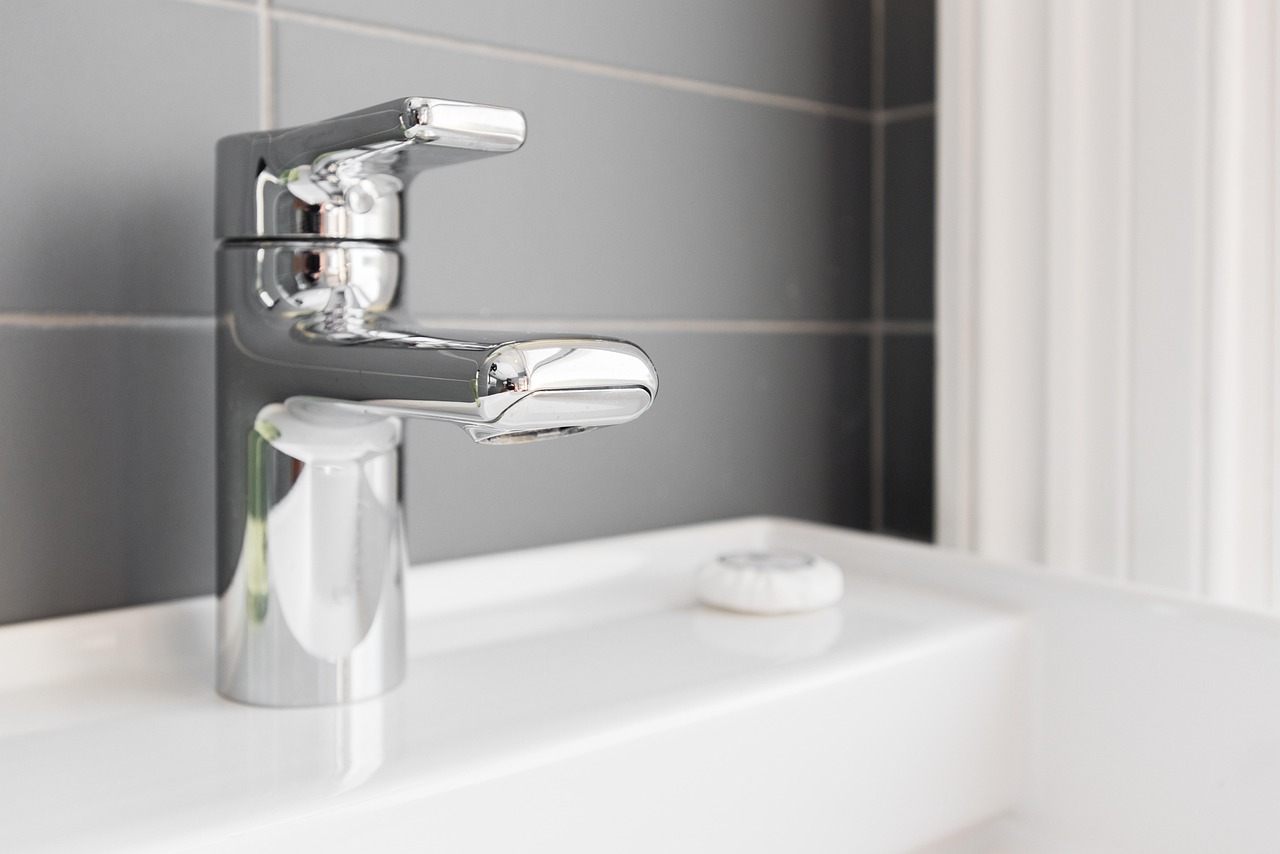
You can see the appeal in this spare sink-and-shower reference: nothing heroic, just fewer things competing for your eye.
I know this sounds less thrilling than a shopping list. That is also why it works. A small Australian bathroom, especially in a rental or an ordinary apartment block, rarely needs an identity transplant. It needs a clearer edit. Better light. Less floor obstruction. One surface with a point of view. After that, the room can get on with being what it is: a small, hardworking space that no longer asks you to apologise for it.
Maybe that is the bit I keep circling back to. Tight money has a way of making every room feel like evidence. Evidence of what you cannot change yet. The smarter small-bathroom moves interrupt that feeling. They do not imitate wealth. They create ease. On cold mornings, with the tiles underfoot and steam still collecting on the mirror, ease is not a minor luxury. It is the whole brief.

The Lifestyle Desires brief
Style, food, travel and wellbeing — weekly in your inbox.
Subscribe