What faux flowers are asking good taste to admit
Faux flowers are moving from guilty secret to design object as maintenance fatigue, cost and biophilic styling reshape the tasteful home.
The social risk of faux flowers arrives late. You do not feel it when you first walk into a room and clock the branches on the console, or when the light catches a petal just enough to make you assume somebody stopped by the flower market on Saturday. It lands later, in the slightly embarrassed beat when you realise the arrangement has looked exactly the same for months. For years that beat carried a small moral charge. Fresh flowers meant money, time, care: the household that remembers to trim stems and change the water. Fake flowers meant you wanted the signal without the labour.
I am not sure that equation survives 2026. Not intact, anyway. Across Australian interiors, especially the ones built around rental compromise, dry light and a suspicion of anything too polished, the old disdain is starting to look a touch theatrical. By now, the question is no longer whether faux florals are passing as real. It is whether a good room can admit convenience without sounding the taste alarm.
Maybe that is the optimistic read, the builder’s read. Still, the same vase makes a lot of people flinch. Artificial flowers have a long history of looking shiny, dust-catching and faintly lonely, the décor equivalent of a fruit bowl nobody is allowed to eat from. Products have changed, yes, but so have the excuses and permissions that travel with them.
The room passes the test
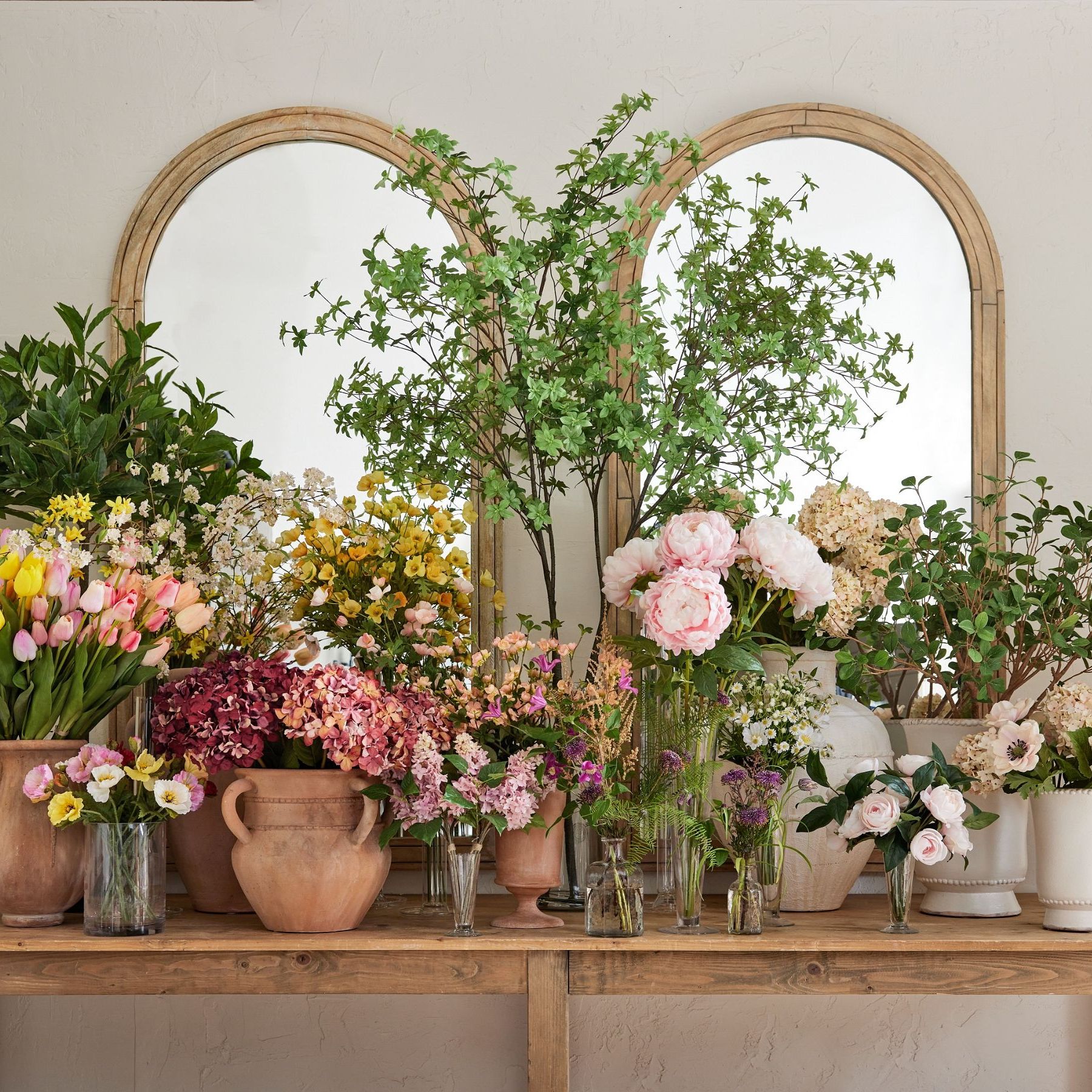
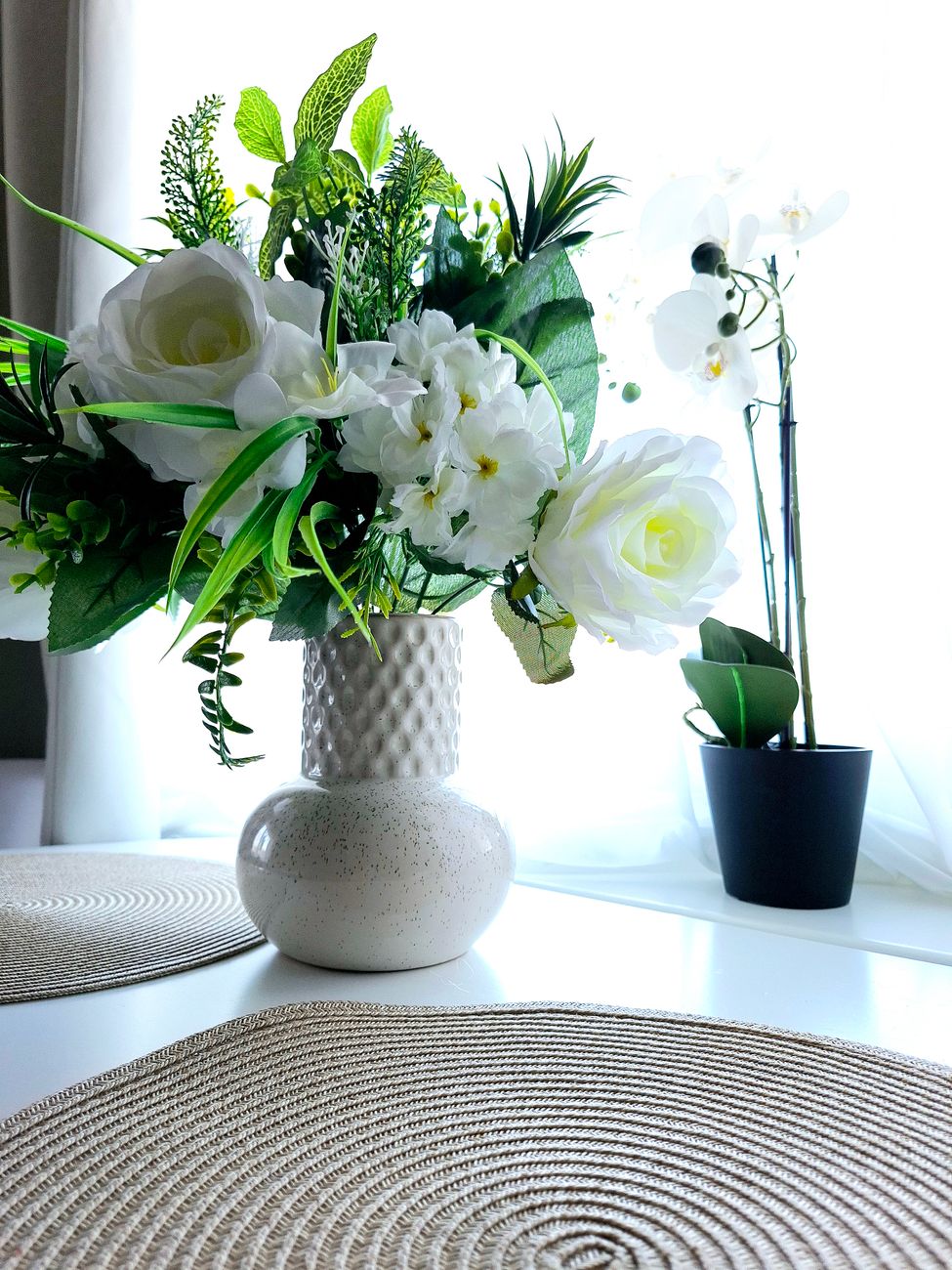
In Vogue’s report, the young luxury brand Apartment387 and the long-running Diane James Home are described less like florists’ substitutes than object makers. Small distinction, large effect. Once faux flowers stop promising exact imitation and start behaving like sculpture, they move into the same territory as a rough linen lamp shade or a stoneware bowl with a warped rim: not copies of nature, but designed things with their own authority.
Carolyn McDonough of Diane James Home, speaking in that same Vogue piece, put the demographic change plainly:
“The faux floral customer demographic has changed over time—it is younger … more sustainable than fresh.”
Carolyn McDonough, via Vogue
I hear a confession about taste in that line, not just a sales pitch about age. Younger shoppers are less loyal to the old hierarchy that placed the weekly bouquet near the top of domestic virtue. Their rooms are already a blend of vintage finds, rental fixes, marketplace ceramics and design objects bought one careful piece at a time. A convincing arrangement from Apartment387 does not have to mimic the Saturday market haul. It only has to sit credibly beside the travertine lamp and the chair you found second-hand in Marrickville.
Kandice Hansen’s description in Vogue’s reporting does more work than any neat trend line:
“The goal is for the arrangement to read as a carefully composed botanical sculpture, organic, intentional, and highly elevated.”
Kandice Hansen, via Vogue
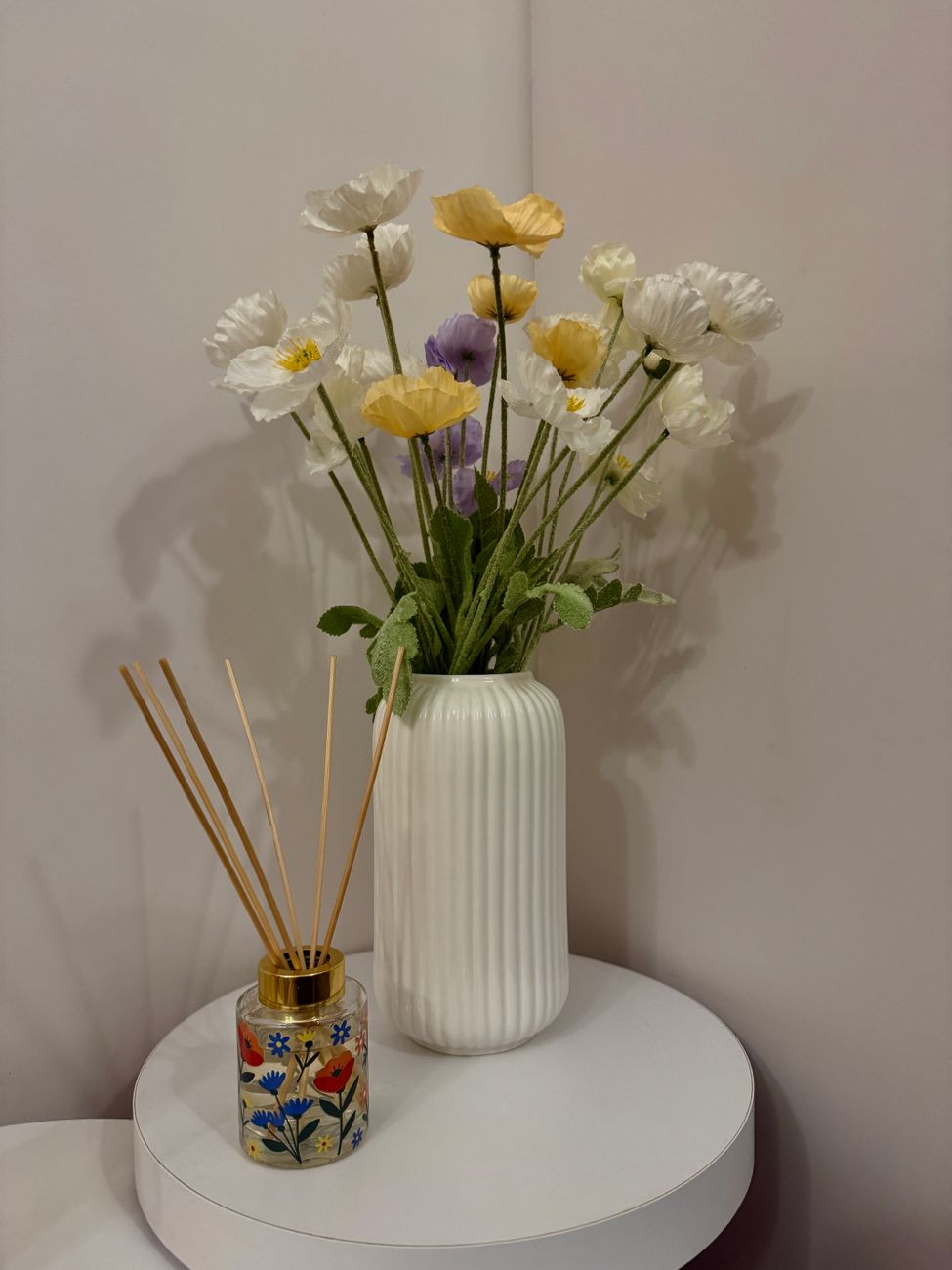
Botanical sculpture is the useful phrase. At least partly, it answers the sceptic’s question: what makes the fake feel convincing? Not perfect mimicry. Not glossy petals that insist too hard. A good arrangement joins the visual language many design-conscious rooms already speak: texture, shape, asymmetry, restraint. Style Sourcebook’s analysis of biophilic interiors reaches the same place from another angle. People want more natural reference points at home, but often in forms that feel curated rather than rustic.
The money in the water
Practicality is the less romantic answer, and it has money in it. Fresh flowers are not only expensive; they recur. Every bunch asks for a weekly appetite, or at least a fortnightly one, plus the invisible household energy of remembering it before it sags. Homes To Love’s reporting on the return of fake flowers makes the case bluntly: plenty of stylish households are choosing artificial arrangements because they are easier to live with than the loop of buying, trimming, refreshing and binning stems.
For busy households, that matters more than design people sometimes like to admit. Glamour is not the user story here. Think parents juggling school runs, renters in warm flats, anyone who has watched a beautiful bunch collapse during a chaotic week and felt faintly reproached by it. Faux flowers remove one more minor chore from the domestic ledger while keeping the room from feeling bare. Not decadence. Maintenance triage.
The sustainability argument gets more complicated, as it should. Independent Australia’s analysis of the hidden cost of cut flowers notes that fresh blooms carry ecological and import costs, which makes the fresh bouquet look less innocent than its moral halo suggests. Fake flowers do not become pure just because they last. They are still manufactured objects, often plastic ones, and durability is not the same thing as virtue. A more honest claim is smaller: the old fresh-equals-good shortcut was always a bit lazy. Cost-of-living pressure, import realities and sheer upkeep fatigue have made it harder to keep pretending otherwise.
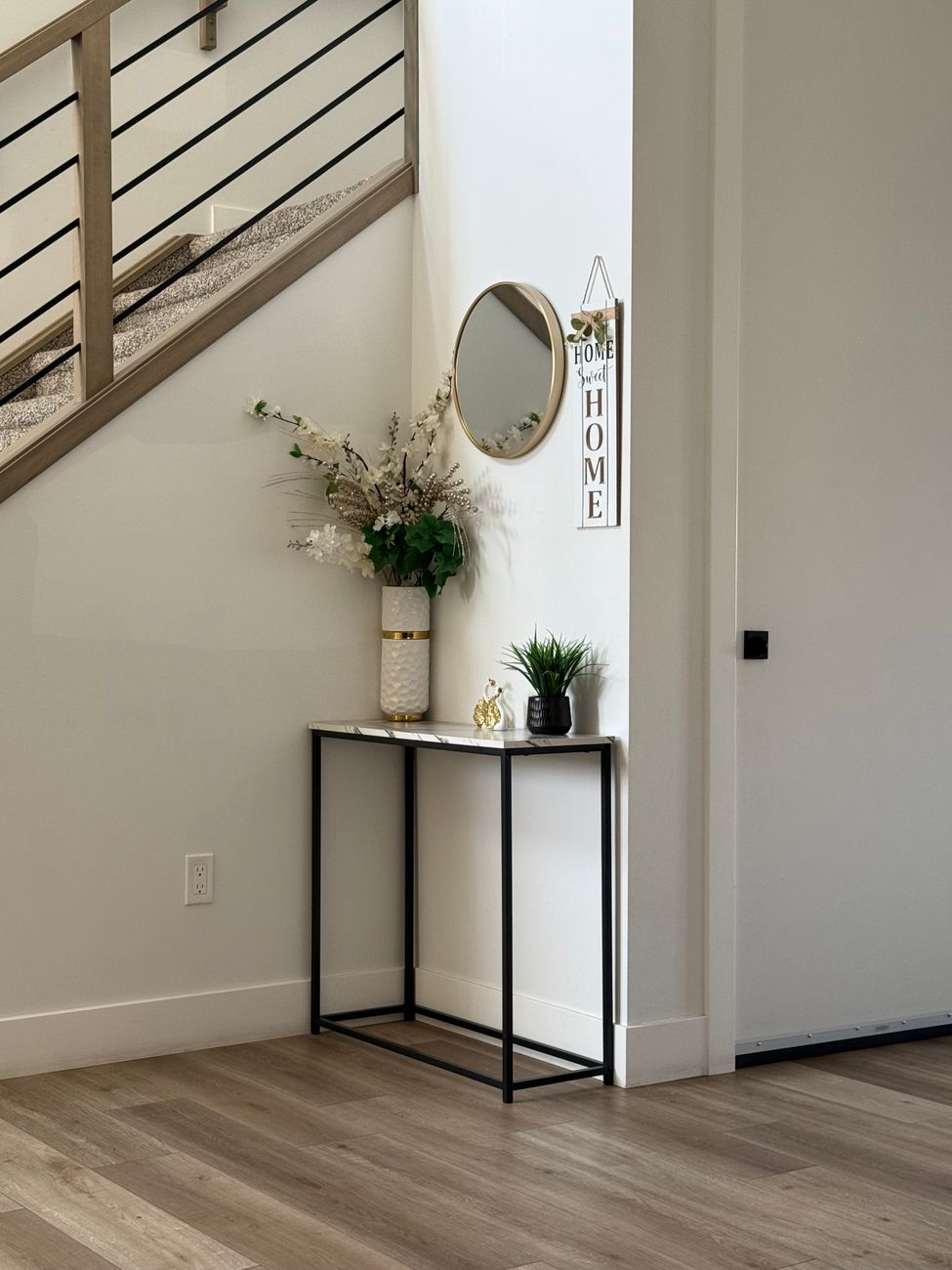
Around Australian homes, faux florals seem to be landing in very particular places. Entry consoles. Awkward hallways. Sunny corners that want softness but not a weekly obligation. Homes To Love’s hallway ideas even treats a faux arrangement as an easy way to give a transitional space some ceremony. Small, but revealing. These flowers are not returning only to grand dining rooms. They are turning up in the ordinary passages of the house, where style has to coexist with friction.
The old shame
Memory clings to a room. Faux flowers carry old class codes with them, which is why this trend is more interesting than it first appears. Fresh flowers have long operated as a quiet flex: somebody bought these recently; somebody noticed the table; somebody has time for this. Artificial flowers, by contrast, used to announce either thrift or delusion. They were the thing you apologised for, hid in a hallway, or inherited from a relative with a heroic tolerance for dust.
Residue like that does not vanish quickly. The New York Times’ 2017 Letter of Recommendation on fake flowers treated the category with a mix of affection and side-eye, which feels about right. We have always wanted flowers indoors, and we have always distrusted the copy. Even Wirecutter’s reporting on fake plants people can actually live with carries that guarded tone in the title alone: not the best, not the most beautiful, just the ones we do not hate. The stigma survives because most people can still picture the bad version immediately.
Name the objection plainly. If the arrangement is too symmetrical, too glossy, too botanically earnest, the room starts pleading its case. You can feel the performance. Good taste has never liked visible strain. Older fake flowers strained to persuade you they were alive. A newer version, I think, is more persuasive because it gives that up. It says: yes, of course this is made. So is the lamp. So is the chair. The point is not authenticity in the biological sense. The point is whether the object belongs.
For Alexander Jordaan of Apartment387, the market may finally be catching up to that more relaxed standard:
“It feels like there’s sort of this tailwind … and we might be at the right time where the product is actually getting good.”
Alexander Jordaan, via Vogue
Yes, the product getting good matters. Better materials. Less garish colour. More convincing movement in the stem. Culture is doing some of the work too. Taste is getting less puritanical about effort. A well-styled home no longer has to prove that every beautiful thing inside it is difficult to maintain.
What the fake has to get right
Amnesty is not owed to every artificial arrangement. Good ones follow the same rules as good interiors generally: less perfection, more texture; fewer declarations, more atmosphere. Faux florals make most sense when they sit among timber, linen, stone, rattan, faded books and sun-struck plaster, the materials Style Sourcebook associates with biophilic design and that Vogue’s recent look at wabi-sabi interiors frames as tactile and intentionally imperfect.

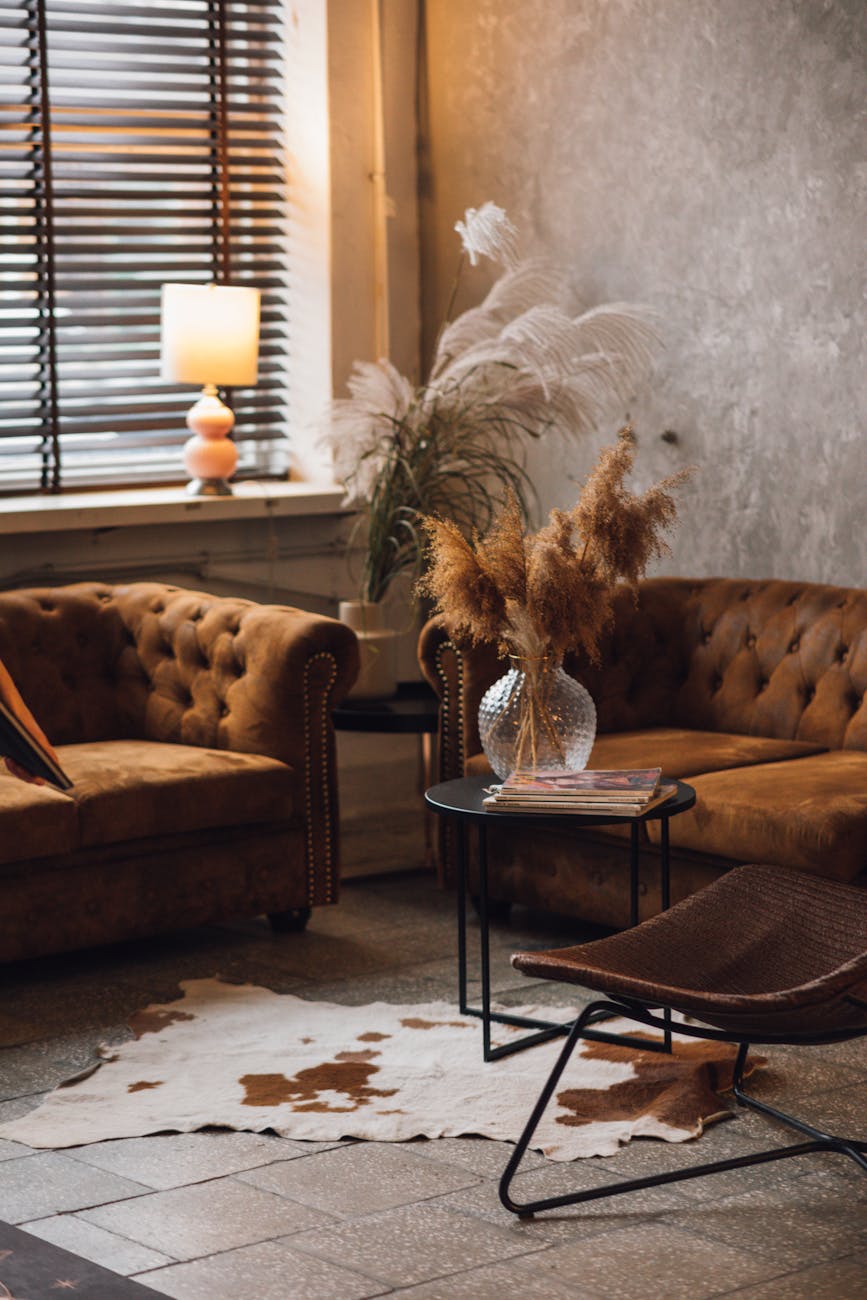
Most persuasive are the arrangements that stop pretending to do every job. A single stem or slightly off-kilter spray often reads better than an overstuffed bouquet trying to impersonate peak-spring abundance. In that sense faux flowers are like dried branches, old brass or a tablecloth with the right amount of crease: they need a room willing to let them be an object, not a stunt. Personally, I would trust them sooner in a hallway or on a bookshelf than in the centre of a formal dinner party table, where comparison with the real thing becomes too loud.
So no, faux flowers are probably not innocent, and I am still less convinced by the sustainability halo than the marketers are. I do think they are asking something useful of good taste. They are asking it to admit that domestic beauty is not only about purity, or perishability, or the little disciplines wealthy homes once performed so effortlessly. Sometimes it is about building a room that can survive the week you are having.
If that means a branch of magnolia stays exactly where it was in March and still looks right in July, perhaps the embarrassment now belongs elsewhere. Not to the person who chose the fake flower. To the old snobbery that assumed care only counted when it wilted.
The Lifestyle Desires brief
Style, food, travel and wellbeing — weekly in your inbox.
Subscribe