What teaching boys about endometriosis changes in a classroom
Teaching boys about endometriosis in school turns a hushed girls' issue into shared knowledge, and that matters long after the bell.
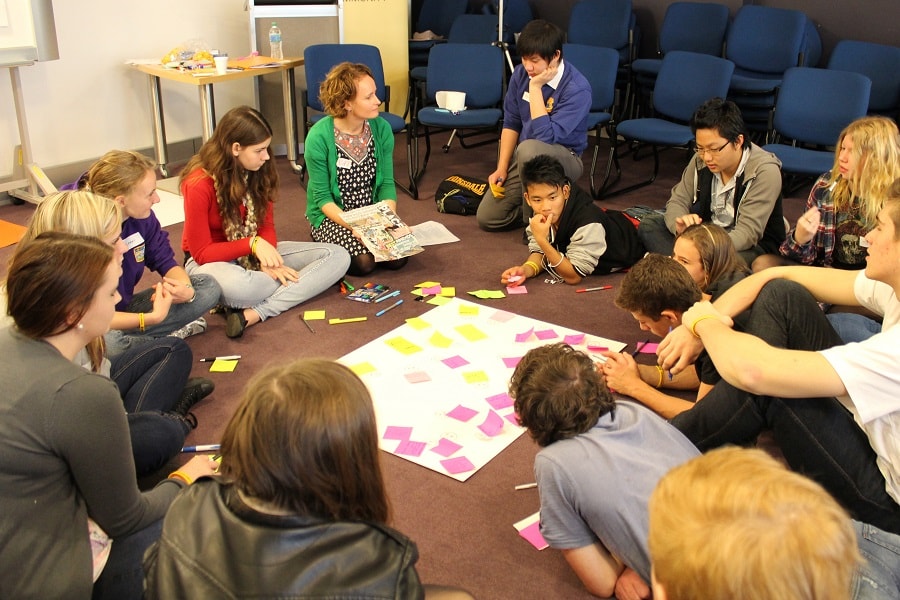
Before anyone says the word pain, the first sound in a classroom like this is often a laugh someone tries to swallow. A chair leg scrapes. One boy studies the desk. Across the aisle, a girl decides, in the half-second before the lesson properly begins, whether this is going to be another hour of treating her body as either a joke or a private inconvenience. What stayed with me in the ABC’s reporting on Palm Beach Currumbin High was not the novelty of a school lesson on periods and pelvic pain. It was the room being rearranged, socially, while everybody sat there trying not to look strange.
At that Queensland school, boys sat with girls for a session from the Pelvic Pain Foundation of Australia’s PPEP Talk program, which says it has now reached 160,000 students across more than 1,000 schools. Generations of schools have treated the subject as background noise to girlhood: periods, endometriosis, pelvic pain, the plain fact that pain can be chronic, misread and life-shrinking. Small lesson, large silence around it.
Adolescence is where a lot of private hierarchies get installed. Belief. Squeamishness. The point at which pain becomes comic because nobody has been told to take it seriously yet. A mixed classroom cannot erase those hierarchies. It can, though, interrupt the rehearsal.
Here is the early tension. An awkward classroom is not a transformed culture. The analyst’s question still hangs there: does a mixed-gender lesson reduce stigma, or does it mostly expose how little we were teaching in the first place? Australia still takes an average of 6.5 years to diagnose endometriosis, and that number sits in the body like a stone. One health class cannot carry all of that. Still, it can shift where the weight lands.
The first laugh
What the ABC piece catches is the bit adults often skip past: the second before a supposedly hushed topic becomes speakable. Nicola Jensen, the clinical educator and national programs manager for PPEP Talk, is not trying to make a perfect classroom. Usable is the better word. Messier, too. The work accepts discomfort on the way through.

What feels useful in EducationHQ’s reporting on the program’s empathy focus is that the lesson is less a biology download than a nudge at social behaviour. Schools can distribute information. Shame is harder to redistribute. Once boys hear about periods and endometriosis at the same time as girls, the subject stops being smuggled sideways through the whisper economy of adolescence.
In the ABC report, Jensen puts it plainly:
“It’s so important that boys are learning about how to empathise with people around them, how they can best support them.”
Nicola Jensen, ABC News
PPEP Talk is short for period, pain and endometriosis, which is refreshingly literal. Even the name pushes back against the old curriculum habit of flattening women’s health into reproduction or hygiene. Pain gets named. Endometriosis gets named. Boys hear the names too.
For me, that is the hinge of the story. Empathy becomes easier when the information is no longer coded as someone else’s business. A girls-only lesson can be useful, obviously. It can also leave the old division untouched: pain on one side of the room, ignorance on the other.
The room settles
Maybe the most revealing voice in the story is not the adult expert. It is the year 9 boy admitting that the whole thing began awkwardly, then stopped being awkward because everyone stayed put long enough for embarrassment to get bored.

That same ABC report answers, at least partly, the question of what boys carry out of the room. Not mastery. Not a perfect script. Just a lower threshold for hearing the subject without collapsing into mockery.
“The beginning of the talk was a bit awkward but then everyone just got used to it.”
Zane Zimmerle, ABC News
There is more wisdom in that line than we usually allow. Adults love school programs to produce immediate, measurable enlightenment. Teenagers are more practical. The win here may be that a boy hears his sister complaining about pelvic pain and does not shrug it off, or notices a girlfriend cancelling plans and does not reach for the old jokes. I cannot prove that every lesson becomes care. Nobody can. Social permission has to begin somewhere. Often it begins in the banal moment where a room does not fall apart.
Students understand the currency of embarrassment better than ministers do. They know exactly how quickly a body-related topic can turn into lunch-table comedy. If a program like this works, it will not be because every student remembers the medical terminology. Later language is the point: corridors, group chats, relationships, university share houses, offices.
The program’s wager is modest, and that is why I trust it more than the grander claims. Teenage boys do not become instant allies because of a single session. Familiarity can lower cruelty, though. Culture usually shifts through repetition long before it shifts through virtue.
The years between first pain and help
The reason this classroom story lands so hard, at least for me, is that it sits beside a much older and sadder Australian script. Girls and women describe pain. Clinicians, teachers, family members, sometimes friends, find softer names for it. Temperament. Drama. A bad cycle. Years pass. Then someone finally names the thing that has been there all along.
In ABC’s 2022 reporting on school endometriosis awareness, teenager Matilda Hockey said the quiet part out loud. Her frustration was not only with symptoms. She was naming the culture that teaches girls to internalise them.
“We need to do something about it so that girls who have it know that they can be accommodated for what they’re experiencing and they don’t have to suffer in silence.”
Matilda Hockey, ABC News
A June New Scientist report on fresh endometriosis biology noted that the condition can affect far more than the pelvis. That science matters because casual dismissal tends to shrink the illness down to “bad periods”, a phrase that has probably delayed more help-seeking than any pamphlet could measure.
No wonder the diagnosis lag still stings. The broader habit of treating women as unreliable narrators of their own bodies has not vanished either. In The Guardian’s recent analysis of medical misogyny, historian Alison Downham Moore argues that dismissal is part of a much older pattern. I read that piece less as an abstract polemic than as a warning about what happens when ignorance hardens into institutions. By the time a patient reaches a specialist clinic, she has often already spent years being asked to reinterpret pain as normal.
This is where the policy perspective earns its place in a story that is otherwise intimate. The classroom lesson is not floating by itself. It now sits alongside a broader care network. The ABC reported this week that the federal government’s $40 million menopause and perimenopause expansion will roll support into all 33 existing endometriosis and pelvic pain clinics from 1 July. On the Gold Coast alone, Dr Angela Model says two EPPICS clinics have already cared for 1,100 women since April 2024. Education is not treatment. Education without treatment is a cul-de-sac, and treatment without cultural literacy is slower than it should be.
Placed beside the classroom program, that clinic expansion feels like more than service delivery. It is a grudging recognition that the life of these conditions begins well before anyone reaches specialist care. The body shows up in school before it shows up in a clinic.
What schools can hold
One thing I like about this story is that it refuses the false choice between classroom culture and clinical seriousness. Too often, women’s health is framed as a choice between empathy and evidence, as if one belongs to schools and the other to medicine. In reality, the two are braided. A teenager who has language for endometriosis and pelvic pain is not magically cured, but she may arrive earlier at the point of asking for help. A boy who has heard the same language may become, at minimum, one less obstacle on the way.
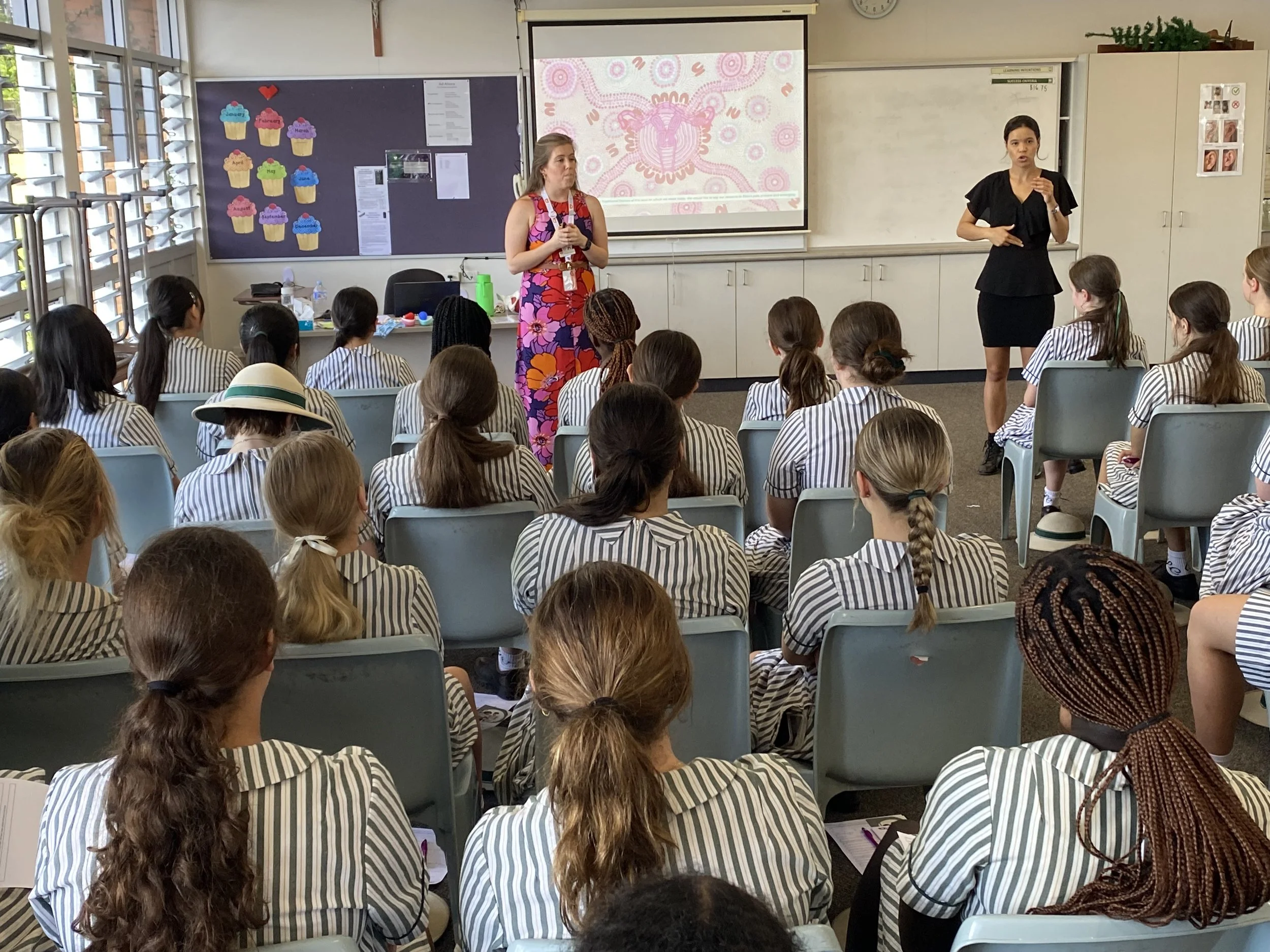
Jensen wants boys to learn practical empathy. Policymakers want earlier help-seeking and a cleaner path into care. Those goals are not identical. They overlap more than we sometimes admit. If the old model taught girls to manage pain privately until it became impossible, the new one is at least trying out a public vocabulary.
I would be wary of overselling it. One program cannot undo decades of euphemism, or the weirdly durable belief that severe period pain is a character test. It cannot solve drug shortages, specialist waitlists or patchy GP training. Nor can it guarantee that a teenager who hears this lesson at 14 will become an attentive partner at 24. That would be a tidy ending, and tidy endings are usually lies.
Still, there is something bracing in letting boys hear the words at the same time as girls, with no lowered voice and no ceremonial embarrassment. Boys do not need to be centred in a story about endometriosis. They do, however, live in the social atmosphere around it: as classmates, brothers, future partners, future managers, future policymakers, future doctors. Letting them stay uninformed has always had consequences. We just pretended those consequences belonged to someone else.
After the bell
The phrase I keep circling is shared knowledge. Awareness can sound like a campaign slogan. Sensitivity can curdle into patronising mush. Shared knowledge is plainer. It means a lesson about periods or pelvic pain no longer belongs to girls as a private burden, and boys are no longer licensed by ignorance.

I do not think boys deserve applause for sitting through a lesson girls have had to live inside. Expectation is different: this knowledge is ordinary, empathy is not optional, and not knowing is no longer a charming alibi.
That may sound modest, but most durable cultural shifts do at first. They arrive looking almost embarrassingly small. A room stays in the room. A boy listens through the awkward start. A girl hears the subject spoken at normal volume. A clinic exists when she needs it. None of that is enough on its own. Together, though, it begins to alter the terms.
What teaching boys about endometriosis changes in a classroom is not only the classroom. It changes who is expected to understand pain, who is allowed to dismiss it, and who has to carry the explanation. For a condition that has so often flourished in the gap between experience and belief, that feels serious. Small, maybe. Early. Unfinished. Serious.

The Lifestyle Desires brief
Style, food, travel and wellbeing — weekly in your inbox.
Subscribe