Why women are still asked to doubt their own pain
Medical misogyny in Australia is measurable: young women say they are dismissed, delayed and taught to mistrust pain in clinic rooms.
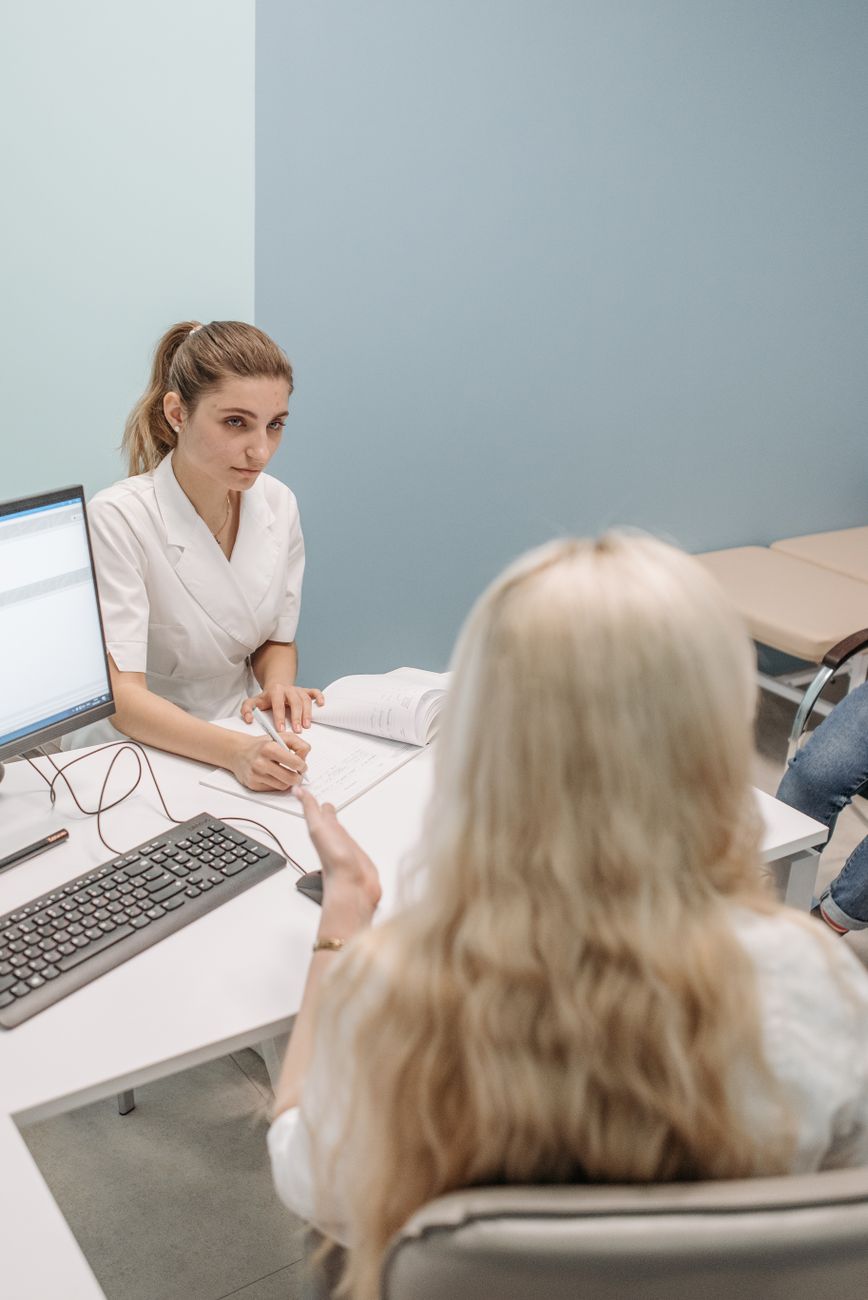
I know the exact shape of the appointment this story is about. Not because it is rare, but because so many women can describe it without pausing. The plastic chair. The too-bright room. The little rehearsed speech in your head, edited down to sound reasonable. The decision, made somewhere between the car park and reception, that you will not cry because crying will be used as evidence against you.
Then the appointment ends and the real work begins. You sit in the car with the script still running, wondering if the pain was as bad as you said. Maybe you made it sound dramatic. Maybe the one detail you left out would have made the doctor believe you.
That, to me, is the part of medical misogyny we still under-describe. It is not only the missed diagnosis or the rushed referral. It is the way women are trained to become doubtful narrators of their own bodies. Alison Downham Moore, writing in The Guardian this weekend, put the wound plainly.
“Women are often wronged not only in what is done to their bodies but in their status as the knowers of those bodies.”
— Alison Downham Moore, The Guardian
The sentence lands because it names a familiar insult. The body hurts, then the telling of that hurt is put on trial.
The small humiliation before the harm
The first perspective here is not a policy one. It is the woman leaving the appointment with a pathology form in her bag, or nothing in her bag, and a fresh little doubt lodged under the ribs. Maybe she was told to track symptoms for another cycle. Maybe she was asked about stress before pain relief. Maybe the word anxiety appeared early enough in the consultation to change the weather in the room.
But the analyst’s view cuts through the fog of anecdote. In Australia, The Australia Institute’s recent polling found that only 14% of women aged 18 to 34 said doctors always take their concerns seriously. Among men aged 65 and over, the comparable figure was 50%. Two-thirds of women reported gender bias or discrimination in the health system.
That is not a vibe. It is a trust gap with edges.
Skye Predavec, one of the researchers behind the Australia Institute work, described the split bluntly.
“The experience of young women visiting a doctor in Australia is vastly different to that of an older man.”
— Skye Predavec, The Australia Institute
The gap matters because medicine often asks for time before it offers certainty. Watch and wait. Come back if it gets worse. Keep a diary. Try this first. None of those instructions is inherently negligent. Plenty of careful medicine looks like patience. But patience feels different when one group is granted credibility at the start and another has to earn it while in pain.
This is where the word misogyny can make some people flinch. It sounds too blunt for a GP room with a fern in the corner and a clinician running 18 minutes late. I understand that hesitation. Most harm in ordinary healthcare is not theatrical. It is procedural, hurried, inherited. A doctor does not need to hate women to practise inside a culture that has been taught to discount them.
Still, softer language can become its own form of evasion. If women keep reporting the same pattern across pelvic pain, autoimmune symptoms, heart disease, menopause and menstrual disorders, it is not especially brave to say the system has a listening problem. The more interesting question is why listening still has to be argued for.
Disbelief has a timetable
Endometriosis is the case study that keeps returning because it shows how disbelief becomes delay. In the UK, the government’s renewed women’s health strategy says the average time to an endometriosis diagnosis is nine years and four months, rising to 11 years for women from diverse ethnic communities. It also says 565,000 women are still waiting for gynaecological care.

Nine years is not a delay in the abstract. It is school terms, rent rises, relationships, cancelled weekends, painkillers in handbags, heat packs under office desks. It is the slow education of a person into the idea that her body is an unreliable witness.
The BBC’s recent Woman’s Hour discussion of misogyny in medical school and care culture sits uncomfortably beside that number. If young doctors are learning inside a system that has normalised women’s pain as vague, emotional or difficult to classify, then no amount of glossy “listen to women” branding will be enough. The instruction has to reach the training room, the triage desk and the ten-minute appointment.
There is also a practical Australian sting here. ABC News reported this week that low-dose Zoladex is being pulled from shelves, affecting people who use it for conditions including breast cancer and endometriosis. That is not the same issue as diagnostic dismissal, and it should not be collapsed into one tidy grievance. Yet for patients who have already fought to be believed, any disruption to treatment can feel like another reminder that women’s pain is easy to make administratively fragile.
I keep thinking about the phrase “quality of life”, which appears so often in women’s health that it can start to sound polite and bloodless. Quality of life is whether you can work a shift. Whether sex hurts. Whether you trust yourself enough to make another appointment. Whether you stop apologising before you describe a symptom.
The regulator’s perspective is, by necessity, colder. Waiting lists can be counted. Referral pathways can be redesigned. Training modules can be rewritten. The UK health secretary Wes Streeting used the word many patients have already been using at home, saying the system too often “gaslights women”.
“too often gaslights women, treating their pain as an inconvenience and their symptoms as an overreaction.”
— Wes Streeting, GOV.UK
It is useful to hear a minister say it. It is not enough.
Naming it is only the first repair
A sceptic might reasonably ask what changes when “medical misogyny” becomes the approved phrase. Institutions are good at absorbing critique once the words become familiar. Put the phrase in a strategy document, add a listening exercise, convene a panel, and the system can look chastened while the waiting room feels exactly the same.
That scepticism is healthy. The phrase should not become a badge that lets governments or hospitals sound modern without changing how care moves. For a woman with pelvic pain, the test is not whether a department has learned the vocabulary. It is whether she gets pain relief, investigation, a referral that arrives before the condition has eaten another year, and a clinician who does not make disbelief the first diagnostic tool.
The same goes for Australia. The Australia Institute report gives the local conversation a sharper spine because it refuses to treat women’s accounts as a handful of unlucky encounters. Its medical misogyny research frames the issue as a structural feature of care, not a bedside-manner complaint. That distinction matters. Bedside manner can be fixed with charm. Credibility has to be redistributed.
What would that look like in a GP room? Slower questions, perhaps. Clearer safety-netting. Less reflexive psychologising when symptoms are messy. Better pathways for pelvic pain, menopause, menstrual disorders and the conditions that do not announce themselves neatly on a first blood test. More curiosity from clinicians, but also more power for patients to come back without feeling they are being difficult.
I do not want to romanticise listening. A doctor can listen beautifully and still miss something. A patient can be heard and still need tests that take too long, specialists who are booked out, drugs that disappear from supply. Medicine is full of uncertainty, and pretending otherwise is its own kind of cruelty.
But disbelief is not the same as uncertainty. Uncertainty says, I do not know yet. Disbelief says, I suspect you do not know yourself.
That is the line women are still being asked to walk. Speak firmly, but not too firmly. Be informed, but not the sort of informed that irritates a clinician. Describe pain, but do not perform pain. Bring evidence, but do not seem like you have been on the internet. Trust your body, but accept that the room may not.
The cultural habit begins long before the appointment. Girls learn to make period pain school-manageable. Women learn to joke about being dramatic. Friends swap doctor recommendations in the tone other people use for restaurant tips, except the question is not who does the best pasta, it is who will believe me the first time. There is tenderness in that network. There is also indictment.
So yes, policy matters. Data matters. The phrase medical misogyny matters because naming a pattern gives patients something sturdier than private shame. But the repair I keep coming back to is smaller and more radical than a slogan: women should be able to enter a clinic as credible witnesses of their own lives.
Not perfect witnesses. Not always correct. Just credible.
That should not feel like a feminist demand. It should feel like the beginning of medicine.

Brisbane-based GP turned health writer. Covers women's health, fertility and the gap between clinic and culture.
The Lifestyle Desires brief
Style, food, travel and wellbeing — weekly in your inbox.
Subscribe