Dating in white spaces can cost more than love
Dating in white spaces can make Black women pay in scrutiny, translation work and the exhaustion of being read as an experiment.
There is a point, in certain restaurants, when a date stops being a date and becomes a room.
Not loudly. No glass thrown, no hand on the table, no film-scene sting. The waiter is still asking sparkling or still. Someone’s friend from work leans over to say hello. At the next table, a woman clocks the couple, looks once, then again, with the calm confidence of a person who thinks looking is neutral. Your date keeps talking about the film he saw on the weekend. Somehow you are meant to stay with him, laugh in the right places, and read the room that has started reading you.
That split-screen feeling kept coming back to me after Nicky Josephine’s Vogue essay on dating in white spaces as a Black woman, which turns on Ciara Miller’s Summer House fallout. Interracial dating is the broad subject, but the bit that catches under the fingernail is smaller and more tiring than the phrase can hold. Desire, in a white room, can arrive with admin.
Josephine writes from a place I do not want to flatten into a neat lesson for the rest of us. I am not the person paying this particular toll. Precisely for that reason, the essay asks to be sat with, not skimmed for a take. Dating, in this frame, is chemistry and timing, sure. It is also translation work. Suspicion management. A private attempt to work out whether you are being chosen as a person, cast as a lesson, or watched as proof in somebody else’s argument.
“I do not want to be seen as an experience, or something to try.”
Ciara Miller, quoted in Vogue
A sentence like that does not come from nowhere. It has the chill of something said after too many smaller moments have already happened.
The table turns
Preference is the easy version of this conversation. Who you fancy. Who fancies you. Whether someone’s parents get strange about it at Sunday lunch. Social legitimacy is the harder version, because a private choice can be hauled into public evidence before dessert.

In the Vogue piece, Miller is not simply a reality-TV personality whose relationship was dissected after the fact. She becomes, as Black women on television so often do, a vessel for other people’s assumptions. White fans can be jealous. Black viewers can be protective, sceptical, disappointed, tired. Meanwhile the man involved is treated as hapless, charming, vaguely absolved. Miller is left with the strangest part of the burden: proving that her desire is not betrayal, not audition, not an invitation for strangers to decide what kind of Black woman she is.
Cruelly narrow, that corridor. Hurt risks being read as harsh. Restraint can be mistaken for proof that nothing much happened. Refinery29’s reunion recap made the sharper point about that composure: Miller was not being severe so much as controlled in a room where a messier response would have been punished.
I recognise the machinery, if not the exact wound. Women are trained early in the awful art of seeming reasonable while unreasonable things happen around them. Smile at the joke. Do not make the dinner weird. Keep the peace. For Black women, the stakes of that choreography can be higher and more racialised: anger gets mythologised, softness gets questioned, disappointment gets treated as excess.
By then the date is never only two people and a booking at 7.30. Around it gathers the imagined audience: friends, family, Instagram, the Bravo comment section, the whole sticky archive of what people think Black women should want, tolerate, refuse, forgive.
What the room asks
Josephine’s most useful phrase, to my ear, is not dating out. It is dating in white spaces. Space does the work. The question moves away from the partner’s identity and toward the weather around the couple.

A white space can be literal. A share house. A ski weekend. A friend group that has never had to learn the difference between curiosity and interrogation. Culturally, it can also be a setting where whiteness is the default lighting and everyone else is expected to explain themselves without blocking the view.
Here the emotional bill starts adding up. A Black woman dating in that setting may be asked, aloud or by implication, to soothe everybody at once. Reassure the white partner he is not being accused. Reassure herself the odd comment was not a warning sign. Answer, maybe silently, the questions from Black observers who know from history and repetition that not every white partner understands the cost of bringing a Black woman into a white social world and then leaving her to manage it alone.
Vanessa Gonlin’s research gives that feeling a wider frame. A Society Pages summary of Gonlin’s interracial-relationships study describes interviews with 82 Black American women, many of whom reported pressure from several directions: accusations of internalised racism, doubts about racial loyalty, and the tiring work of defending intimacy that should have belonged to them.
“Because I am a Black woman, I’m not allowed to be attracted to light-skinned men or to white men…”
Interviewee in Vanessa Gonlin’s study, via The Society Pages
Treat those findings as a tidy explanation of one celebrity storyline and the point slips away. Research can name the pressure system, but it cannot make the room less lonely in the moment. Numbers help because they stop a woman being told she imagined it. They do not make the date easier.
Education and dating-pool data can harden the conversation further. The Root’s discussion of Pew figures cites a gap among Black Americans aged 25 and older with at least a bachelor’s degree: 24.3 per cent of Black men and 30.7 per cent of Black women. Those numbers do not tell anyone whom to love. They do suggest why some Black women’s romantic choices get read through a crowded mix of scarcity, aspiration, loyalty and fear.
None of this resembles the usual dating-app chat. The apps ask for preferences as if desire were a menu. Height. Politics. Want children. Doesn’t smoke. But preference never floats in clean air. It arrives through neighbourhoods, schools, class, family warnings, pop-culture scripts, old wounds, and whatever the algorithm keeps showing you at 11.48pm when you should be asleep.
The audit of being wanted
“Seen as an experience” lands so hard because it names a particular romantic insult. Not the blunt rejection of not being wanted. Worse, maybe: the ambiguity of being wanted for the wrong reason.
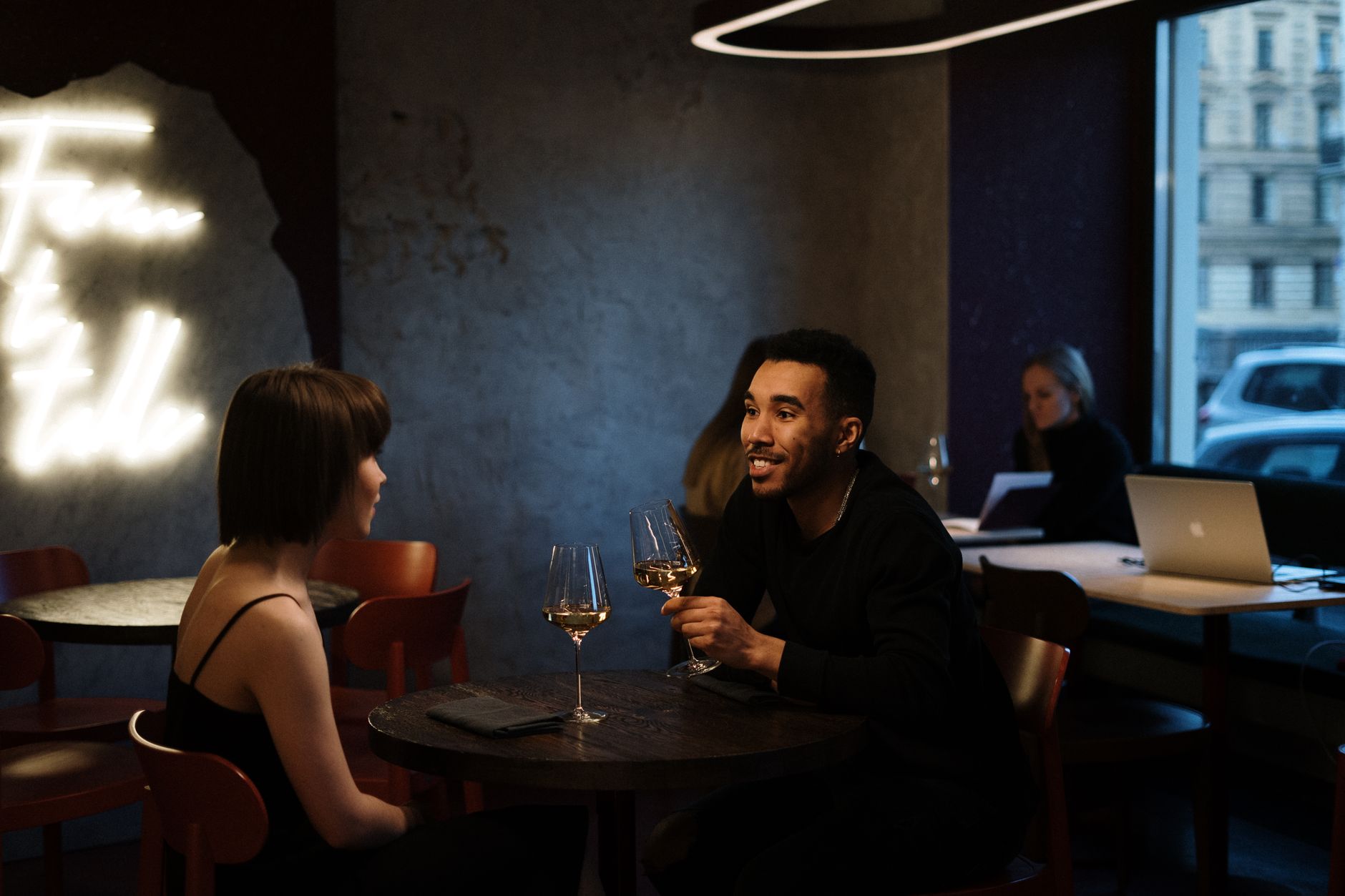
Anyone who has been on the receiving end of novelty desire knows the little internal audit it produces. Is he listening, or collecting? Was the compliment specific, or has he said it before to women who look vaguely like me? Does he know the difference between attraction and extraction? Black women have been hyper-visible and under-protected in the culture for so long that even tenderness can arrive with a question mark attached.
Call it pattern recognition, not paranoia. The friend asked to explain racism at a party remembers. So does the colleague whose hair becomes office conversation. So does the woman whose confidence is called intimidating until someone wants to borrow it. In dating, the same script can arrive in softer clothes. You are beautiful, but also a type. Impressive, but also a lesson. Loved, perhaps, after translating the terms of loving you.
I might be wrong about this, but I suspect that is why Miller’s sentence travelled. It refuses the flattering version of fetishisation. Do not turn me into your evidence of openness. Do not make me the syllabus for your moral development. Do not date me as proof that you are the kind of man who dates Black women.
Restraint matters in that refusal. It is not asking for worship. It is asking for ordinariness, maybe the most underrated romantic luxury. To be allowed to be annoying, late, funny, unsure, badly dressed on a Tuesday, not always composed, not always symbolic. To be someone’s person without becoming a public curriculum.
The small refusal
Another thread runs beside this dating story: women naming the tiny scripts that hold them in place. The Guardian recently wrote about microfeminism on TikTok, where women describe small acts that reverse old gender habits: not softening every email, not defaulting to the office housework, not stepping aside as if space belongs to someone else.
“These small actions are ways that we can contribute to our own equity and equality.”
Tori Dunlap, speaking to The Guardian
Pretending microfeminism solves the racial politics of dating would be clumsy. It does not. A TikTok habit is not a shield against fetishisation, family pressure or the strange courtroom of reality television. Still, the connection sits in the scale of the thing. So much of the work women describe is not grand rebellion. It is the tiny refusal to make yourself easier to consume.
For a Black woman in a white dating space, that refusal might be asking the uncomfortable follow-up when a partner’s friend says something off. Or declining to laugh. Or leaving early without drafting a courtroom-quality explanation in the Uber. Sometimes it is simply saying, plainly, that being loved cannot require constant translation.
The hard part is that every refusal has a cost. Patience can dissolve you into the role of educator. Directness invites the old caricature. Leave and you are accused of not giving people a chance. Stay and you may have to keep proving that what happened did, in fact, happen.
That is what dating in white spaces can cost. The bad date, yes. The baffling comment. The defensive brunch conversation after. More than that, it can cost the ease other people mistake for romance itself: arriving unedited, wanting without being audited, sitting in a room without being turned into a referendum.
I do not think the answer is to turn every interracial relationship into a tribunal. People love across history all the time, messily and sincerely. But sincerity is not safety, and attraction is not care. If a man wants to date a Black woman inside a white world, the least romantic thing he can do is pretend the room is invisible.
The more romantic thing is smaller and harder. Notice the room. Stand in it with her. Do not make her translate the weather while you enjoy the meal.

The Lifestyle Desires brief
Style, food, travel and wellbeing — weekly in your inbox.
Subscribe