When Vivid’s drones faltered, Sydney kept staring
Vivid Sydney’s drone show stumble exposed how much the city now expects free public wonder to arrive smoothly, safely and on cue.
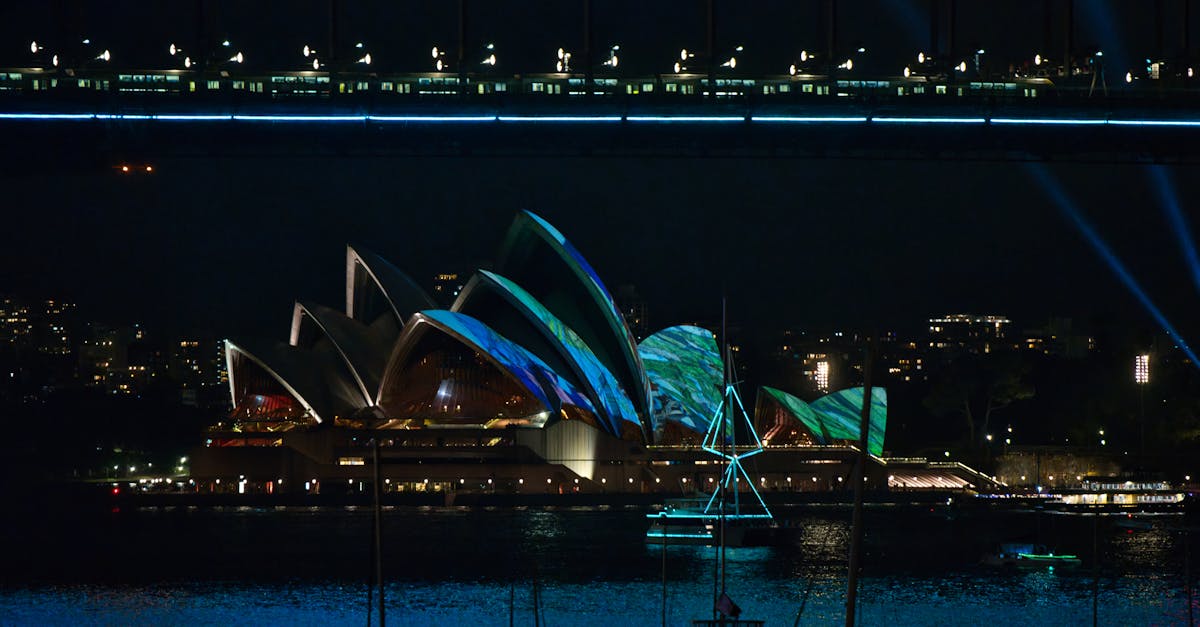
There is a peculiar Sydney mood that arrives the second a free public event stops feeling free and starts feeling managed. One moment everyone is angling their phones towards the Vivid Sydney drone show, ready for the city to deliver that annual little hit of collective awe. The next, people are no longer asking what shape will appear in the sky. They are asking whether the thing is happening at all.
When 9News reported Monday night’s cancellation, the official explanation read almost comically dry beside the anticipation hanging off it:
“Monday’s 7.30pm Vivid Sydney ‘Star-Bound’ drone show was cancelled due to unforeseen technical difficulties at the start of the performance.”
Vivid Sydney spokesperson, 9News
Dry as it was, that sentence landed harder than the technical details did. A drone wobble is not, on its own, a cultural event. Vivid has not been just a lights festival for a while, though, and that is the part worth sitting with. This year’s programme is pitched at 2.5 million visitors across a 23-day run, with the drone piece alone marketed as 22 free shows over 11 nights using 1,000 drones. At that scale, a glitch stops reading like a glitch. It starts to feel like a broken promise about what Sydney is supposed to feel like after dark.
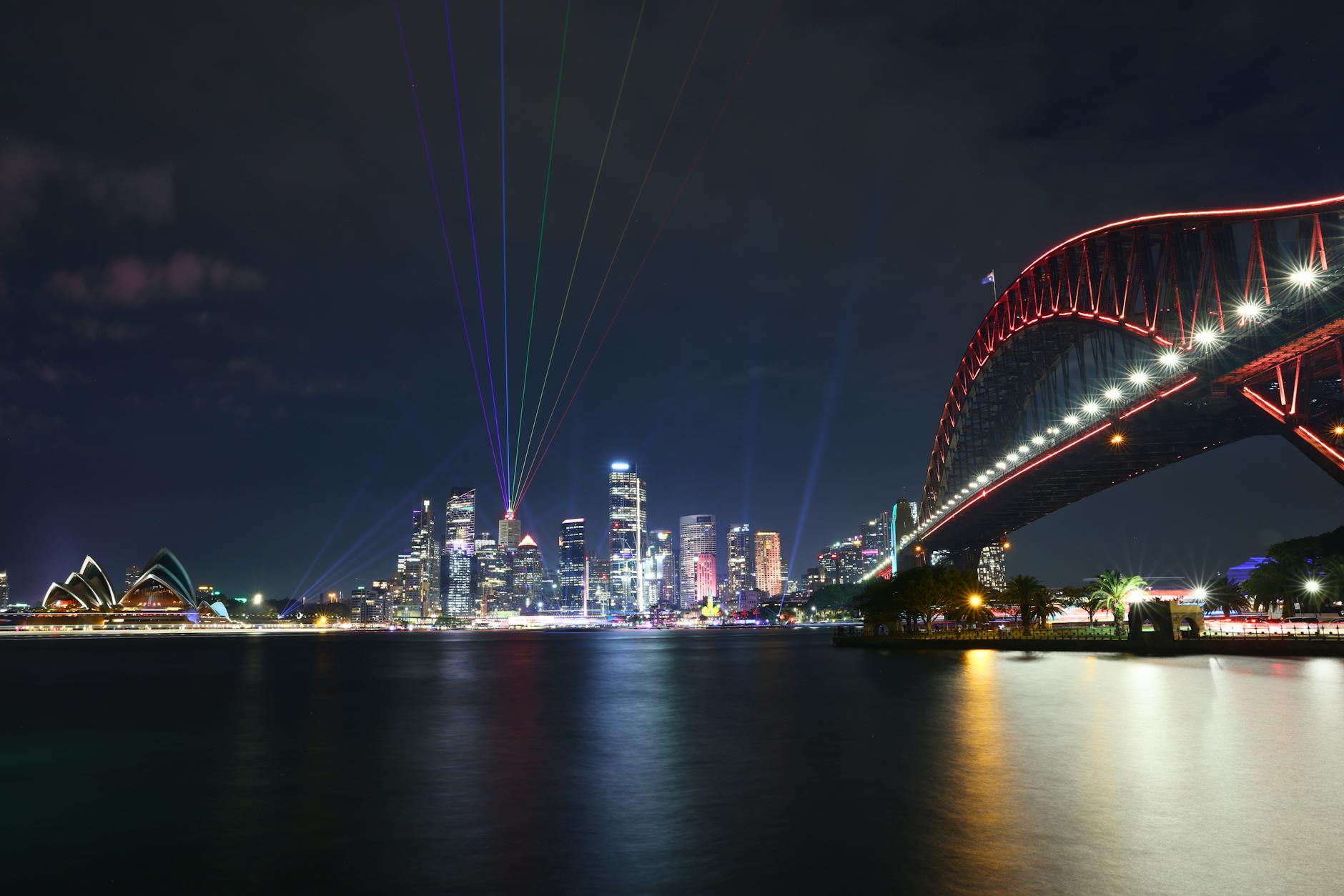
Most of us know the user side of this story because we have stood inside some version of it: a foreshore crowd, a bit of damp in the air, kids on shoulders, a ferry timetable in the back of your mind, and the private hope that the city might briefly become more generous than usual. I do not think people go to Vivid for art in the strict gallery sense. They go because it offers a mass, low-stakes ritual of being out together, a way of borrowing the harbour back from office towers, cruise schedules and restaurant bookings for an hour or two.
From inside the festival machine, that feeling is something organisers have to build. In ABC’s preview of the festival, festival director Brett Sheehy framed Vivid as something much larger than illuminated buildings:
“Vivid is much more than a light festival, it’s really four festivals in one.”
Brett Sheehy, ABC News
That hardly sounds like arts-speak. It sounds like a production brief. Vivid is being sold as lights, food, ideas and music, which is to say as a bundled night-time economy product, a city-branding exercise with culture doing the glamour work. Inside that bundle, the drone show matters because it offers the cleanest visual proof that Sydney still knows how to put on a scene. You can see why the harbour keeps getting cast in this role. Refinery29’s Fashion Week dispatches made the same point from another angle this week: Circular Quay and its surrounds are not just places here; they are backdrops, the civic equivalent of a ready-made set.
The city that wants a reveal
So the 2026 stumble feels more revealing than catastrophic. Sydney is not short on natural beauty. What it worries about, I think, is whether beauty alone still counts as programming. The city wants a reveal now, a cue, a soundtrack, a skyline that performs on schedule. That is why the drone show suits the appetite so neatly: it turns public space into a communal screen. No tickets, no dress code, just an agreement that we will all look up at the same time.

Read that way, Vivid looks a little less romantic than the festival copy. Culture is part of it, and tourism is too. More than either, the festival acts as a rehearsal of civic competence. Can Sydney move people, delight them, feed them, keep them safe, and send them home with the feeling that the city still works? When the answer is yes, Vivid looks like effortless magic. On the nights when the answer wobbles, the machinery becomes visible.
We have seen that machinery before. The 2024 version of Vivid left attendees describing crowd crush fears and bottlenecks around Circular Quay, with then minister Victor Dominello summing up the atmosphere in a phrase nobody working in events would want attached to a festival:
“It was human sardines.”
Victor Dominello, ABC News
Dominello’s line matters because it names the user-affected perspective cleanly. Spectacle is only delightful while the body feels safe inside it. Once the exit becomes the story, the show has changed genre. Suddenly it is not a night out but a systems test, one in which train platforms, police barriers, ferries and weather calls all have speaking parts.
Seen from the regulator’s side, public wonder is conditional. The official event page notes that weather can affect the drone programme. Last year, officials responded to crowd concerns by stretching the drone event across more dates, and this year the answer was more scale plus more sessions, not retreat. That seems smart to me. Sydney’s appetite for spectacle is real, but so is its anxiety about crush, queue and chaos. The compromise is not less show. It is more chances to see it, with thinner peaks.
When the exit becomes the plot
That points to something unflattering, and maybe honest, about what free culture has to do in Sydney now. It cannot merely be good. It has to be frictionless. It has to justify the walk, the babysitter, the train surge, the parking drama, the drizzle, the text thread trying to pin down where everyone is standing. That is a tall order for any artwork. For a thousand small aircraft over Darling Harbour, it is impossible.
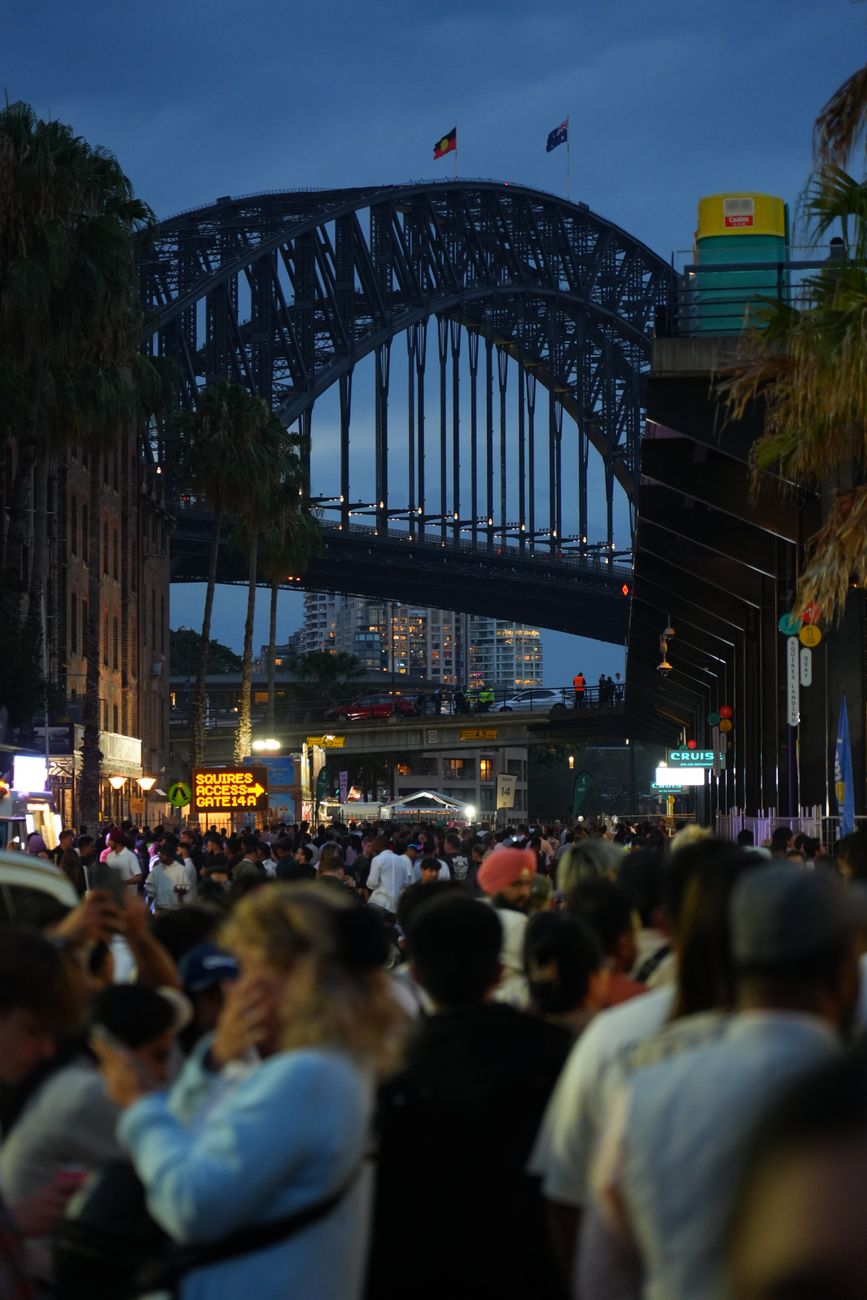
I keep coming back to the strange intimacy of public disappointment here. If a blockbuster film underwhelms, you complain on the way home and move on. If a city-backed spectacle stumbles, it feels a bit personal. The state has invited you to imagine yourself inside a shared civic mood, then failed to quite land the cue. That is why a technical issue can register as a mood failure. We were not only promised drones. We were promised a version of Sydney that still knows how to enchant itself.
Inside the machine, the response will be to tighten the plan, sharpen the comms and get the show back up without fuss. Fair enough. Memory makes the crowd less forgiving: who got stuck last year, who had kids with them, who bothered making the trip this week only to stare at an empty patch of sky. Hardest to shake, at least for me, is the analyst’s view that Vivid now carries too much symbolic freight to ever be just a festival. It has become a proof-of-life test for Sydney’s event economy, its after-dark confidence, even its self-esteem.
I do not think any of this means the city should stop wanting spectacle. If anything, I would argue the opposite. Free, ambitious, slightly excessive public culture is one of the few ways a city reminds people that belonging can feel pleasurable rather than transactional. Still, if Sydney is going to keep selling awe as civic identity, it has to take the vulnerable bits seriously: crowd flow, contingency, honest expectation-setting, the unglamorous logistics that sit beneath every pretty image.
What the drone-show stumble says, in the end, is not that Sydneysiders lack appetite for spectacle. It is that the appetite has become refined. We do not only want a beautiful skyline. We want the whole thing to play like a finished scene, cue to cue, with no visible rigging and no panic on the walk out. That is a hard standard, maybe an unfair one. It is also the standard Vivid helped teach us to expect. Sydney still wants the reveal. It just wants an exit plan too.
Melbourne film and television critic. Streams the lot so you don't have to. Writes about the Australian screen industry and what's worth a night in.
The Lifestyle Desires brief
Style, food, travel and wellbeing — weekly in your inbox.
Subscribe