The sea-change dream starts to flicker
Yorke Peninsula blackouts are forcing households and small businesses to put a price on the fragility of coastal regional life.
People do not move to the Yorke Peninsula for drama. They move for the kind of quiet that can feel almost medicinal after Adelaide or Melbourne: a wide kitchen window, a quick drive to the water, kids with a bit of room to roam, the sort of night sky that makes the city look faintly over-designed. The regional dream is sold in details like that. Then the lights go out again.
Which is why the run of Yorke Peninsula blackouts lands as more than a standard utilities story. Over the past 18 months, locals have described days broken into smaller, more fretful jobs: checking the cool room, then the freezer, then EFTPOS, then texting staff, then doing the private arithmetic about whether tonight is another torchlight dinner with food half on the turn. In a place people choose because it feels calm, unreliable power stops feeling like an inconvenience pretty quickly. The postcode starts to feel as if it changed the deal.
For its part, SA Power Networks says the problem has a technical explanation and a fixable one. The utility says the peninsula has been hit by an unusual build-up of insulator pollution, and that this summer’s conditions pushed a maintenance problem into a reliability crisis.
“This is a one in 10-to-15-year event, attributable to the driest summer in 33 years.”
— Cecilia Schutz, SA Power Networks
Maybe that is true at the network level. Down at the level of a bakery till, a school lunchbox or a brewer’s chiller, it misses the point a bit. The interesting part of this story is not the engineering language. It is the lifestyle tax that shows up when a beautiful regional life still depends on infrastructure locals suspect would have been restored faster if the same thing were happening closer to the capital.
The part nobody puts in the brochure
The glossy version of regional Australia is always about what you gain: space, light, neighbourliness, no traffic, a house that lets you hear yourself think. The Yorke Peninsula has all of that. It also has a fresh reminder that the romantic maths only works when the boring systems under it work too.

Lisa Martin, who owns Minlaton Bakery, told ABC News that the outages have cost her between $100,000 and $150,000 over two summers. That is not a decorative number. It is wages, spoiled ingredients, lost trade, repairs, the sort of money that can leave a good local business feeling brittle. Her other calculation was blunter: why should she be the one to spend $90,000 to $100,000 on a generator for a service she already pays to receive?
“Why should I fork out for a generator that’s going to be about $90,000 to $100,000 when I’m actually paying this bill for a service that I’m not getting?”
— Lisa Martin, ABC News
If you live in a city, backup power still sounds a bit like a disaster-prepper purchase. In regional towns, it starts to read like a budget line. That is the shift this story is really tracking. Not catastrophe. Not collapse. Just the slow privatisation of resilience, one cool room and one insurance loophole at a time.
The peninsula has seen this film before. During a 24-hour blackout in 2025, local businesses were estimated to have lost more than $1.06 million, and many said insurance did not cover the damage. Before that, more than 20,000 homes and businesses were left without power in March last year, with cafes, pharmacies and schools caught in it. By the third or fourth version of the same story, people stop calling it bad luck.
The private backup economy
I keep circling one sentence here: reliability now has a cash price. Once outages become routine, the answer stops being collective and starts becoming private. Some people buy the generator. Others lose the stock. Fridges get run colder than necessary. Ice appears in freezers that never used to store it. Work starts being organised around the chance that the power may vanish halfway through the most ordinary task.
At Watsacowie Brewing Company, manager Josh Parsons described a stretch when the power was “flicking on, flicking off” through the night, sometimes 10 times in a single night. That sort of instability can be worse than one clean outage because it makes planning impossible. Nobody resets after a single event. Instead you live in the startle response.
“For a while there we were getting outages 10 times a night, flicking on, flicking off, and then substantial ones for a couple of hours once a week.”
— Josh Parsons, ABC News
There is something unlovely and very honest in that quote. Regional life is often pitched to urban Australians as a simpler arrangement, one with fewer moving parts. What repeated blackouts show is that the moving parts are still there. People in those towns are simply carrying more of them themselves.
This is also where the resentment about a metropolitan double standard starts to make sense. In the ABC’s reporting, locals say the problem would have been dealt with faster if the same outages were happening in Adelaide. That is not only a complaint about repair crews. It is a complaint about whose inconvenience counts as urgent. Regional Australians know the feeling. Roads wait. Services thin out. The freight bill arrives. Now the power flickers too.
The policy issue is simpler than the jargon around it: consumers are still being asked to absorb those losses as a private fact of country life. After the 2025 blackout, business owners discovered how little formal protection existed when the grid fails for a long stretch, a point that also helped push a bill to compensate customers for extended power outages into the conversation. That does not solve this winter’s freezer problem. Still, it begins to answer whether the burden should stay invisible. It should not.
What the network says, and what that answer misses
SA Power Networks is not a cartoon villain here. On its Yorke Peninsula outage page, the company says insulator pollution emerged as a major issue in 2024 and intensified across the 2025-26 summer. On its broader maintenance update, it says crews are replacing equipment, coating insulators with silicon, stepping up washing and automation work, and trying to cut the risk before next summer. The company is now planning $10 million in fixes, including 10,000 replacement insulators and 2,000 coated ones. Technically, that is a serious response.
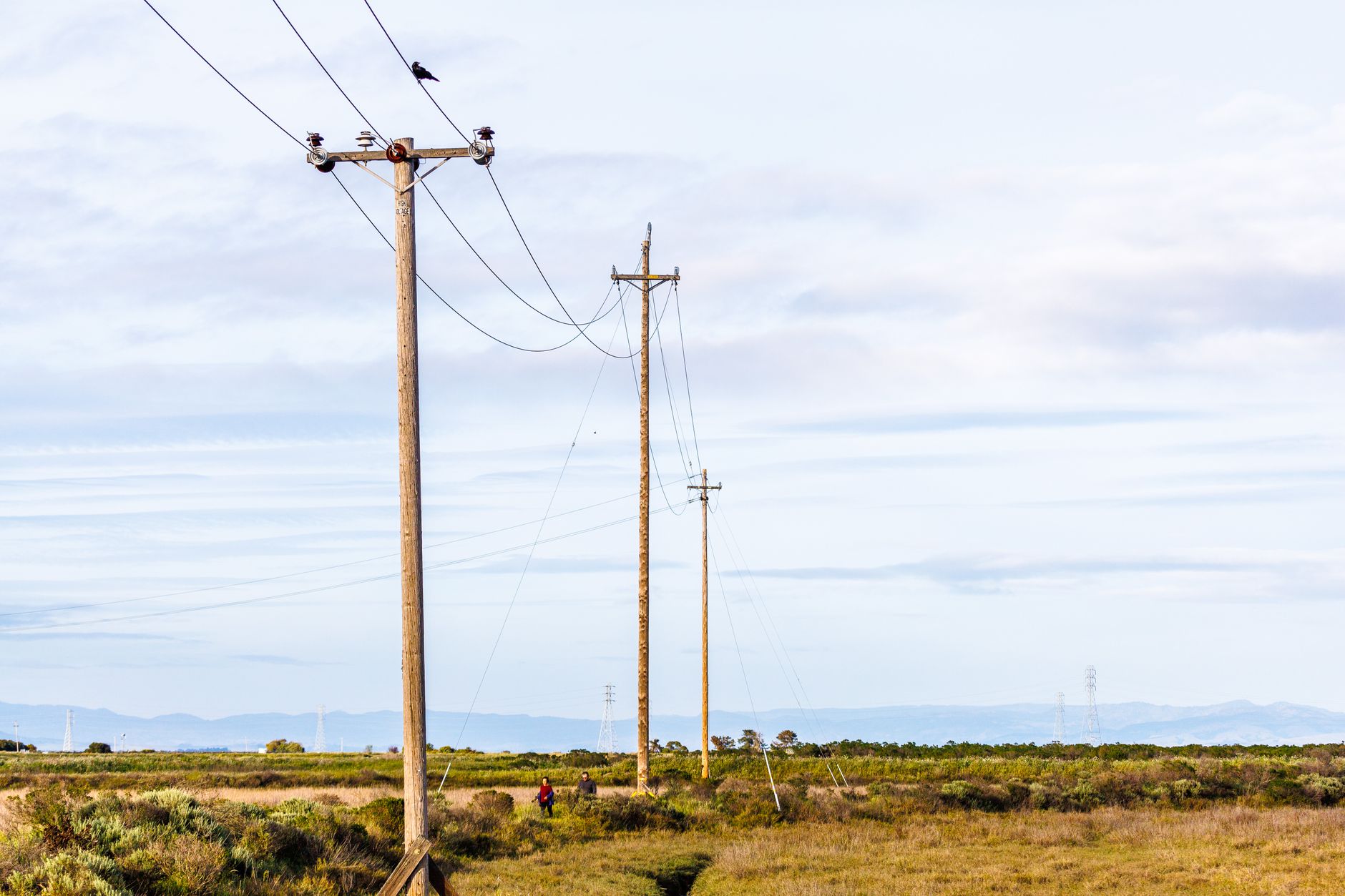
Emotionally, though, it reads like cleanup. Locals have already spent 18 months adjusting their businesses and households around instability. When a fix arrives after that long, it does not feel like reassurance. It feels like confirmation that the problem was real all along.
That is why Schutz’s explanation, sensible as it may be, lands with such a split-screen effect. On one side is the network language of unusual seasons, technical faults and staged remediation. On the other is a community mood that says: perhaps, but you still let this become normal. Both can be true. Usually both are.
There is a deeper regional pattern in that split. Infrastructure failures are rarely experienced as purely technical when they happen outside metropolitan centres. People read them as social messages too. What are we worth, exactly, once the holiday brochure has been packed away and the maintenance budget has to follow us home?
Back in February, another ABC report warned that insulator-related outages were likely to continue until the problem was properly contained. That matters because it shows this was not one freak weekend. The warning was already there. So was the anxiety. So was the sense of drift. What has changed now is not the fact pattern so much as the patience around it.
The harder version of the regional dream
I suspect that is why this story belongs on a lifestyle site and not only in the utilities pages. The Yorke Peninsula blackouts cut against a fantasy many Australians still hold tightly: that moving regional means stripping life back to what matters and discovering, with some relief, that what matters is cheaper and prettier there. Sometimes that is true. But regional life is not simplicity by default. It is intimacy with systems. Water tanks. Fuel bills. School buses. Internet dead spots. The nearest tradie. The nearest GP. Now, for some locals, the generator too.

That is the harder, less romantic underside of the sea-change story. The dream does not fail in one cinematic moment. It frays in domestic increments. You host less because the fridge is unreliable. You stop buying ahead. You think twice before expanding the business. You keep one eye on the weather, another on the power app, and a third, imaginary one, on whether this place you chose is being treated as somewhere people are expected to endure more.
None of this means the regional dream is fake. Yorke Peninsula is still Yorke Peninsula. People will still stay for the water, the pace, the sense that a life can fit more neatly around itself there. SA Power Networks may well get the outages under control before next summer. I hope it does. But once a community has been taught to imagine backup power as part of the entry fee, the story does not vanish with the next stretch of stable service.
The quiet regional life is real. So is its infrastructure. We tend to write lovingly about the first and bureaucratically about the second, as if they belong to different genres. They do not. Ask any bakery owner staring at a warm cool room, or any brewer waiting through another flicker at midnight. The dream and the grid have always belonged in the same sentence. Yorke Peninsula has just been forced to say that sentence aloud.

The Lifestyle Desires brief
Style, food, travel and wellbeing — weekly in your inbox.
Subscribe