The Sydney dream, revised for an actual life
In 2026, Sydney housing choices are less about postcode prestige than the daily arithmetic of light, commute time, rent and the kind of life a home can still hold.
Spend ten minutes outside a Saturday open home in Sydney and you can hear the city renegotiating itself. Wet umbrellas. Takeaway coffee going lukewarm. A pram half-folded near the gate. The questions are less glossy than they once were. Not whether the suburb sounds impressive enough when said quickly, but whether the second bedroom can hold a desk, whether the bus is reliable after school pickup, whether the afternoon light reaches the kitchen, whether the train ride will feel punishing by Thursday.
This is not the Sydney property script I remember.
A recent Ocean Road Magazine feature on Sydney buyers reordering the usual hierarchy of address and amenity caught the mood neatly, but the mood has been building for a while. The city is getting more candid about what home is supposed to do. Prestige still matters, obviously. Sydney has not turned saintly. Patience for paying dearly just to inherit a map pin, though — that’s thinning. Once the arithmetic hardens, people start asking ruder, more useful questions: if the rent is swallowing this much of the week, what exactly comes back in return? In The Age’s reporting on Sydney house rents reaching a record $800 a week, with unit rents at $750, the numbers land with the kind of dead weight that changes behaviour before ideology has time to catch up. This is grocery money, childcare money, the hidden tax on wanting one extra room, a patch of sky, enough distance from the neighbour that you can open a window without feeling observed.
Dr Nicola Powell, from Domain’s research and economics team, described the moment crisply: “This is where the levers of the affordability ceiling really start to play out.” It is an economist’s sentence, but the feeling is domestic. A suburb stops being a dream at some point and turns into a constraint instead. The ceiling is not only financial. It arrives as a shorter temper on the commute home, a child woken by street noise, the dull panic of another rent rise, the fatigue of making an entire adult life fit around a prestigious location.
That is a different story from collapse. It is the sound of ambition becoming domestic.
I keep thinking about Lisa Hollinshead, who moved from Balgowlah to Umina Beach. In the same Age report, she explained the choice in five plain words: “It was a no-brainer.” I love the bluntness of that. Housing is so often narrated in Australia as a moral melodrama, full of sacrifice, striving and symbolic loss. But sometimes the answer is less operatic. A family wants more room. A pool, a quieter street, fewer spatial acrobatics, a day that does not begin with everyone already irritated. The move may still hurt in parts. Friends stay behind. Travel time lengthens. Favourite corners of the old life fall out of reach. Yet the decision itself can become startlingly clear once you stop treating proximity as a sacred good.
People aren’t giving up on Sydney. They’re just getting less sentimental about the precise deal they’re willing to sign.
Here’s what I think has shifted: the idea of amenity itself. For years Sydney sold amenity as spectacle — harbour access, restaurant density, the inherited glamour of certain eastern and inner-city postcodes. Now the prized luxuries sound smaller and, frankly, more useful: a decent primary school within walking distance, a café where you can sit without queueing for twenty minutes, a park that absorbs a bad mood, neighbours you might actually learn by name. Community has stopped looking like a soft-focus bonus and started looking more like infrastructure.
Renters are in this recalculation too, not only buyers. The city’s daily reality is built from provisional decisions made inside a very expensive machine: which suburb lets you get to the station without adding forty minutes of friction; which unit leaves enough wall space to work from home without balancing a laptop on the ironing board; which outer ring buys the children a bedroom each; which move gives a single person the rare luxury of quiet. None of that is decorative. It shapes the texture of a week. Dinner becomes either recovery or admin depending on what the rent bought. Generosity between two people in a household — that depends partly on whether the floor plan lets them breathe. Even solitude splits: restful in one layout, merely cramped in another.
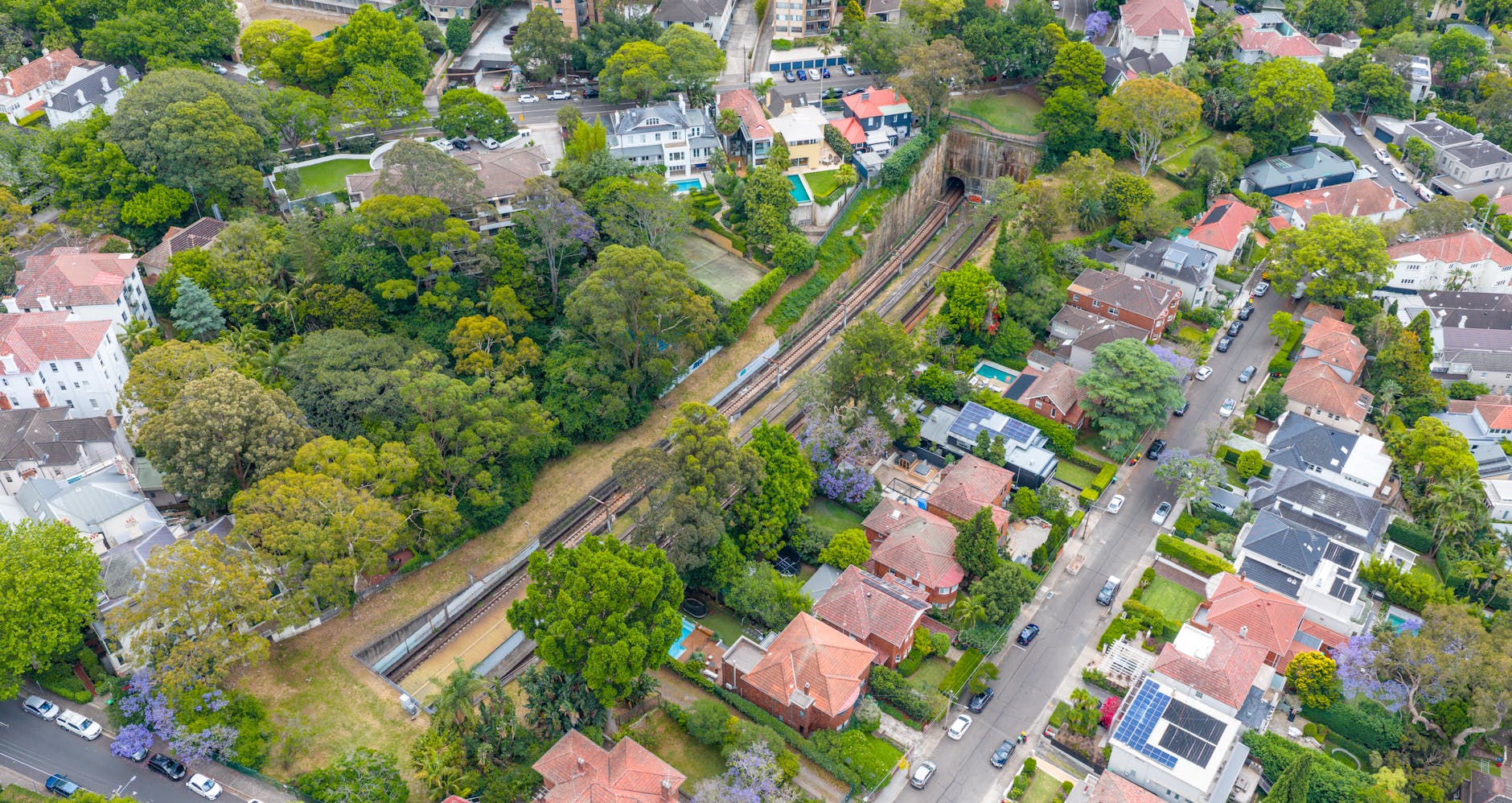
The infrastructure material looks dry until you drag it back into ordinary time. Infrastructure Australia’s work on Greater Parramatta and the Olympic Peninsula projects the corridor’s population rising from 1.3 million to 1.8 million over two decades. It also notes that 64 per cent of resident trips and 75 per cent of worker trips are made in private vehicles. You can read that as transport planning. Or you can read it as a document about human patience — about what happens to a household when more of its life is spent in traffic, on platforms, in the dead strip between work and home where nobody is fully present and everybody arrives slightly frayed. I know this from the other side, watching Adelaide friends weigh up whether a job in western Sydney is worth the commute arithmetic. Some of them tried it. Most came back.
Commute math changes the romance.
Once you start looking at housing through that lens, the old distinction between a good suburb and a merely workable one gets slippery. A place with less brag value can suddenly look generous if it gives back an hour a day or a front room that does not double as an apology. A fashionable address can look oddly thin if every ordinary task inside it feels cramped, loud or temporary. The status economy survives, but it no longer gets the last word.
That is why Theo Chambers’ line in Shore Financial’s State of Sydney report lingers with me: “The power of sentiment in the property market can sometimes be more impactful than the actual commercial effect of a rate rise.” Sentiment sounds airy, but it is often the toughest material in the room. It is the private story people tell themselves about what a suburb means, what a long trip proves, what kind of adult they are if they can endure one more year in a place that looks good on paper and leaves them underslept in practice. I might be wrong, but this is where the old postcode flex starts to lose some shine. The glamour of nearness is harder to defend when the trade involves a child’s sleep, an hour of traffic, or the weekly dread that comes with every lease renewal email.
For years, Sydney property talk has been crowded by a performance of inevitability. You stretch, obviously. You overpay for closeness, obviously. The right suburb will justify the tight kitchen, the damp courtyard, the apartment that is close to everything except rest. There was always a brag tucked inside the complaint. What feels different now is that people are editing the brag out.
I hear this in how people talk about moving now. The language has shifted. Nobody says “we made it” anymore — they say “we needed something that could hold us.”
Finding words for what replaces it is harder than I expected. Not anti-city feeling — that’s the easy label. It’s something more like an adult version of desire. A more honest one. People still want beaches, restaurants, culture, friends nearby, a station that works, some pulse after dark. They also want a door they can close without hearing the neighbour’s phone call, a room that can change function when life does, enough light to feel human in winter, maybe even a little boredom. I keep coming back to that. A home that is only a trophy leaves very little room to exhale. So the Sydney dream survives, but in a revised form. The conversation has stopped being about performing the correct postcode. Now it’s about negotiating for time, calm, sky and the possibility of an ordinary good day. That does not sound smaller to me. It sounds newly exact.

The Lifestyle Desires brief
Style, food, travel and wellbeing — weekly in your inbox.
Subscribe