
Guzman y Gomez could conquer Australia. America was another story.
Guzman y Gomez's US exit shows how an Australian fast-food hit can feel singular at home and strangely generic in Chicago.
For a while, Guzman y Gomez was one of those Australian food stories that flattered us twice. The chain sold burritos, bowls and breakfast with enough fluorescent confidence to make suburban convenience feel almost stylish, and it carried the bigger promise that a homegrown fast-food winner could walk into America without apologising for its accent. Now the company is shutting its eight Chicago restaurants, and that promise reads less like swagger than a very expensive mistranslation.
Reading Reuters’ account of the retreat, what struck me was how plainly founder Steven Marks described the problem. The US push needed more than management had bargained for. From the inside, that is a revealing admission. Chicago was not meant to be a footnote. It was meant to be proof.
“significantly more time and capital than we had expected”
Steven Marks, via Reuters
Then the sceptical reading arrives. Chicago was never waiting for an Australian lesson in fast casual. In The Guardian’s sharp framing of the exit, the US market looks less like unfinished business and more like a graveyard for local chains that mistake affection at home for inevitability abroad. Harsh, yes. Still, it gets close to the cultural problem. A burrito chain that feels brisk and slightly novel in Australia can look generic in a country where Mexican food is not a category to be introduced, just one more lunch decision in a crowded strip.
To me, this is less a story about whether the food was good enough and more a story about translation. The AFR’s March look at Guzman y Gomez’s Chicago experiment captured the size of the ambition. What the exit exposes is how much of the original pitch depended on context that does not travel neatly: the breakfast burrito habit, the Australian drive-through rhythm, the sense that this chain had found a gap in local suburbia and could keep widening it. In the US, especially in a city already rich with Mexican food, those qualities are not a revelation. They are table stakes.
What Chicago was never going to forgive
Once Guzman y Gomez hit America, the harder question was what counted as difference. The US fast-casual market already has its own grammar, and its biggest players do not merely sell lunch. They sell familiarity at scale. Recent US reporting on Chipotle’s resilience even as fuel prices bite other chains and Cava’s latest investor bounce shows how brutally legible the category already is to American diners and markets alike.
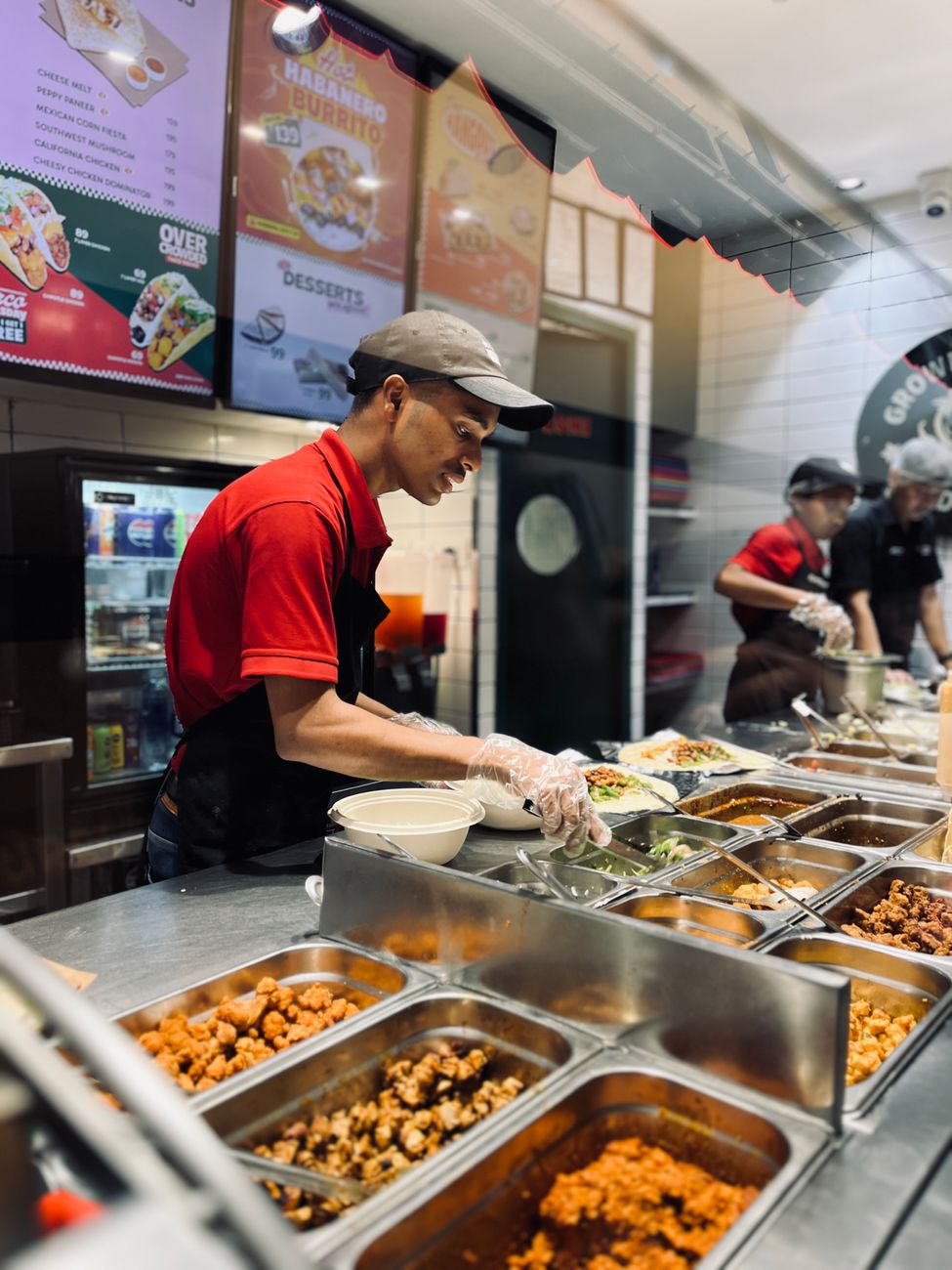
Which matters because GYG’s Australian edge has never been just cumin and queso. It is the rhythm of the place. The bright menus. The breakfast trade. The sense that chain dining can still feel a little bit local if it catches the right habit at the right moment. CNBC quoted Citi analysts saying the US problem came down to a “lack of differentiation between GYG and rival Chipotle”. Brutal, maybe. Wrong, I am not so sure.
“lack of differentiation between GYG and rival Chipotle”
Citi analysts, via CNBC
Put differently, an Australian brand identity can travel only if it arrives carrying something a local market does not already believe it owns. In Australia, GYG could feel like an upgrade on older fast-food habits and a cheerful rewrite of the drive-through meal. In Chicago it had to explain why another Mexican chain deserved oxygen in a room that was already full. That is a different assignment entirely.
Underneath all this sits a small Australian delusion, and I say that with affection. We are very good at turning a successful local restaurant story into a national fable about scale. Once a chain starts opening everywhere, we stop describing what it does well and start describing what it symbolises. Suddenly the burrito is not a burrito anymore. It is ambition. It is proof of concept. It is the export version of confidence. That emotional inflation can be useful for an IPO. It is less useful when a customer in Illinois is deciding between lunch options they already understand.
The chain that travels best at home
From the analyst’s side, the view is less romantic and in its way more forgiving. CNBC reported that GYG shares surged as much as 20 per cent after the company said it would quit the US and refocus on Australia, where it already operates 237 restaurants. The AFR’s reporting on the exit made the same point more bluntly: investors seem relieved that management has stopped feeding a story that was consuming capital without earning belief.

None of that means the dream was fake from the start. It means the company may be more valuable when read as a domestic compounding story than as a global one. For years the grand line around Guzman y Gomez was not just that it was growing, but that it could “become the best and biggest restaurant company in the world”. That sentence sounds exciting when America is still in the future tense. It sounds different once eight Chicago stores are being shut.
“become the best and biggest restaurant company in the world”
Guzman y Gomez shareholder statement, via The Guardian
So the more interesting answer to the analyst’s question is that the exit does two things at once. It clears away a costly overhang, and it punctures a myth. The cleaner domestic story is real. So is the loss of the old fantasy that every successful Australian chain is only half-finished until it conquers the United States. Not every food business needs America as its final exam. Some probably damage themselves by sitting it.
Seen that way, the remaining international push matters less as consolation than as reframing. Reuters noted that GYG still intends to focus on markets such as Singapore and Japan. Those places make more sense as proof that the brand can travel in selected ways, without demanding that it win a category war on someone else’s home turf. Lighter-footed expansion is not as glamorous as Chicago once sounded, but glamour was part of the problem.
What lingers for me is not schadenfreude so much as recognition. Australian hospitality is full of stories that feel bigger than their numbers because they attach themselves to a mood, a city, a habit, a version of ourselves we enjoy seeing reflected back. Guzman y Gomez still looks strong inside that frame. The US exit just reminds us that some food successes are inseparable from the place that taught people how to want them. I might be wrong, and the chain may yet find another offshore form that fits. Right now, though, the sharper read is simpler: Guzman y Gomez could conquer Australia. America was another story.

Melbourne restaurant critic and drinks writer. Files from kitchens, bars and the long lunches in between.
The Lifestyle Desires brief
Style, food, travel and wellbeing — weekly in your inbox.
Subscribe