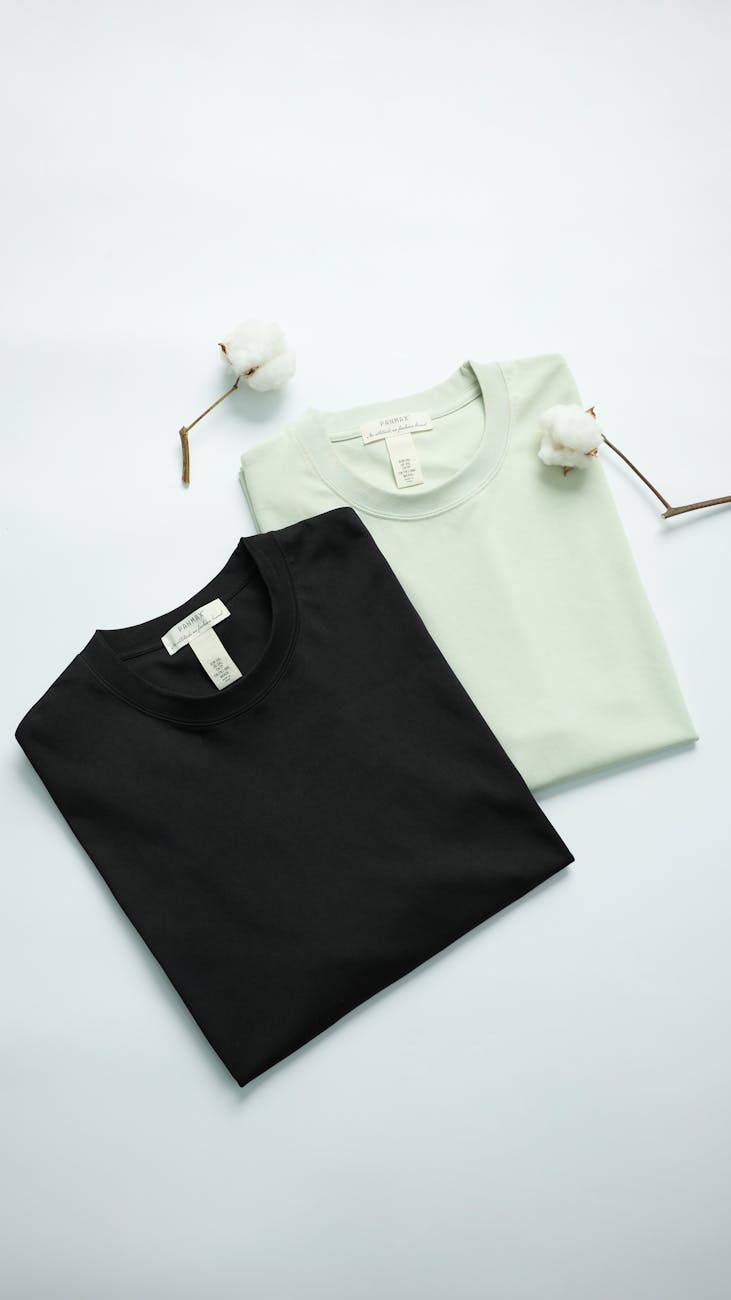
When the white tee lost its halo
Everlane's sale to Shein makes the sustainable fashion pitch look suddenly fragile: a $100 million deal, $90 million in debt, and a mood that has curdled.
Buying basics from Everlane used to be the cleanest way to signal you were trying, sincerely, to be a decent shopper. The uniform was easy to clock: boxy white tee, straight jean, leather loafer. Cotton that said restraint, not deprivation. For a certain kind of millennial woman, it let ethics get folded neatly into the weekday wardrobe. Wear your principles to work, then to drinks, and nobody had to watch you strain.
Which is why Everlane’s reported sale to Shein doesn’t land like a routine deal. It lands like an old fantasy giving way, loudly enough that you can’t not hear it. Blunt numbers: reported price, $100 million. Debt sitting nearby, about $90 million. A brand that once seemed to offer a chic workaround to fashion’s mess has ended up circling the biggest symbol of that mess. If you ever bought into the idea that the right white tee might make consumption feel cleaner — this is the week that idea started looking embarrassingly thin.
From the analyst’s chair the same facts read differently. The question isn’t sentimental. It’s arithmetic. How long can a sustainability-led basics label carry premium pricing, slower production and a moral sales pitch once shoppers get twitchy about money? The Atlantic’s reporting argues Everlane was crushed between its own promises and a market newly obsessed with cheapness. I think that’s right. Merciless, too, in a way that’s hard to look at directly.
The uniform
What made Everlane clever was never just the cotton or the cut of the trouser. It was the story around them. Transparency, the brand discovered, could look elegant — factory photos, cost breakdowns, plain language about materials, a palette that suggested good taste could also be good citizenship. Landing that pitch depended on meeting a very particular consumer mood. Plenty of shoppers knew fashion was dirty, wasteful and extractive. Nobody was about to start spinning their own wool, either. Everlane offered a compromise that felt modern enough to live with.
If that sounds harsh, fair. I am including myself. Conscious shopping’s appeal was always part ethics, part aesthetics, part relief — relief that you could keep buying and still narrate yourself as the thoughtful one. Abstinence was never the old sustainable-fashion dream. It was absolution, preferably in cream denim and matte poplin. This is why Elizabeth Cline’s argument in The Atlantic stings. The problem was never that shoppers didn’t care. Care was being routed through a market built to metabolise every objection and sell it back as branding.
“You can’t shop your way out of the climate crisis.”
— Maxine Bédat, via The Atlantic
Severe, that line, but not joyless. It simply refuses the flattering myth that better checkout behaviour can do the work of policy, labour reform or smaller appetites. Once you let that thought in, Everlane’s reported sale stops looking like a freak betrayal. It starts to look like the logical endpoint of a model that asked the till to carry too much moral weight.
The bill arrives
Colder at first, the analyst view — and that’s why it’s useful. It explains why the fantasy cracked now. Puck’s deal report and the surrounding trade coverage don’t describe a single dramatic collapse. They describe a slow narrowing of room. A brand built on nicer basics, careful sourcing and a premium margin survives only if enough people keep believing the premium means something. Belief gets shaky when the weekly grocery bill looks rude, rent behaves like a threat, and every second app shows you a cheaper version of the same trouser — overnight shipping included.
About debt, the tidy answer isn’t comforting. Once a business carries roughly $90 million in debt and the mooted sale price is only a little higher, the story has already changed. You’re not debating aura or aspiration anymore. You’re debating exit options. WWD’s trade framing captures the insult of it. Around $550 million, that’s what Everlane was once worth. Now the brand that sold moral clarity in camel knits is being discussed as a distressed asset. Nothing metaphorical about that comedown.
Shopper psychology is the second piece of arithmetic. The Atlantic notes that US consumer prices have risen about 25 per cent since 2020. You didn’t need a chart to feel the same mood creeping through wardrobes elsewhere, including here. In a more expensive world, ethical premiums start to look less like conviction and more like a luxury temperament. People still want to be good. They just want to make payroll, cover childcare, book the flights, replace the broken kettle and maybe buy jeans that don’t ask them to feel guilty in two directions at once. Depending on a shopper with just enough disposable income to treat conscience as an upgrade — that was the sustainable-fashion pitch, and it’s wobbling.
The people who never quite trusted it
Enter the sceptics, and they should. Less tragedy than confirmation, that’s how they read the Everlane story. Build trust around being cleaner, fairer, more transparent than the rest of the industry and you don’t just win loyal customers. You create an expectation you may never quite satisfy. Moral branding’s trap, right there. It raises the ceiling for how much shoppers hope, then leaves the brand to manage every disappointment in public.
Marie Claire’s explainer puts the deal in the language of surprise, but the more cutting line came from the critic Katya Moorman in WWD’s reporting:
“Consumers did everything right.”
— Katya Moorman, via WWD
I keep coming back to that line because it rescues ordinary shoppers from the worst kind of smug hindsight. People did try. They paid more. Read the labels. Learned the vocabulary — traceability, deadstock, circularity. Swallowed the mild embarrassment of discussing factory conditions over brunch. And still the structure held. Cheap stuff stayed cheap. Labour stayed far away. The planet kept warming. Even the brands with the most virtuous copy had investors, debt and acquisition possibilities.
Camille Witt, in that same WWD piece, landed the cruellest — and funniest — summary:
“This is like if SeaWorld bought PETA.”
— Camille Witt, via WWD
Hyperbolic, obviously. Also memorable because it catches the emotional whiplash. Everlane was never a movement — it sold clothing. But it sold clothing to people who wanted the market to reward restraint, and seeing it fold into Shein makes restraint look, for a moment, like the only party who forgot the rules.
MarketWatch was blunter still: price has beaten principle for plenty of shoppers. Not proof people are shallow. Proof ethics are easiest to maintain when they don’t keep arriving as a surcharge.
After the slogan

Less sentimental than the consumer view and less fatalistic than the market one: the regulator perspective. It asks a sharper question. If shopping with a conscience was always too flimsy, what has to change outside the fitting room? Part of the answer is that the state, finally, has started nosing around the places branding used to occupy by itself. Reuters has reported on EU scrutiny of Shein over illegal products and addictive design. WWD has also tracked the pressure building around anti-fast-fashion rules and green-claims enforcement in Europe. Doesn’t fix the white-tee problem, that. But it does at least move the burden away from a lone shopper standing under changeroom lighting, trying to decode whether a nicer font counts as reform.
I don’t think the lesson here is to sneer at anyone who ever believed in sustainable fashion, or to pretend every label is equally cynical. Some brands do make better choices. Some designers really are trying to produce less, pay more fairly and say fewer silly things. Repair, resale, rental, local manufacturing, buying less with more intention — there’s still value in all of that. I still care. What I no longer trust is the older fantasy, the one where a well-written product page can turn capitalism into character.
Which is why Everlane’s reported sale matters beyond deal gossip. It clarifies the emotional architecture of the last decade in style. A lot of us wanted fashion to become a site of moral self-improvement without requiring genuine sacrifice. The clean tote, the honest button-down, the traceable denim — the better-girl version of consumption. For a while that script held. It even looked chic. Then the bills rose, the copy got thinner, the competitors got faster, and the conscience premium began to feel like something you could admire only from a distance.
What comes after that is less glamorous and probably more useful. Fewer halos. More scrutiny. Better laws, if governments can manage it. Fewer promises that a checkout page can save us. More honesty about how clothes are made, who gets paid, and which compromises are still compromises even when they arrive in tasteful neutrals. The white tee can just be a white tee. A smaller ambition, maybe. But I suspect it’s a truer one.

The Lifestyle Desires brief
Style, food, travel and wellbeing — weekly in your inbox.
Subscribe